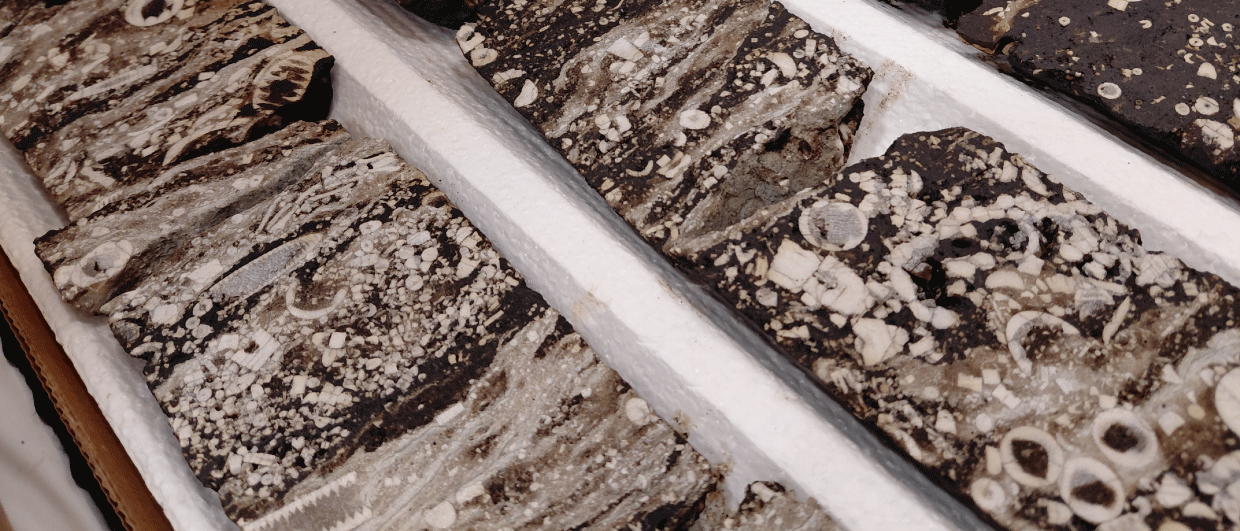
Core displays are one of my favourite features of geoscience conferences, and the one at the latest GeoConvention in Calgary in May again proved why. There, I met with Alisha Fridrich, who was already deeply engaged in a conversation about the beautiful Waulsortian (Lower Carboniferous) mud mound cores she had on display when I arrived. But fortunately, I could tag on.
The carbonate cores are not only a delight to look at; the story Alisha shared made them even more fascinating. That’s because she is part of a small team – forming Islander Oil – that is successfully developing these complex, small mud mounds where others have previously failed. And in some ways, you can understand why developing these oil fields is challenging.
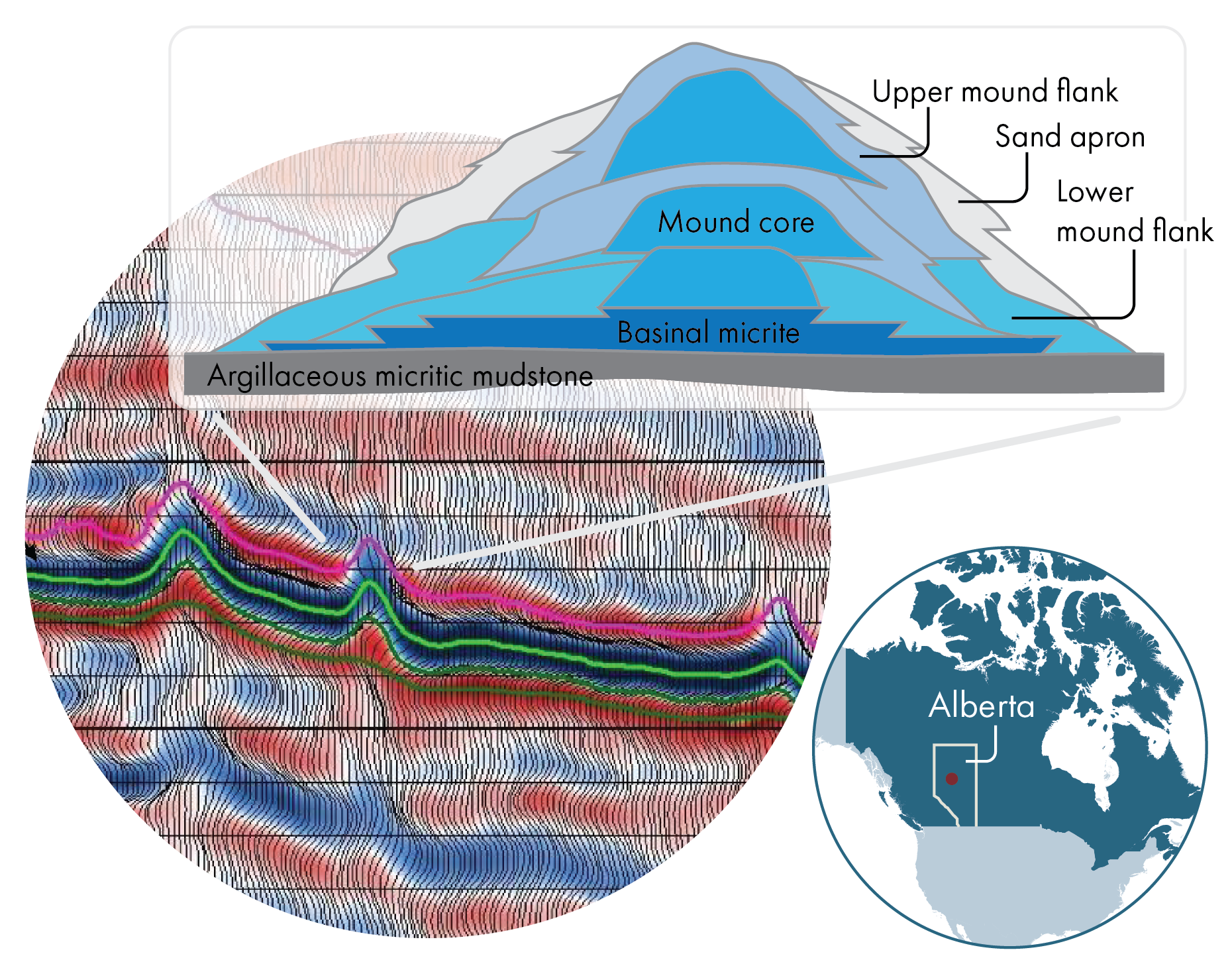
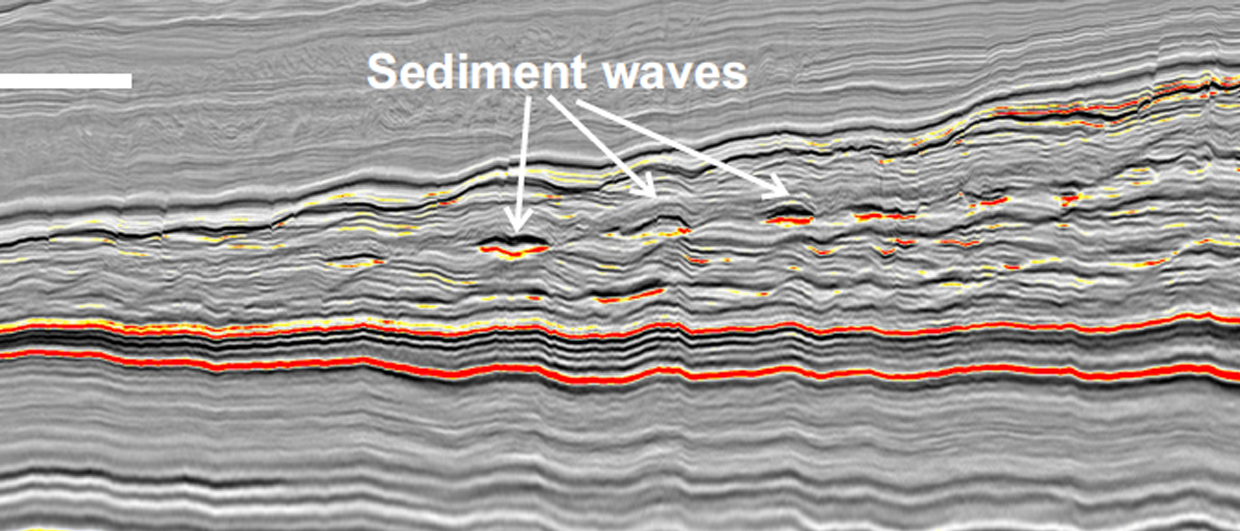
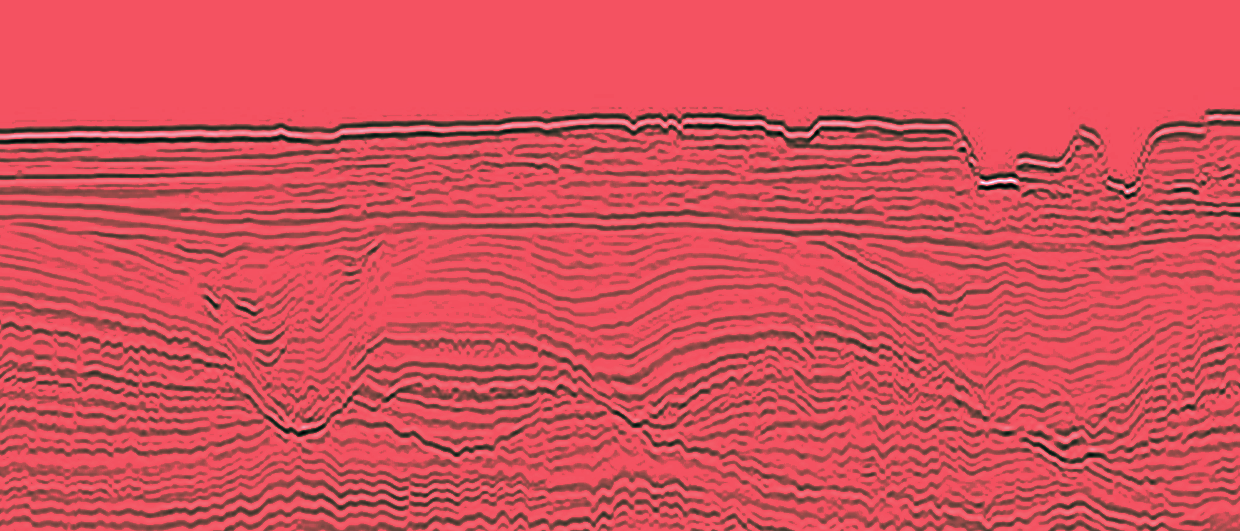
“The seismic data only allow mapping the top and base of the mud mound structures,” says Alisha. “And you surely need 3D. Not so much to map them internally, because we lack that resolution, but rather not to miss them in the first place.“
The mud mounds are often just a few hundred meters across and up to 3 km in length. The thickness of the carbonate build-ups is also less than 100 m. “It is a seismic play,” says Alisha. “The cost of acquiring the seismic data are significant, also because the terrain is not the easiest in Alberta, but the investment is essential.”
Previous drilling attempts tested these mounds through vertical wells, with Shell drilling quite a number of those not so long ago. “We thought, with the advance in horizontal drilling, it would be better to test them in that way,” says Alisha. And it worked. “Comparing how much we can produce from vertical versus horizontal wells, we are looking at around a three-fold increase for horizontal legs,” she explains, “with a typical range of 120-435 bbl/d per well.”
“At the end of the day, it is quite simple,” she says, “because with the horizontal wells, we are accessing more reservoir.”
But uncertainty remains, Alisha admits, when we look at the cores again. Not all parts of the reservoir are oil-stained, clearly indicating that there are sweet spots. “That’s what we are up against,” explains Alisha, “together with the difficulty of mapping the structures in 3D, it means that it is hard to obtain a recovery factor for the individual fields we operate. We simply don’t have a good grip on the 3D distribution of pay within the mud mounds.”
Despite that, it is really cool to see a small outfit being able to successfully develop this niche oil play within the Canadian oil patch. “There are other targets even at shallower levels that are also being developed,” says Alisha, “such as the Clearwater oil play. These reservoirs are easier to map and drill out, which is why most activity in the area is still focused on those horizons. But let’s not forget that there are small nuggets out there that are ready to be found and developed.”