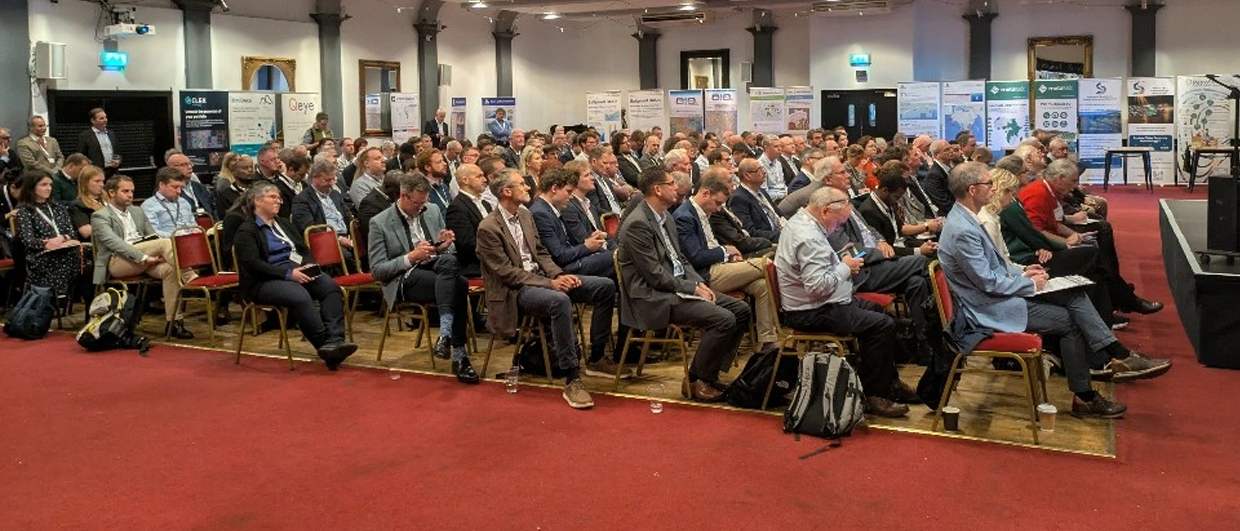
It was full house in London. Photo: GESGB
It boils down to connectivity
GESGB’s Africa Conference in London provided a great glimpse of what operators are planning to do and how that differs from how they looked at things in the past

When I arrived at the address my phone told me to be, I had a second thought. Is this really it? The Irish Centre didn’t look exactly like last year’s venue. And instant coffee? It’s been a while since I had to prepare that.
But who cares when the company is good? Who cares when the talks are good? That’s the most important ingredients for a successful event after all. And those ingredients were there, in full swing. The turnout was great, lots of familiar faces, and honestly, the quality of the talks was the best I’ve seen for a while. Shell presenting their Nigeria deepwater story, Murphy talking about Ivory Coast, bp giving the first subsurface account of the GTA development, Sasol illustrating their pancake geology in Mozambique; it was all technical and very little fluff. TGS’s Angola story was great too, even when you know what they mean when the statement is made that AVO-led exploration is not over yet. No panel sessions either, which is great. Hats off to the organisers.
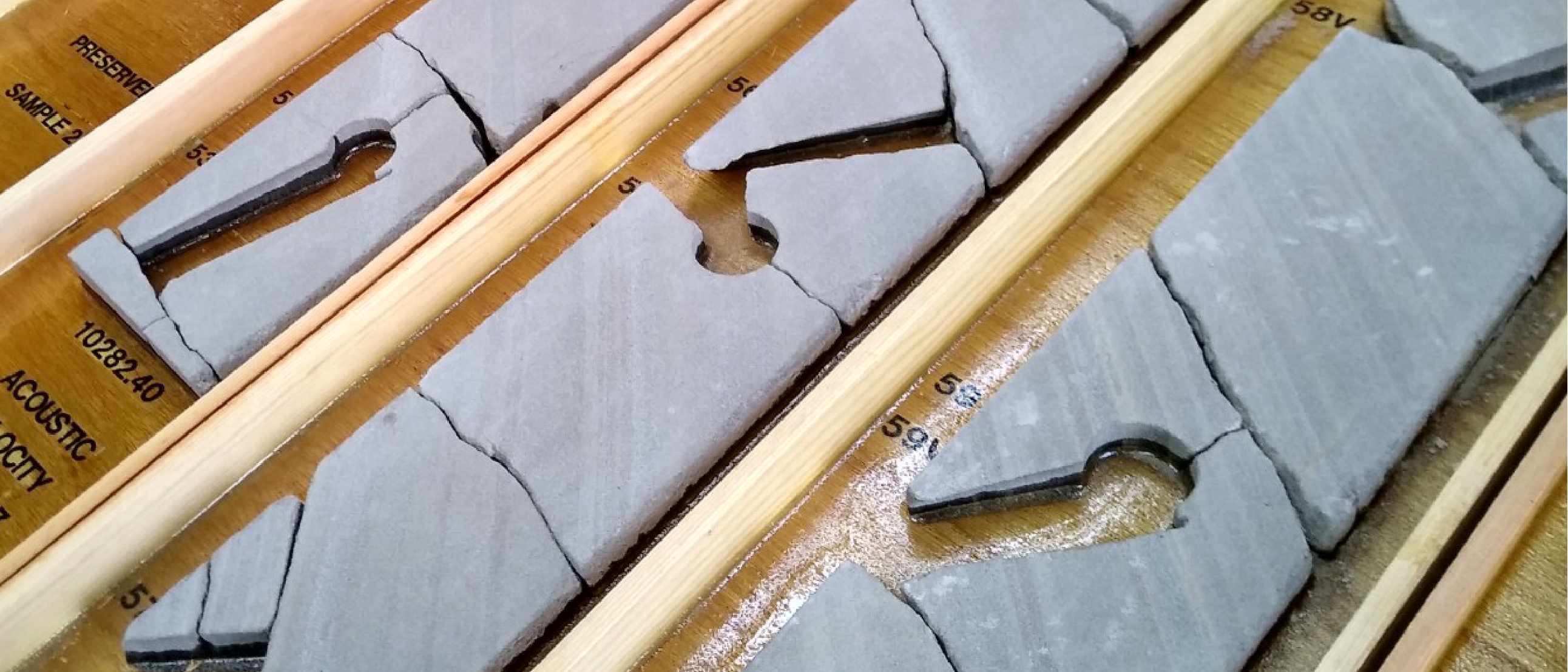
But let’s focus on connectivity. Because that’s what formed a little bit of a common theme throughout the conference, I believe. Manuel Poupon from Shell was the first one to address the issue. No, wait, it actually was Tony Yanis, who spoke about the Venus discovery. He shared that the two sandstones they expected to find based on seismic data were separated by a much thinner mudstone than initially thought. Whether that means the sands are in communication; he left that in the middle. Manuel’s case was a bit more straight to the point. He said that the “old” model Shell carried for deepwater Nigeria included mudstones separating individual turbidite lobes. Only to learn, once the Bonga field started producing, that the lobes must have been in communication. The mudstone drapes did not really matter at all.
Sara Grant from bp brought a similarly upbeat story, as she ran the audience through a detailed story on the Greater Tortue-Ahmeyim development. Similar to Shell’s Nigeria story, the big question for the Lower Cenomanian deepwater reservoirs was how connected they really were, given the presence of what could have been continuous mudstones. With the seismic not allowing proper identification of intervals less than 10 m in thickness, there was a lot left to guess when it comes to connectedness. So, once the first well came on production, two other nearby wells that showed the same pressure trend were monitored closely. It turned out that in one of these nearby wells, a pressure response was seen rather quickly, indicating a good connection, whilst the third well showed a delayed and more subtle pressure decline, indicating that the reservoir connection was more subtle. “Adding transmissibility barriers in our model only degraded our history match,” said Sara, hinting that reservoir connectivity in the GTA is less of an issue than what was initially anticipated.
Duncan Barkwith from Sasol bucked the trend. His reservoirs in Mozambique only got more compartmentalised as the seismic quality improved. Whether that actually translated in the associated production response is something I might have missed, but the conceptual models he showed clearly got more complicated over time, as more geophysics was thrown at it. Maybe that’s not too much of a surprise though, as the geology is frankly quite boring in that part of the world. The strata Sasol produces gas from for the South African market is very flat-bedded. Classic pancake geology, Duncan said himself. In such a setting, it is indeed tempting to correlate sands forever. However, as better seismic became available, and a little bit more of a depositional dip became apparent, the model evolved a little more towards isolated bodies.
Reservoir connectedness. We live in 2026, and yet we need to drill multiple wells to find out if a turbidite lobe talks to the other. The subsurface still demands proper investment before it discloses its intricacies.