Seabed Minerals

Do we need seabed minerals?

The debate on this topic is fierce. The Metals Company, who are gearing up to harvest polymetallic nodules from the abyssal plain, argue that even though terrestrial deposits can meet demand, the economics of extracting them are less favourable. Seabed…

Mic drop: Dropstones are, in fact, polymetallic nodules

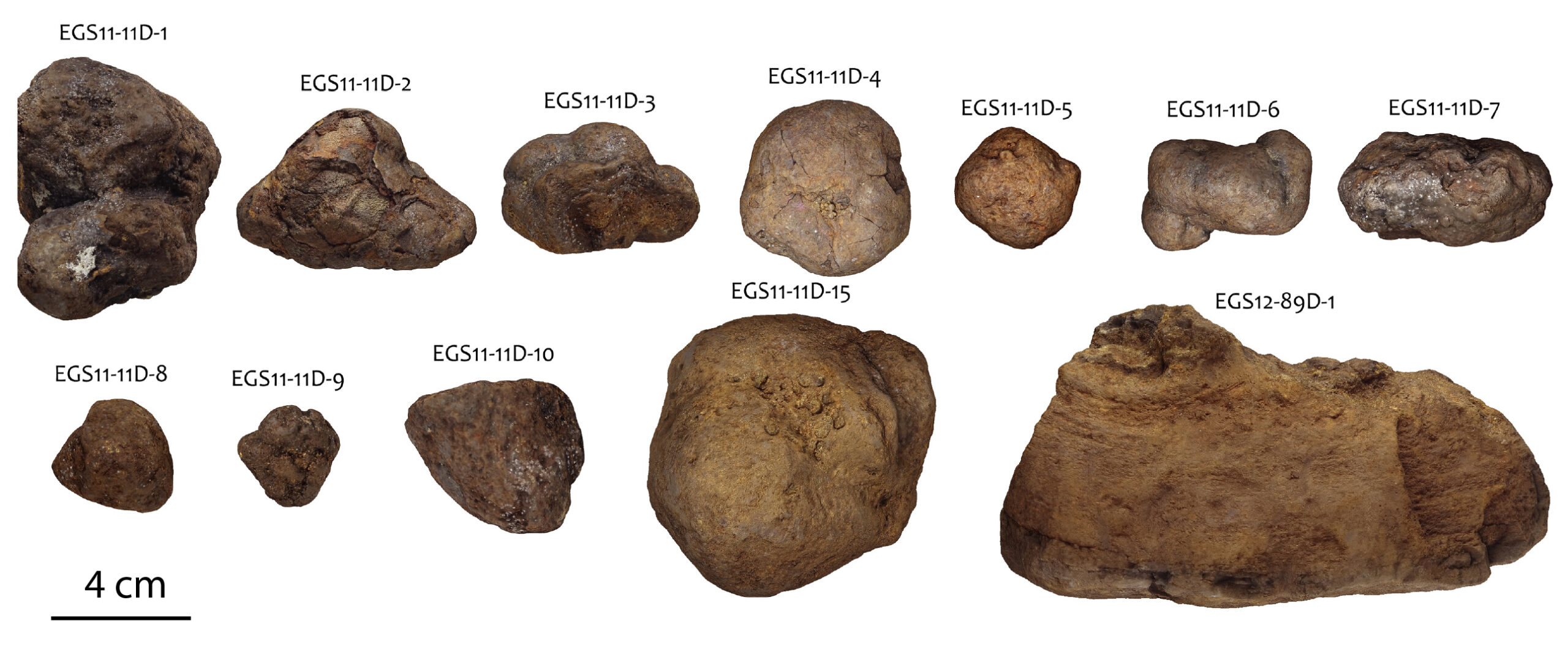
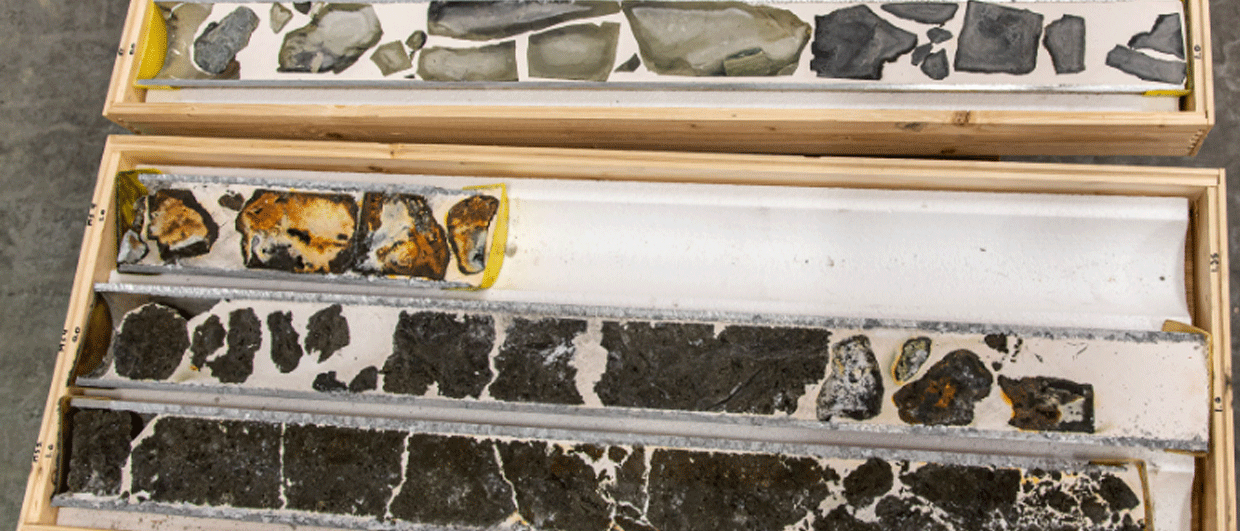
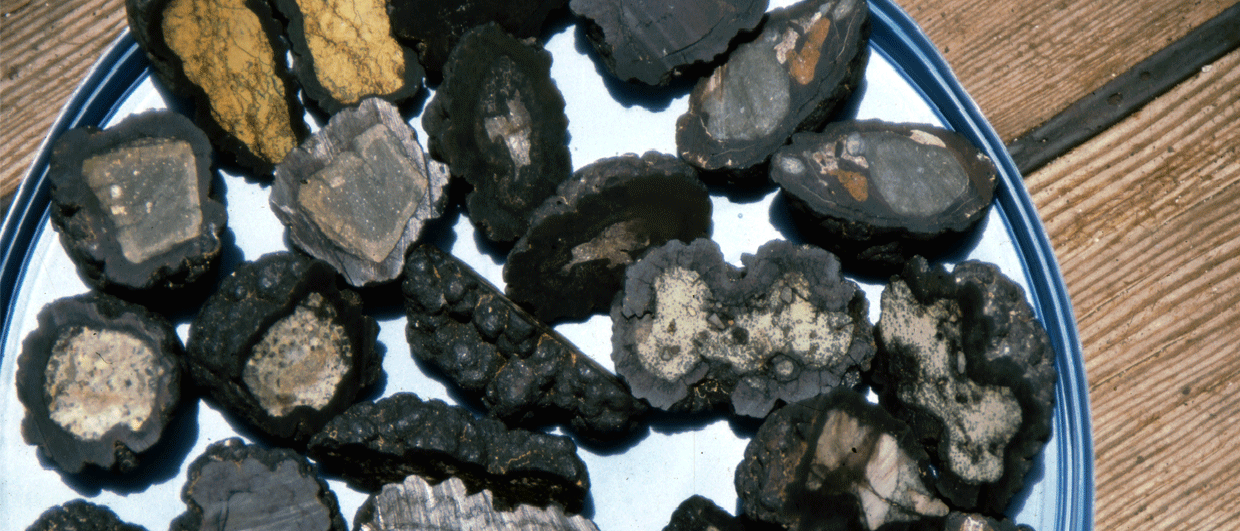
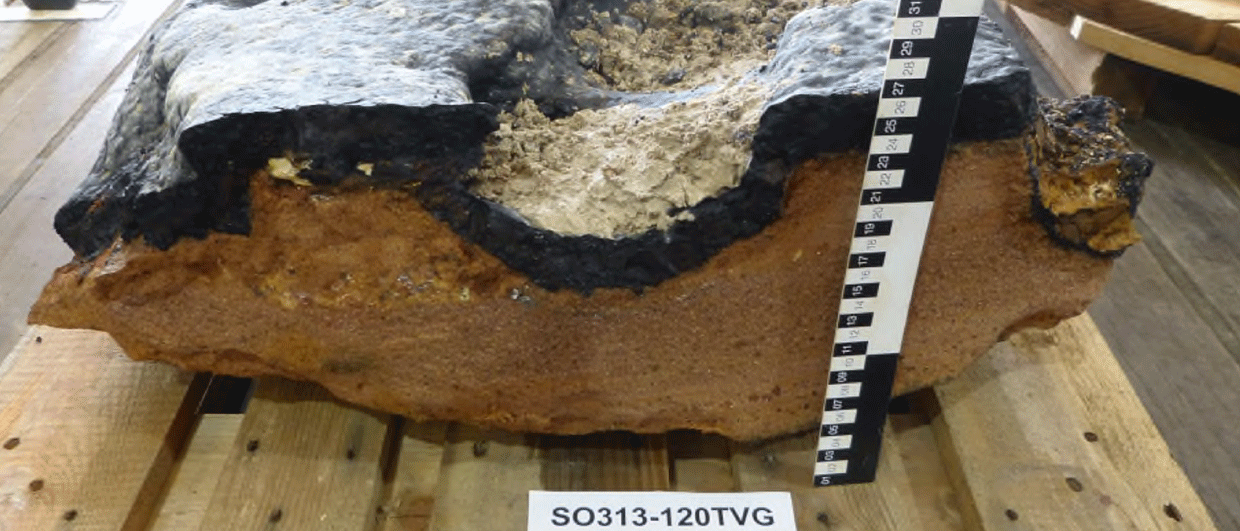
In search of oil seeps and to understand regional stra­tigraphy, VBER and TGS conducted two seafloor sam­pling surveys on Greenland’s north-eastern continental shelf over a decade ago. They retrieved samples through dredging and coring along the continental slope. Among the…

Movement towards a mining moratorium

Mining in international waters is a hotly debated topic. One of the discussion points is environmental concerns about the effect of mining on the unique and poorly understood abyssal plain ecosystem. The Deep-Sea Conservation Coalition (DSCC) is passionate about protecting…

Japan retrieves rare-earth-rich mud from 6,000 m in deep-sea’s first

Japan has successfully retrieved sediment containing rare earth elements (REE) from the seabed off Minami-Torishima Island in the Pacific Ocean, some 1,900 km south-east of Tokyo. At nearly 6,000 m below the sea surface, the mission marked the world’s first…

The benefits of being a second mover

“I was in oil and gas for most of my career,” says James Deckelman, the CEO of Deep Sea Minerals, when we meet online. “And the opportunities I have had in that sector are amazing. But when I was approached…

First seabed copper from Norway

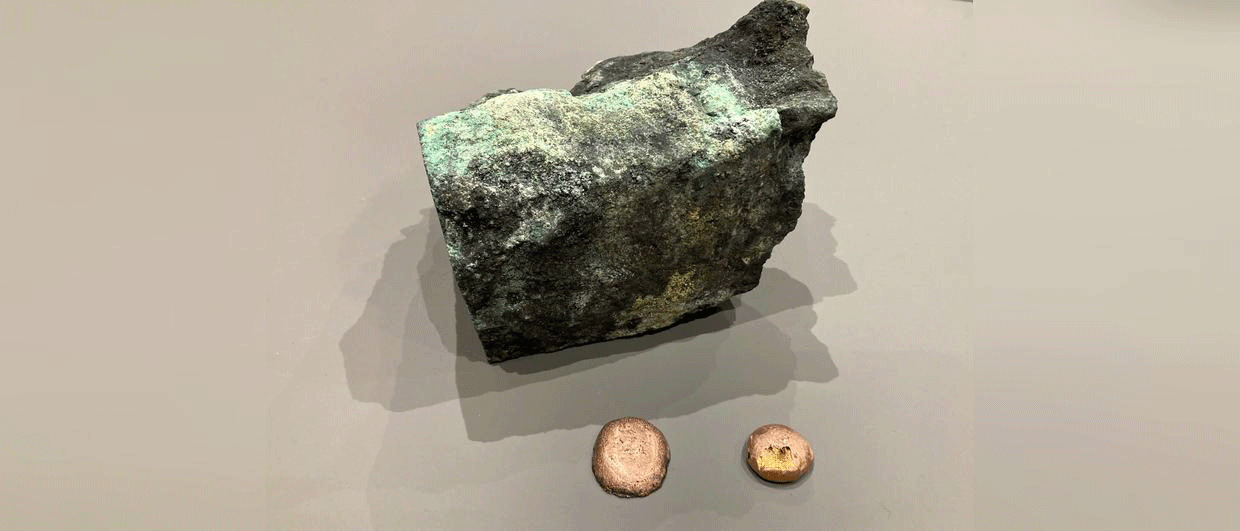
Over the past three years, academia and industry joined forces in the pro­ject EMINENT to in­crease knowledge of the deep sea and demonstrate a full value chain for sus­tainable extraction of seabed minerals. Now the results are on the table,…

Norway stumbles at the finish line

On the night of December 3, 2025, Norwegian parliament re-ached an agreement on the state budget for 2026. One point in the budget agree­ment reads as follows: The parliament asks the government not to announce the 1st licensing round for…

Are sea cucumbers in a pickle?

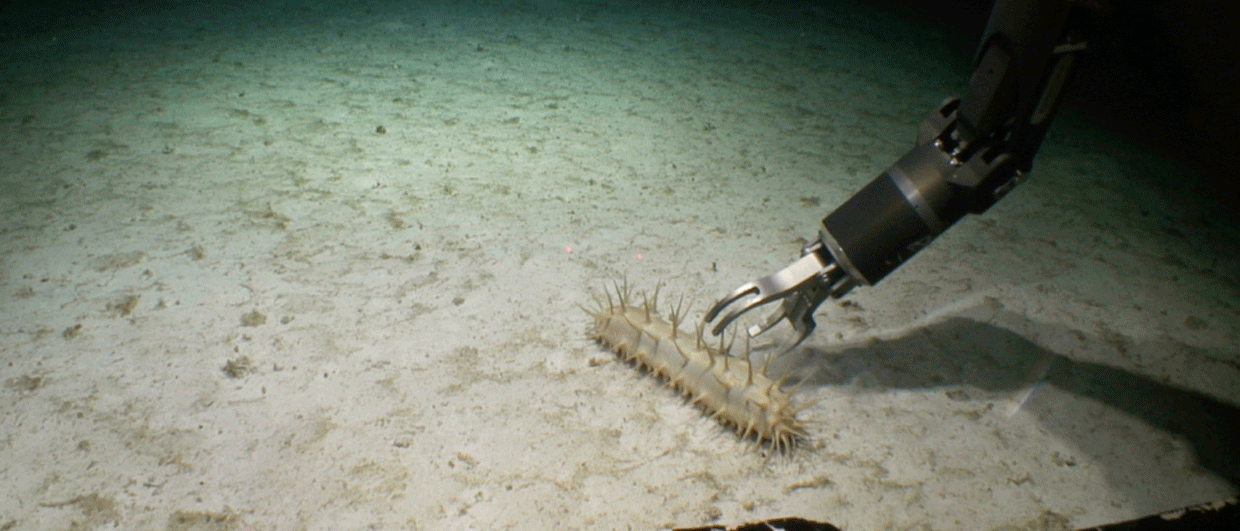
In March this year, the Internation­al Seabed Authority (ISA) mem­ber states met and negotiated over two weeks in Kingston, Jamaica, to discuss the future of seabed min­ing. But yet again, the council con­cluded without adopting a mining code or approving…

First commercial recovery permit for seabed mining on the horizon

The national Oceanic and At­mospheric Administration (NOAA), an agency within the US Department of Com­merce, recently updated regulations regarding seabed mineral exploration and commercial recovery. The updated framework allows US companies not only to apply for a permit to explore…

A greenprint for deep sea copper exploration

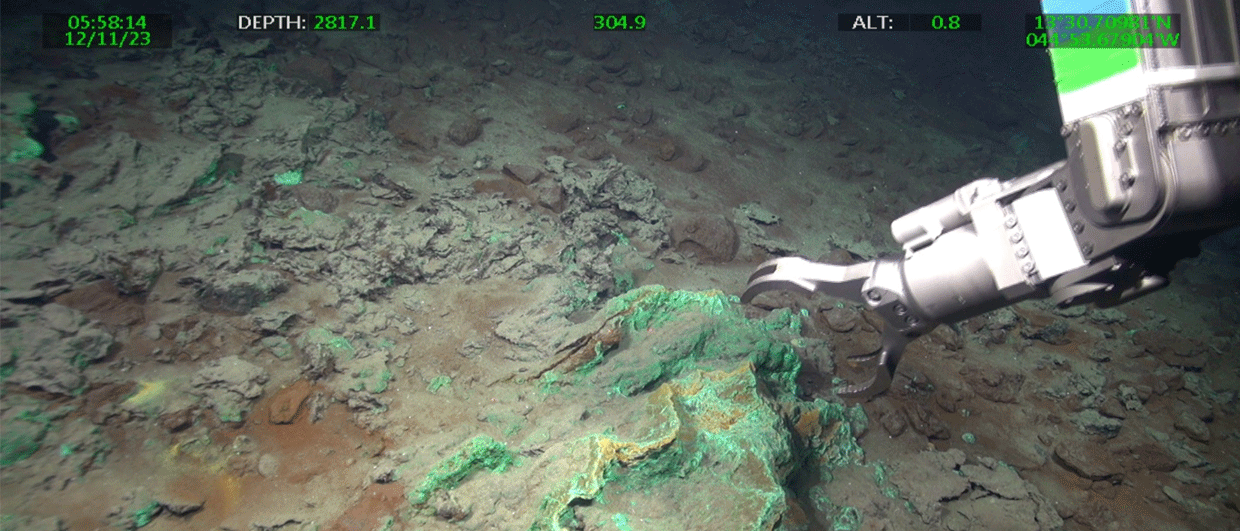
The Semenov hydrothermal fields along the Mid-Atlantic Ridge at 13° N, the same lati­tude as Senegal and Nicaragua, boast the world’s largest known Sea­floor Massive Sulphide (SMS) deposits, with a volume well over 100 million tonnes (Mt). Globally, over 600…

Deep-sea mud trial extraction to begin in 2026

Japan is set to launch test mining of a unique deposit of rare earth element (REE)-rich deposits in an area off the Minami-Torishima Island (Marcus Island) in the Pacific Ocean, some 1,900 km southeast of Tokyo. First identified by the…

American company eyes seabed mineral opportunities in Norway

“Earlier in my career, I have had the privilege of working in Norway, which is a leading example of how industry, trade, and the public and private sec­tors collaborate. And you have a fan­tastic resource base,” boasted Graham Talbot, CEO…