Subsurface Storage

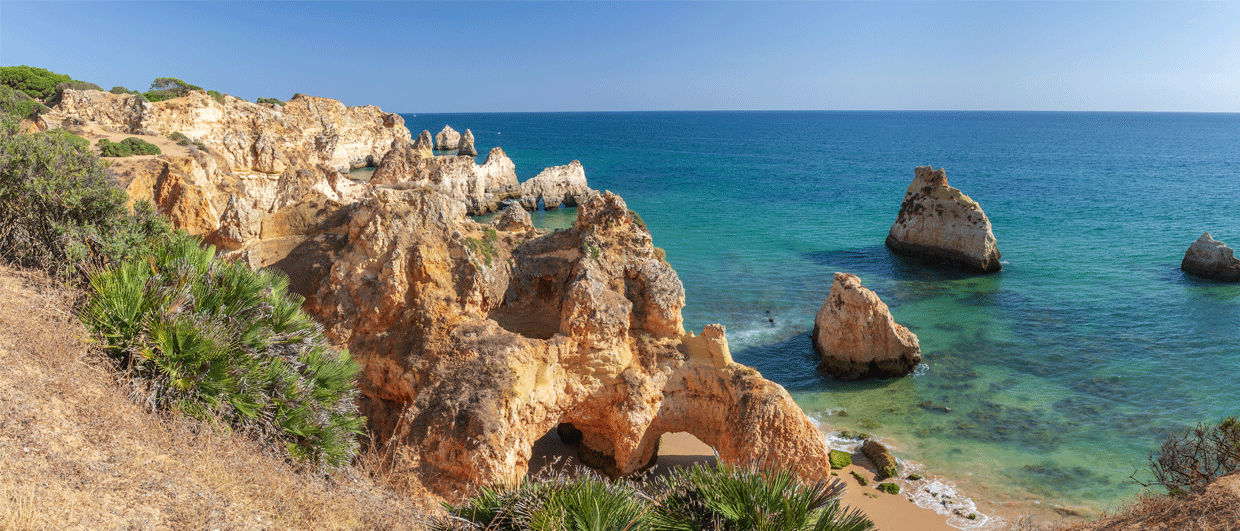
Offshore Algarve Basin geological carbon storage potential

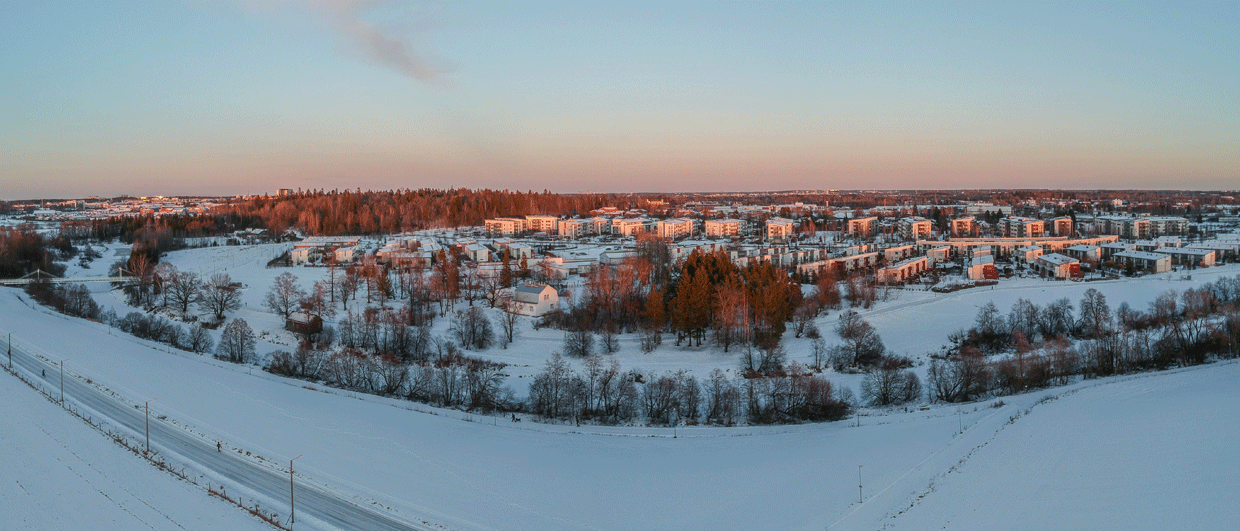
In the Algarve Basin, two late Mi­ocene plays have been identified southeast of the Faro Peninsula using high-quality seismic and bore­hole data (Figure 1). These comprise of high-porosity turbiditic sands…

“In one year, we lost two years”

“Last year was not a very good one,” Habib admits when we meet on Teams. “Everybody expected that 2025 would be a turning point in the market, with many pro­jects…

Silver out, air in

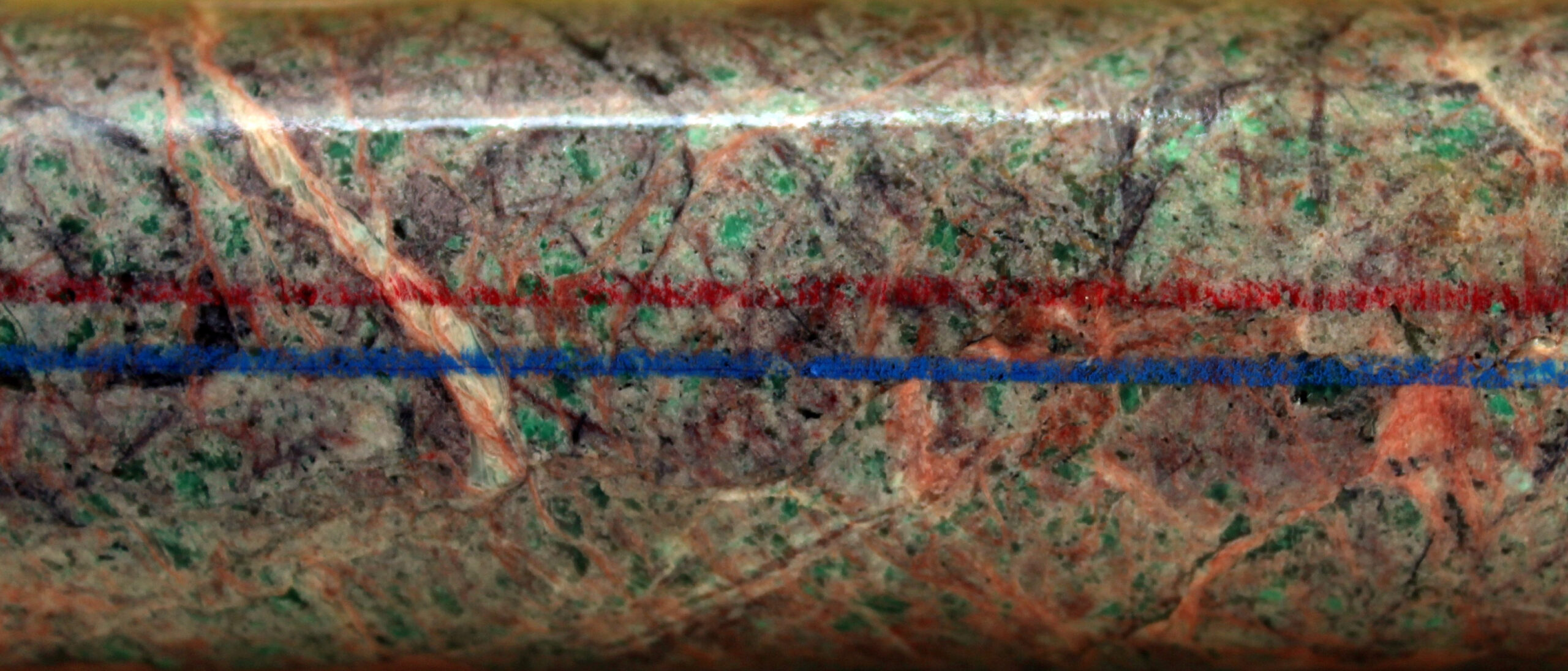
Just as Aberdeen in Scotland – where this article was written – is sometimes referred to as the “Silver City”, the village of Bro­ken Hill in southeastern Australia is described…

Progress over perfection

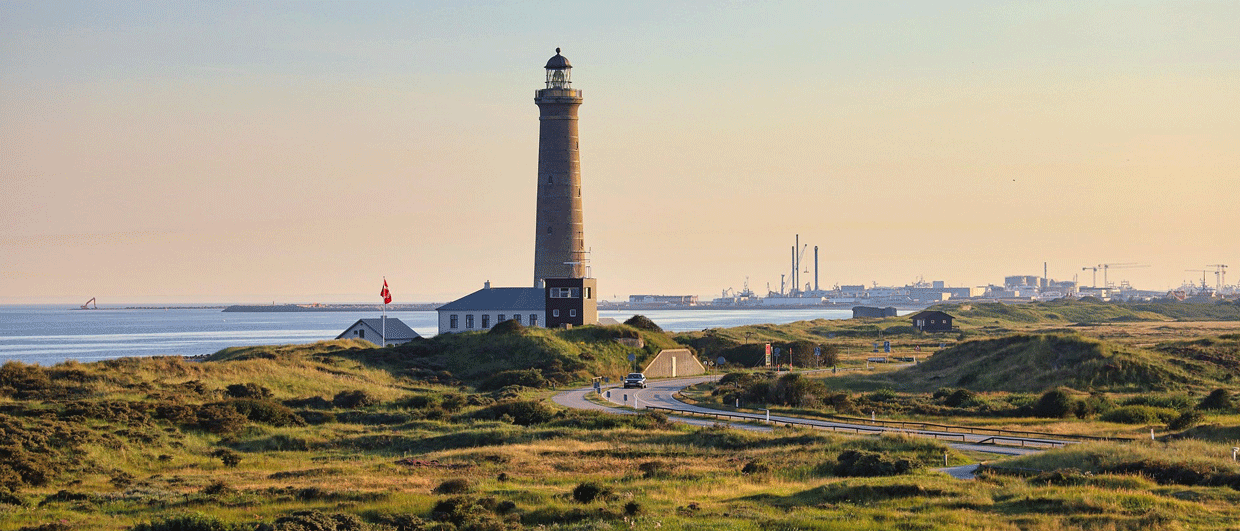
The Norwegian continental shelf offers a wealth of opportunities for new industries alongside and after oil, and car­bon capture and storage (CCS) has gained a solid foothold. Northern Lights has…

Being smart with data

On the fringe of the EAGE GET Confer­ence in Rotterdam, I meet with May Zhang, who is representing Carbon Guardi­an in the start-up zone. We previous­ly met at the Annual…

How a sandbox model caused an epiphany

“I think I watched it about 50 times,” Sean tells me when we meet online on a rainy morning. He refers to a video published by the FluidFlower research team…

An under-communicated factor for CCS

Ola Eiken. Photography: Ola Eiken private archive. “We did not want the same unexpected situation like we had at Ekofisk,” recalls Ola Eiken, CEO of Quad Geometrics. He refers to…

Understanding CO2 flow at Sleipner using stratigraphic continuity

The Sleipner pro­ject, located off­shore Norway, marks one of the first large-scale carbon cap­ture and storage (CCS) in­itiatives. Since 1996, more than 18.5 million tons of CO₂ have been injected…