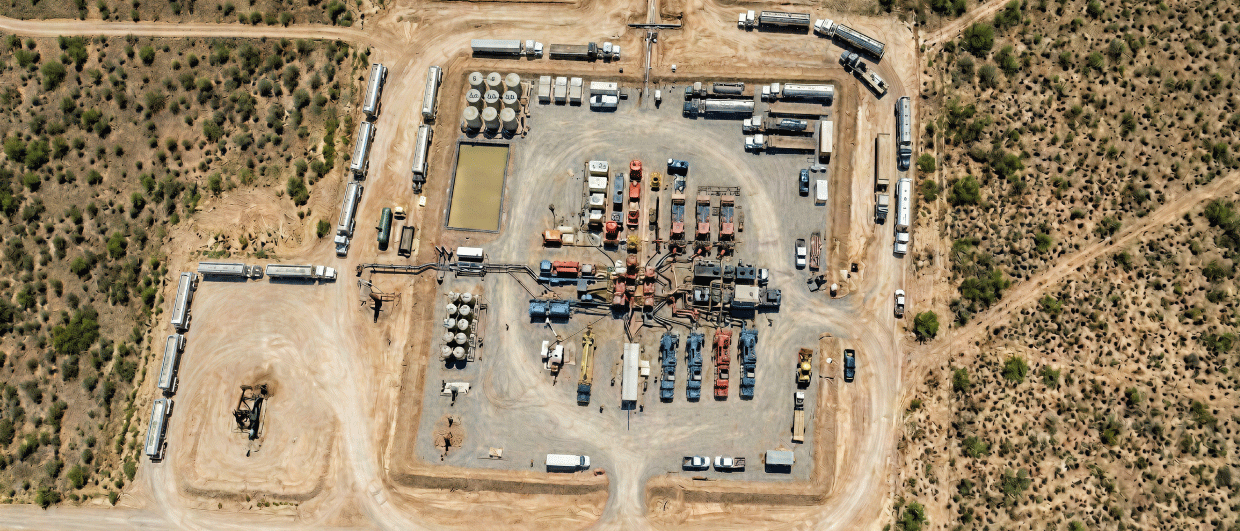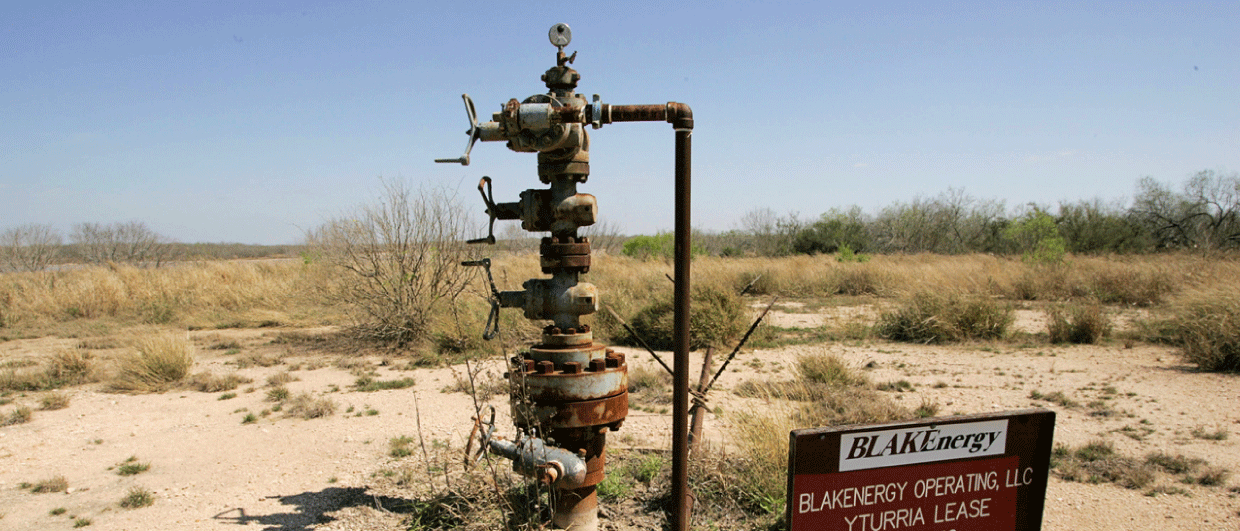
Abandoned gas well. Souce: www.fws.gov.
Beyond the list
Which inactive wells are most at risk?

Texas has seen more than 1.2 M wells drilled throughout its history. The Railroad Commission (RRC), the oil and gas regulator in the Lone Star State, currently lists more than 12,000 wells as legally orphaned, a figure that has grown by more than a third in the past year. But the population of wells showing signs of long-term inactivity is much larger.
An analysis of 1.21 M Texas well records found approximately 183,000 that have gone idle. More than 125,000 have not produced in over a decade. These figures describe different things. Regulatory data identifies wells that have already crossed a defined threshold. The larger question is whether the data can also tell us which inactive wells may be moving toward it.
In Texas, an orphan designation follows a regulatory process. A well must be inactive and non-compliant, and the responsible operator’s organizational filing must have remained delinquent for more than 12 months. Regulatory status can therefore delay changes in the circumstances surrounding a well. In other words, production history can provide an earlier signal, but it is not enough on its own.
Consider two wells that have both been idle for five years. The first is 4,000 ft deep and belongs to an operator active across dozens of leases. The second reaches 8,000 ft and is the sole remaining asset of an operator that has reported no production in three years.
Neither appears on the state’s orphan list. But if the objective is to anticipate future plugging liabilities rather than simply catalog existing ones, the distinction matters. The second well carries warning signs that can be identified years before its regulatory status changes.
Those differences become clearer when production data is linked with well engineering, operator history and location. A company carrying hundreds or thousands of inactive wells has a different liability profile from one with a small number of aging assets. Changes in ownership can also reveal wells that have moved repeatedly between operators as their economic value declined.
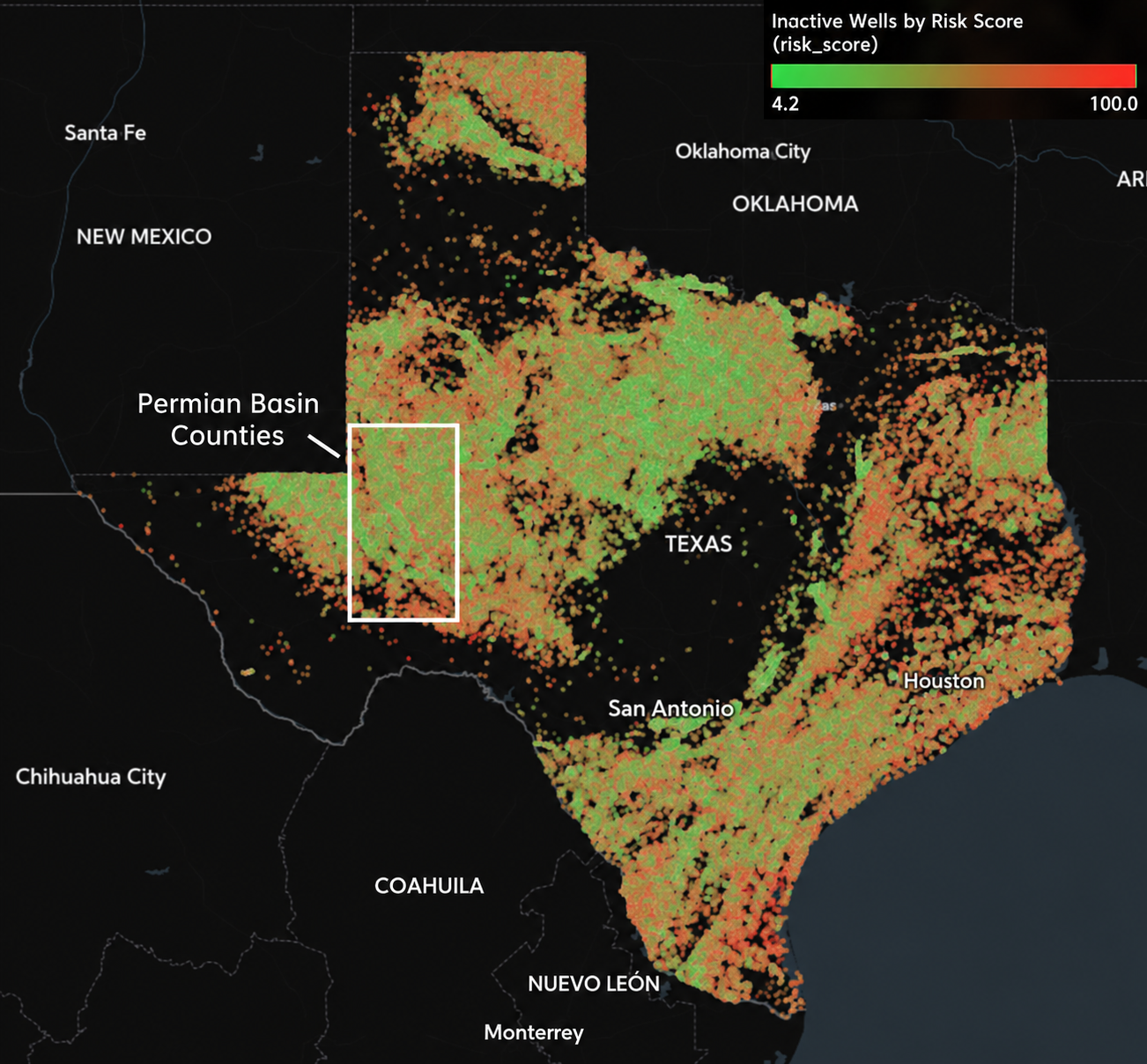
The patterns are visible at a larger scale. In the Permian Basin, the Andrews, Ector, Crane, Ward and Pecos counties contain significant concentrations of long-idle wells from decades of conventional development. Some operators are also responsible for thousands of inactive wells and substantial potential plugging liabilities.
No single variable tells the full story. The value comes from connecting production history, well characteristics, operator exposure and location at the individual-well level. Regulatory data shows which wells have already crossed a defined threshold; integrated data can help identify which ones may be moving toward it.
For an industry managing a large and aging well inventory, that creates a more useful question: not only which wells are liabilities today, but which are most likely to become liabilities next.