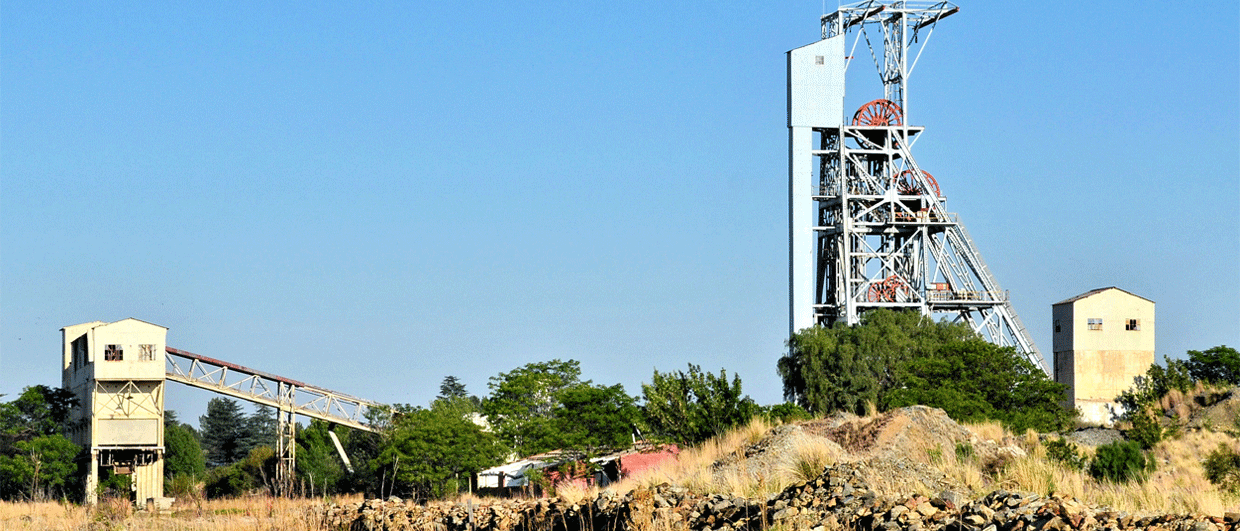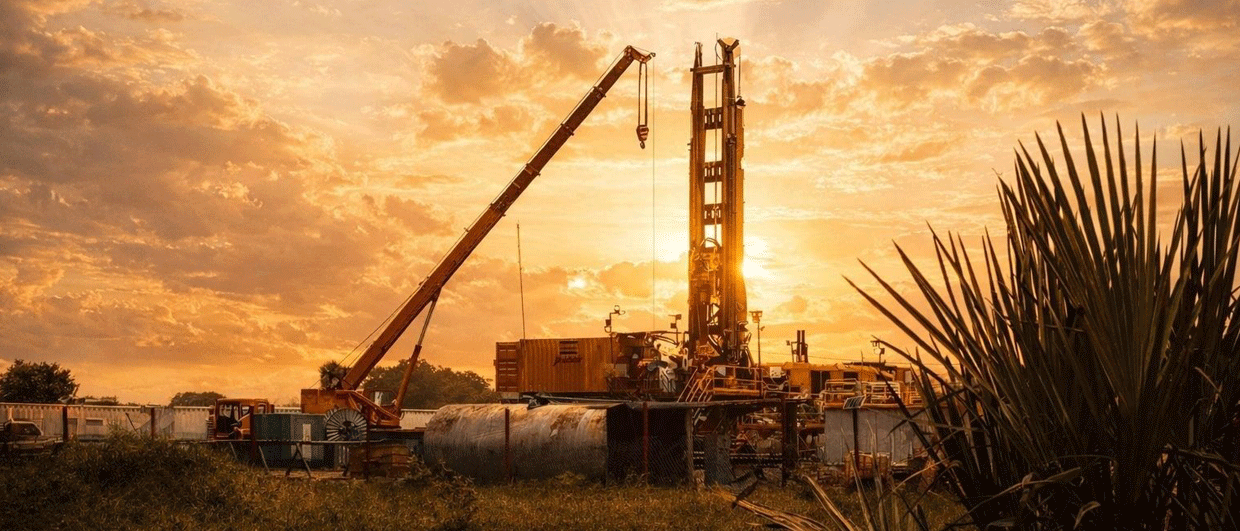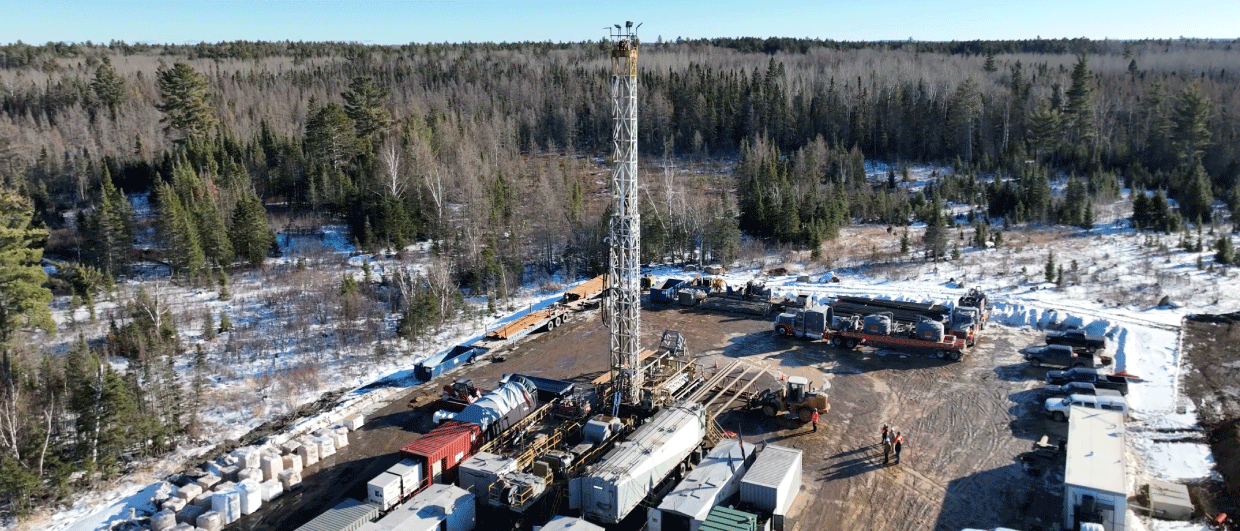
Jetstream wellsite at the Topaz project in Minnesota. Photo: Pulsar Helium.
The Bald Eagle has landed
Pulsar Helium has measured unexpectedly high helium-3 concentrations at its Topaz project in Minnesota, comparable to those found in lunar regolith. A closer look at the region’s magmatic history explains why the elevated helium-3 levels are not that surprising

The north-east corner of Minnesota, sandwiched between Canada and Lake Superior, is covered with dense pine forest; glaciers have smoothed the terrain during the recent ice ages.
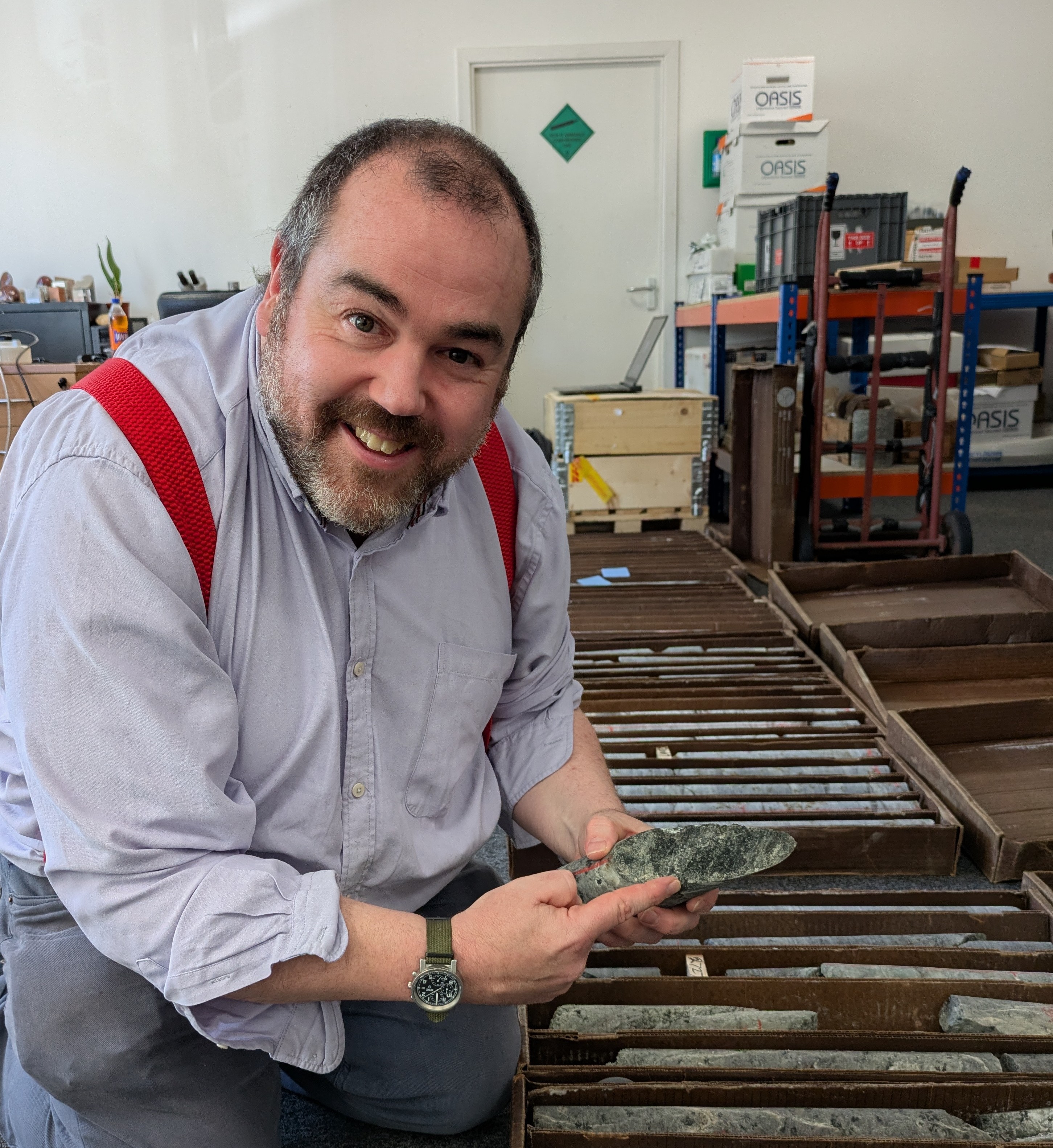
“It’s a spectacular place,” says Nick Schofield, who is both Pulsar Helium’s chief geologist as well as honorary professor at the University of Aberdeen. “It can be challenging to do fieldwork; key outcrops are sparse and often very small.” That is maybe why the Duluth Complex, the second-largest igneous complex in the world, is still poorly understood.
The Duluth Complex is situated towards the northern end of the Midcontinent rift system, which, a billion years ago, tried to pull the American craton apart and failed. Nick explains: “A massive amount of magmatism was associated with the rifting event; there are lavas in the main rift basin and the intrusive complex away from the rift axis.”
Plutonic activity lasted around 25 million years and culminated in the emplacement of the Bald Eagle intrusion. This is the location of Pulsar’s Topaz project. The company has successfully proven the presence of a helium reservoir in the fractured igneous rocks and is now moving towards developing the field. The first step is understanding the geology in detail. To maximise the amount of subsurface data, Pulsar Helium drilled seven appraisal wells, coring five from surface as well as running wireline tools. One of Nick’s tasks is to correlate the wells and build a detailed subsurface framework. He explains that the Bald Eagle intrusion is mainly made up of troctolite, a mafic rock consisting of feldspar and olivine. It was emplaced in multiple pulses, with olivine crystals forming distinct cumulate layers. The cumulates are easily recognisable in the logs as density and resistivity spikes and can also be seen in the core. “The olivine layers correlate from well to well, which means I can make out where we are in the subsurface, and Pulsar Helium can accurately target key gas-rich zones”, says Nick.
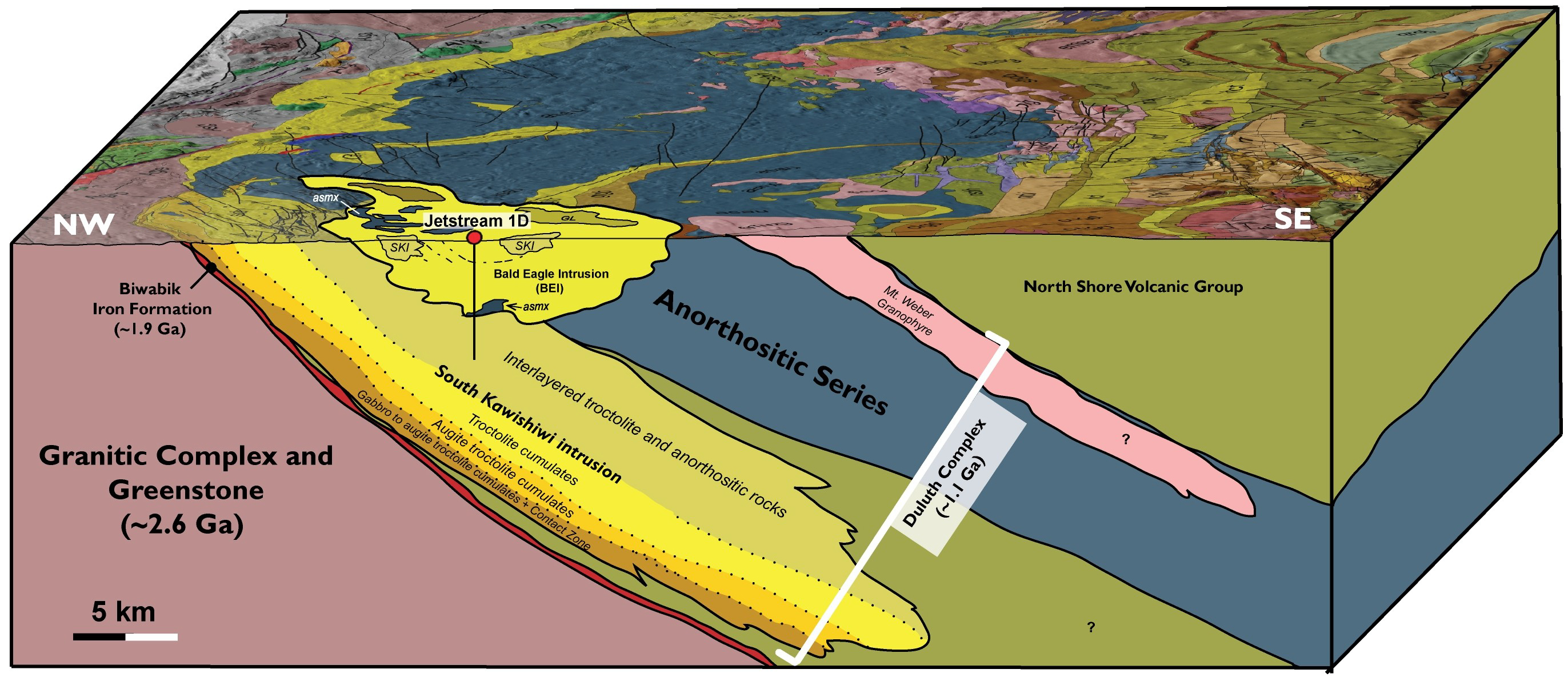
Helium formed during the Big Bang and some of it got trapped in the Earth’s interior. Although helium-4 isotopes are continuously replenished through radioactive decay, helium-3 reserves are exclusively primordial and are dwindling as the gas dissipates to outer space. “The sheer size of the Duluth complex indicates it resulted from significant mantle perturbation and melting,” explains Nick. “That is what brought helium-3 up to crustal levels.”
That doesn’t mean helium-3 concentrations are enormous at Topaz; up to 14.5 parts per billion in the Jetstream 1 well. But compared to 15 ppb in lunar surface rocks, the decision where to obtain the future fuel for nuclear fusion might still be a straightforward one. With now a firm understanding of the geology, Nick and Pulsar Helium’s next task is to pick the locations of the production wells. Drilling will recommence in 2027.