The rise of the onshore
Onshore activity across Sub-Saharan Africa continues to gain momentum, with opportunities ranging from under-development projects to pre-sanction and exploration plays

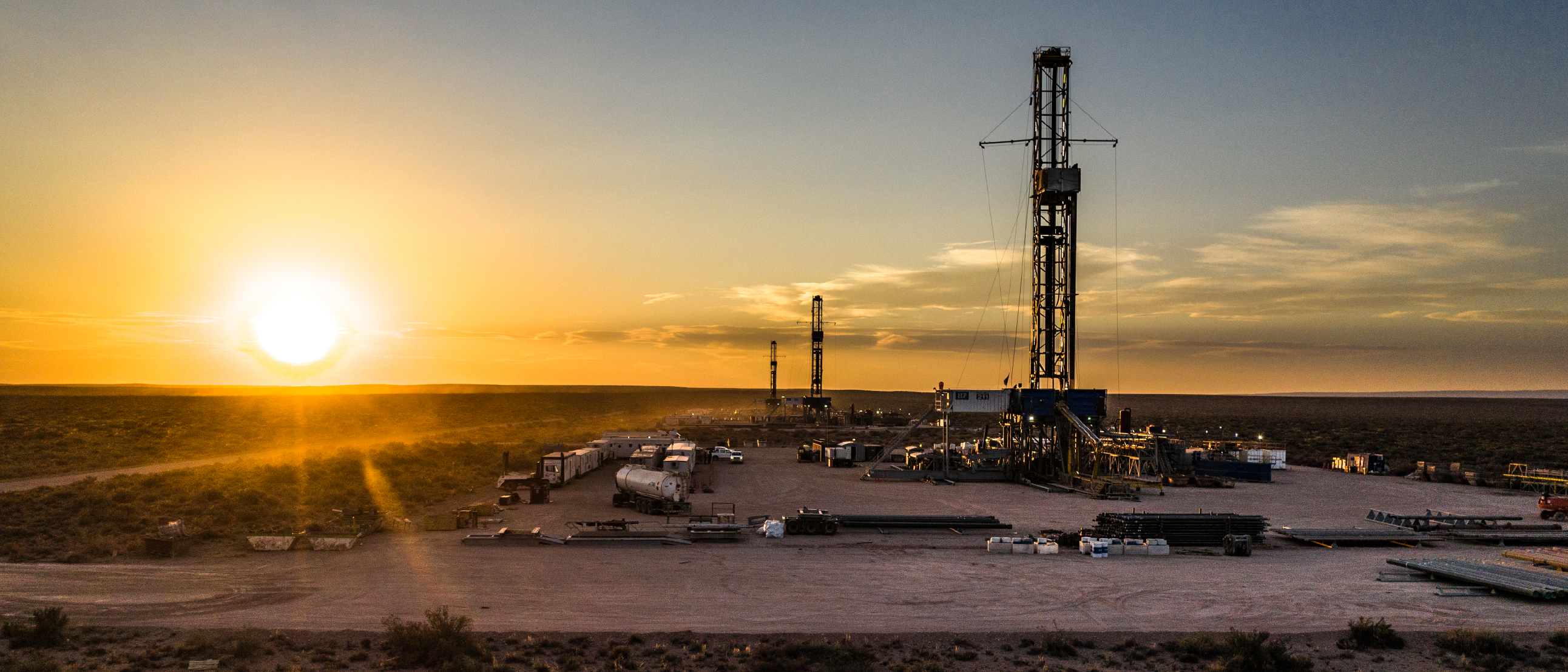
With most attention going to the big discoveries offshore Namibia, or what is shaping up in the Rovuma Basin, it’s easy to miss that onshore activity across Sub-Saharan Africa continues to gain momentum. In Uganda, Tilenga and Kingfisher remain on course to establish the country as a producer before the end of 2026. Combined, the projects hold ~1 Bbbl of reserves. First production is tracking for September 2026. The East African Crude Oil Pipeline is nearing completion, currently at ~90 %. One note of caution is that delays at Tilenga will constrain Kingfisher, given that first oil must be synchronised across both projects to fully support the pipeline.
In Kenya, Gulf Energy, operator of the Lokichar development, is making progress and targeting first oil by the end of 2026. But funding has remained uncertain. While the operator has moved to address this, committing to invest $6 B, in June 2026, the National Treasury removed the $76 M development allocation from the State budget. First oil now depends on Gulf Energy delivering its financing commitments and the Treasury reversing its decision. Until there is clarity on how any funding gap will be bridged, the December 2026 target remains aspirational.
ReconAfrica has been active throughout 2026. The company raised $22.5 M at the start of the year, earmarking the proceeds to advance several projects, including production testing at the Kavango West-1X well onshore Namibia. The first testing phase concluded in August, and while it failed to deliver oil, flowing hydrocarbons to surface marked a first for onshore Namibia. Subsequent testing and the Kavango-2A well will follow and have an important bearing as to whether Namibia’s onshore will produce oil.
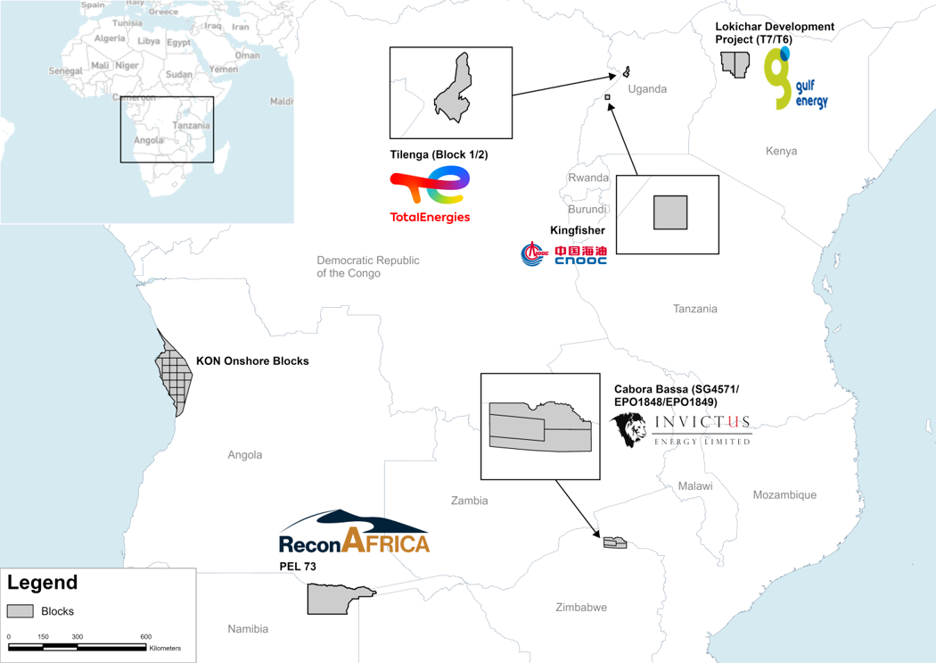
In Zimbabwe, Invictus has advanced towards a commercial development at its Cabora Bassa project. The company signed a Petroleum Production Sharing Agreement (PPSA) on June 1. The Environmental Impact Assessment was also extended, clearing the way for the Musuma-1 campaign, a new-play exploration well in the eastern basin, expected to spud in November 2026. Invictus funds itself largely through the issue of new shares. The signing of the PPSA will have buoyed investor confidence, but a disappointing Musuma-1 result will risk appetite.
Angola’s onshore Kwanza Basin is at a different stage of its hydrocarbon history. It offers exploration, discovered resource and re-development options. At Afentra’s KON4 block, the operator plans to take FID on a redevelopment project focused on the shut-in Quenguela Norte field by late 2026 / early 2027. This is ambitious, as reactivation is never a given. The last reactivation project in the onshore Kwanza had similar plans but stalled as new wells were unsuccessful. However, the geology across the basin differs, and Afentra is confident it can fast-track the project.
In summary, while the onshore continues to garner interest across Sub-Saharan Africa, exploration results, financing constraints, and development complexities can hinder progress and push back first oil dates. Challenges remain as these predominantly frontier countries look to join the league of producing nations.