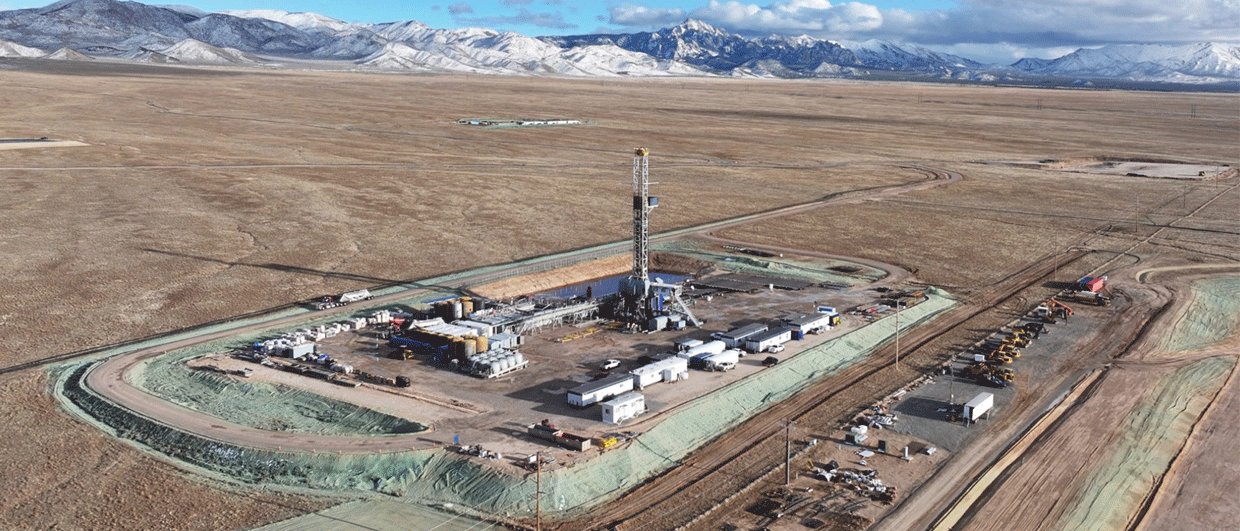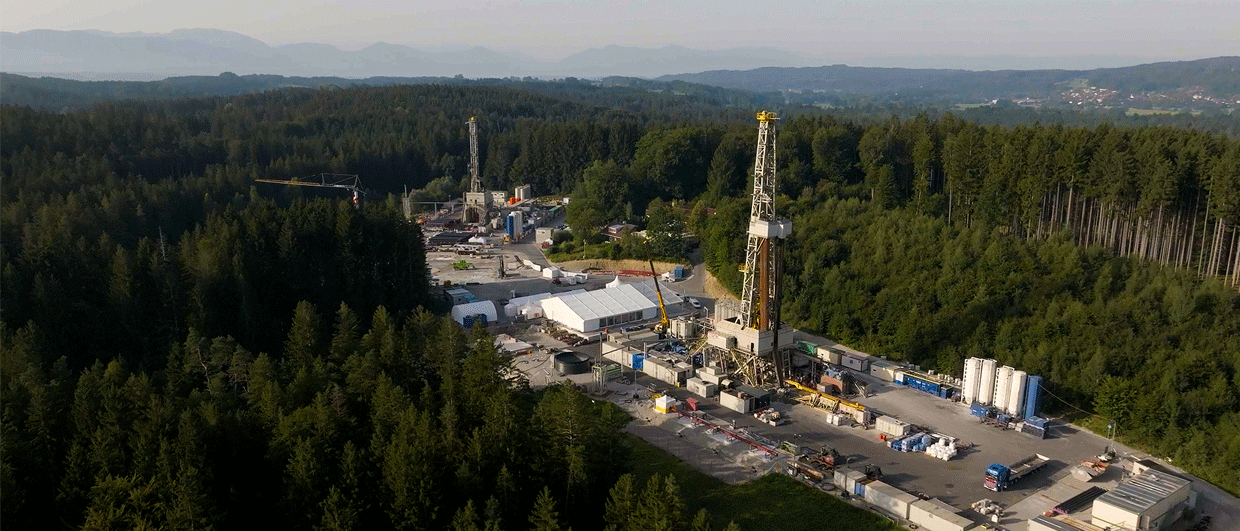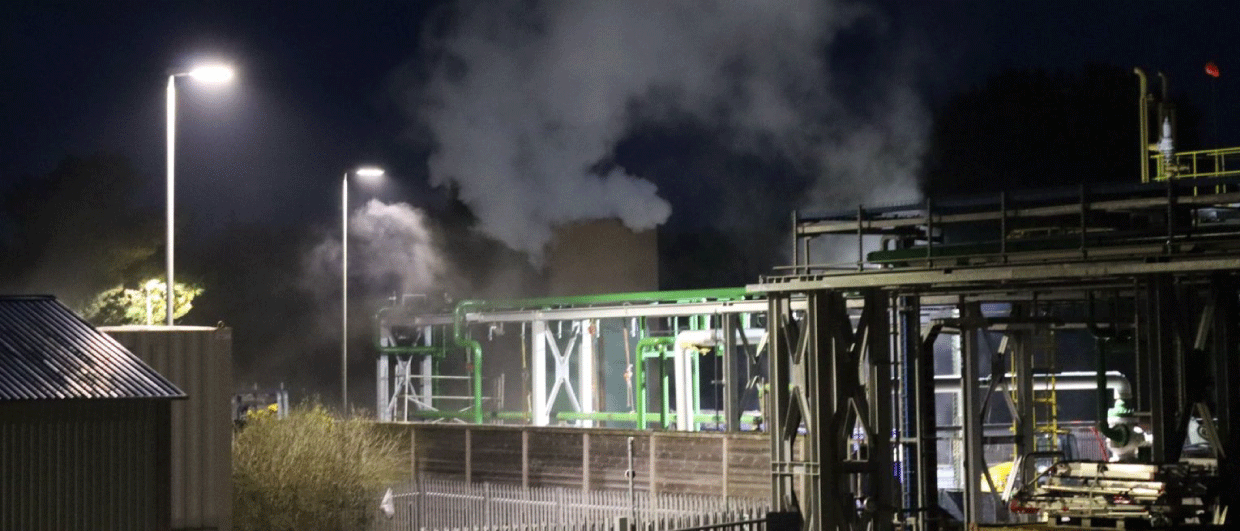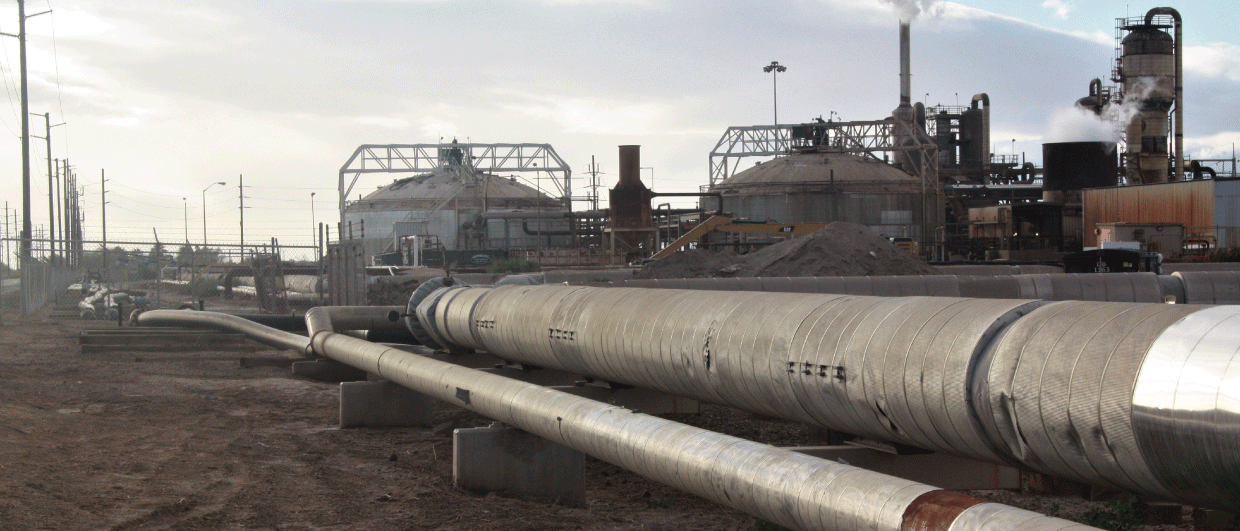
A geothermal energy plant near the Salton Sea, California, USA. Photo: Jack Catalano via Wikimedia Commons,.
Injecting gas in a geothermal well can double its net energy output
That is what a new published modelling study using the parameters of a Californian geothermal project suggests

Increasing production from geothermal reservoirs is often done through the use of an electric submersible pump (ESP). Especially in regions where no significant overpressure exists, such as the German Molasse Basin, the use of an ESP is routine from day one. But as we have reported on before, ESPs are prone to scaling. High fluid flow, which is characteristic of geothermal projects, is not particularly good for these systems either, which causes ESPs to fail at unexpected moments. This requires costly workovers, with associated lost production time.
A new publication in the journal Geothermal Energy discusses a modelling study that addresses production enhancement from geothermal reservoirs in another way; namely, through gas injection. Personally, I was not aware that geothermal projects can also use gas injection as a means to lift production. However, the authors – Orkhan Khankishiyev and Hamid Karami – describe several projects in the introduction of their paper. For instance, compressed air was used to initiate production from geothermal wells in the Philippines in 1998, whereas nitrogen was injected in five geothermal wells in the Sibayak field in Indonesia from 1993 to 1995. However, the cost of the operation in Indonesia proved uncompetitive; the coiled tubing service as well as the gas were too expensive. It is interesting that the authors, a few paragraphs later, argue that gas lift in geothermal wells offers significant advantages because of its cost competitiveness.
How gas lift works
Gas injected in a well at reservoir depth mixes with the brine, which reduces the overall density of a fluid. In turn, this results in a reduction in hydrostatic pressure in the borehole, which means that the reservoir fluids will flow to the well more easily.
The study reported on in this case looks at the effect of gas lift applied to the Brawley geothermal field in California, USA. After reproducing the well design and the reservoir and produced fluid parameters, the study simulates the change in production using different gas types – compressed air, methane, nitrogen and CO₂. The results show that an 80 % increase in fluid production can potentially be achieved, from 110 lbm/s to around 200 lbm/s at a gas injection rate of 1 MMSCFD. Taking into account the power demand required for the gas injection operation, this still means that net power output increases by 3.37 MWe, or 118 % of the initial power output.
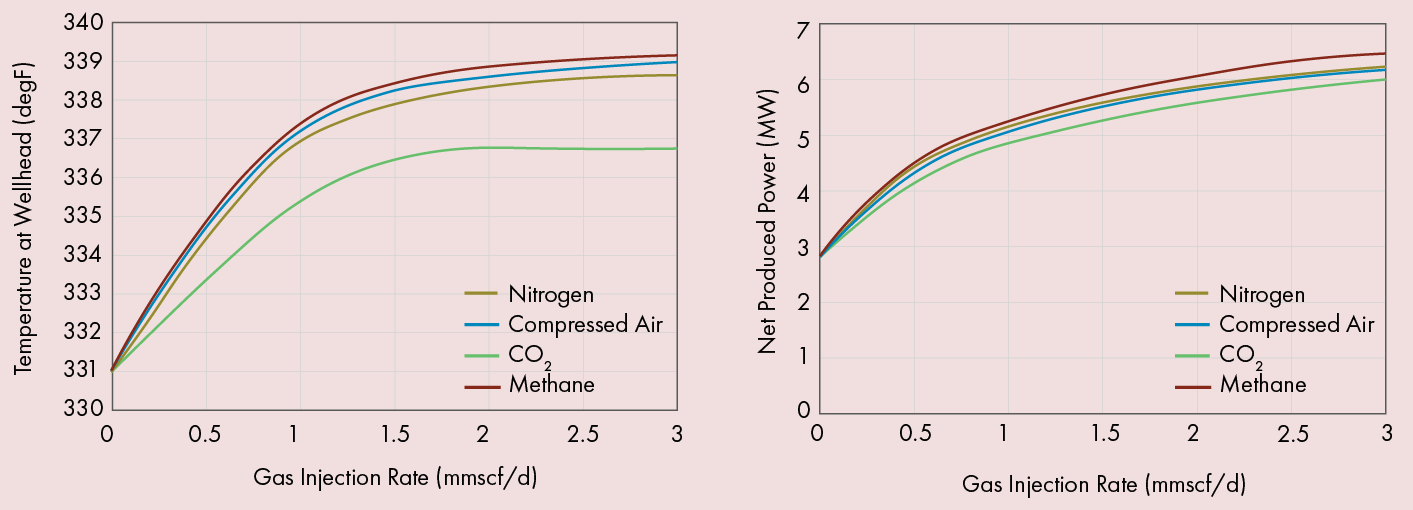
It is also interesting to note that methane turns out to be the most effective in raising the output (128 %), where CO₂ is the least efficient (112 %). Yet, the authors note that there is no reported case of methane being used in a geothermal project to enhance production. Maybe it is about time for some associated gas from Californian production to be used in a geothermal project? Or is it still regarded as being too expensive after all, given the short-lived nature of the gas injection projects quoted in the introduction?