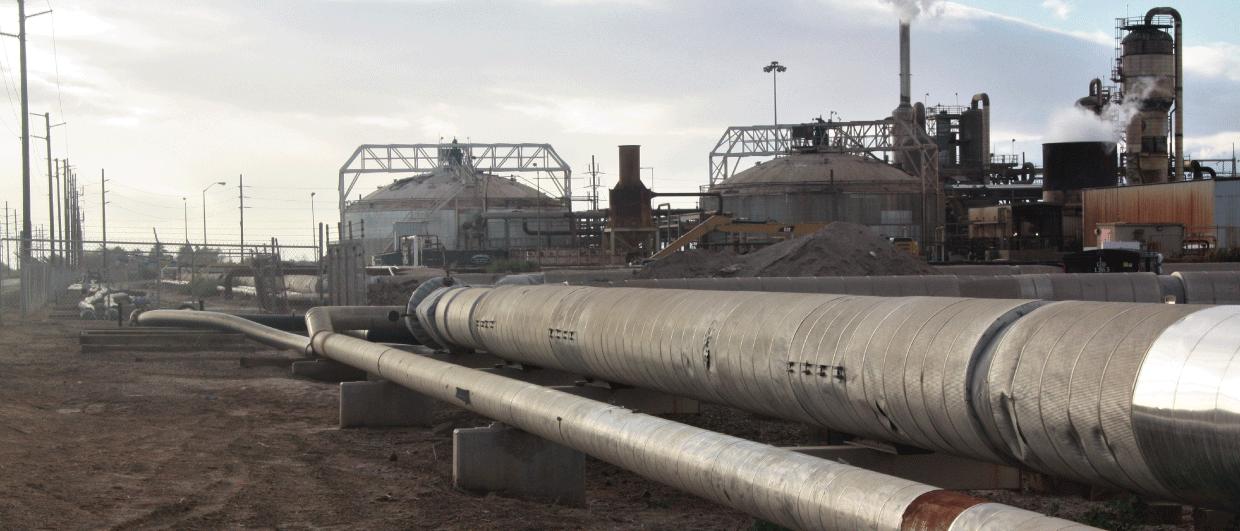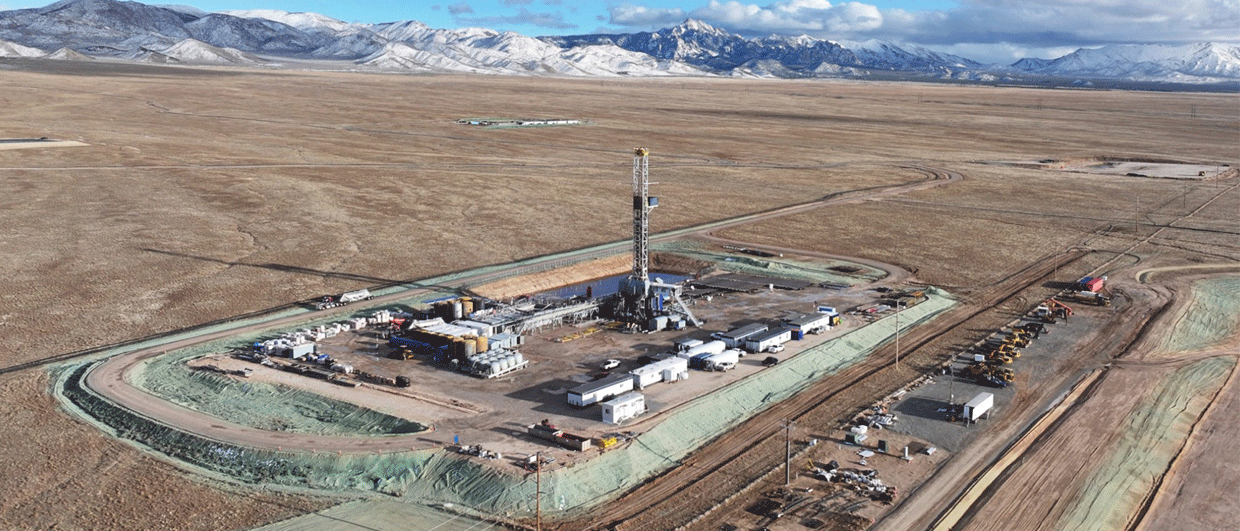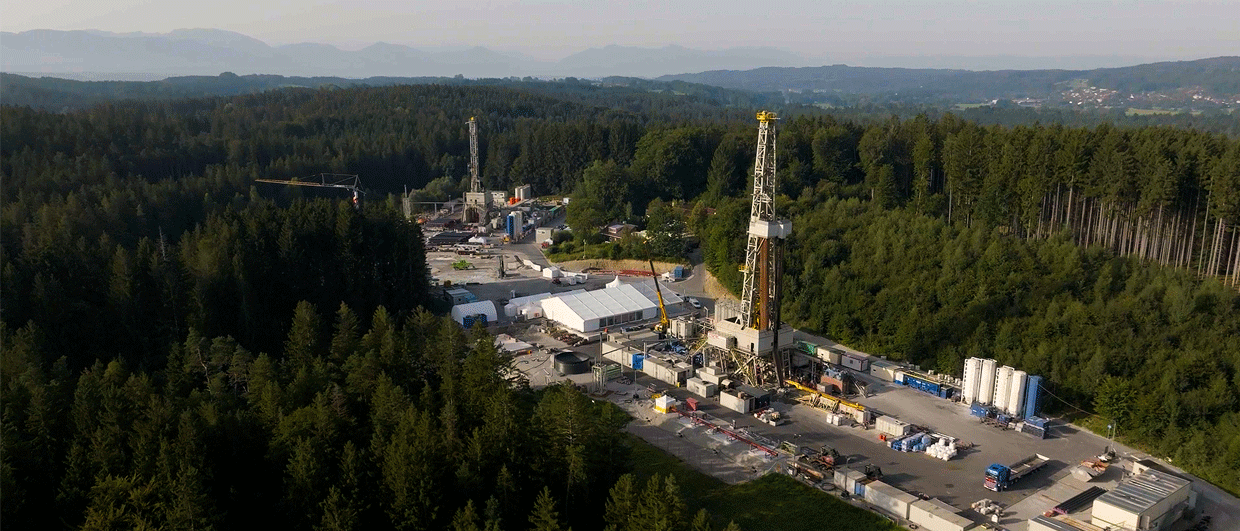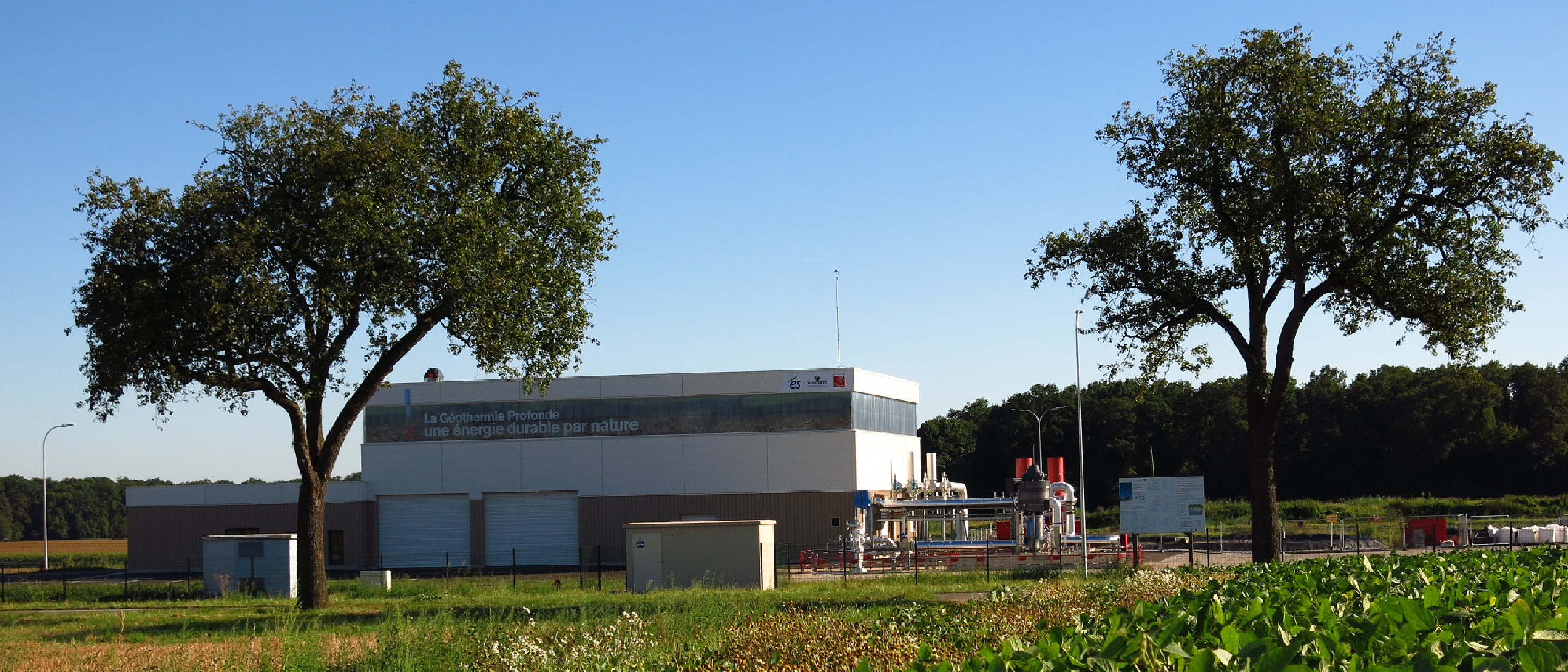
Rittershoffen geothermal heat plant. Photo: Electricité de Strasbourg.
Why the Rittershoffen geothermal plant came to a halt
Understanding induced seismicity after 10 years of geothermal reservoir operation: The Rittershoffen case

The ECOGI geothermal heat plant, located in Rittershoffen (France), has been exploiting geothermal energy from the naturally fractured reservoir of the Rhine Graben for 10 years, with an injection well (GRT-1) and a production well (GRT-2) both reaching the same regional structure, known as the Rittershoffen fault zone, in the granite basement at a depth of 2.3 km. The operation of the Rittershoffen power plant has generated induced seismicity since it was commissioned in 2016, with an average of around a hundred induced events per month, occurring in temporal clusters. The magnitudes are generally low, since only 2 events exceeded magnitude 2 between the start of production and December 2025. However, a sequence of significant induced events was observed near the wells of the ECOGI geothermal plant in December 2025, with magnitudes up to 2.6 (PGV 14.6 mm/s) and several events felt by the local population. In accordance with local regulations, these events, induced by the operation of the plant, led to its immediate shutdown.
Detailed investigations have been carried out to characterise these events, understand their origin, and determine the necessary modifications to allow safe operation of the installation in the future.
Observations
More than 400 seismic events were detected between December 4 and December 17 2025 around the ECOGI geothermal wells. The first event, detected on December 4 at 1:45 a.m. of Ml 2.5 led to the shutdown of the plant, as specified in the operation authorisation. This event occurred at the beginning of the sequence without any precursor event being detected, making it impossible to apply preventive measures of the Traffic Light System in place. The seismic sequence of December 2025 induced the largest induced earthquake recorded since the start of first drilling operations in December 2012 (Ml 2.6; max PGV 14.6 mm/s). Low residual seismicity has been observed since December 17, 2025.
These events are all considered induced by the activity of the plant due to the proximity of their locations to the injection well, their depths and the temporal correlation with the operation, despite the plant shutdown.
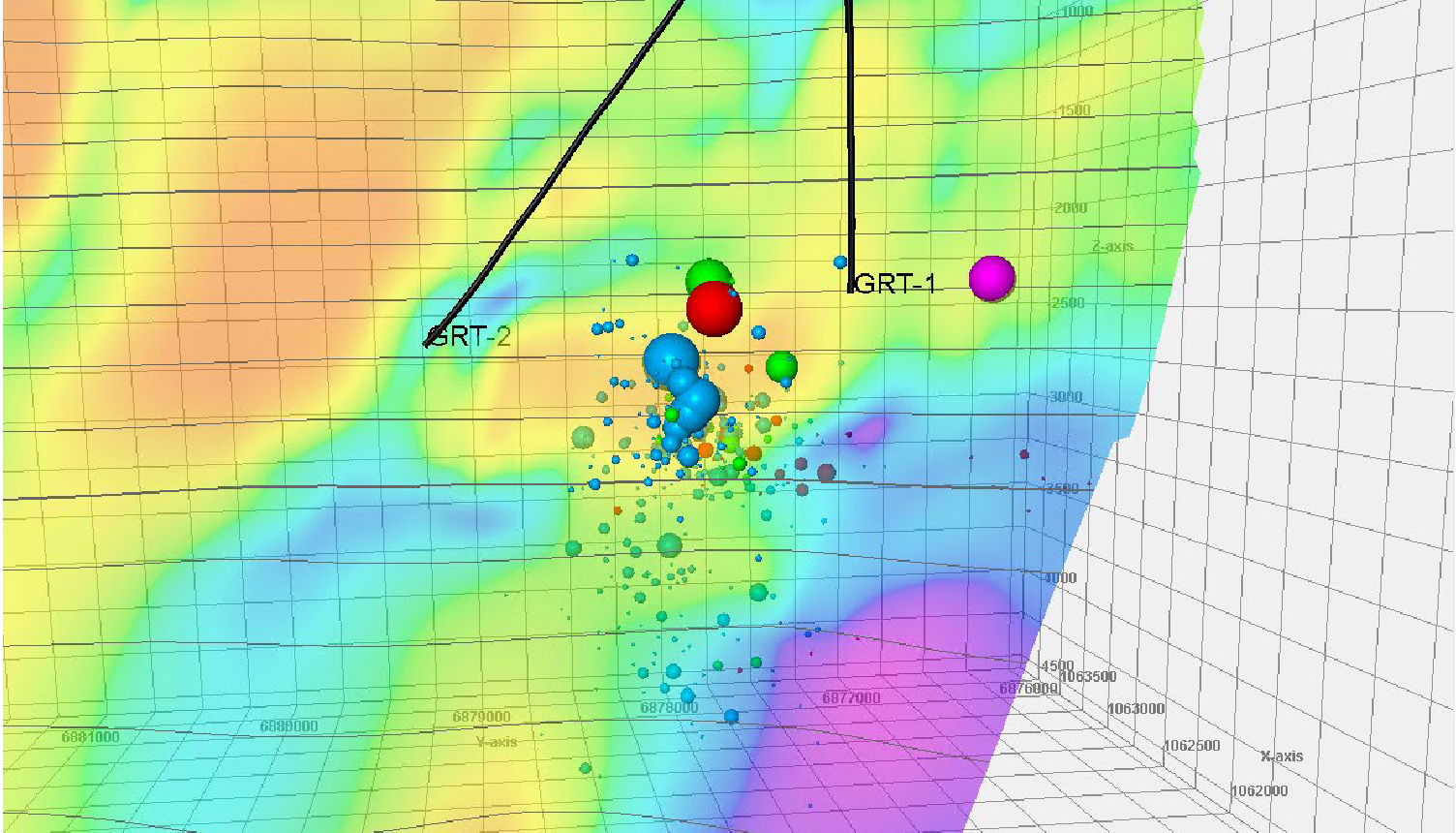
The highest magnitude events are located about 500 m north of the GRT-1 well, at a depth corresponding to the reservoir and are close to the Rittershoffen structure in the granite. The compatibility of their focal mechanisms, both in terms of azimuth, dip and mechanism (normal fault) shows that these events are most likely linked to a reactivation of a portion of the Rittershoffen structure, over a length of about 300 to 400 m. The events of December 13, although showing rather strike-slip mechanisms, are also close to this structure. The slip tendency calculated on the fault plane shows that the events of December 2025 are located in a slip-prone section of the fault, showing slip tendency values around 0.8 (Figure 1).
Understanding the triggering mechanism
The injection pressure at well GRT-1 during operational conditions was rather low, and no significant change in the operating conditions (flow, pressure, temperature) was reported prior to the seismological events, meaning steady-state pressure conditions. Moreover, the events are located between the production and injection wells, i.e. in a region where an even lower pressure is expected. Therefore, a purely hydraulic mechanism cannot directly explain this sequence.
The evolution of the cooling profile around the injection well was calculated using a 3D hydro-thermal model. The model incorporates a simplified but structurally realistic representation of the reservoir, including the main geological units and major faults identified on 3D seismic data. It is calibrated against operational data and a tracer test carried out in 2021-2022. The distribution of induced events suggests a direct relation between the evolution of the temperature profile and the reactivation of pre-existing structures, with a correspondence of the location of the events with the cooled zone (Figure 2).
Numerical simulations were then carried out to calculate the impact of the temperature change on the stress field and the consequence of this change on fault stability, considering different fault geometries and stress fields. It appears that the cooling induced by cold fluid reinjection explains the mechanical destabilisation of a section of the fault of a size likely to generate the seismicity observed in December 2025. Indeed, the thermal contraction of the rock due to cooling induces a reduction in stresses that affects large portions of nearly critically stressed segments of this structure, also beyond the cooled volume, the intensity of which is locally much higher than the reinjection pressure. However, it should be pointed that other mechanisms cannot be completely ruled out, such as mineral chemical dissolution, decrease in fault friction, or a progressive evolution of the stress field due to past seismicity or aseismic movements.
Consequences
The modification of stress conditions due to cooling explains the seismicity observed in December 2025 at Rittershoffen. Thus, this mechanism appears to play an important role during the operation phase. This result is a new parameter to be taken into account in seismologic risk management during geothermal projects design and operation. This process appears to be essential as geothermal exploitation involves the reinjection of cooled brine and therefore the cooling of reservoir rocks.
The models used to identify the trigger mechanism were also used for predictive purposes, by simulating the evolution of the cooling profile after 20 additional years of operation, and by calculating its thermomechanical impact on the Rittershoffen fault. The results obtained for all models show that this process can induce the release of 10 times more seismic energy after another 20 years of operation, which could correspond to magnitudes of the order of 3.1.
In order to reduce this risk and to resume operation at the Rittershoffen site, different solutions are currently under review with the local authorities, with the aim of minimising the extension of the cooling profile along the fault currently exploited by reinjecting at a greater distance.