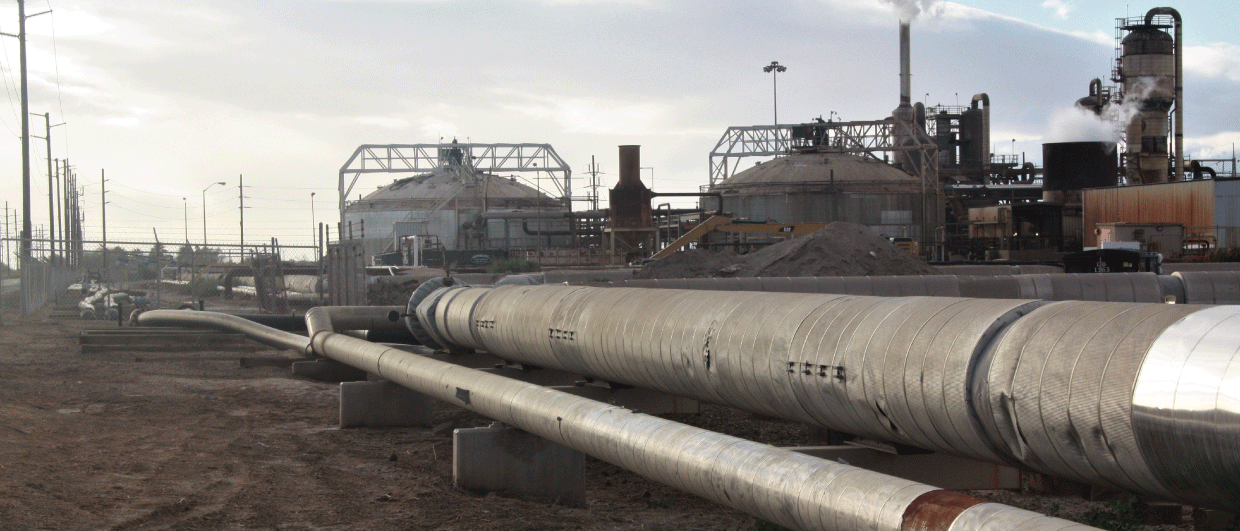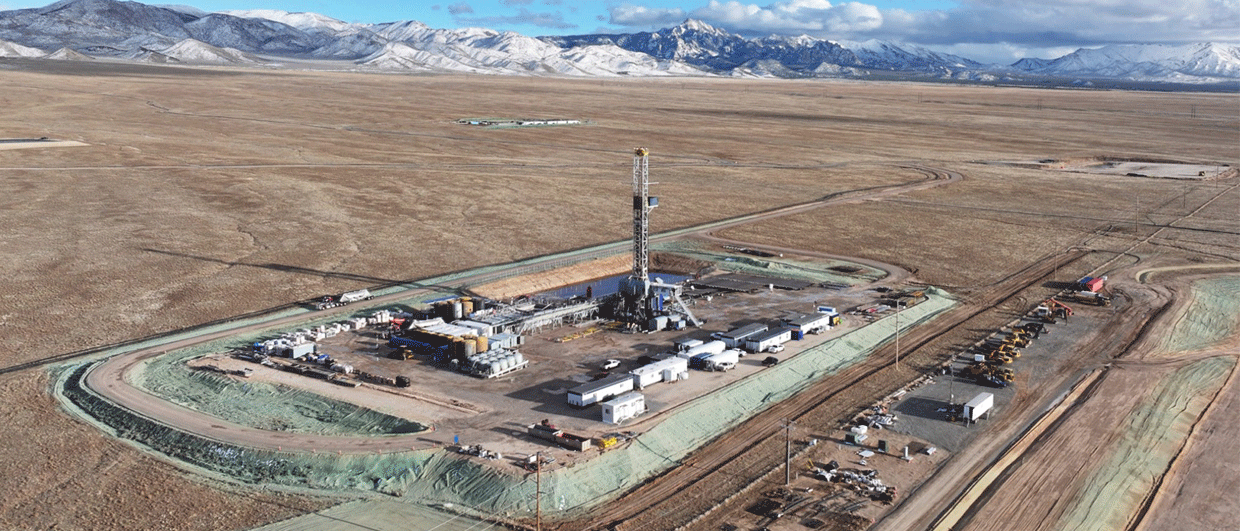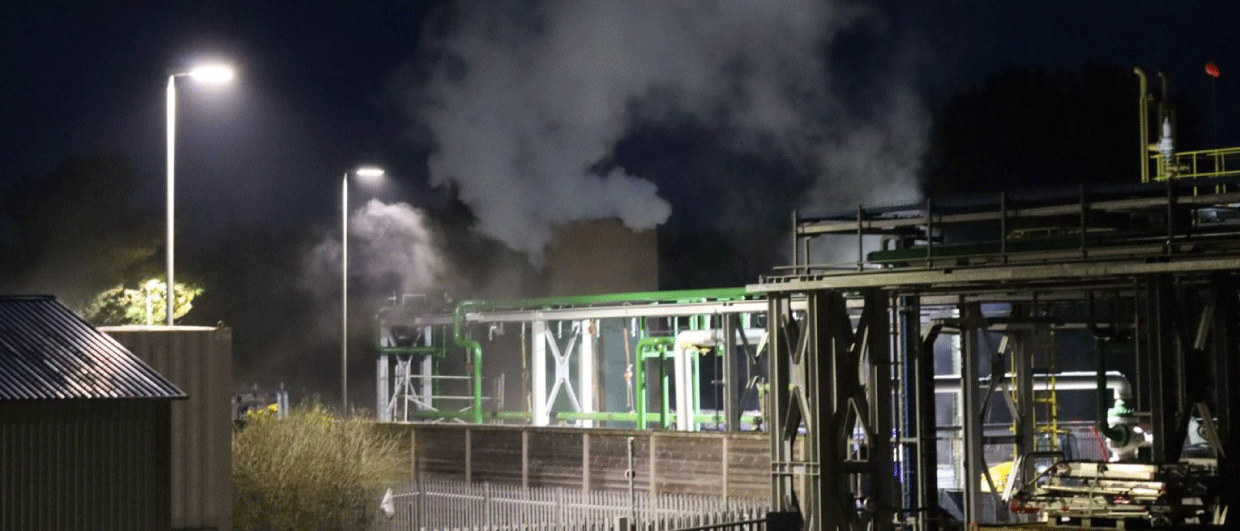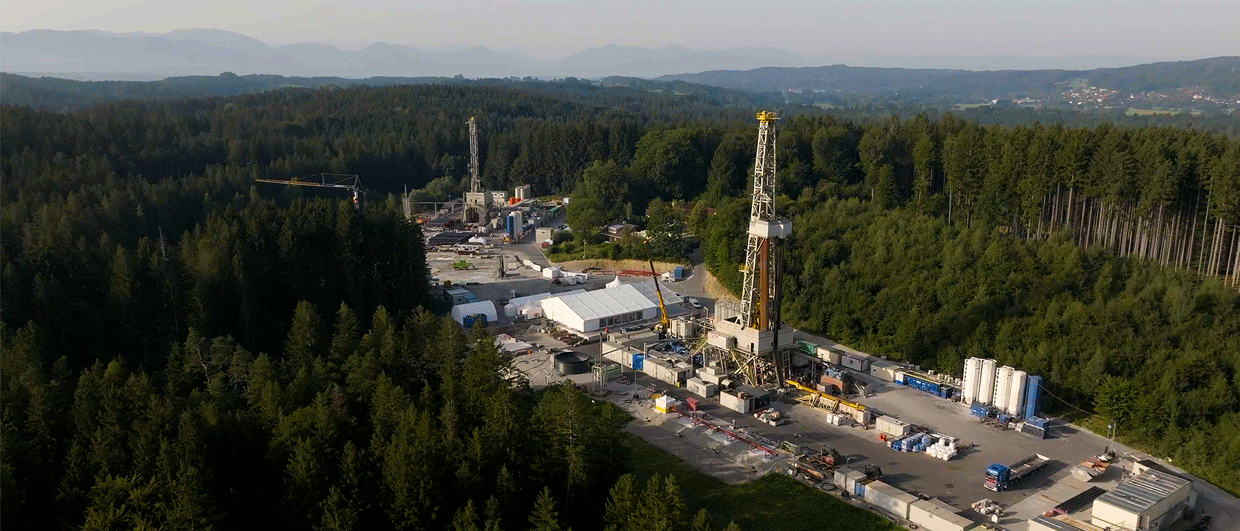
The Geretsried geothermal drilling site. Photo: Eavor.
The critical role of cement
And other learnings from the Geretsried deep closed-loop geothermal system in Germany

In January this year, during a presentation at the Canadian Energy Geoscience Association (CEGA), Eavor’s VP Drilling Performance, Mark Hodder, shared some insights on the drilling aspects of the Geretsried deep geothermal project in southern Germany. For me, this was the first opportunity to hear from Eavor about this project directly.
The most important learning, at least that’s what I took home from attending the talk, was about the quality of the cement used to fill the annulus between the liner and the formation at the point in the well where the twelve loops – which later became six – were to be drilled.
This aspect of the project turned out to be critical when it came to the time it took to drill the laterals. The cement had to prevent drilling fluids from flowing through the already completed loop once drilling of the next one had started.
The Geretsried deep geothermal project originally entailed the drilling of four sets of twelve closed loops, thereby forming a giant radiator in the subsurface. The first set of closed loops has now been completed, but with only six loops instead of twelve. The energy produced from this first system amounts to 0.5 MWe. We published an account of that in GEO EXPRO, concluding that this level of energy production seriously questions the validity of the investment.
A whipstock and a packer were used to enable kicking off the sidetrack for each loop and hydraulically seal off the liner itself, respectively. The cement was supposed to form the outer barrier between the formation and the liner. As it turned out, the quality of the cement was not sufficient, as Hodder explained. This resulted in fluid communication between the two boreholes once the milling of the liners had been completed for the second loop.
Shutting down operations
As a result of this, Eavor was forced to shut down operations on one rig whilst drilling with the other, and vice versa. Therefore, drilling times per lateral almost doubled. “Next time we will need better cement,” concluded Hodder.
During the Q&A, someone in the audience asked why Eavor decided to use a liner and not place a packer in the open hole to seal off the first loop. According to Hodder, there was not enough confidence in the integrity of the formation – an Upper Jurassic tight carbonate succession – to be able to do this properly. Borehole instability issues experienced in the first loop may have been the rationale behind that line of thinking.
Namely, in contrast to what previous wells drilled in the area suggested, the Geretsried wells suffered from borehole stability issues. It led to stuck pipe on multiple occasions, with the associated delays and re-drilling of one of the lateral sections.
Based on these observations, it is now increasingly clear why it has taken Eavor so long to complete the six loops that are now in production. The average number of days for each of the first four laterals was 108 days, whilst the last two laterals could be drilled in 54 days each, thanks to optimising bits and other parameters. Hodder expects that once the cement is of better quality and simultaneous drilling is allowed again, around three weeks should be possible per lateral, meaning a reduction of 80 % compared to the first four laterals.