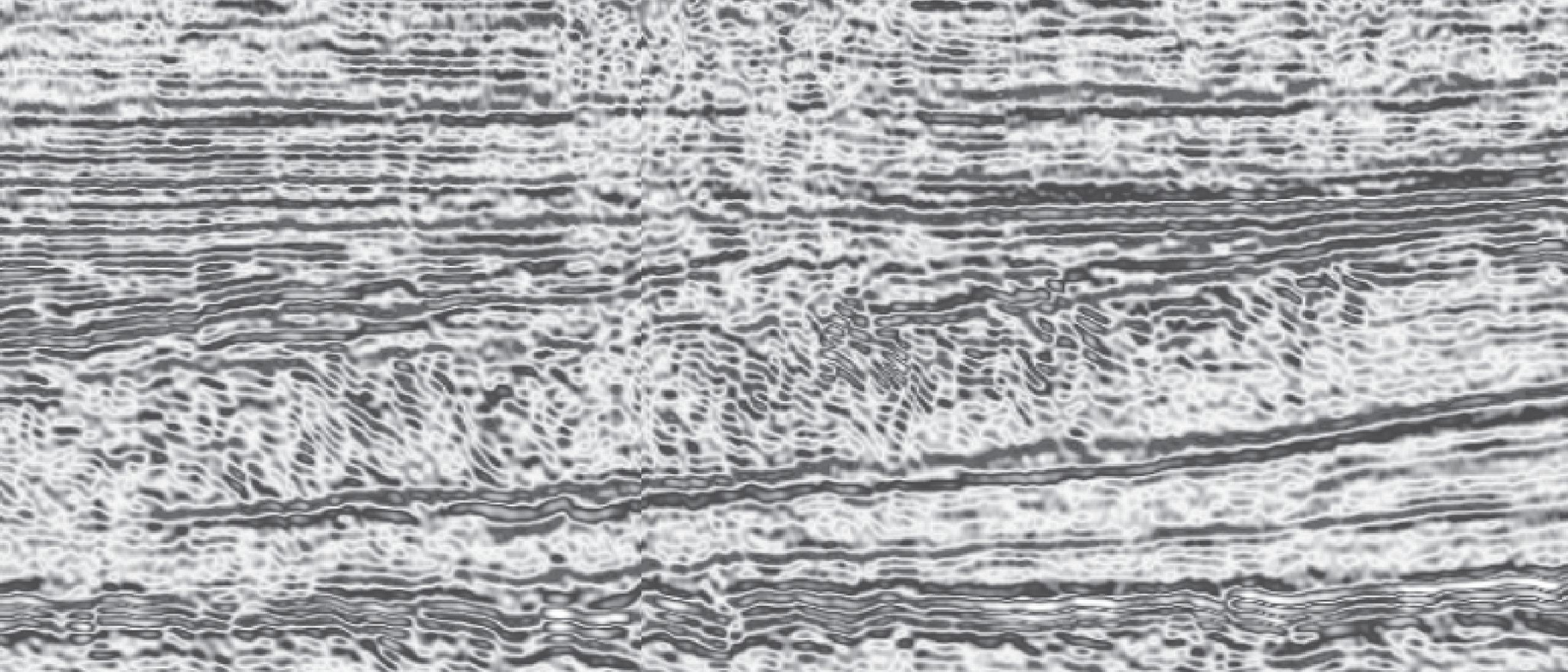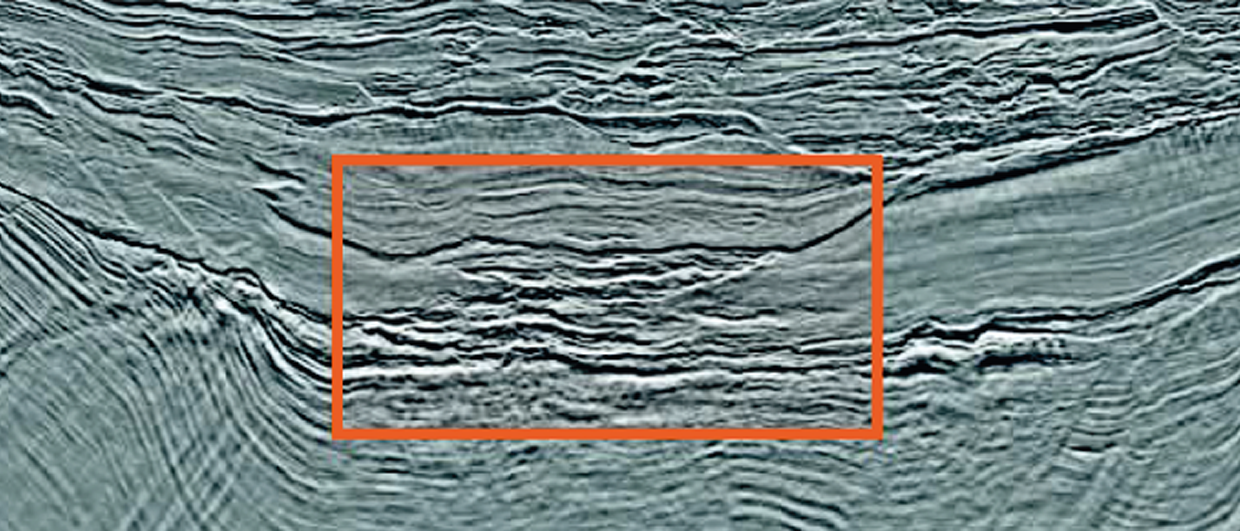
Stacked turbidite channel systems along the Ivory Coast Transform Margin. Source: PGS.
Why there may be more non-reservoir in your slope channel complex than you think
And why that is good news, because it may be a seal for your prospect

“Every time I found a very obvious sandy deepwater channel base in outcrop,” says Professor Bryan Cronin from Deep Marine during his Deepwater Reservoirs in E&P course delivered through the SAGA Wisdom online platform, “it was always preceded by mud slumps. Sometimes they are gravelly or pebbly mudstones or just slumped facies, sometimes with shallow marine bioclastic debris. A poor reservoir for sure, but it was always underneath the base of the main channel complex.”
So the question is, where do these fine-grained deposits come from? Are they coming down the slope channel complex? Are they part of the excavation? Or does their origin lie in slumps from the sides of the channel? “Whatever the origins, or maybe a mixture of origins, these mud slumps are certainly the first calling cards,” adds Bryan.
Seismically, the deposits tend to be very chaotic or transparent. They often have very hard tops, which indicates that they’re very indurated. “I was on a cruise back in 1997,” says Bryan, “off Western Corsica, where we cored into one of these mud slumps on the base of a modern active canyon. It took us a day and a half to get the gravity core back out because the mud slump was so indurated and dewatered.”
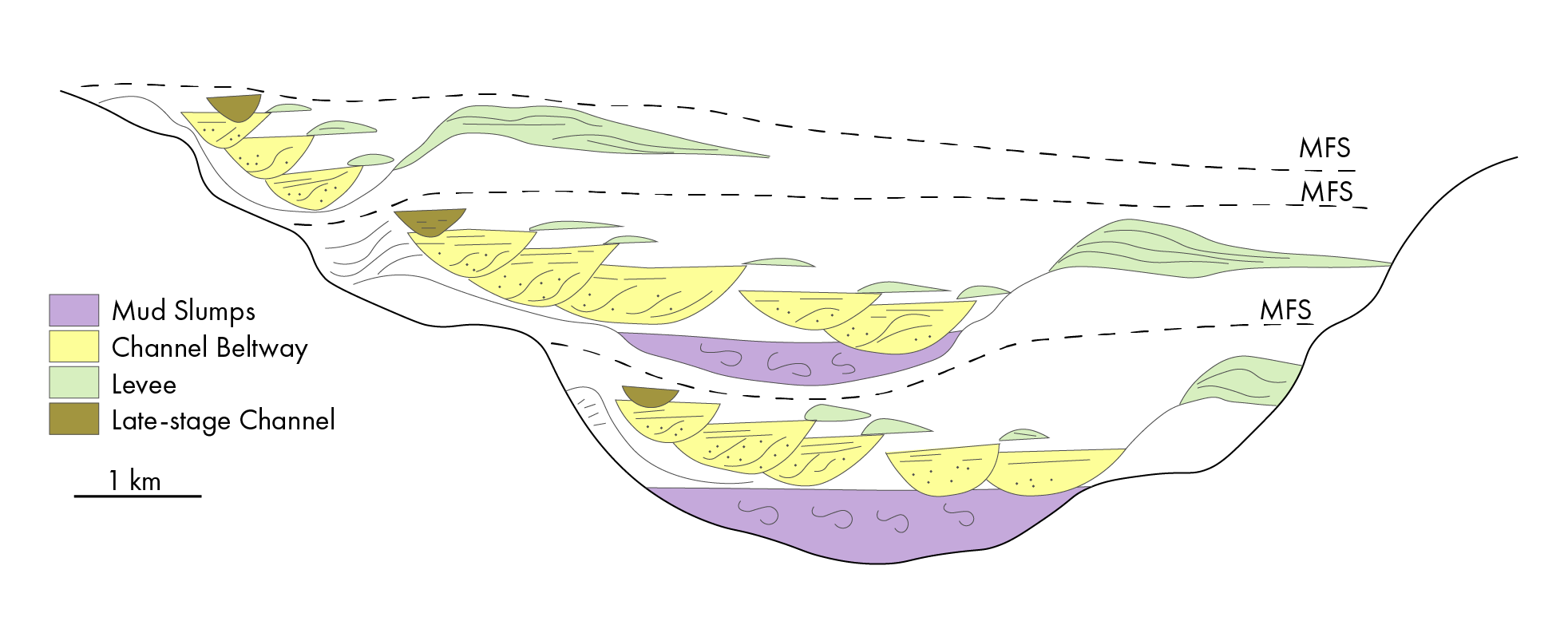
In a gamma-ray log, you may be tempted to put the base of the deepwater channel system at the base of the sand. But the high gamma section below the coarser-grained reservoir section may in fact be part of the overall system too, as being the precursive mud slump. “So, the base is actually underneath the base as many people may instinctively draw it,” explains Bryan.
He also shows how other authors have recently published about mud slumps at the base of deepwater channel complexes. “But as is often the case,” he adds, “you only need to go back to the early 80s and you find that Professor Emiliano Mutti from Parma University has probably thought about it already. Some of his models from canyon complexes in the Eocene of the South Central Pyrenean Foreland Basin nicely describe these mud slumps at the base of the slope channels.”
“In other words,” concludes Bryan, “these mud slumps seem to be very common, and are a key part of almost every slope channel complex I’ve ever worked on.”
And what are the implications? “As these features are quite extensive, they normally form a top seal to anything that’s underneath it, forming a critical aspect of the risking process. If you have a canyon or a slope channel complex touching down onto a prospect, it doesn’t necessarily need to be risked as being a position for leakage or a compromised top seal, given the lithologies often found. In fact, it may form a good seal.”
This is the second in a series of articles dedicated to course content available on the SAGA Wisdom Platform
Find the previous articles here:
Seismic reflections – lithological boundaries or timelines?