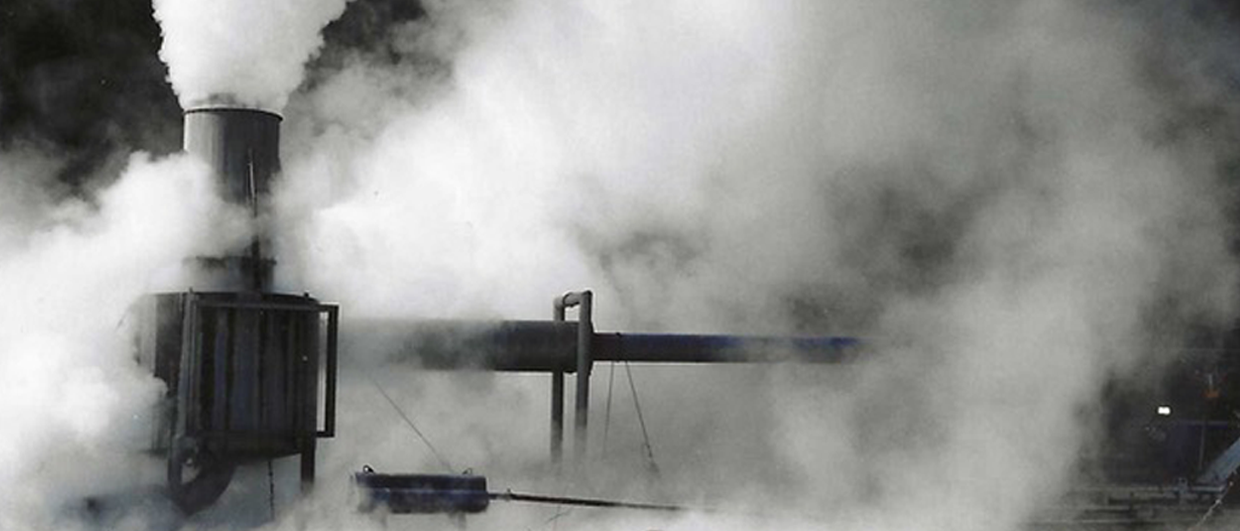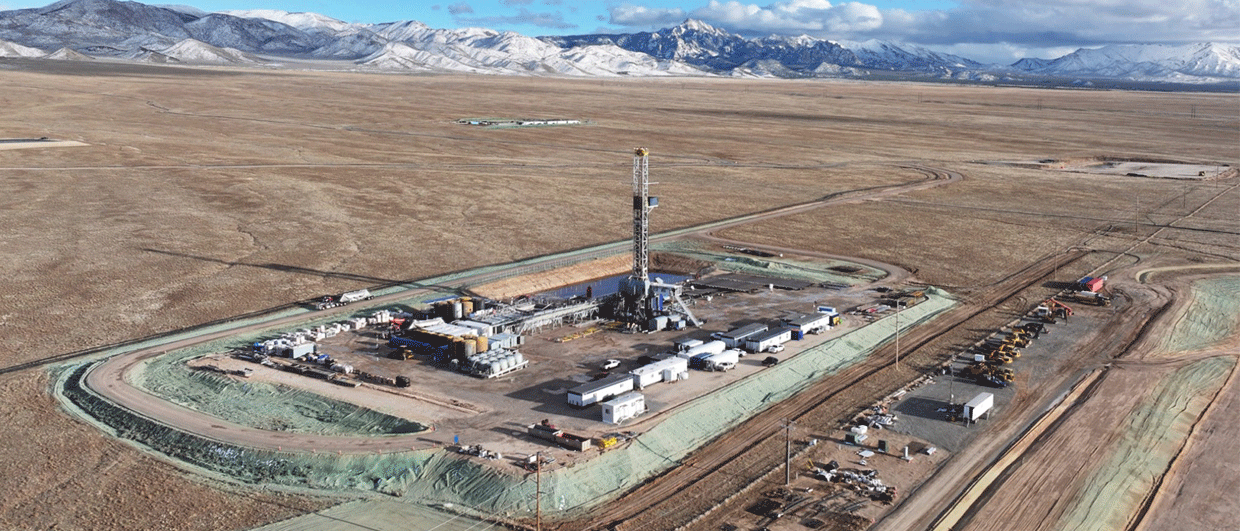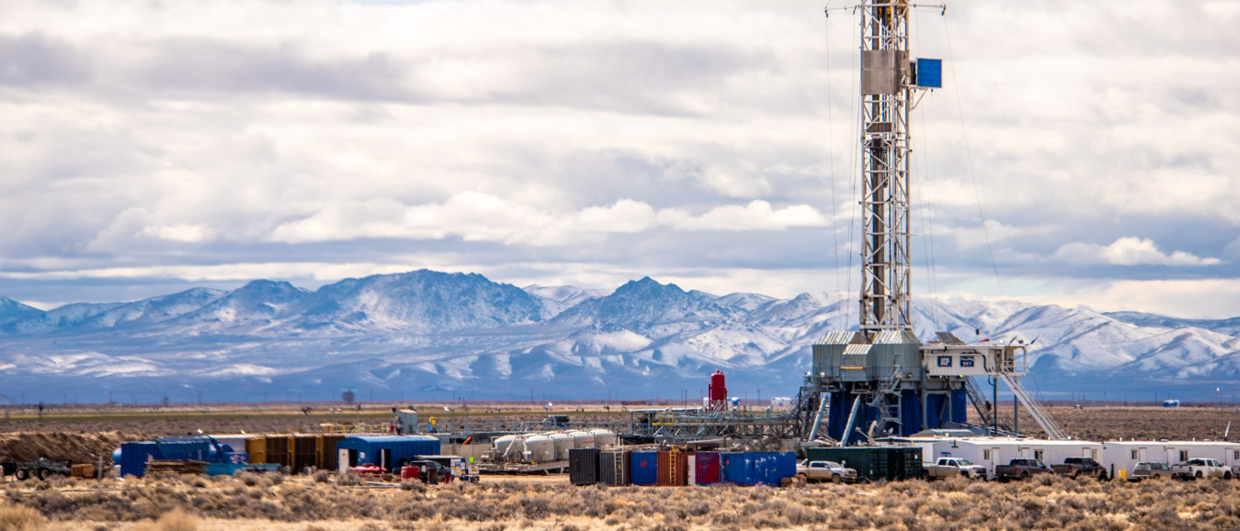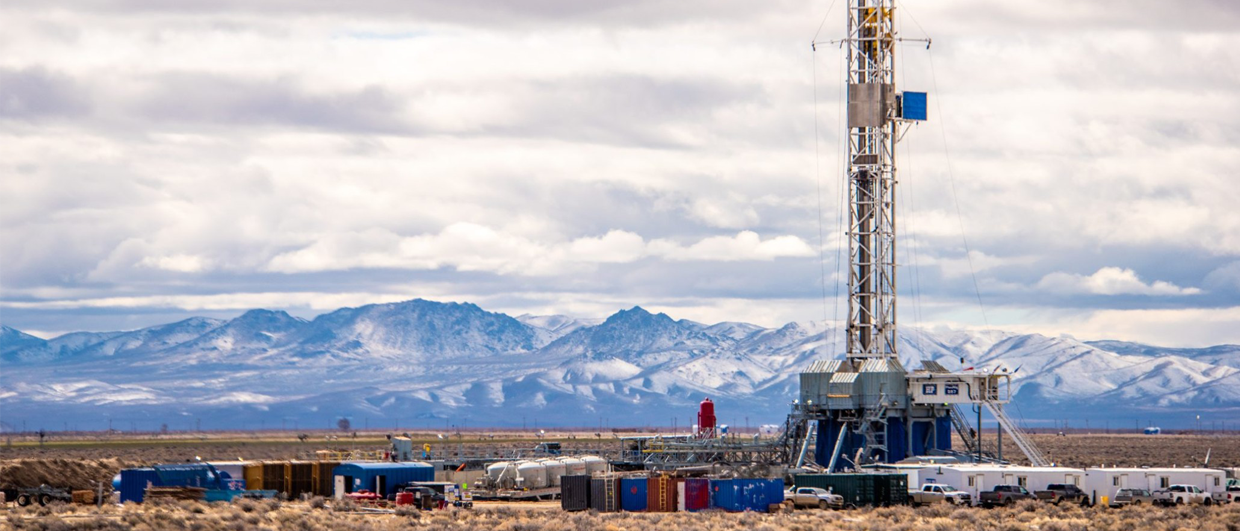
Project Red drilling site in Nevada. Photo: Fervo
The reservoir will always have its final say
Why the lack of published well test data from Fervo’s Enhanced Geothermal projects may not be a good sign

With 500 Megawatts (MW) of plant capacity in construction for their flagship geothermal project at Cape Station, Utah, one might think that Fervo had already answered the questions on the subsurface reservoir and lower-than-advertised well productivity. Unfortunately, this does not seem to be the case. Confirming sufficient well productivity can only be known through well testing. It is puzzling then, why Fervo has not been forthcoming in the review and publication of the well test data for Cape Station. That is explored in this essay.
Mission not accomplished
Quick to declare victory, Fervo announced in their September 2024 Technology Day presentation that they had achieved “2.0” well performance, 10 MW per production well, and were “already on to the next generation”, 15 MW wells. Almost two years later, Fervo have been unable to demonstrate either. Fervo do note in their fine print that the 10-15 MW quoted are “gross peak output”. This is an almost useless metric, as it is short-lived – quickly declining in a matter of hours – and does not take into account the substantial amount of parasitic power required for the re-injection wells. This is perhaps best illustrated by Fervo’s Project Red in Nevada, which was advertised as having achieved a “peak output” of 3.5 MW. As it turns out, extended testing showed that the well could sustain only 1.4 MW (net) – less than half its quoted peak.
When Fervo finally did publish Project Red production data, it did not help their case. Their misleading headline that “Enhanced Geothermal Has Been Proven at Scale” was in direct conflict with their statement in the same article that Project Red was not a commercial-scale development. To make matters worse, their data showed that the well had started experiencing thermal decline, and required an external source of injection water to maintain production. Both these trends add up to one thing: the popular notion of Enhanced Geothermal endlessly recycling fluid in the subsurface to economically produce a constant source of power still hasn’t passed the reality test.
To temporarily reach higher flow rates in a production well at Cape Station during the first well test, Fervo increased injection pressure, and used two injection wells instead of one. This increased the parasitic load and the number of wells required, reducing net output and driving up costs. This well test demonstrated a short-term capacity (after 24 hours) of about 6 MW (net), needing three wells to do so, a disappointing 2 MW (net) per well – far below most conventional geothermal wells. Fervo have published no further well test results, despite selling shares in the company to the public.
Everything except well test data
This lack of published well test data has not kept Fervo from a frantic public relations campaign. Among their many press releases were announcements of the “hottest well to date” and high temperatures found at “a new greenfield geothermal site”, related to Project Blanford (Utah). Although this makes for impressive headlines, it is not news. High temperatures were already well known in the region long before Fervo, especially at Cape Station, which is adjacent to the Roosevelt geothermal field, and at Blanford, which was the site of several deep wells drilled in the 1980s (known then as Pavant Butte). More importantly, higher temperatures do not solve Fervo’s well productivity problem.
Fervo have also highlighted reductions in drilling time, although these reductions are benchmarked against their own wells. Even at the improved drilling metrics advertised by Fervo, their wells are significantly more expensive on a net MW basis compared to most conventional geothermal wells.
Adding to the distractions from the lack of real production data are thinly researched, or in some cases just copy-pasted, media stories in an endless stream of accolades for Fervo. Forbes ran an article on how “Next-Gen” geothermal could power the world, featuring Fervo. Forbes also endorsed Theranous and Elizabeth Holmes so we can perhaps ignore them, though there are numerous other groupthink media stories, AI-generated nonsense, and self-proclaimed geothermal enthusiasts repeating Fervo’s selling points.
One endorsement of Fervo stands out. Dr. Roland Horne, a Stanford professor, co-authored a 2024 paper appearing in Nature implying the widespread commerciality of Enhanced Geothermal Systems (EGS). The paper, however, is short on hard flow rate data, or any actual production data that would support EGS. Instead, the authors rely on a reference from the National Renewable Energy Laboratory (now called NLR) that quotes a flow rate of 125 kg/s per production well. This theoretical flow rate proposed by NLR is based on the assumption that Enhanced Geothermal reservoirs can be “engineered to produce at levels more consistent with those observed at conventional hydrothermal plants”. Regrettably, Fervo have not been able to do this – no one has. In fact, a key indicator of well productivity at Cape Station is at the very lowest end of the range for conventional geothermal fields. NLR appears to have made another mistake: their curious reference to “well productivity” of 38 kg/s/bar is about 40 times too high.
Independent review is missing
The two sets of well test results published by Fervo, one for Project Red in Nevada and one for Cape Station in Utah, were described in self-published papers with no independent review. Given the high profile of EGS, one would think that a critique of Fervo’s well tests would be peer reviewed and published in the two oldest and most well-known geothermal conferences held annually, Geothermal Rising or the Stanford Geothermal Workshop. But there are no such publications to date, and only one paper on any recent EGS well test results. Authored by Richard Holt on the FORGE project adjacent to Cape Station, Holt’s paper documents a well test demonstrating a sustained flow rate of about 23 kg/s, even less than Project Red in Nevada.
A technical paper from the 2025 Unconventional Resources Conference (URTeC), not known as a geothermal forum, gives the impression that their computer predictions have been achieved in the field at Cape Station. Co-authored by Fervo and their consultant, ResFrac, this paper claims that “the observed circulation rate (at Cape Station) was within the range of predicted values”, but the authors do not show, or even try to explain, the actual well test data. If they did, they would have to confront the question of why the flow rate plot for the first, and only, published well test was cut off at 24 hours, while still declining. Or how the use of two injectors per production well (real life) compares to their computer model using two injection wells per three production wells – the so called “bench” completion design – while still obtaining the same (or even better) production per well (i.e. three times the actual production achieved). The authors state in the paper that the “model has been further updated based on comparison with the results” (presumably results means field results). That was more than a year ago. There is still no sign of that promised comparison between the model and the actual field results.
Thin on geothermal experience
At its core, Cape Station is a geothermal project. Yet, Fervo have no board members who have come from the geothermal industry, according to the bios in their website. This includes its CEO and Co-founder, Tim Latimer, who has three years experience in the petroleum industry, according to his LinkedIn profile. Remarkably, Fervo, a geothermal company that according to Fortune magazine was valued at over $10 billion just after its Initial Public Offering in May of this year, appears to have no reservoir engineers with previous geothermal experience on staff other than Jack Norbeck, the Chief Technology Officer, who has all of five months geothermal industry experience.
Lack of oversight
Lenders for the construction of geothermal projects usually require a review from a qualified third party geothermal consultant, especially in this case given the lack of geothermal experience in the company. No review of this nature appears to have been done. The credit agreement for the $421 million financing of Cape Station Phase 1 does not specifically reference a requirement for an independent geothermal review. Instead, the credit agreement defines Black & Veatch as the Independent Engineer, who are not geothermal experts and do not list geothermal projects as one of their services in their website.
The credit agreement also refers to a “subsurface consultant”, although does not define who this is. Previously, Fervo’s presumed subsurface consultant had been DeGolyer and MacNaughton (D&M). But as this is D&M’s first geothermal project of this kind, they would not seem to be a good choice as an expert on geothermal reservoirs. D&M’s report on Cape Station contained no review of well testing or analysis of well productivity, and no confirmation of reserves as Fervo originally claimed.
The crucial missing piece – well test data
Enhanced Geothermal is potentially an important development in the geothermal industry, but needs to be proven by more convincing well test data than available from Fervo’s first two published accounts. Fervo’s lack of geothermal experience or oversight may be responsible for them overlooking a key variable: the reservoir. A more experienced geothermal operator would likely be more careful and guided by actual well test data. For example, Ormat and SLB have recently announced a pilot program at Desert Peak in Nevada, to “address key EGS challenges”, and by that they primarily mean the subsurface reservoir. Noticeably absent from this announcement are “gigawatt” projections like those made by Fervo.
Long before making any gigawatt projections, and even before committing to build the first 100 MW of capacity at Cape Station, data from a sufficient number of well tests should have been vetted. The well testing for Cape Station should have included a minimum 30 days of data for each well test, comprising of production flow rates, injection flow rates, and flowing wellhead pressures and temperatures. Fervo should also be measuring flowing bottom hole pressure during at least part of the testing, which would provide a better understanding of the reservoir than they apparently have. This testing is necessary to assess the number of wells required per power plant to avoid a shortfall, which is key to the economics of the project. The long term viability of EGS would still be a question mark, including issues such as thermal breakthrough and sustainability.
So why the secrecy? It could be that Fervo feel no obligation to publish more well test data, as they have been successful raising money without it. Or, the well test data that they do have may not fit with their carefully crafted story. It is also possible Fervo simply have not conducted further testing beyond their first well test. Whatever Fervo’s reasons are, keeping the public in the dark suits their purposes. In the long run though all will be revealed, as the reservoir, enhanced or otherwise, always has its final say.