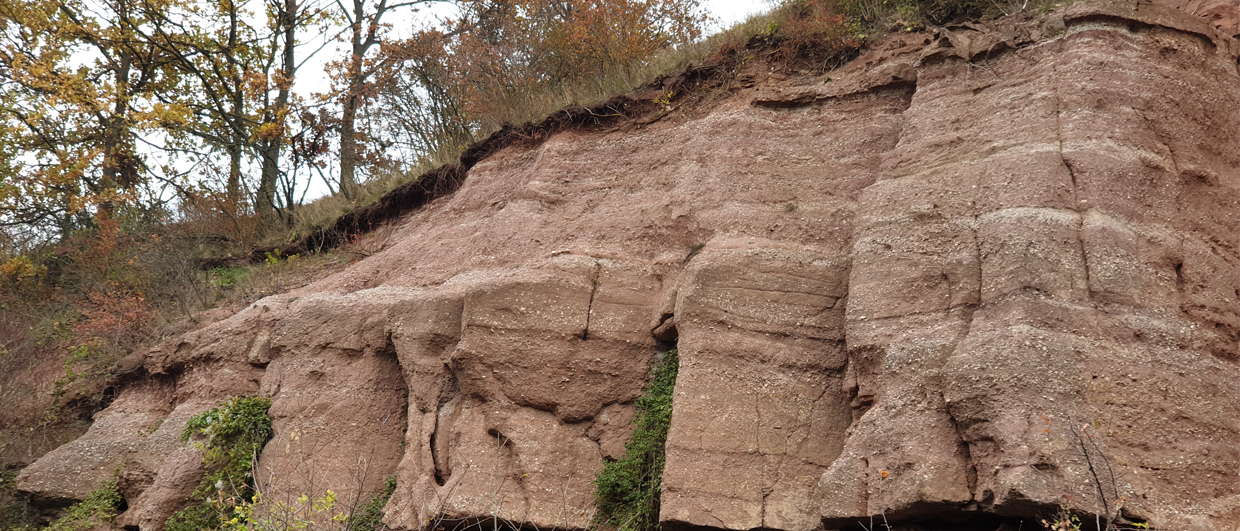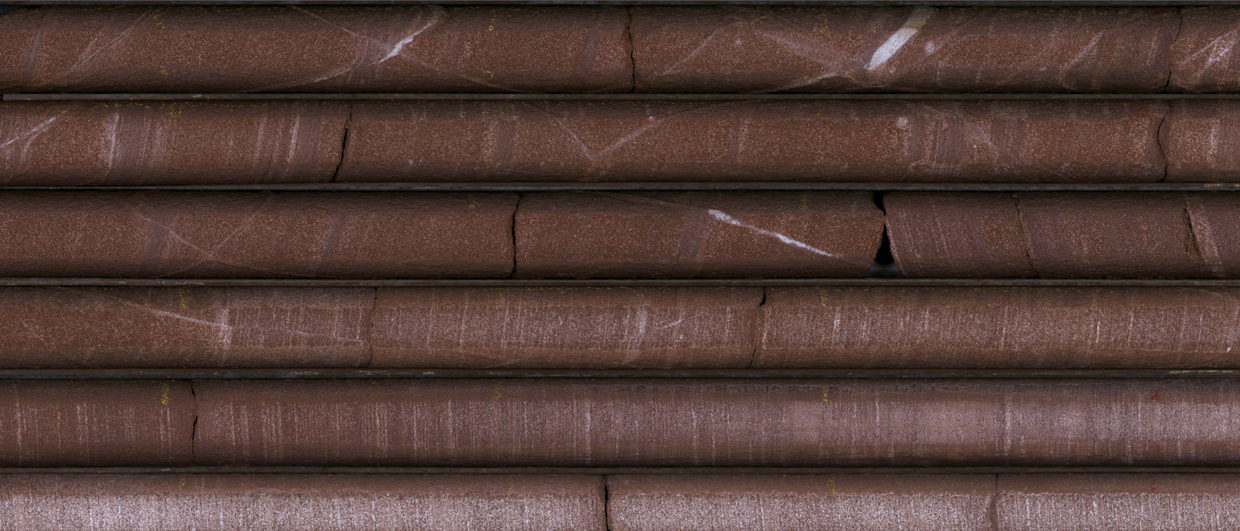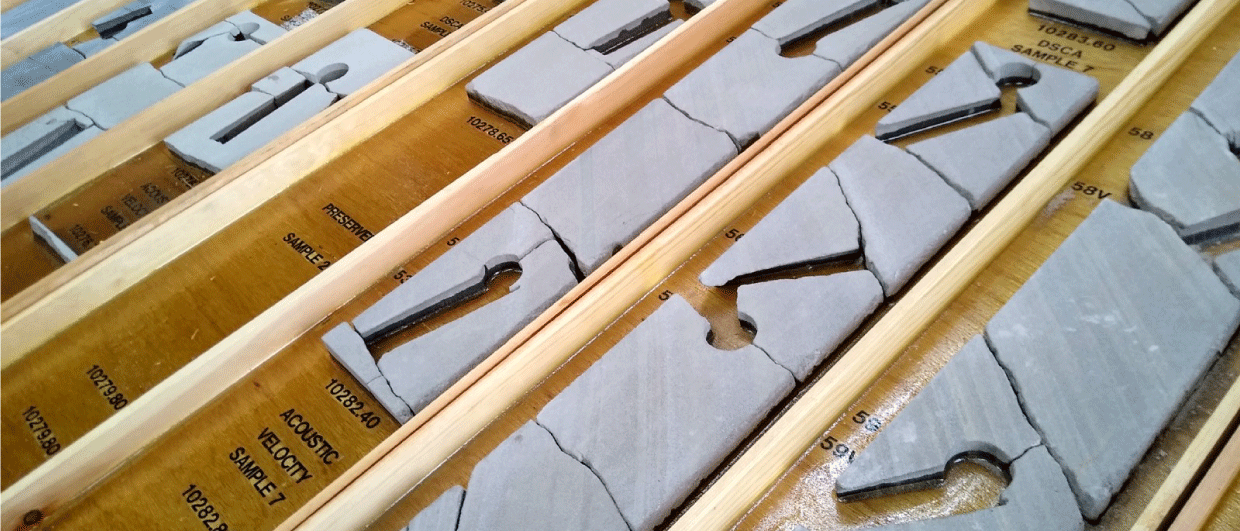
Rotliegend eolian sands from well 48/11b-A5, UK North Sea. Photo: Henk Kombrink.
The increasing importance of DHI’s in the Rotliegend play of the Southern North Sea
Better seismic data and more subtle targets have created an environment in which the presence of DHI’s should be investigated even when they did not play a role in exploration in the past and even when they are not always there

It sounds odd, bearing in mind the quality of broadband seismic data available these days: unlocking an offshore gas province without using seismic DHI’s to de-risk exploration drilling.
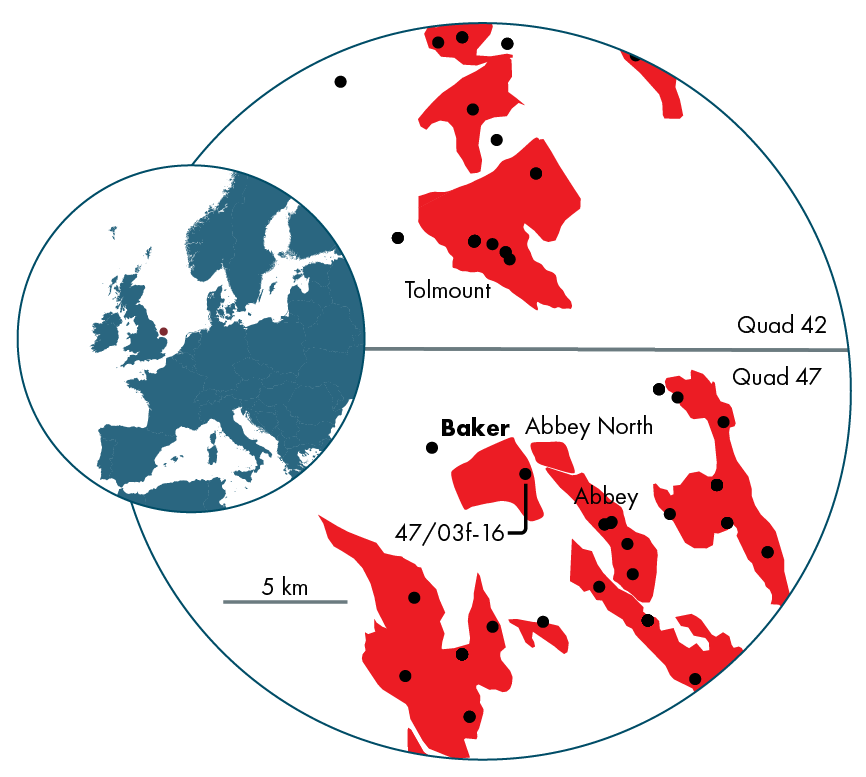 Yet, that is what happened in the Southern North Sea, where the Upper Permian Rotliegend sandstones proved to be gas-bearing in many closures that were primarily drilled during the 1980’s and 1990’s.
In those days, the 2D and 3D seismic data allowed for the interpretation of the fault blocks beneath the thick Permian evaporite succession, but that was about it.
Now that the Southern North Sea is in a much more mature state of exploration, and remaining Rotliegend prospects are hidden in more subtle closures, it is therefore important to see if DHI’s are actually able to help de-risk the targets that remain. Even when some may argue that DHI’s have never been observed or never been used.
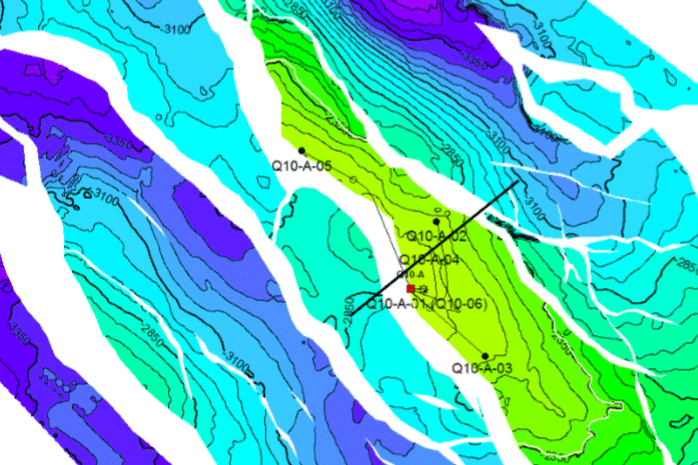
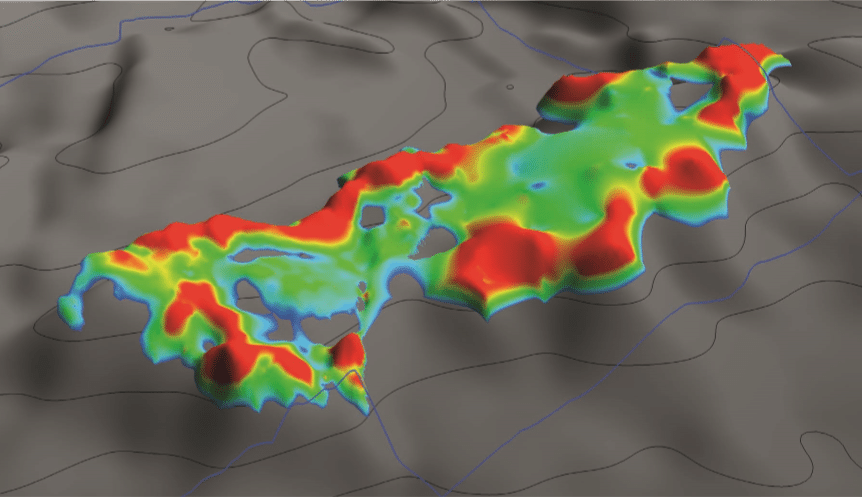
That’s exactly what the team at Petrogas did before they successfully drilled the Baker exploration well in the UK Southern North Sea. And Baker had what looked like a Direct Hydrocarbon Indicator; a bright spot conformable to the interpreted trap, matching the Gas Water Contact and also in agreement with synthetic data.
Still, there was some scepticism. Why did Baker have a DHI, but the nearby Abbey Field did not? And neither did the Tolmount gas field, jus a stone’s throw away. Following a closer look at the geology of the wider area, the team came up with an explanation as to why some prospects have a DHI and some don’t.
The key is in the overburden, and the reservoir characteristics themselves. The Baker reservoir is characterised by a very good quality reservoir, with up to 22% porosity, permeabilities of 0,5 Darcy and a high net to gross of 91%. In addition, Baker’s overburden is quite benign; no major faults nor strong thickness variations or dolomite rafts in the overlying Zechstein sequence.
In contrast, the Tolmount gas field has a much more complex overburden, including a series of major faults in the Jurassic interval, in addition to more lithological variation in the Zechstein succession including a series of dolomite rafts. Additionally, the reservoir at Tolmount is not fully resolved, with a thick intermediate shale layer that complicates the geophysical interfaces. These three elements have been proposed as causing too much of a downgrade in seismic signal for a DHI to be preserved.
Abbey is another case. Here, the reservoir quality is of a tight nature, with significant illite in the pore throats bracing and stiffening the framework, which therefore means the impedance contrast with the Silverpit shale seal is not strong enough to cause a DHI.
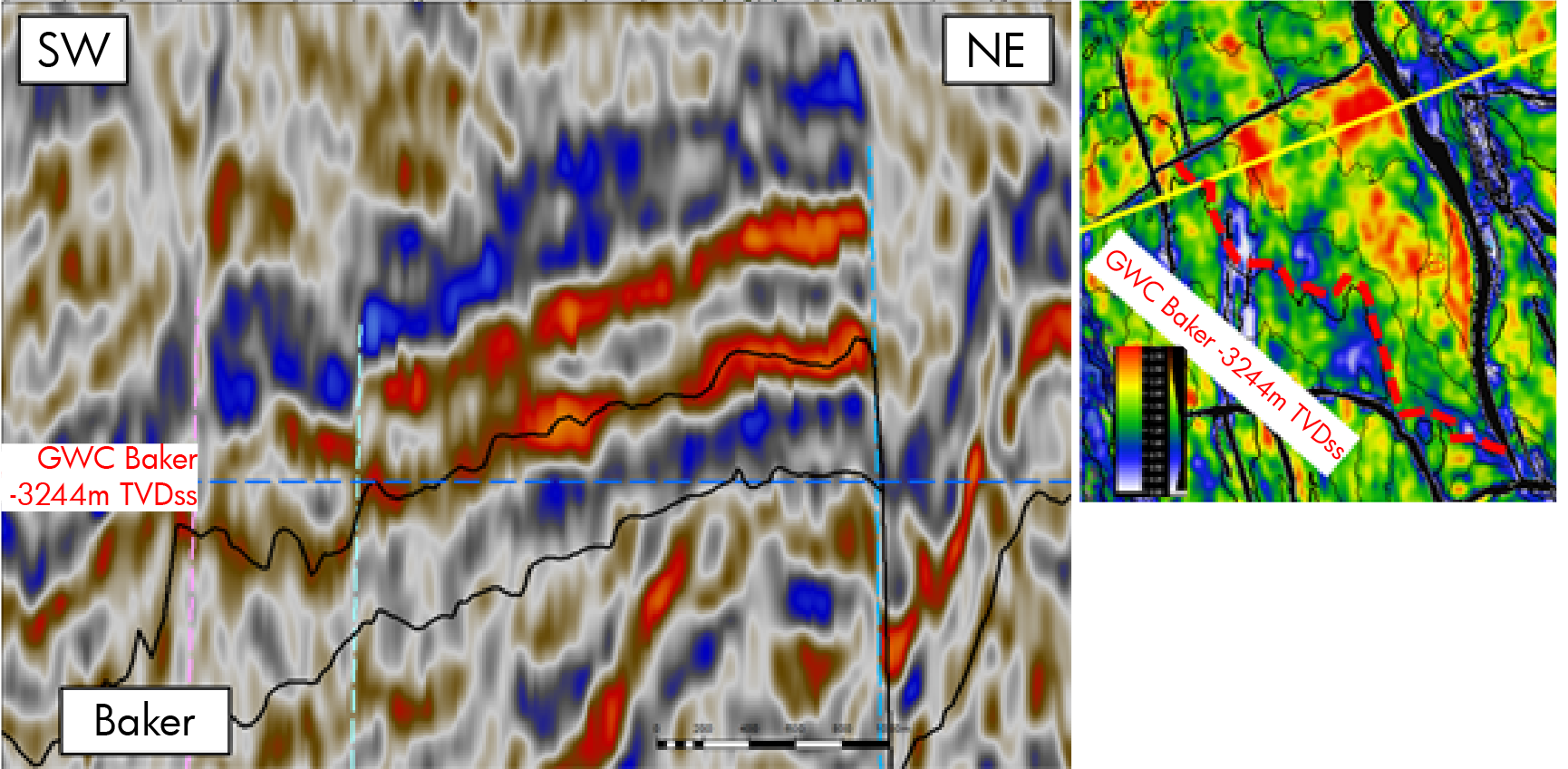
These outcomes once more prove that seismic data are non-unique, and that the overburden geology and specific reservoir and geophysical nuances of each field need to be taken into account when hunting for a DHI. But the general rule of thumb that DHI’s don’t exist in the Rotliegend of the Southern North Sea should be retired. Instead, if the conditions are right, it can be of great help de-risking remaining targets.
So, what does this mean for the future? Around the Baker discovery, there is a broad “sweet spot” where seismic quality and reservoir porosity are sufficient to display DHI’s. This materially increases confidence in additional prospects in the area, including opportunities with considerable upside where fault seal appears effective, supported by DHI’s that extend beyond the mapped three-way dip closures.
Finally, a more speculative play is emerging: a westward stratigraphic pinch-out of the Lower Leman Sandstone, forming a substantial closure that has historically been overlooked but is now attracting interest due to a strong DHI signature. The Southern North Sea has been explored for more than six decades, with offshore drilling commencing in the mid-1960s, yet it continues to deliver exploration surprises.