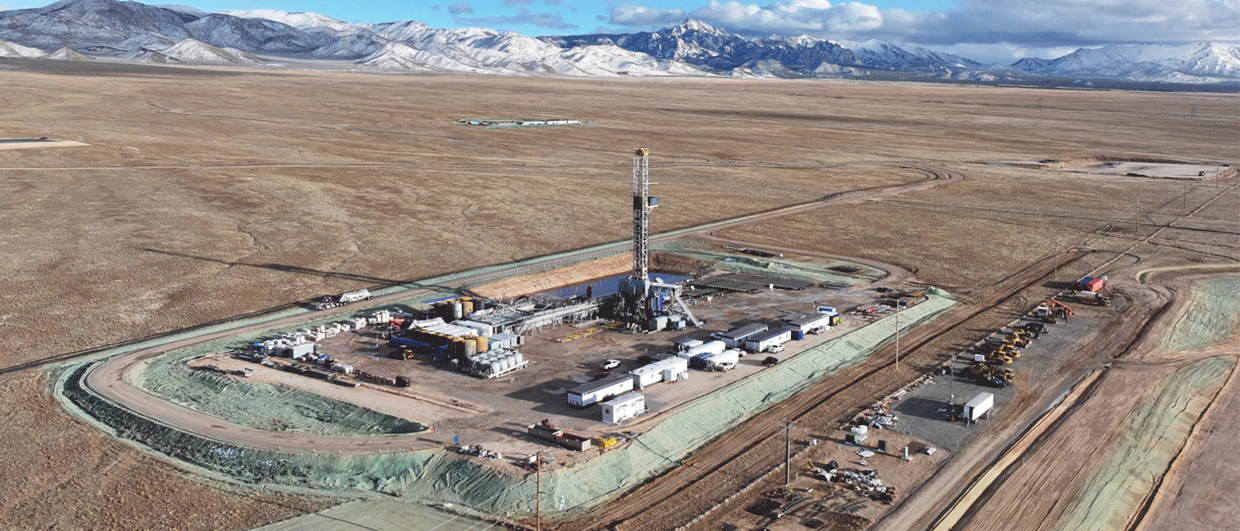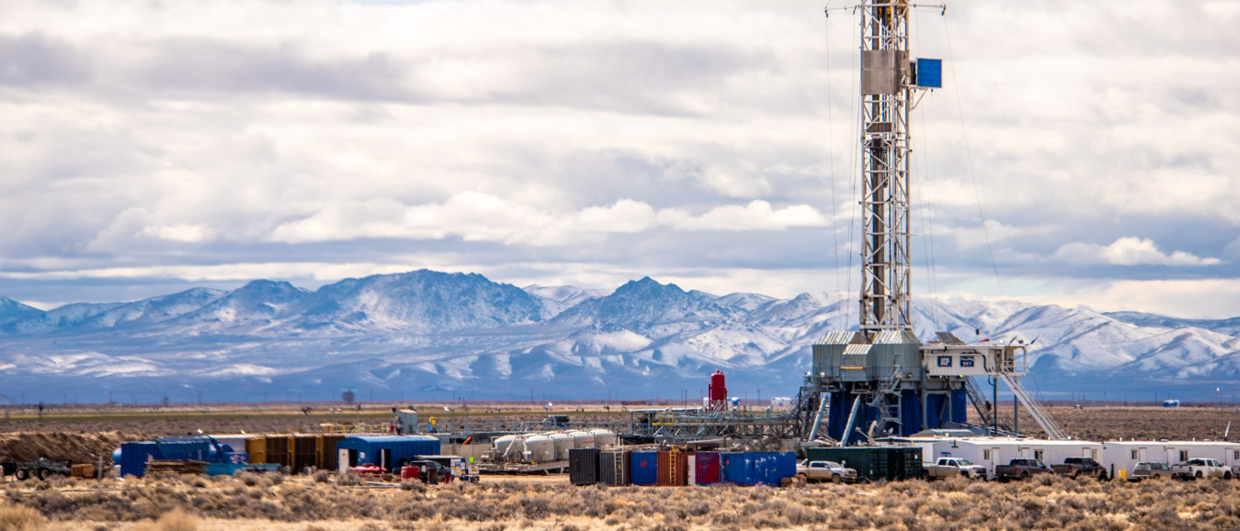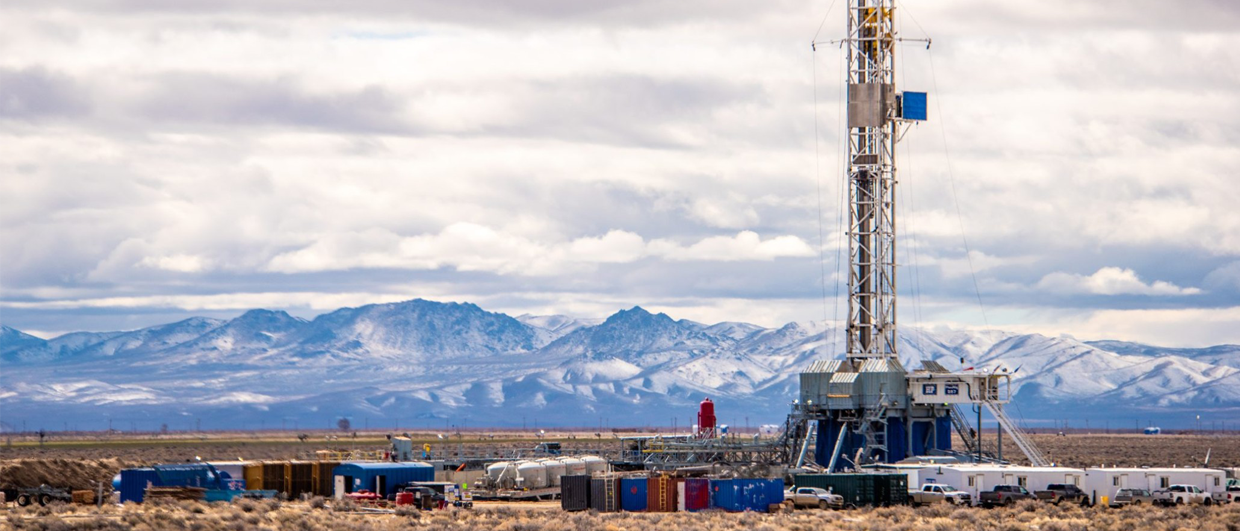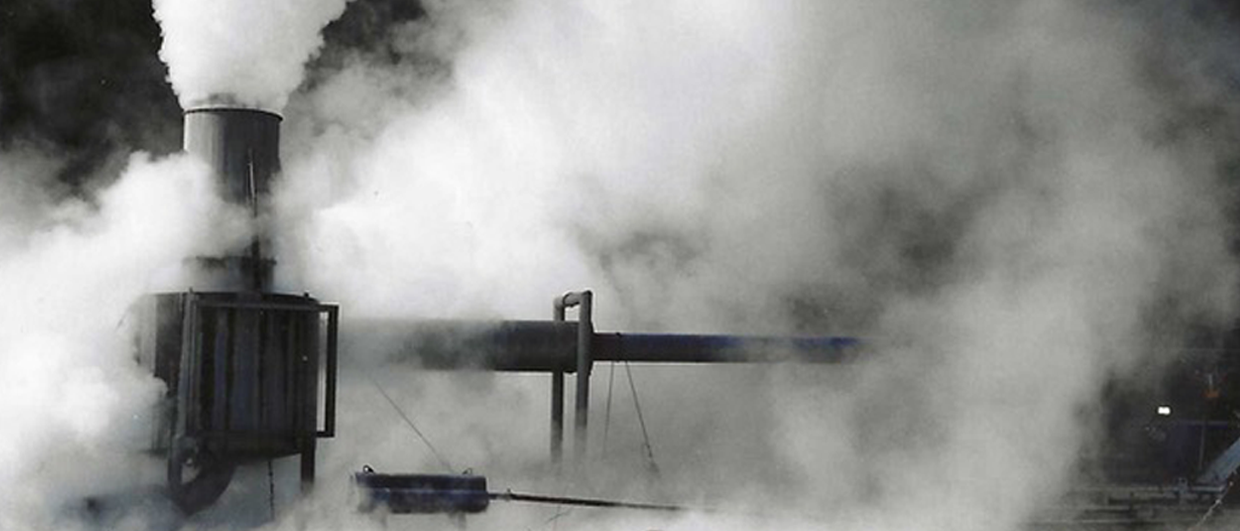
Well testing - an essential element in quantifying the geothermal resource, or reserve. Photo taken by Elliot Yearsley during a test he conducted at the Patuha geothermal site in Indonesia in 1997.
Cape Station and the case of the missing reserves report
Comments and opinion based on information in the public domain as of 19 May 2026

In a press release dated June 10 2025, Fervo Energy announced a reserves report by DeGolyer & MacNaughton (D&M), which they say confirms that the Cape Station project can support over 5 Gigawatts of development. The next day, D&M issued their own press release, referring to this report as the “First Reserves Report on Enhanced Geothermal Systems”, which was performed “in accordance with the principles of the Petroleum Resources Management System” (PRMS). We were sceptical, for good reason.
Heat In Place is Not Reserves
The S-1 filing related to Fervo’s recently proposed Initial Public Offering refers to a Heat Initially in Place (HIIP) report by D&M, in which they make no mention of reserves or the PRMS. It is difficult to judge D&M’s methodology, as key data are missing and no figures are included in the publicly available version of their report, but we do know they do not have great deal of geothermal experience. This report is the only geothermal report listed on their website. As a general comment, it does not take much expertise to calculate heat “in place” for subsurface rocks – but this is largely an academic exercise and requires no knowledge of how that heat is actually extracted from wells.
The distinction between reserves and resources is an important one, though, with the latter being more speculative and potentially sub-commercial. In their S-1 filing, Fervo say that the geothermal resources for Cape Station “should not be viewed as a measure of reserves prepared under SEC guidelines or as a measure of estimated future production or generation capacity.” These resources, say Fervo, are based on applying their “thermal recovery factor” to D&M’s estimate of heat in place, which is akin to multiplying a theoretical number by a debatable factor.
Unlike in petroleum engineering where recovery factors are considered reasonably well known, the geothermal recovery factor is poorly understood. Significant effort has been made to try to quantify geothermal recovery factors and what has become clear is that the geothermal recovery factor is not a fixed constant but depends upon how reservoir volume is defined. Recent work by Libbey and Murphy found that geothermal reservoirs with a low Productivity Index, such as indicated for Cape Station, tended to have recovery factors in the lower range of 5-15%, whereas Fervo’s estimate of the recovery factor for Cape Station is an oddly precise 30.5%.
Fervo state in the S-1 filing that their recovery factor is “estimated using a variety of methods, including computational reservoir simulation, decline curve analysis, case studies from reservoir analogues, and literature review”. But this generic statement is misleading. For one, decline curve analysis is generally performed on long-term production data, which for Enhanced Geothermal Systems (EGS) would be scarce to non-existent. The same can be said of relevant EGS case studies of field-scale reservoir analogues. Experience also tells us that even the impressive-sounding “computational reservoir simulation” is only as reliable as the history matching it is based on.
As Fervo’s presumed geothermal resource expert, D&M do not attempt to address the geothermal recovery factor issue in their Cape Station report. Instead, to calculate power from their heat in place numbers, they are provided “design specifications” for the ORC turbines by Fervo – and presto, out of this comes enormous amounts of power – with no field analogies or explanation of how this power is produced.
Level of Subsurface Risk at Odds with the Headlines
It is customary for geothermal power projects proposed for construction to have the well testing reviewed by a qualified third party geothermal consultant. Key results from this type of review would be well productivity and the number of wells needed (including injection wells) to meet the design flow rate required for the expected net power sales. No review of this nature appears to have been done.
From a reservoir engineering perspective, the absence of a review would be concerning, and this is especially true for a new production technology like EGS. Now we have also learned that the independent “reserves report” is actually just a heat in place report with no review of how that heat would be produced from wells.
Project Red in Nevada was heralded as Enhanced Geothermal “proven at scale” (Fervo’s headline). But Project Red was only able to sustain 1.4 MW – which cannot reasonably be considered at scale. After the initial test in Nevada, Fervo wrote that there were “no significant fast flowing pathways that could potentially cause premature thermal breakthrough”… and then more recently “Project Red has not experienced the kind of premature thermal decline that has long plagued traditional geothermal projects”. But it turns out that Project Red did experience thermal decline during extended testing.
For Cape Station, there is no information on extended testing available in the public domain. Fervo claimed that their first production well at Cape Station achieved “a sustained output of 8-10 MW”, but this was not demonstrated by the company that decided to show only 24 hours of flow rate data for that 30 day well test. No further well test data from Cape Station has been made public, whilst the production modelling for Cape Station that has been released is co-authored by Fervo and uses assumptions instead of matching actual production history.
These issues taken together: the missing reserves report, lack of review of the well testing, conflicting messages on thermal decline, and lack of public documentation to back up claims of sustainable flow rates, indicate a level of subsurface risk at odds with Fervo’s headlines.
Elliot Yearsley – enyearsley@gmail.com