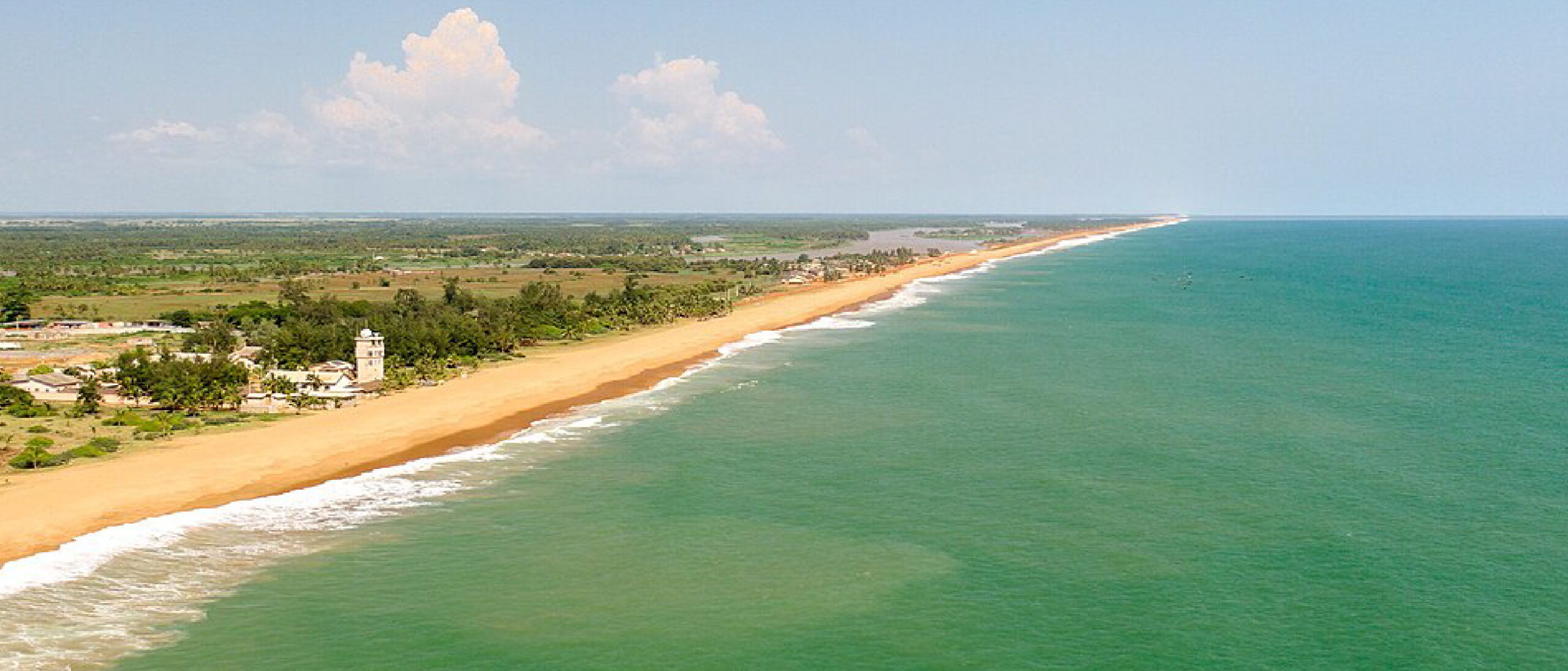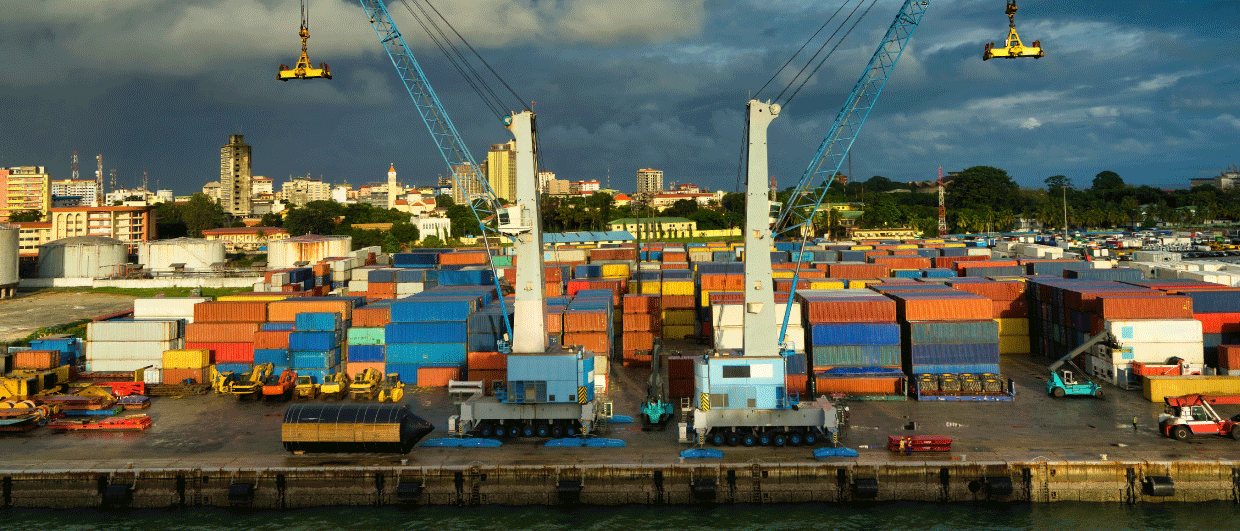
View of Conakry harbour in Guinea. Photo: manola72 via Adobe Stock.
Guinea-Conakry: From quiet frontier to regional contender
Petroleum Promotion Manager Aïda Souaré explains how strategic promotion, geological insight and persistence helped put Guinea-Conakry on the radar of international explorers.

Guinea-Conakry is among the West African countries actively developing its offshore prospects. Encouraged by discoveries in other parts of MSGBC basin, the country is now gearing up for the next phase. The progression is driven by improved geological understanding, strengthened institutional capacity, and a landmark development: ENI’s acquisition of exploration rights for 15 offshore blocks.
 Aïda Souaré, Petroleum Promotion Manager at SONAP, Guinea’s petroleum administration, can be credited for the increased momentum. Thanks to her work, Guinea-Conakry has positioned itself for its next chapter: moving from early‑stage frontier exploration toward the possibility of commercial discovery. “Petroleum promotion is not only about marketing opportunities”, Ms Souaré tells us, “It requires a combination of geology, economics, fiscal terms, and commercial strategy to understand what investors are looking for and how to position Guinea as an attractive exploration destination.”
Guinea-Conakry sits within the broader MSGBC Basin, which stretches along the Atlantic margin from Mauritania to Senegal, Gambia, Guinea-Bissau and finally Guinea-Conakry. It is one of the most geologically compelling frontier regions in the world. “The basin’s proven Cretaceous petroleum systems, high‑quality source rocks, and deepwater turbidite reservoirs have already delivered major discoveries in Senegal and Mauritania”, Ms Souaré explains.
Large-scale regional seismic datasets reveal how play fairways extend across borders, linking proven structures with Guinea’s underexplored acreage. The basin’s conjugate relationship with the Guyana–Suriname margin further strengthens the case, suggesting similar depositional histories and source rock intervals. This transforms Guinea from a speculative frontier into a basin with meaningful geological analogues.
SONAP is preparing to launch an FTG (Full Tensor Gravity Gradiometry) survey across its onshore acreage, alongside additional data acquisition. These efforts will further strengthen the subsurface understanding and help future exploration decisions.
Earlier deepwater wells, such as Sabu and Fatala, did not yield commercial discoveries, but they provided valuable geological insights. “Every well contributes to the understanding of the basin,” Ms Souaré explains, noting that these learnings are helping refine models and identify more targeted opportunities.
The most significant and recent development is ENI securing reconnaissance exploration rights for 15 offshore blocks, an unprecedented commitment in Guinea’s upstream history. For SONAP, it is validation of years of strategic campaigning. Ms Souaré affirms, “It’s rewarding to see that this effort is beginning to translate into real engagement, with several oil companies now showing interest and submitting contract applications.”
Persistence is often as important as data quality
Ms Souaré still remembers the first meeting with ENI, at a conference in London. Meetings followed each other in quick succession and she had to rapidly adapt her pitch to the investor’s profile. After the initial meeting, it remained silent for several months. However, for SONAP’s Managing Director, Dr Lanciné Condé, it was clear, they needed patience. “In this industry it is common for investment decisions to mature over years. Persistence is often as important as data quality,” according to Ms Souaré.
ENI’s presence in Guinea is expected to accelerate seismic acquisition, basin modelling, and eventually exploration drilling. The company also has reconnaissance exploration deals offshore Sierra Leone and Equatorial Guinea and has already made a major discovery in Côte d’Ivoire. The scale of ENI’s acreage signals the company’s confidence in the potential of the wider West African margin.
For Guinea, a country that has seen only limited drilling and remains largely underexplored, the arrival of a supermajor represents a decisive shift. The growing interest in its hydrocarbon resources marks the beginning of a more assertive chapter in the nation’s upstream journey. Ms Souaré shares, “The collective achievement of attracting ENI profoundly changed my vision of oil promotion. It is not only SONAP’s job to present blocks or data, we represent our country by sharing Guinea’s potential, its vision and above all its ambition.”