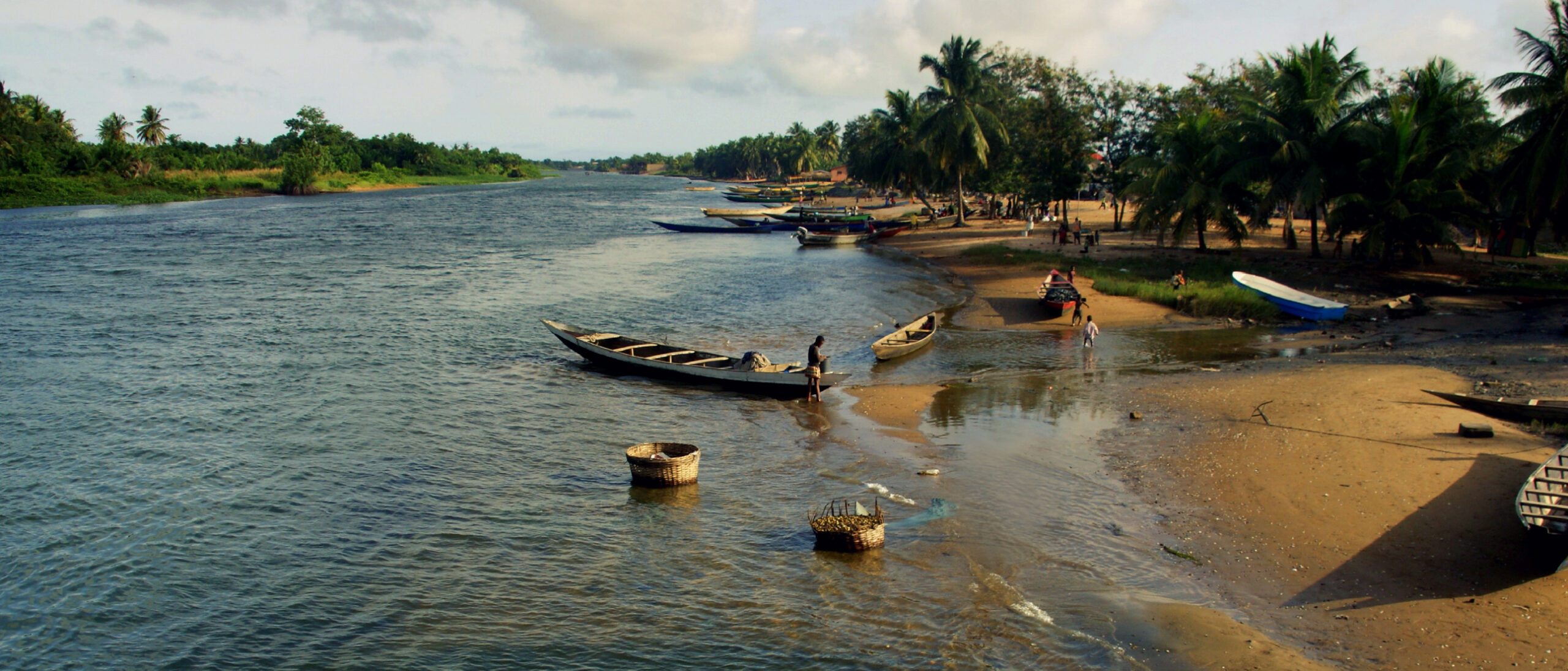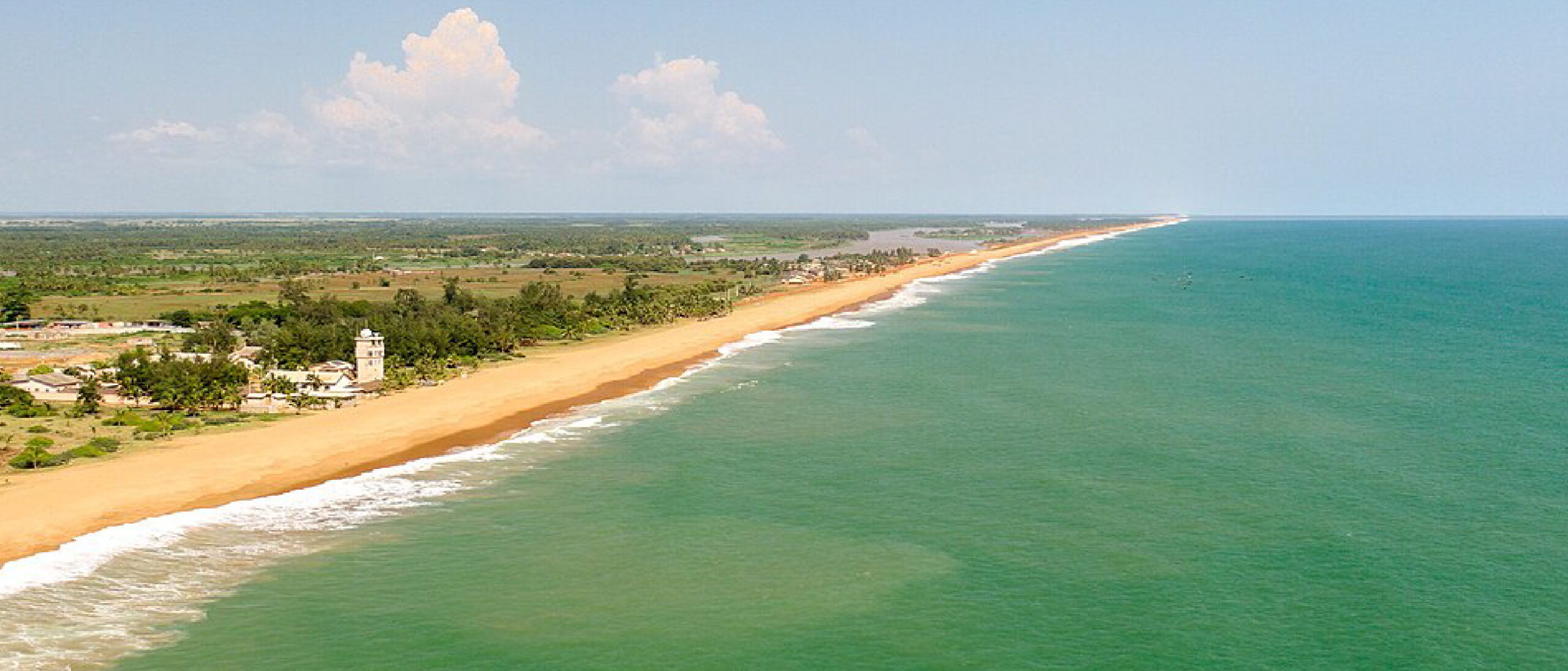
Coast of Benin in Grand-Popo. Photo: Sampo Kiviniemi via Wikimedia Commons.
Benin’s second act: Redevelopment of the historic Sèmè Field
A conversation with Blandine Biaou, Direction of Exploration and Data Management at SNH-Benin, and nominee for the Africa Oil Week 2026 Exploration Award

Benin’s upstream sector is entering a new era. After nearly three decades without production, the West African nation is preparing for a revival thanks to the redevelopment of the historic Sèmè field. Akrake Petroleum drilled a successful horizontal well earlier this year and the start of production is imminent. At the same time, there is a major national effort to build the geological and institutional foundations required to advance exploration and international investment. At the heart of this momentum is SNH-Benin, the country’s national oil company, and its Direction of Exploration & Data Management, Blandine Biaou. She organises and analyses the subsurface data, contributes to and monitors exploration activities and promotes the country’s petroleum potential.
Benin’s petroleum history begins in the 1960s, when early exploration identified the West African Transform Margin, stretching from Sierra Leone to Western Nigeria, as a prospective region. The discovery of the Sèmè field in 1968 confirmed an active petroleum system, and was developed by Saga Petroleum, with production eventually starting in 1982. Over 16 years, the Sèmè field produced modest but commercially meaningful volumes before shutting down in 1998 amid low oil prices and ageing infrastructure.
For Biaou, this early chapter was never the end of the story. As she explains, “Benin’s short oil history is not over, it is just a teaser of the real story that will be written by my generation.” Her conviction has shaped her career. She trained as a petroleum engineer and she is now building the technical and administrative foundation for Benin’s future upstream sector.
Exploration begins with data, and this is where Benin’s revival truly started. Under Biaou’s leadership, SNH‑Benin launched a national petroleum database. “We have developed a well‑organised, high‑quality dataset that is serving as the foundation of modern exploration in Benin,” she notes. “Without it, investment decisions are harder or sometimes even avoided.”
The initiative consolidated seismic, well, and geological information into a coherent, accessible system. It also enabled a comprehensive reassessment of the petroleum systems across the Benin coastal basin, including source rock maturity, migration pathways, trap integrity, and reservoir distribution. This work has given operators clarity on the geological setting and boosted investor confidence.
Benin’s short oil history is not over, it is just a teaser of the real story that will be written by my generation
The most tangible result of Biaou and SNH-Benin’s efforts is the current redevelopment of the Sèmè field by Akrake Petroleum. The operator completed a horizontal production well at the start of the year. The well penetrates the Cretaceous Abeokuta reservoir, including approximately 950 metres of oil‑saturated sandstone. Precise geo‑steering successfully kept the well path within the oil-bearing reservoir interval.
Akrake has deployed a jack-up mobile offshore production unit and a floating storage and offloading unit for production to start. While some technical challenges have arisen, Biaou confirms that they are being resolved and that the project is progressing.
Although the Sèmè field should yield success in the short term, Biaou also sees plenty of long‑term potential for Benin. The Avon Fan, the deepwater continuation of the Niger delta system, represents one of the most promising frontier plays. Biaou continues, “When you combine that with the connection to the broader Dahomey basin, you begin to see a large, continuous petroleum system extending across borders.”
Atlantic margin discoveries such as Baleine and Calao in Côte d’Ivoire, Liza in Guyana, and Calamar and Ahanga in Brazil provide powerful analogues. “These basins are part of the same Atlantic margin story, they share common origins prior to continental separation. When we see success on one side of the Atlantic, it reinforces the potential on the other.”
And here lies Blandine Biaou’s next challenge: “There is a growing need for cooperation between countries that share the same basins. By aligning strategies, sharing data where possible, and creating consistent frameworks, we can significantly accelerate exploration success across the region.”