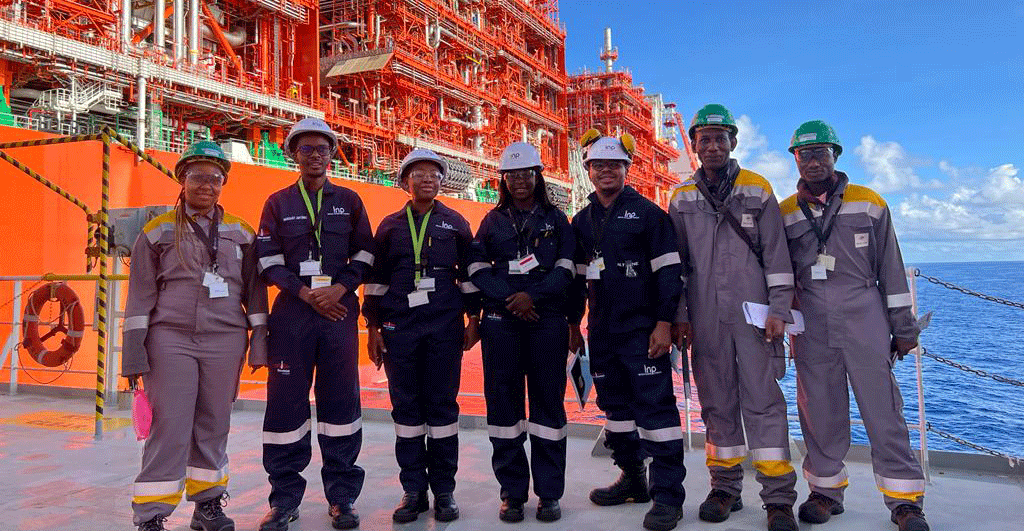
Crew at the Coral floating LNG facility. Source: INP.
Momentum behind the frontier Angoche and Save basins
Milton Zibane, exploration geologist and board member at Instituto Nacional de Petróleo (INP), and nominee for the Africa Oil Week 2026 Exploration Award shares his thoughts on frontier exploration in Mozambique.


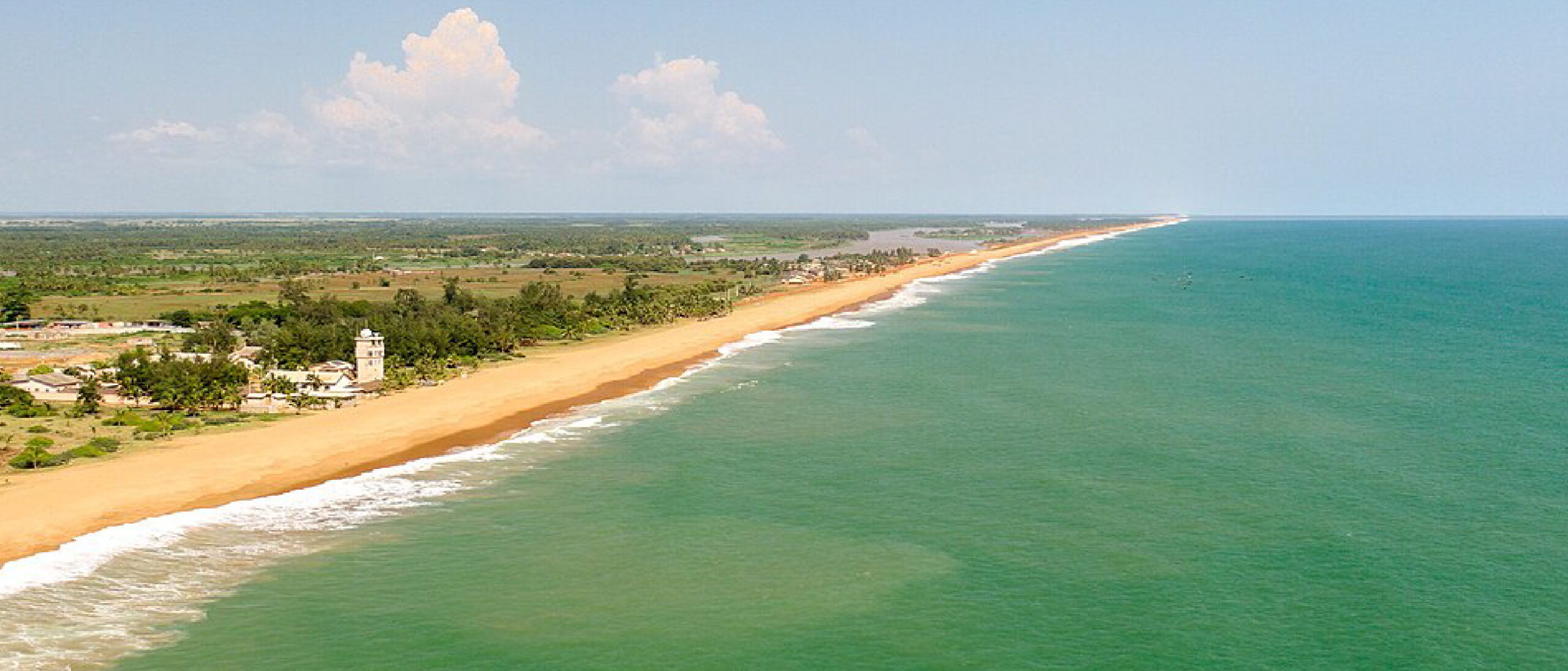
Natural gas in Mozambique is currently produced from four fields. Three of them, Pande, Temane and Inhassoro, are located onshore in the Mozambique basin, 520 km north of Maputo. The fourth, and most prolific field, Coral, is located in the very north of the country, in the offshore Rovuma basin. The 1400 km long stretch of coast in between is still a frontier, open to exploration. We spoke with Milton Zibane, exploration geologist and board member at INP, over email. He is actively trying to attract more investments in frontier exploration covering both onshore and deep water in Mozambique. He tells GEO EXPRO that currently momentum is building in the Angoche and Save basins. These basins each have promising geology, newly awarded acreage and soon-to-be-expanded seismic coverage.
The Angoche basin, along the north-central coast of Mozambique, has an up to 7000 m thick sedimentary infill, suggesting that all requirements of a working petroleum system can be met. Oil seeps along the Angoche coastline further support this potential. Seismic data indicate large-scale slope‑fan sandstones within the post-rift sediments, with stratigraphic traps and additional structural traps created over syn‑rift highs. Despite this promise, drilling remains sparse. Most notable is Eni’s 2023 deepwater Raia‑1 wildcat well. However, the block was relinquished after drilling presumably failed to yield a commercial discovery. Eni still has one active concession in the Angoche basin, while CNOOC holds three.
The Save Basin, further south, represents an even earlier-stage frontier. Offshore Save is almost totally unexplored, with only limited seismic coverage acquired so far. Yet its position adjacent to the onshore producing Pande, Temane and Inhassoro gas fields evokes the potential for offshore success in a proven petroleum province. During Mozambique’s Sixth Licensing Round, CNOOC was awarded two blocks in the Save area.
I’m expecting frontier drilling and new discoveries for Mozambique
Exploration activities in the Angoche and Save licenses have started at the beginning of the year, Mr Zibane tells us. “I expect at least four new, deep exploration frontier wells soon”, he says.
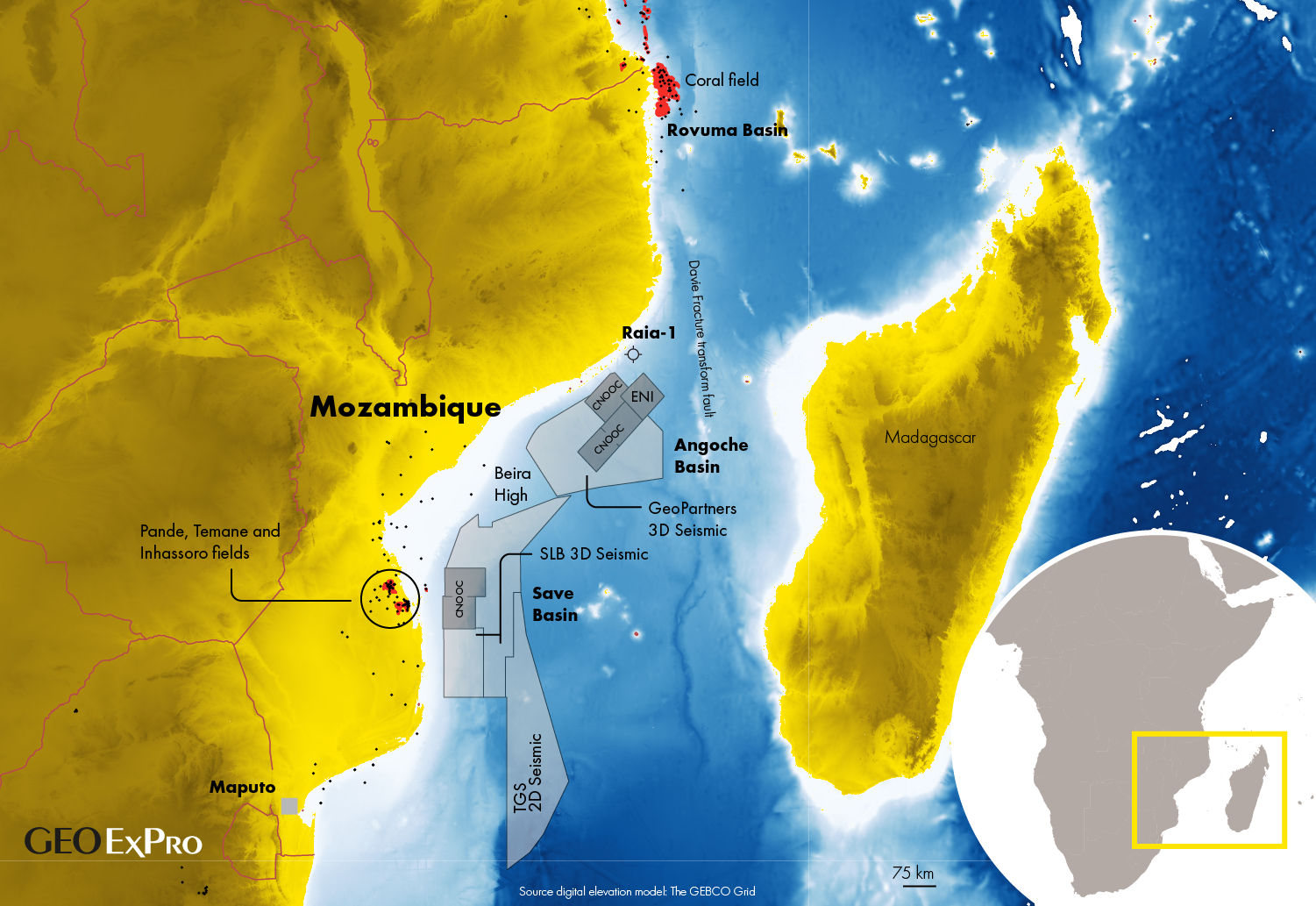
Another achievement this year was the successful closing of the 3rd bidding round for new seismic and geophysical data acquisition. 3D seismic acquisition over the Angoche basin will be covered by GeoPartners and SLB will take care of the work across the Save Basin. This will further de‑risk frontier acreage and support future licensing rounds.
As exploration ramps up, Angoche and Save are set to become central to Mozambique’s next exploration chapter, offering deep‑water potential, modern seismic coverage, and growing investor interest.