Subsurface Storage

Spindletop spin-off: Helium storage

Qatar, generally responsible for a third of global helium supply, has had to halt production because the Iran war prohibits export. Storing liquified helium gas at surface is not cost-effective; highly specialised, insulated tanks are needed, and even then, the…

Many CCS projects may falter quietly without the promised benefits

In a recent special issue of EAGE’s journal First Break, dedicated to underground storage, one finds the usual articles that one would expect for such a publication. But there happened to be one little outlier. Or maybe a slightly larger…

Exploring salt for hydrogen storage

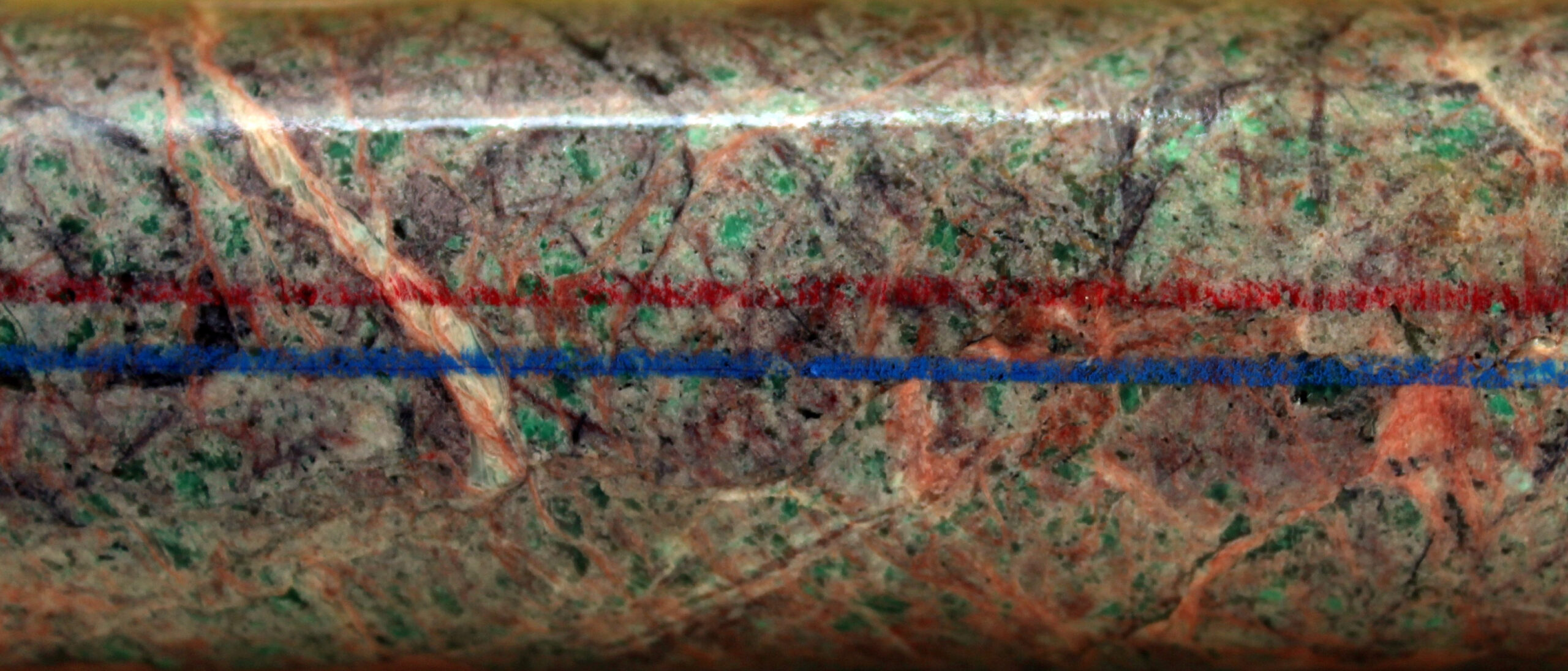
Halite cores from one of the exploration wells drilled to evaluate the Zuidwending salt dome for hydrogen storage readiness. Photo: IOT Holland. Energy stock, a wholly owned subsidiary of the Dutch state-owned company Gasunie, is working on a project called…

Storing heat in basement rocks

“Having a look at our lineament map,” says Jon Engström from the Geological Survey of Finland, “that is the first thing you need to do when you’re planning a subsurface project in our country.” Jon is a structural ge­ologist who…

The CCS parallel universe

Sometimes, I cannot prevent the feeling that the CO2 storage business is not so much about putting CO2 in the ground, but rather to keep an en­tire academic research community, a conference industry, and a contingent of geoscientists in a…

Carbon capture and mineralisation pilots in the Middle East

44.01 named their company after the mass of the molecule that is central to their business: Carbon Dioxide. They use CO2 captured from indus­try or the atmosphere and dissolve it in water to create a carbonated in­jection fluid, a kind…

Diverting the flow: The hidden power of overburden barriers

Since Mark Lakos joined Rock Flow Dynamics (RFD) from Wintershall Dea a bit more than a year ago – a job that brought him to Russia and Egypt – he has been heavily involved with mod­elling of CO2 injection and migration…

Offshore Algarve Basin geological carbon storage potential

In the Algarve Basin, two late Mi­ocene plays have been identified southeast of the Faro Peninsula using high-quality seismic and bore­hole data (Figure 1). These comprise of high-porosity turbiditic sands of Tortonian and upper Messinian age, overlain by regionally extensive,…

How can we monitor North Sea carbon stores under wind farms and production platforms?

Repeat time-lapse seismic surveys can track CO2 plume migration, but where the seabed is obstructed by wind turbines or oil and gas platforms, access by ves­sels towing long multi-streamer arrays is impractical. Research in the Centre for Energy Transition, part…

“In one year, we lost two years”

“Last year was not a very good one,” Habib admits when we meet on Teams. “Everybody expected that 2025 would be a turning point in the market, with many pro­jects coming online. But unfortunate­ly, that did not happen. And if…

Silver out, air in

Just as Aberdeen in Scotland – where this article was written – is sometimes referred to as the “Silver City”, the village of Bro­ken Hill in southeastern Australia is described in the same way. But where in Aberdeen this nickname…