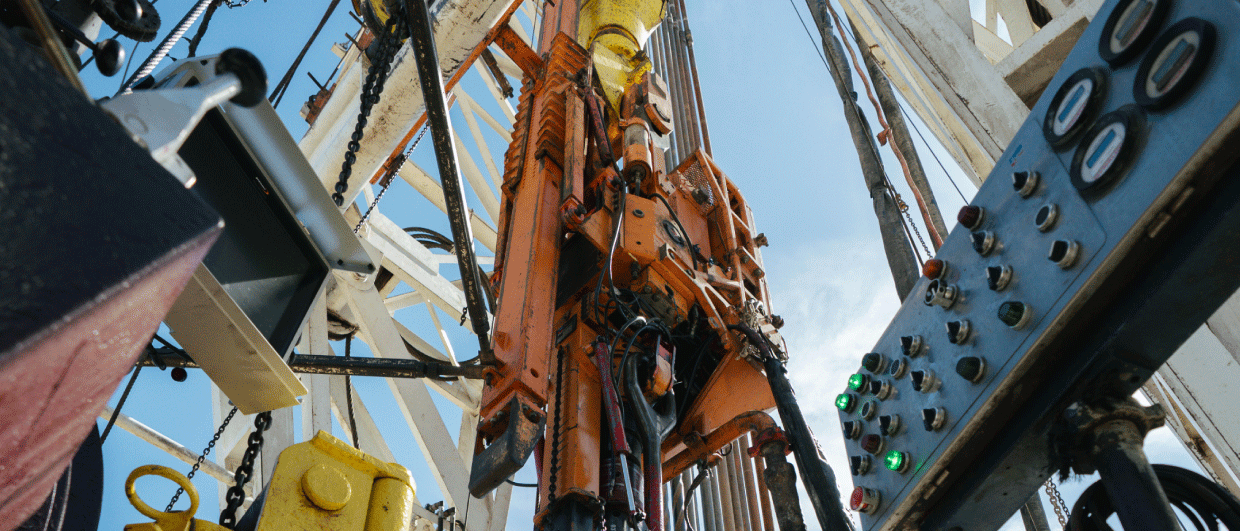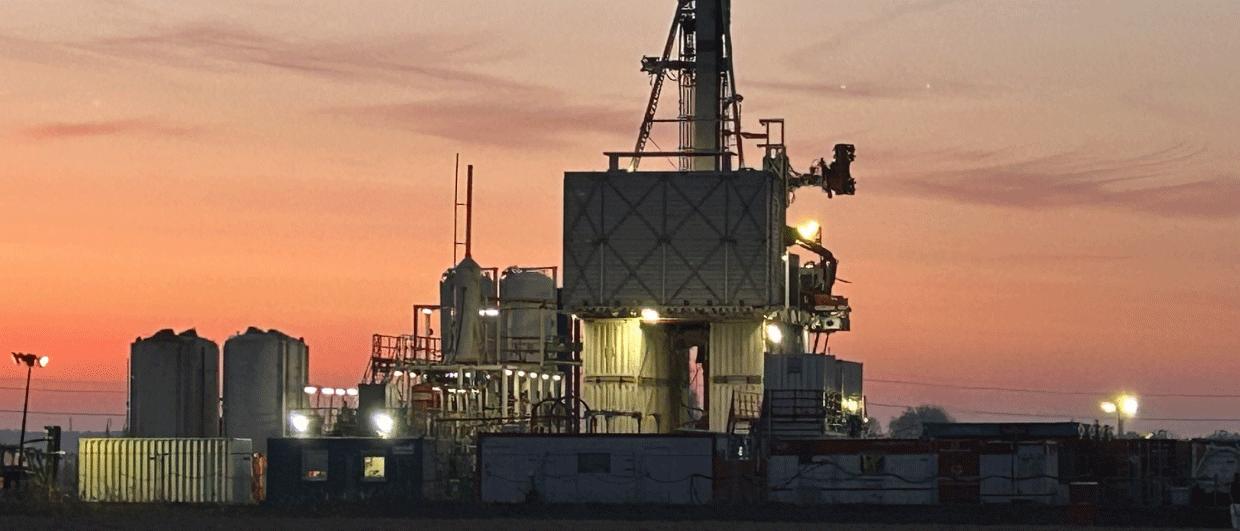
The rig during drilling operations of one of the Hystock salt wells. Photo: Nobian.
Exploring salt for hydrogen storage
Dutch salt mining company Nobian has embarked on a drilling programme to gather geological information required to assess the feasibility of constructing storage caverns as part of a future hydrogen economy

Energy stock, a wholly owned subsidiary of the Dutch state-owned company Gasunie, is working on a project called HyStock, which aims to facilitate underground hydrogen storage as a crucial element in the hydrogen economy. As part of this project, and prior to any potential cavern development, salt producer Nobian has started to drill three wells in an area where brine production already takes place from a Zechstein salt dome at Zuidwending in the northeast of the Netherlands.
The idea behind the project is, in due time, to construct three new caverns that will be suitable for storing hydrogen. These caverns will become smaller than conventional salt production caverns, having a diameter of around 75 m. But the biggest difference is that they will be significantly deeper than conventional caverns. “The top of the caverns will be around 900 m below the top of the salt,” explains Allard, who is the lead geologist on the project. “This is intended to guarantee the cavern will always be able to withstand significant pressure and pressure changes; the geomechanics are an important element in this project.”
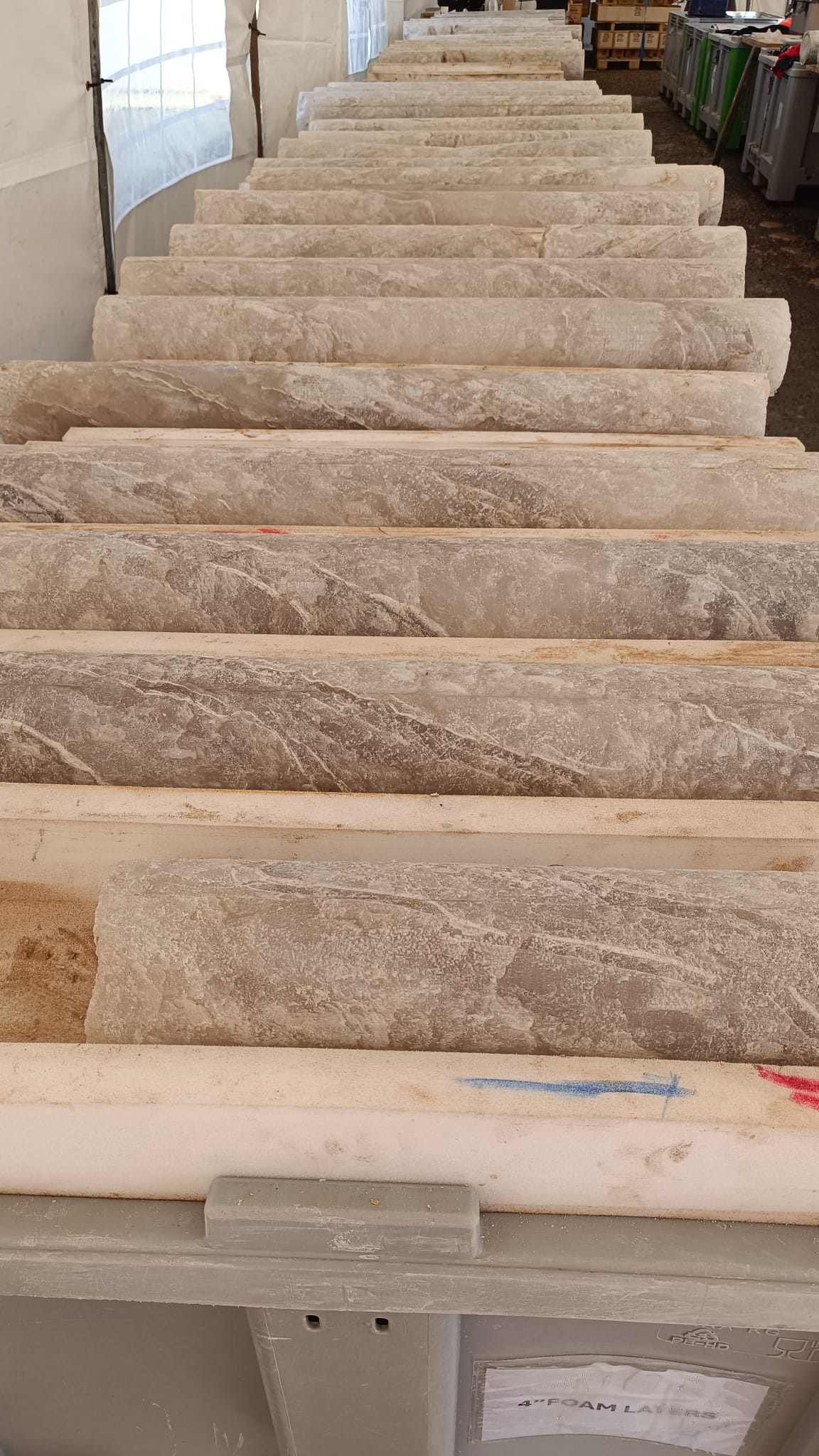
Another difference is that the data acquisition has been more extensive than in other drilling projects. “We cored the entire 350 m interval within which the cavern will be planned,” says Allard. “Of course, as a geologist, you’d like to see as much variation as possible in a core, but in this case, it was a good thing to mainly encounter clean halite. The more impurities in the form of magnesium or potassium-rich evaporites, the harder the brine processing will be.”
With the drilling of the exploratory wells, an important first step has been taken to get more clarity about the subsurface conditions for the construction of new caverns. But that doesn’t mean the caverns will be ready for hydrogen storage in the short term. “Starting the solution mining and the realisation of the above-ground facility adjustments are dependent on regulatory approvals that have yet to be obtained,” says Allard.
So far, the geology of the salt cores looks promising. According to the current schedule, exploratory drilling will be completed around the end of June.
THREE NEW CAVERNS
The so-called HyStock project entails the potential construction of three new caverns, as well as the completion of an existing cavern for the storage of hydrogen. This year, Nobian will drill three wells, of which two are exploratory drills. The third one will be a so-called B-well into the existing cavern. Similar to the gas storage caverns already in operation in Zuidwending, the future hydrogen storage caverns will have two wells to ensure storage efficiency and continued operations in case of a workover on one of the wells.