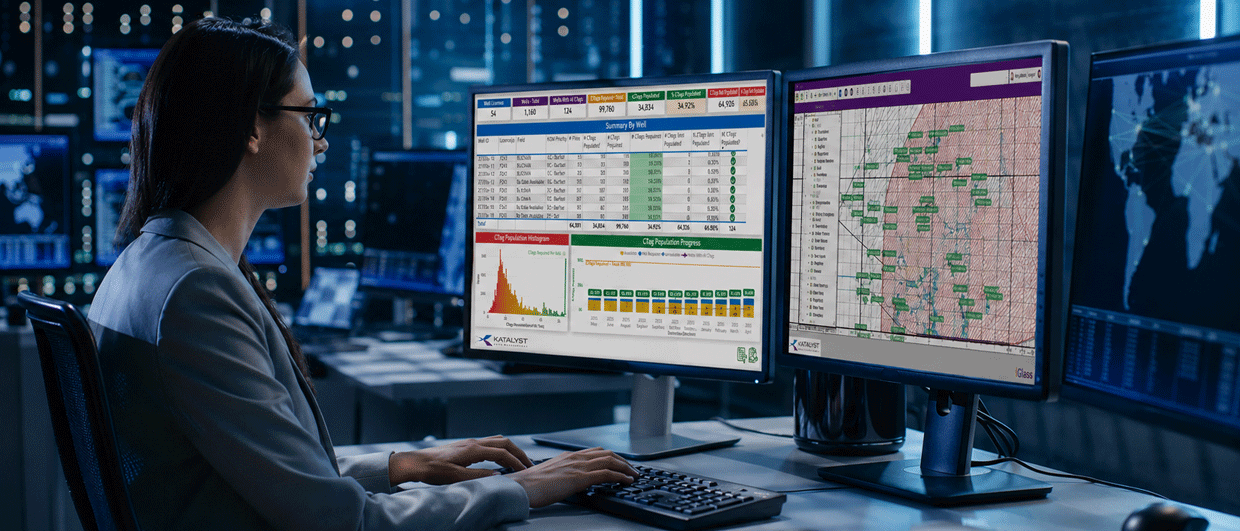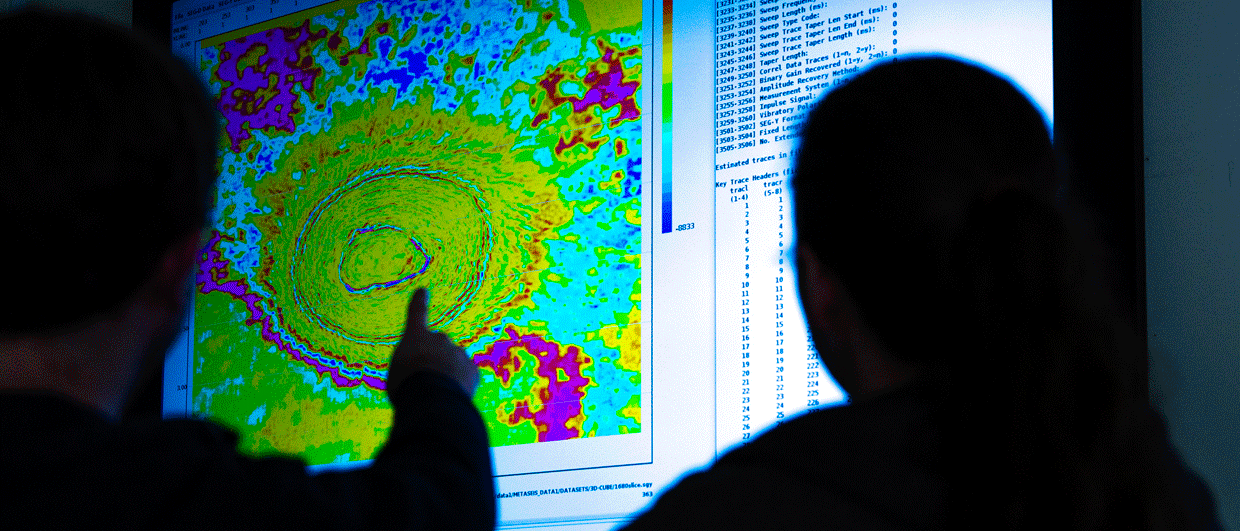
Metaseis creates opportunities for visual collaboration and analysis. Photography: Moveout Data.
Moveout democratises data transformation
As the volume and diversity of seismic data continue to expand, many operators and data custodians face a persistent challenge: How to consolidate legacy datasets – often stored across multiple vintages and formats – into consistent, usable assets. Historically, this has required specialist service providers or significant internal resources

UK-based Moveout Data has spent more than a decade addressing this problem as a service provider. Now, the company is taking a different approach: Releasing its in-house data transformation platform, Metaseis, to the wider market.
The move reflects broader changes in how subsurface data is managed. With increasing emphasis on cloud-based workflows, regulatory reporting, and AI-driven interpretation, the need for structured, high-quality seismic data has become more pressing.
“We originally developed Metaseis to give ourselves a competitive edge in handling complex client data quickly and consistently,” says managing director Darren McDonald. “Over time, it became clear that the same challenges we were solving internally were being faced across the industry.”
From internal tool to commercial platform
Development of Metaseis began in 2014 as part of a strategy to improve turnaround times and adaptability. By building and refining its own software, Moveout was able to refine workflows through exposure to large volumes of real-world seismic data. The company now wants to extend access to the same proven technology that has supported its growth, enabling organisations to efficiently prepare, manage, and optimise their own seismic data at scale.
“From the outset, our strategic decision to develop our own software has certainly paid off,” McDonald says. “Metaseis enables us to respond quickly to client needs, continuously evolving through processing petabytes of real-world data.”
By now launching Metaseis to the global market, Moveout is offering access to the workflows that have underpinned its own success. The company sees Metaseis appealing to a broad user cohort, such as energy companies, national data repositories, multi-client libraries, transcription centres, field geophysicists and academia.
“Metaseis has been built by seismic data geophysicists, not a software house,” McDonald continues. “It’s shaped by real-world challenges and designed with usability in mind. Users can be productive quickly, benefiting from powerful, enterprise-grade functionality.”
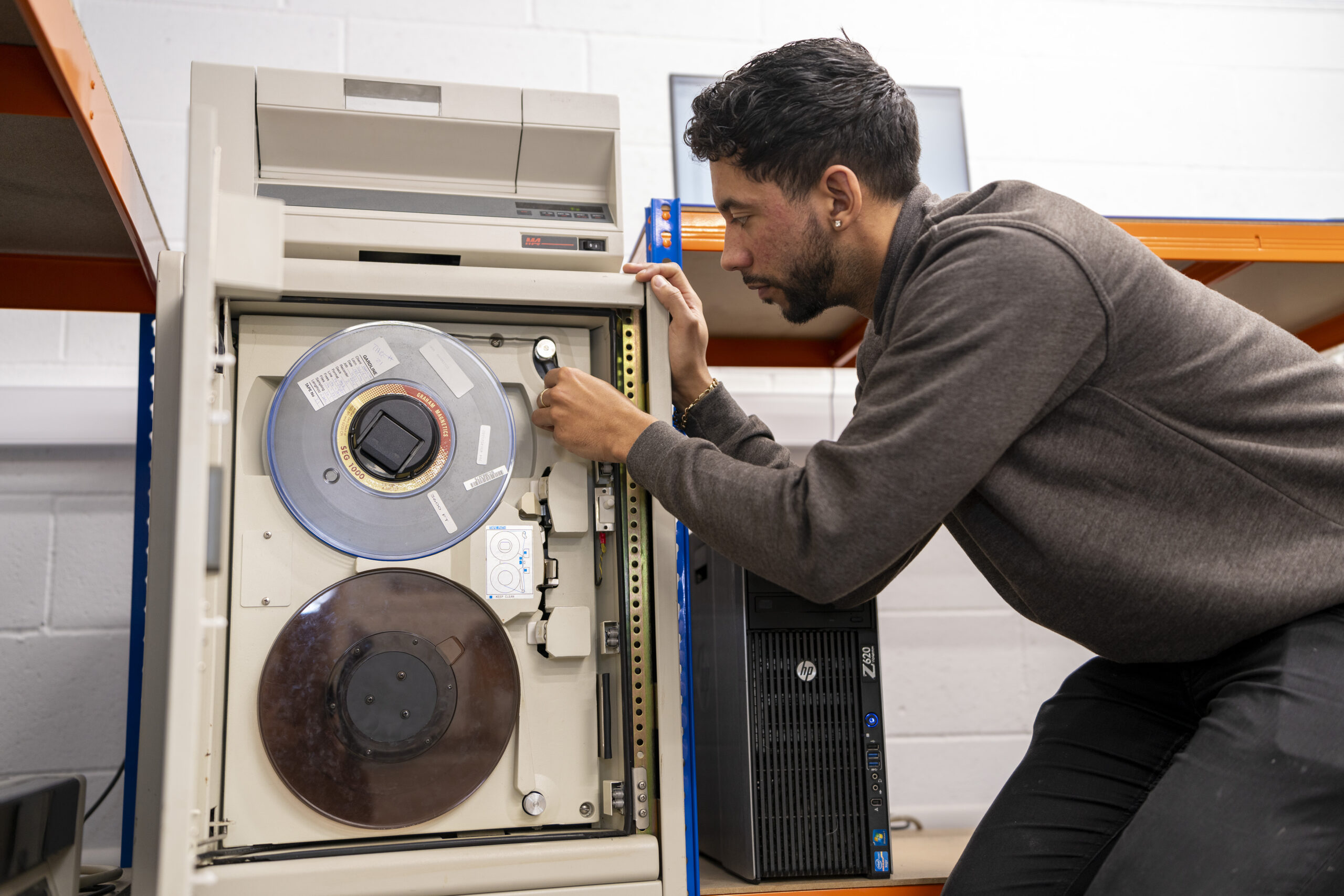
The platform now supports a range of functions, including metadata extraction, data organisation, quality control, validation, and transcription across formats such as SEG-B, SEG-D and SEG-Y, and can decipher TAP and SEG-RODE. These capabilities are particularly relevant for organisations managing legacy archives or preparing datasets for reprocessing and reinterpretation. Unlike many enterprise software solutions, Metaseis has been designed with a focus on usability. According to the company, users can begin working with the system quickly, without extensive training.
Supporting national data initiatives
Metaseis has already been deployed in large-scale projects: notably, it underpins Moveout’s role in supporting the UK’s National Data Repository, where it has been used to streamline data ingestion and compliance processes since 2021.
Such initiatives highlight a wider industry shift towards improved accessibility and standardisation of subsurface data. As more countries develop national repositories, the ability to efficiently transform and validate incoming datasets is becoming increasingly important.
“As demand increases for cloud readiness and AI-driven workflows, Metaseis will enable organisations to standardise and prepare their seismic data,” says Steve Callan, Moveout’s sales director. “There’s a clear trend towards the preparation of seismic data for advanced analytics and machine learning, which requires consistency and quality at the input stage.”
Addressing legacy challenges
A significant proportion of global seismic data still resides in older formats or on physical media. Converting and validating these datasets can be time-consuming and technically complex.
Moveout’s experience includes hundreds of seismic navigation merge projects, as well as large-scale library rationalisation efforts. In one recent UK Continental Shelf project, the company supported the reporting and consolidation of dozens of wells and seismic surveys. “Twelve years of using the system gives us absolute confidence in its value to users, and our ability to support it,” adds Callan.
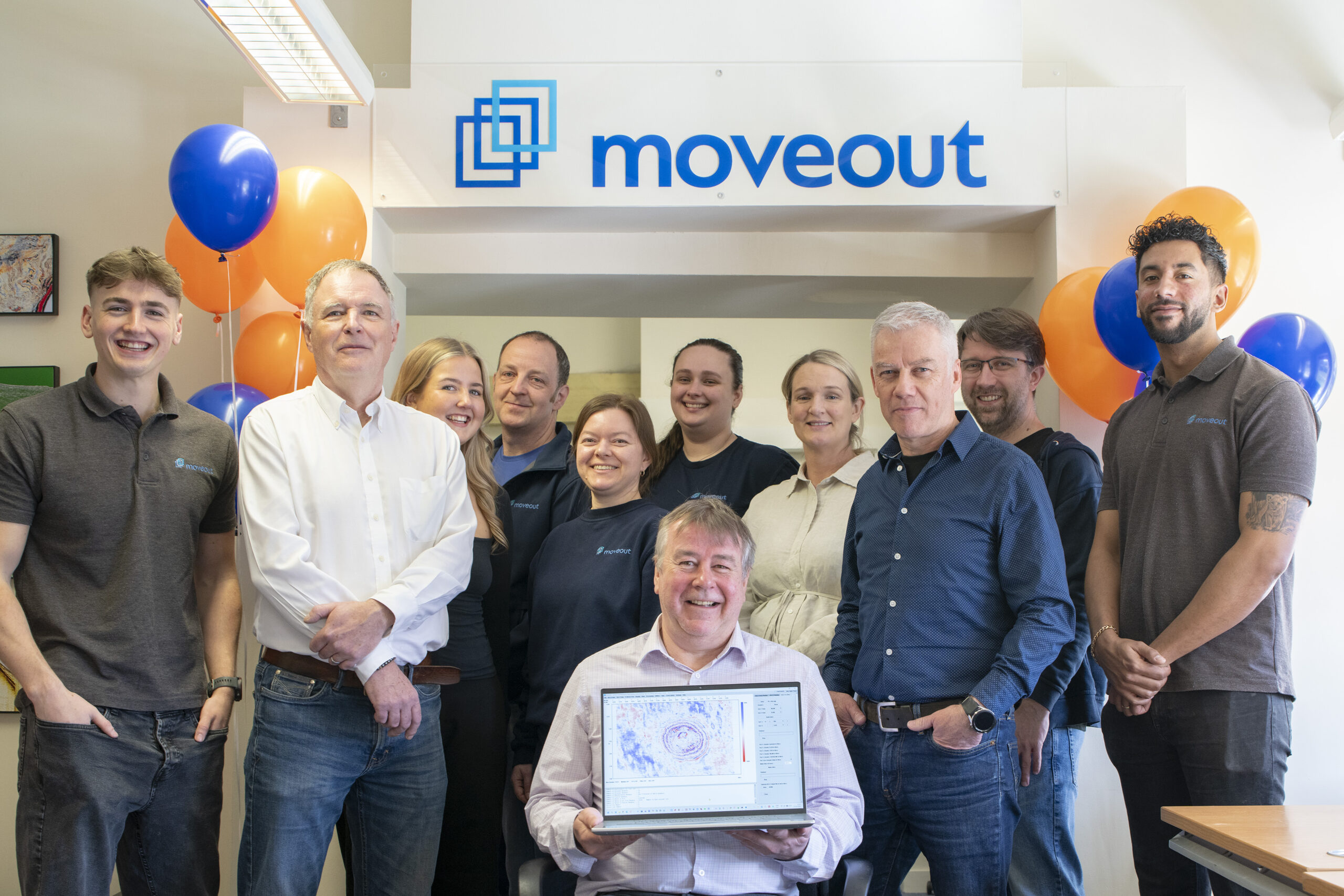
This operational background has shaped the design of Metaseis. Features such as integrated QC visualisation and flexible transcription modules are intended to allow users to interrogate and verify data throughout the transformation process. The company says its team has a total of over 300 years’ experience of acquiring seismic survey data, and knows what users need. This operational background has shaped the design of Metaseis, with features such as integrated QC visualisation and flexible transcription modules intended to allow users to interrogate and verify data throughout the transformation process.
A changing data landscape
The release of Metaseis comes at a time when the geoscience sector is re-evaluating how data is managed and utilised. As exploration strategies evolve and digital technologies mature, the ability to rapidly convert raw or legacy datasets into analysis-ready formats is becoming a key enabler of value.
By making its internal platform available externally, Moveout is positioning itself within this transition – not only as a service provider, but also as a technology supplier.
Whether this approach gains widespread adoption will depend on how organisations balance in-house capability with outsourced expertise. However, the direction of travel is clear: seismic data transformation is no longer a niche technical task, but a central component of modern subsurface workflows.