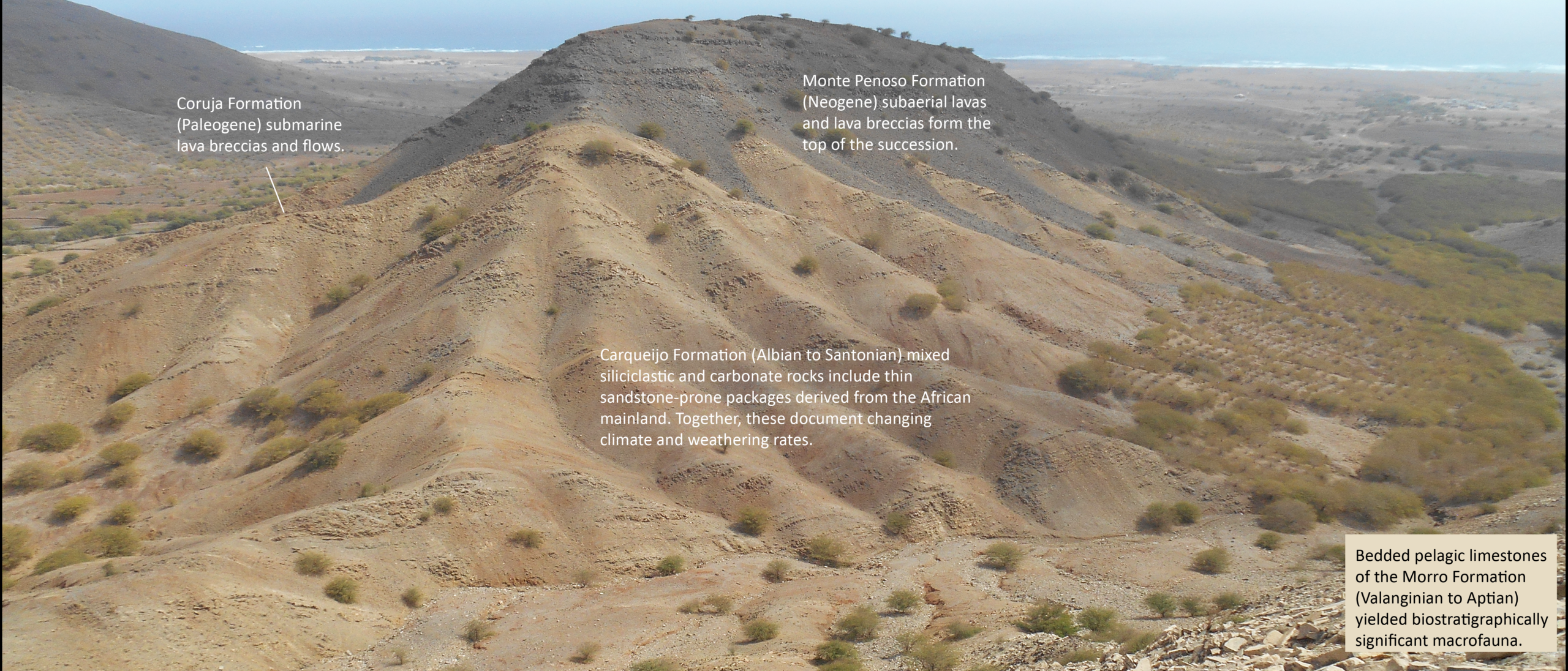
View from Monte Carqueijo north-westward on Lomba Vermelho (’Red Ridge’), western Maio, Cabo Verde. Photo: Simon Schneider.
Mid Atlantic ocean floor at outcrop

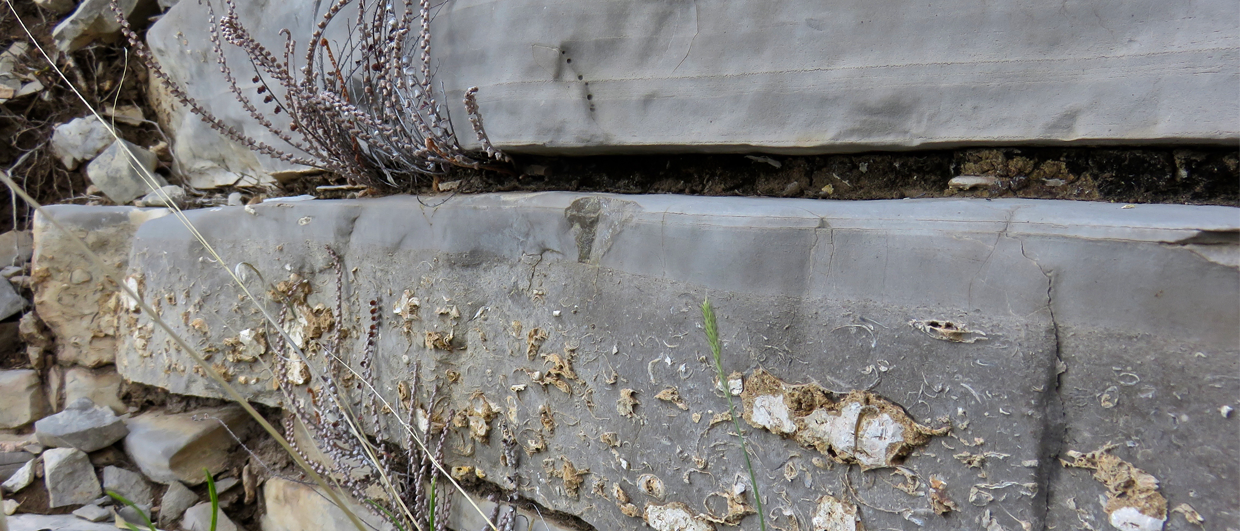
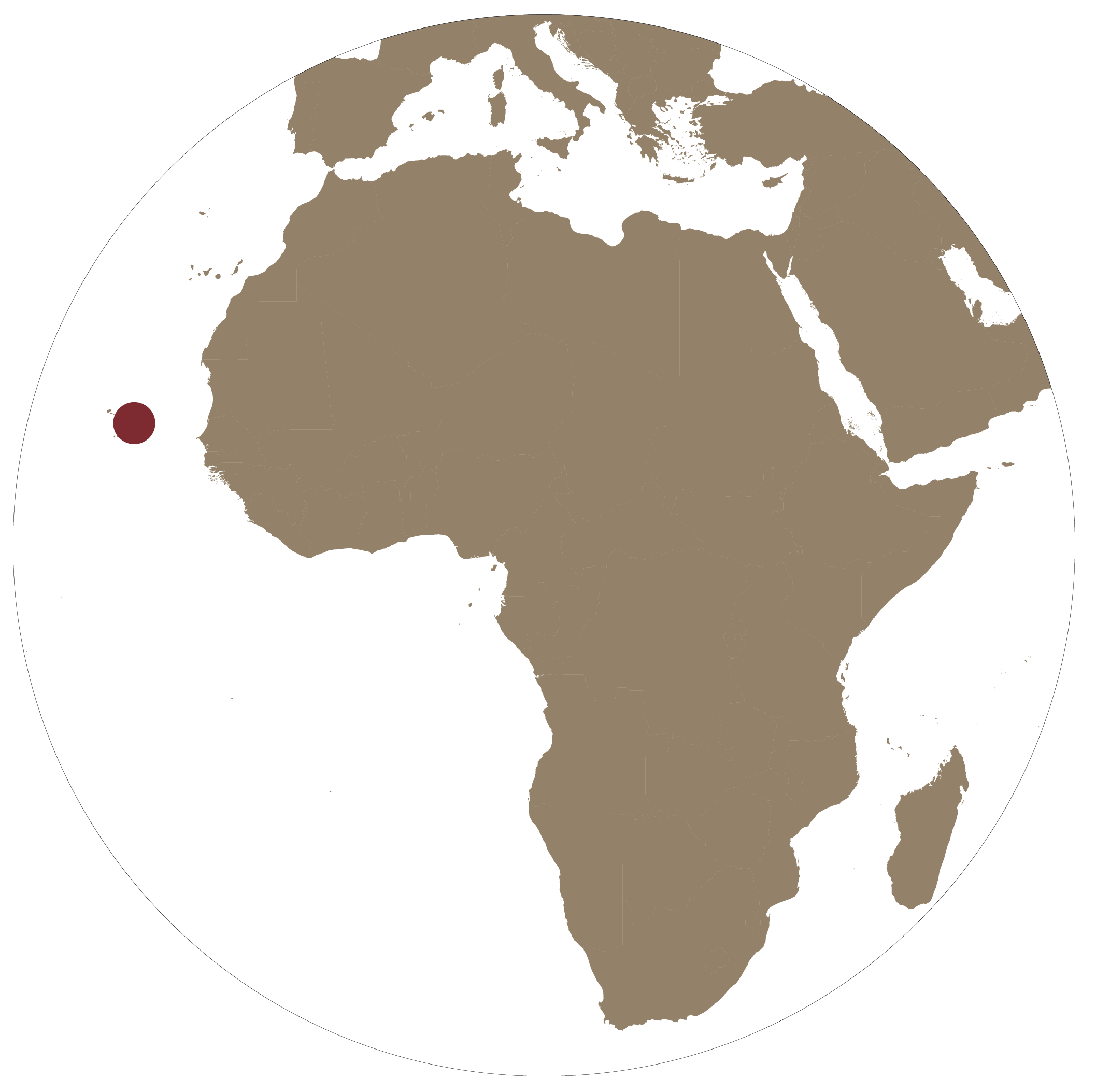 The island of Maio, Cabo Verde, 600 km the west of Senegal, is the only place where Cretaceous mid-ocean floor of the distal Mauritania – Senegal – Guinea Bissau – Conakry (MSGBC) Basin is exposed, providing a unique opportunity to study the early stages of mid Atlantic opening at outcrop. The Basement Complex of Maio comprises four units: Tithonian? to Valanginian pillow basalts of the Batalha Formation (not shown here) were extruded not far from the mid-ocean ridge of the nascent Atlantic. They are overlain by bedded limestones of the Valanginian to Aptian Morro Formation, which gradually pass into the mixed succession of the Albian? to Santonian Carqueijo Formation, dominantly mud – to siltstones and siliceous limestones. The Basement Complex is capped by Paleogene submarine lava flows of the Coruja Formation. These are overlain by Neogene subaerial lavas of the Monte Penoso Formation, which formed after the island of Maio had risen above sea level. The entire Basement Complex has been intruded by basaltic dykes, which account for up to 40 % of total thickness, and caused fragmentation and thermal alteration of the strata, making study of the sediments challenging.
Sands out of Africa
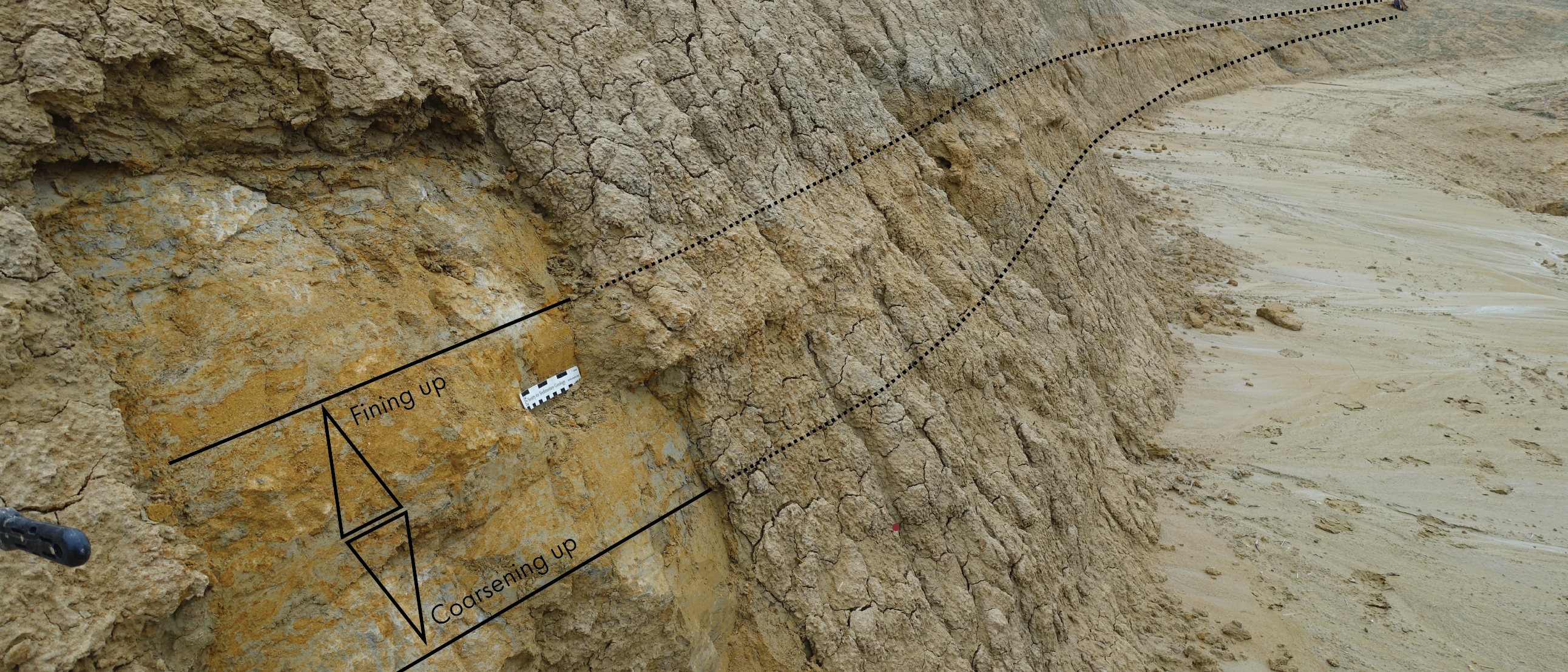
Thin, enigmatic sandstone-prone packages record the interaction between sediment-gravity-flow and bottom-current processes. These sandstones are distal equivalents of Late Cretaceous reservoir intervals in the MSGBC Basin. Their presence and provenance provide clues to basin configuration and indicate sediment pathways that extended well beyond the Mauritanian – Senegalese shelf, with implications for reservoir strata development and distribution. Two different sandstone signatures have been identified – one indicating a north-easterly source, and a second one, where the provenence is unknown, highlighting our still very limited understanding of west African geology.