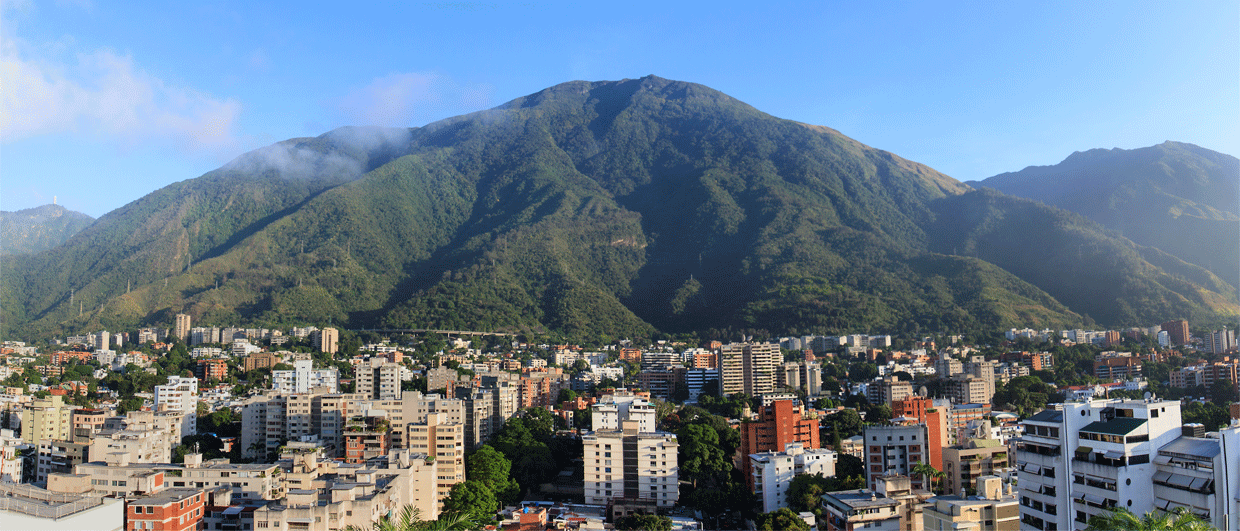
Caracas skyline, Venezuela. Photo: Eagle via Adobe Stock.
Before you decide to enter Venezuela…
The importance of correct and contextualised decision-making

In recent months, several articles emphasising the historical, technical, and human aspects of the evolving “apertura” in Venezuela have been published in the AAPG Explorer and GEO EXPRO. In the former, Brown provided geopolitical and historical perspectives and an indication of “the size of the prize”. Smith Llinas, also in the Explorer, pursued more personal stories from the perspectives of professionals who have worked in Vene-zuela, and summarised the geological reasons why Venezuela has such a rich petroleum legacy. The tone of these articles is one of restrained optimism…” there is a lot of oil, but”. It is the “but” and the steps that have been taken to mitigate it that are the thrust of this article.
The “but” is encapsulated by a cautionary tale from the early 1990s. In an article in Issue 1 of this year’s magazine, Kombrink spoke to former bp staffers who shared, with remarkable candour, the story of bp’s redevelopment of the Pedernales field in the Orinoco delta. The project failed fundamentally because bp failed to understand the complexity of the field. As a result, they misinterpreted the results of a pilot production programme, brought expensive rigs into the field before interpreting new seismic data, drilled new wells without understanding what they were finding and plowed ahead regardless, as the wells failed to deliver. Within this disastrous lack of integrated project management, there are important lessons for investors entering Venezuela after twenty years of isolation.
Help avoid mistakes
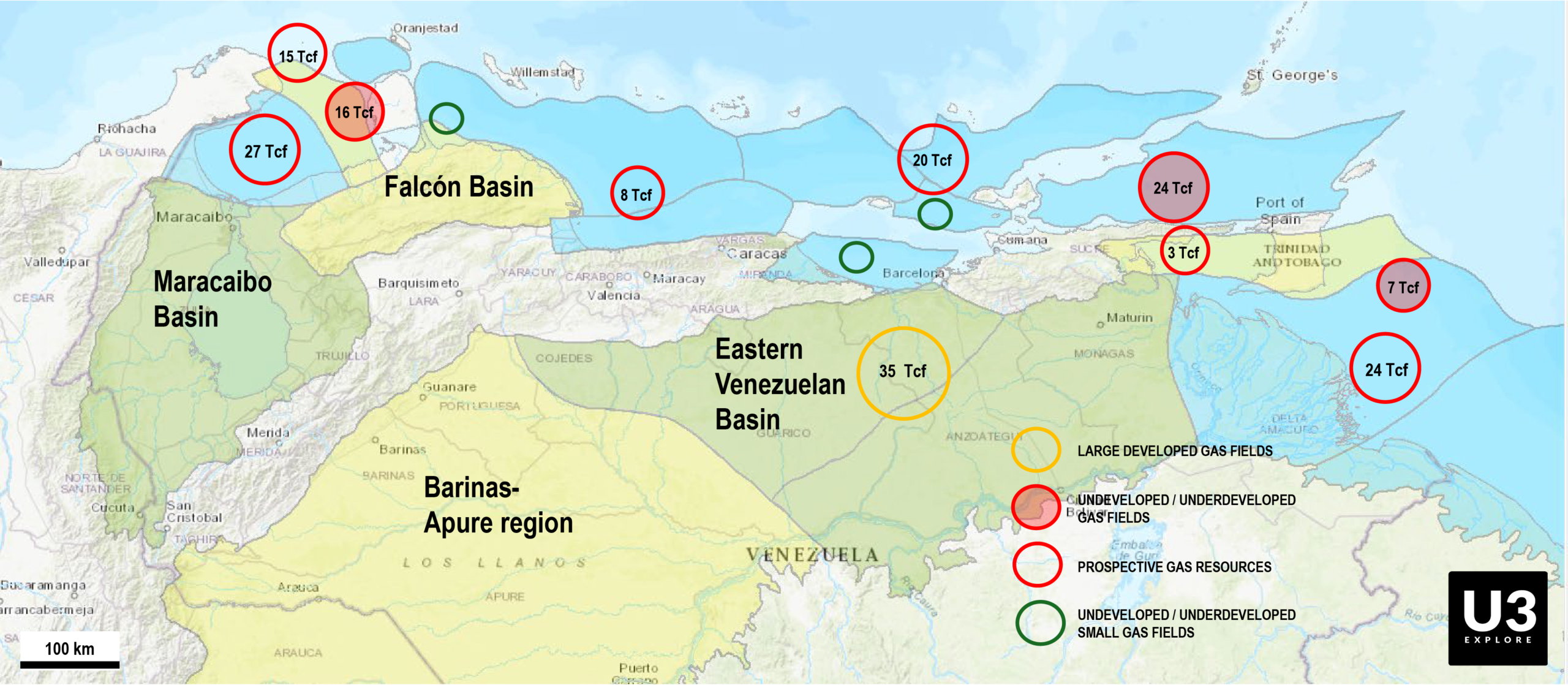
To steepen the learning curve for those investors, and to help avoid repetition of prior mistakes, U3Explore, over the past seven years, has developed an integrated understanding of the petroleum habitat in the major Venezuelan petroleum provinces of the Eastern Venezuelan Basin, Maracaibo Basin, Falcón Basin, Barinas-Apure region, and the Caribbean and Atlantic Margins. This work will mitigate what we believe would be two of the most likely root causes of failure in the revitalization of the Venezuelan oil industry.
Firstly, it is necessary to appreciate how assets and resources in Venezuela have been accounted for historically, which will critically impact the assessment of their current worth and future value. Standard practice in most IOCs and NOCs is to delineate assets and their associated reserve and resource volumes based on geological criteria of reservoir intervals or fairways across mapped accumulations with structurally and / or stratigraphically-defined bounds. In contrast, in Venezuela, resource volumes were historically accounted based on individual producing units in geographically delineated licenses delivering fluids to specific gathering sites with little or no reference to the subsurface structural or stratigraphic constraints. For an investing entity, acquiring such an “asset”, the uncertainties associated with the definition of remaining proven reserves, additional in-field resources, and exploration upside are significant, and the uncertainty in return on investment will be high without the ability to build a comprehensive and consistent ranking of opportunities.
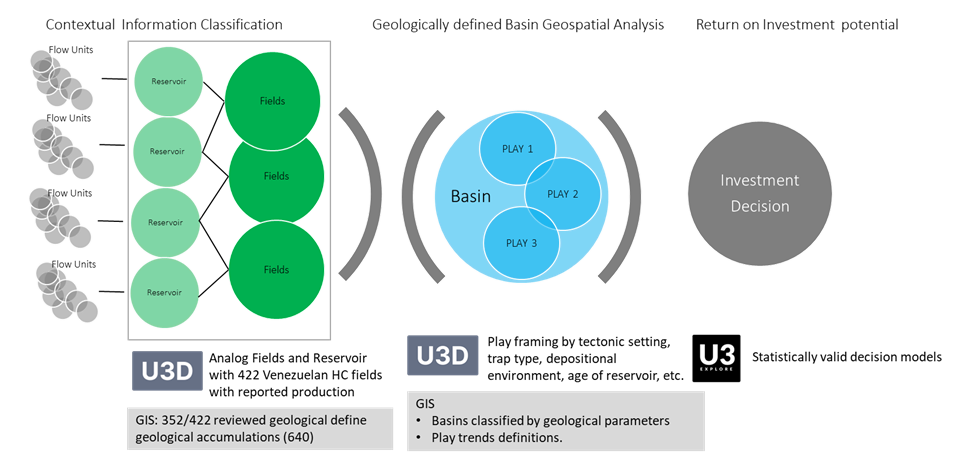
U3Explore’s Venezuela project mitigates this risk by delivering the geological context of significant numbers of accumulations. It is underpinned by the integrated analysis of 21,000 flow-units in 306 fields in the East Venezuelan Basin, and over 2,600 in 64 fields in the Maracaibo Basin. These have been tied together in the context of their basinal setting, stratigraphic age / reservoir fairway and fluid content. The associated reservoir, field and fluid data and volumetrics have been documented in georeferenced datasets (GIS), and a proprietary database “U3D”.
The analytical data points support back-calculation of the volumes available in actual fields, rather than geographical areas (Figure 2), and permit critical project analysis at flow unit and field scales.
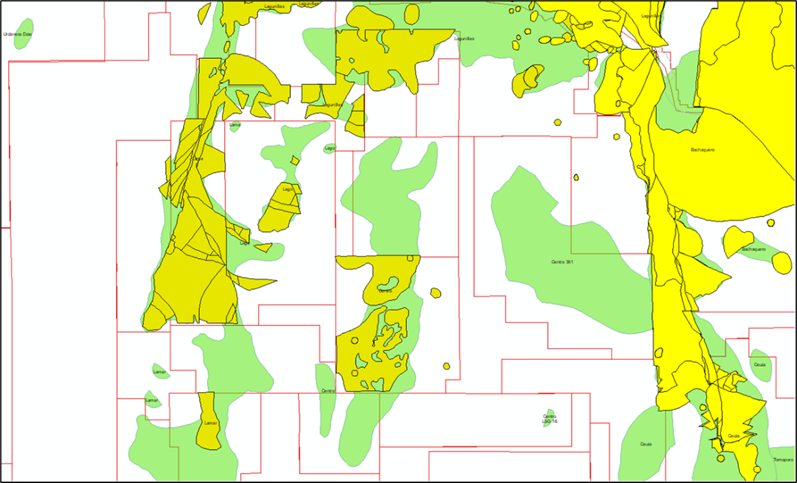
These newly validated and contextualised data can then be input to economic models for making informed investment decisions (Figure 3).
Coherent play fairway models
The U3 project was undertaken by ex-PDVSA professionals with decades of experience, parsing publicly available conference proceedings, theses, literature publications and PDVSA and Ministry of Energy reports and translating geographically defined resource volumes into geologically coherent play fairway-based models. This comprehensive piece of work mitigates another serious risk overshadowing projects in Venezuela; that of human capital.
Both Smith Llinas in the Explorer and Kombrink in GEO EXPRO draw attention to the fact that tens of thousands of highly experienced and skilled oil industry professionals left Venezuela as a result of purges in PDVSA and the later humanitarian crises in the country. With that diaspora, centuries of accumulated knowledge were fragmented, and have seldom been reconstructed outside of the U3 Venezuela Project. Outside Vene-zuela, but of no lesser importance, is the loss of human capital and data attrition within the IOCs. Most staff who worked on their Venezuelan projects have departed, and our experience suggests that many of their databases and reports will have been lost to the literal dumpsters of history. The U3 project will, to some degree, fill the gap, facilitating guided entry into projects, avoiding erroneous assumptions and unrecognised risks, reducing uncertainty and delivering on the promise of large returns.