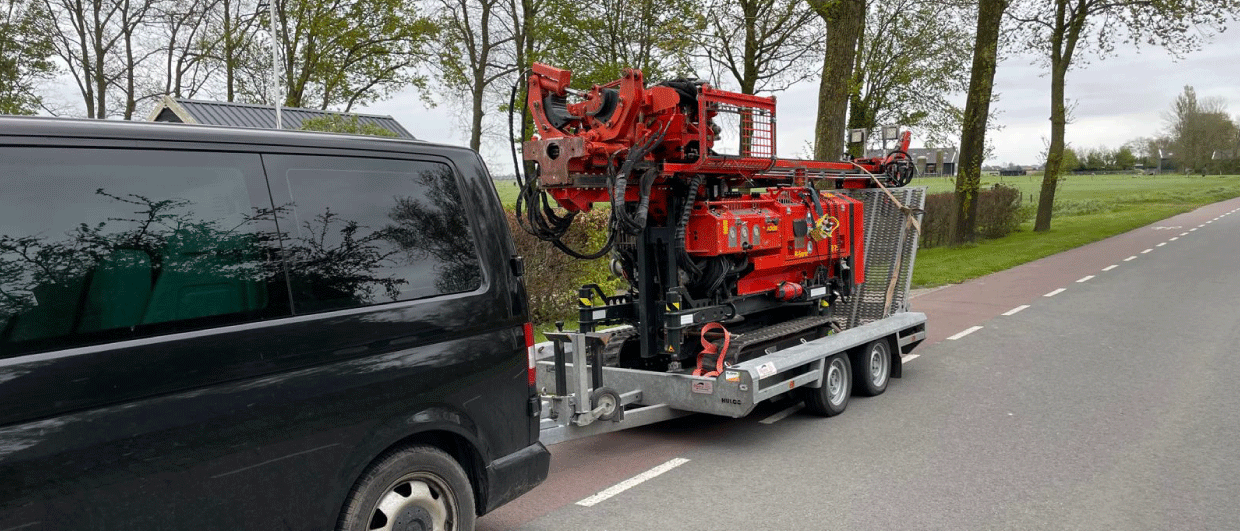
The drilling machine on a trailer. Photo: Ryan Gatherer.
Slim is smart
Why smaller boreholes are a big win for shallow geothermal

“Why drill 150 mm when 120 mm will do?” That simple question sparked an ongoing discussion between Bruce and his son Ryan Gatherer. Bruce has spent more than 35 years in the drilling industry and now works for Iceland Drilling, travelling the world to drill deep geothermal wells for power production. Ryan followed a different path – into the world of shallow geothermal in the Netherlands with Geothermal Drilling Service – but the dinner table conversations are often related to drilling challenges and optimisation. Lately, they’ve focused on one thing: Going slimmer.
“Every job I do is different,” Ryan says. He operates a compact two-tonne drilling rig designed for tight access projects – often in small residential backyards. “This isn’t a large construction site where you can easily move a 15 t rig and manage cuttings without constraints,” he says. “Sometimes we even have to hoist the rig over a building just to reach the drilling location. Everything is bespoke – from access to cutting removal.”
Working in confined spaces forces careful planning and efficiency, and reducing borehole diameter is very much part of that.
Slimmer means smarter – but not easier
Cost efficiency is always a consideration. But as Ryan emphasises, smaller doesn’t mean simpler. “The slimmer the hole, the more critical borehole stability becomes.”
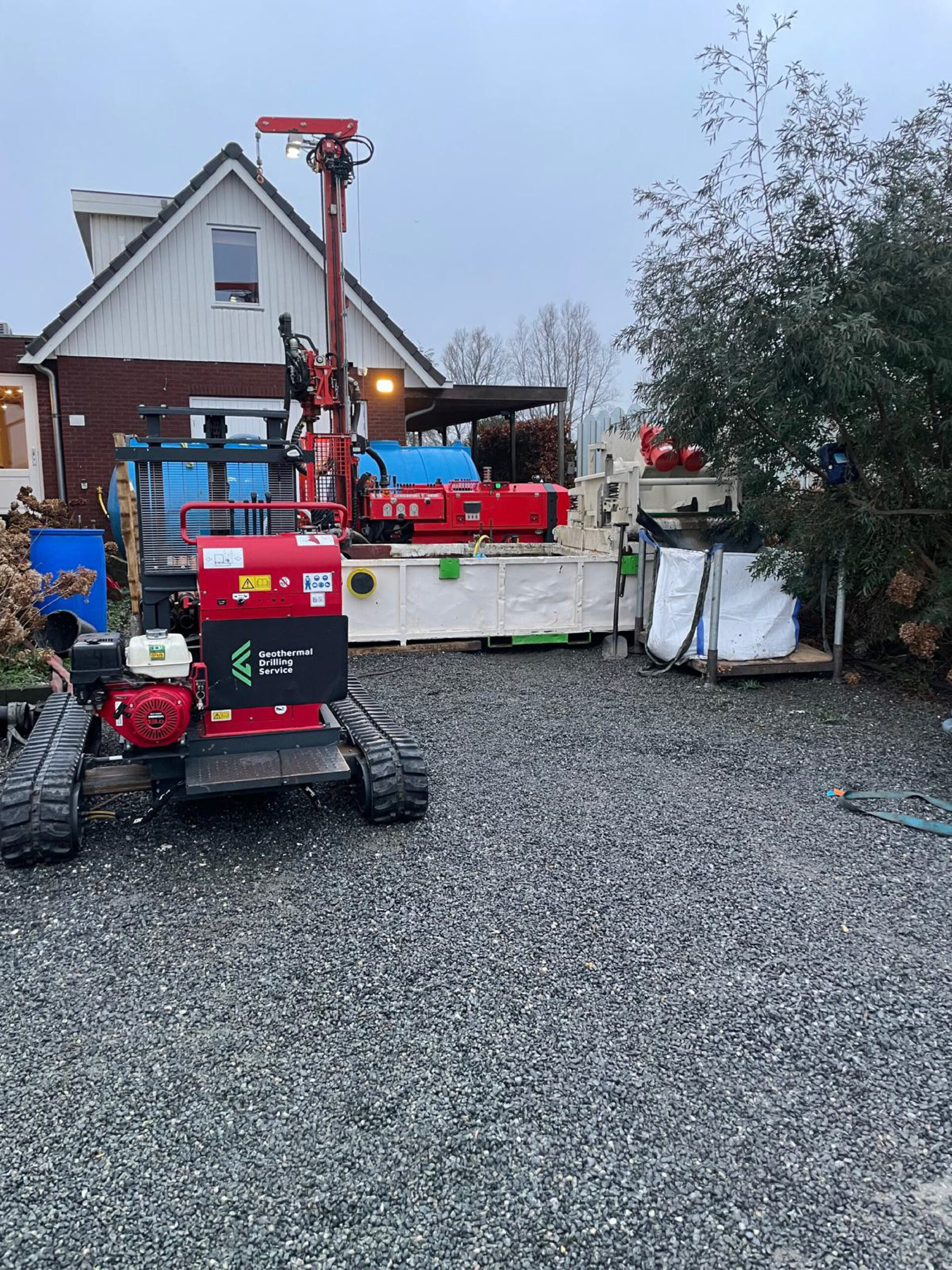
The Dutch shallow subsurface is full of sandy, water-bearing and unconsolidated formations. These are highly prone to collapse, with margins for error shrinking as the diameter of the hole decreases. That’s where discipline in drilling fluid preparation becomes essential.
Like many contractors, Ryan relies on bentonite-based drilling mud to stabilise the borehole. “It acts like wallpaper,” he explains. “It lines the borehole wall, limits sediment movement, and helps prevent collapse due to its slightly higher density than the groundwater.”
But the real difference lies in preparation. “Mixing bentonite properly takes patience. It’s like wallpaper paste – it needs time to fully hydrate. If you rush it, the fluid doesn’t have the viscosity or cohesion required. It can simply disappear into permeable formations before it’s ready to do its job.”
Waiting for full hydration improves fluid performance dramatically, particularly in slim holes where hydraulic margins are tighter and fluid loss is less forgiving. Through careful fluid management and continuous optimisation, Ryan has now successfully drilled 120 mm boreholes to 150 m, capable of accommodating two 32 mm geothermal loops.
“Some people didn’t believe it was possible,” he says. “But it works.”
The benefits are immediate: Less ground cuttings, reduced grout volume, smaller environmental footprint thanks to faster drilling and improved site logistics. And critically, proper grouting remains easier to control when volumes are optimised, reducing the risk of crossflow between water-bearing layers.
Reducing borehole diameter by 30 mm may seem incremental, but it results in a reduction of waste production from 2.65 m3 to only 1.70 m3. In practice, it represents a meaningful step toward smarter, leaner shallow geothermal installations.
“It requires planning, it demands patience and also depends on fluid discipline. But when done properly, slimmer truly is smarter,” concludes Ryan. And sometimes, innovation starts with a simple question from dad.