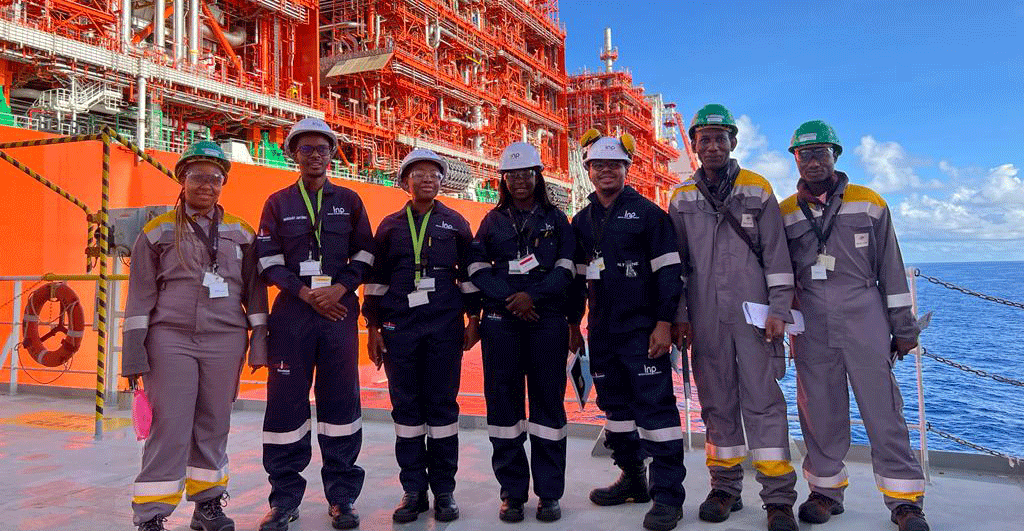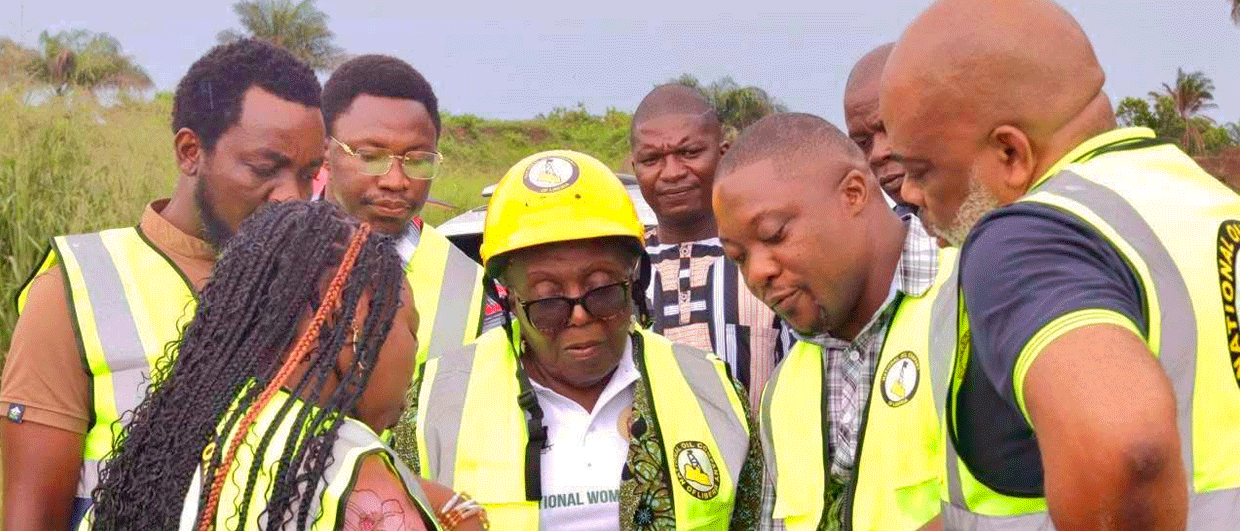
Executive Management of NOCAL accompanied the Board of Directors, including the Chairperson, on a visit to the proposed shore base sites in Buchanan. Following the visit, the Board gave final approval for work to begin. Photo: NOCAL Public Affairs Unit.
Liberia’s quiet rise: Inside the country’s emerging petroleum industry
An interview with Timothy Jarry, executive operations director at NOCAL and nominee for the Africa Oil Week 2026 Exploration award

Liberia is often described as one of West Africa’s last true frontier basins, an offshore province with world‑class geology but still awaiting its first commercial discovery. As the National Oil Company of Liberia (NOCAL) intensifies seismic reprocessing, regulatory reform, and investor outreach, the country is positioning itself for a new phase of exploration activity. Few people have witnessed this evolution more closely than Timothy Jarry, a petroleum and chemical engineer with more than twenty‑two years of experience across upstream and downstream operations.
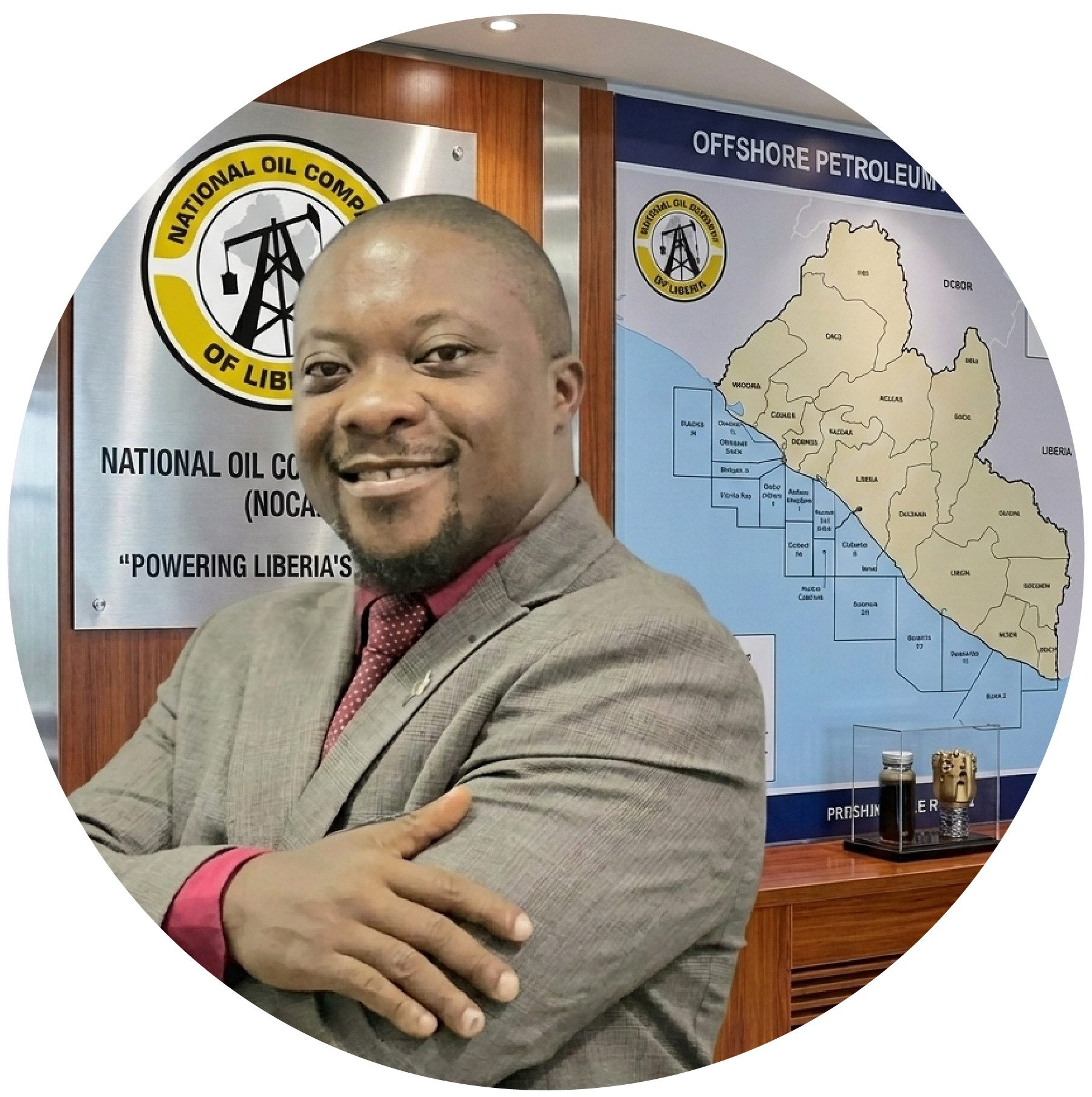
Jarry has spent over thirteen years at NOCAL, contributing to projects that have helped transform Liberia from a post‑conflict basin with limited data into a modern exploration jurisdiction with 33 offshore blocks, extensive seismic coverage, and confirmed petroleum systems.
Jarry began his career in the downstream sector at the Liberia Petroleum Refining Company (LPRC), working in quality control and product assurance. That experience, he says, “fuelled my passion and paved the way for me to transition into upstream activities,” eventually leading him to NOCAL, where he now is Executive Director of Operations, managing upstream activities, downstream projects and some major support services.
When Jarry entered the sector in the early 2000s, Liberia was still recovering from civil conflict. Exploration activity had been intermittent for decades, with several wells drilled between the 1960s and 1980s but no commercial discoveries.
The turning point came after 2003, when NOCAL relaunched offshore licensing rounds and partnered with companies such as Chevron, Anadarko, and African Petroleum. These campaigns confirmed a working petroleum system, most notably through the Montserrado‑1 (2010), Narina‑1 (2012), and Bee Eater‑1 (2013) wells. Since then, Liberia has invested in extensive seismic acquisition and reprocessing to be exploration-ready.
We have the data, the legislation, and the geological evidence. What Liberia needs now is more drilling
“Liberia is better positioned today than at any point since 2004,” Jarry says. “We have the data, the legislation, and the geological evidence. What we need now is more drilling.”
“Basin modelling and seismic, gravity, and magnetic surveys can reveal promising structures, but only wells can confirm commercial hydrocarbons. Each new well will substantially reduce geological uncertainty and improve understanding of the petroleum system.”
His argument aligns with Liberia’s broader strategy: the government has opened 33 offshore blocks for direct negotiation, encouraging international companies to participate. Liberia’s offshore geology shares characteristics with Guyana, Ivory Coast, and Namibia, regions that have delivered some of the world’s most significant recent discoveries.
Jarry believes Liberia’s biggest milestone in the coming decade will not simply be producing its first barrel of oil. Instead, it will be transitioning into a competitive offshore petroleum jurisdiction. This involves integrating advanced geoscience methods and technologies, transparent regulations, active local participation and responsible resource management.
If Liberia establishes these fundamentals, he argues, commercial discoveries can become long‑term national assets that support economic diversification and sustainable growth.
Among Jarry’s accomplishments, one stands out: his leadership in developing Liberia’s first dedicated petroleum shore base.
In 2019, he proposed constructing a logistics hub near the Port of Buchanan to support offshore exploration and future production. By 2020, NOCAL, working with the Liberia Land Authority and National Port Authority, acquired two properties as potential sites.
A shore base would play a critical role in supporting Liberia’s offshore oil and gas sector while generating wider economic and infrastructure benefits. The facility would serve as a logistics hub for offshore exploration and production activities along Liberia’s Atlantic margin.
Jarry is currently overseeing work to commence feasibility and geotechnical surveys to prepare the sites for construction.
When this is in place, it sounds like Liberia might soon join the ranks of Atlantic margin producers.