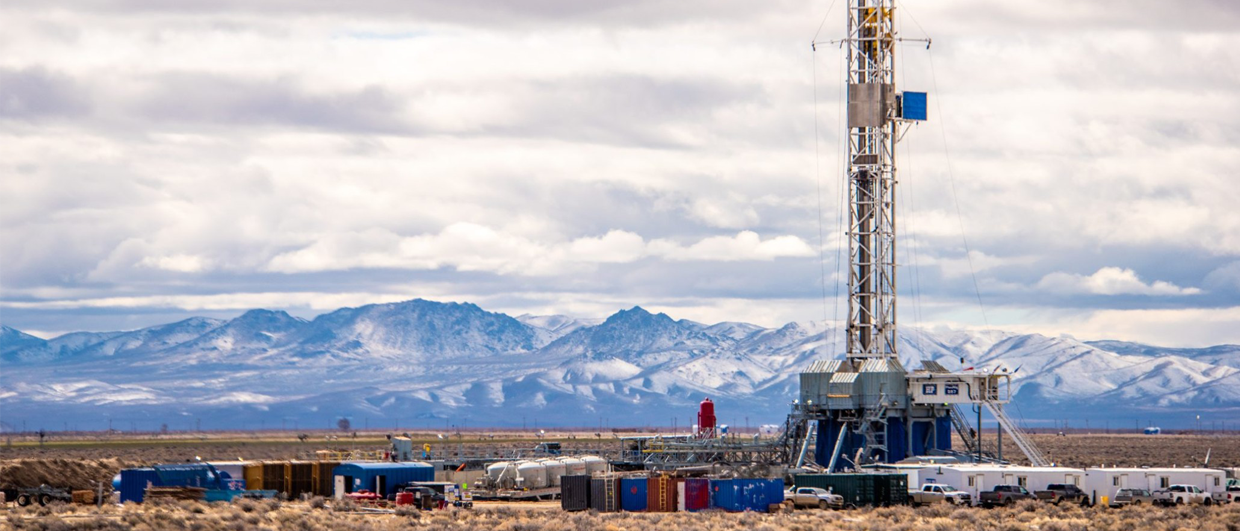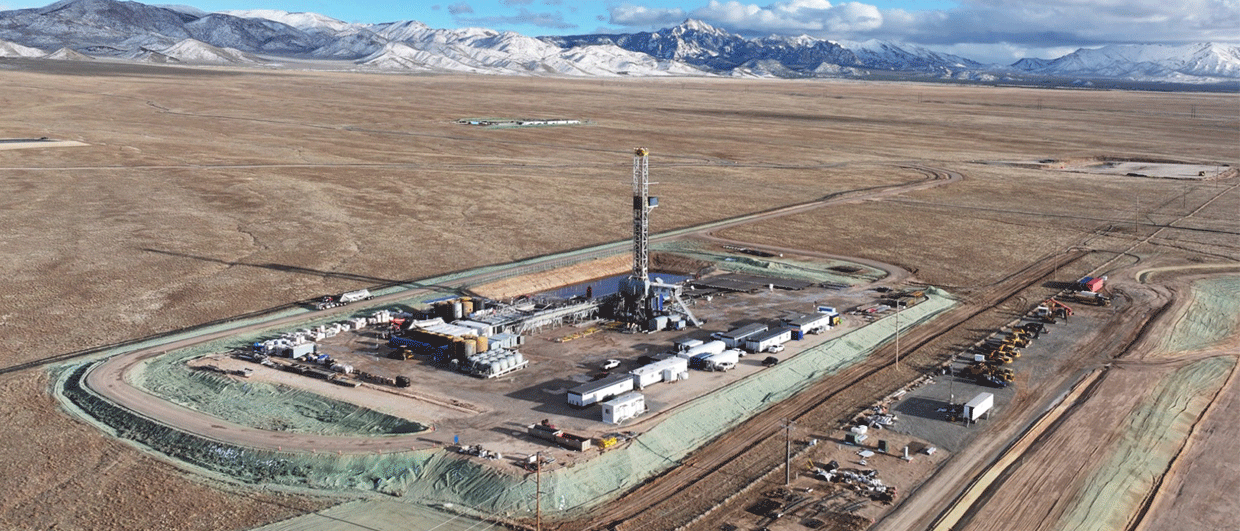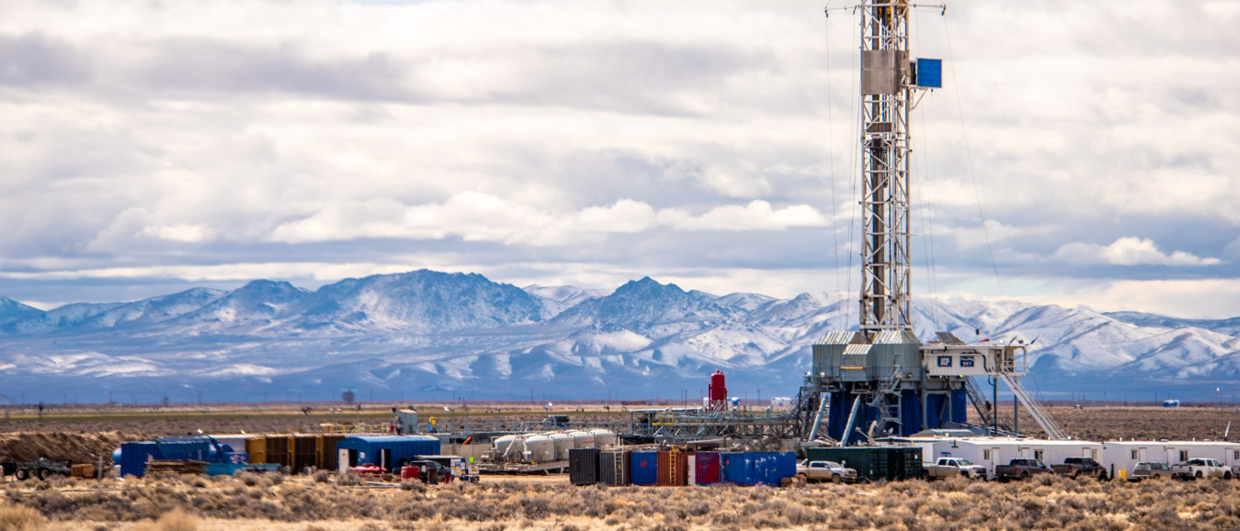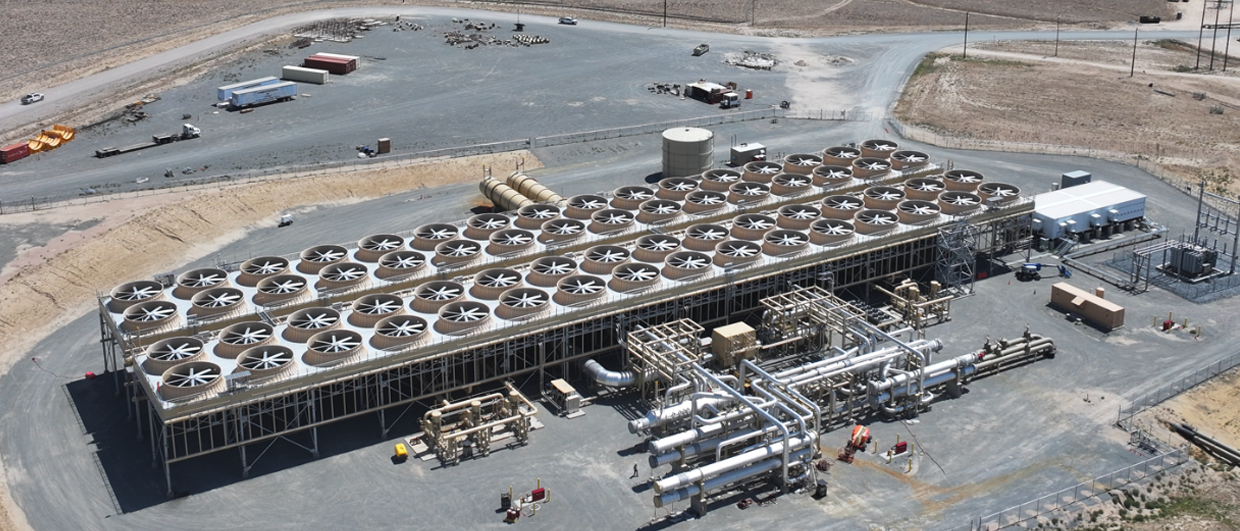
Cape Station's GeoBlock 1 is now operational. Photo: Fervo
Fervo’s Cape Station reached a milestone last week, but the next one is even more important
The celebration of first power only had a very short-lived positive effect on Fervo’s overall declining share price

Last week, Fervo celebrated first power production from their Phase 1 100 MW flagship Cape Station project in Utah, US. This was a milestone moment, given the size of the development. In addition, the announcement came slightly earlier than foreseen, with the company initially expecting first power from the first of three 33 MW GeoBlocks – a cluster of injection and production wells connected by induced fractures – in the fourth quarter of this year.
The market responded with enthusiasm. Fervo’s share price rose from $16.3 to $18.2.
But this didn’t last long, and when the market closed a day later on Friday 25 September, the share price had fallen below what it had been just before the announcement of first production. And at the moment of writing, it has even fallen further to around $14, which is the lowest it has been since IPO in May this year. Why was this big moment such a short-lived spike?
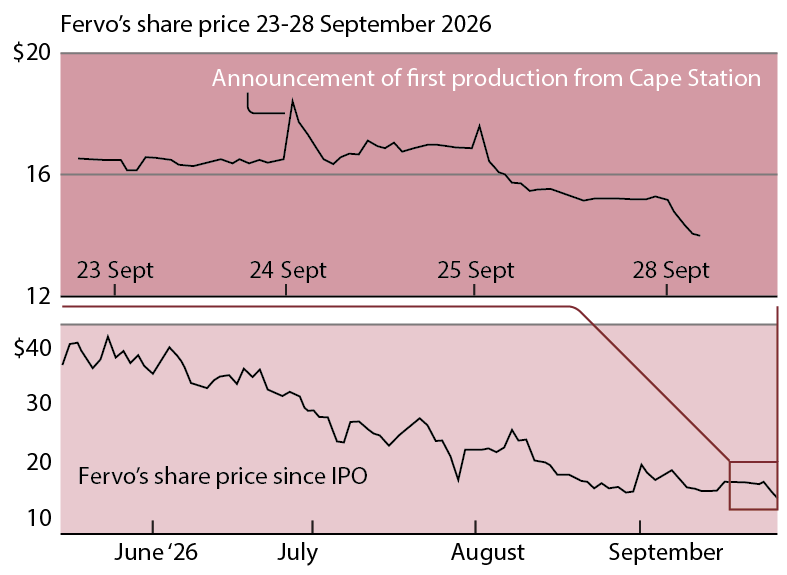
When asking AI about the latest drop in Fervo’s share price, the main reasons given are “mounting anxieties over project execution, analyst’s target price cuts and the ongoing concern about grid transmission curtailment risk”. When looking at the past six months, and asking the same question again, a Q2 earnings miss and an overall sentiment that the initial price was inflated seem to be the main drivers for the longer-term downward trend.
Against this backdrop, the announcement of first production has not done much to bring relief, despite the importance of the moment.
But what could buck the trend? Of course, finding solutions to grid curtailments will obviously help. Above-ground conditions matter. But at the end of the day, the subsurface has to deliver the power that Fervo has committed to supply, and although that aspect does not seem to be surfacing so much in the overall share price narrative, what will certainly provide confidence is to have confirmation that the first GeoBlock is indeed delivering 33 MW to the grid. We have to wait some days for that to happen though, since the company states that it is still “ramping up GeoBlock 1”. If that is 33 MW as promised, I would say that there might be a more lasting effect on the share price.
But what if the first GeoBlock does not deliver the 33 MW as promised? As Elliot Yearsley wrote here, it is mainly the subsurface that will determine how much energy the system of induced fractures between a series of injection and production wells will generate. And with every GeoBlock that starts production, this question will be asked again, because the subsurface setting and hence the distribution of induced fractures will be different for each GeoBlock. Also, Fervo’s technology of long laterals connected via induced fracture systems does not yet have a long-term production history in the public domain that demonstrates long-term viability of the system in term of energy output.
The only longer-term production data Fervo thus far has is from Project Red. Until last week, this was the only project that has been generating power and therefore revenue. With that in mind, noting that Q2 earnings were lower than expected, does this mean that Project Red is not generating the power it is supposed to be? Of course, compared to Cape Station, which is supposed to generate 900 MW at the end, Project Red’s 1.3 MW is very small and of limited scope. But still, if Q2 earnings disappoint, the least that can be said is that this initial “proof of concept” project might not have proven the concept.
So, with grid curtailments, project execution and price inflation cited as two of the main issues explaining Fervo’s share price drop in recent months, let’s not forget that the subsurface is another important one to consider here. The GeoBlocks can be standardised, but the subsurface they are being drilled in can certainly not. That risk needs to be factored in together with the above-ground challenges.