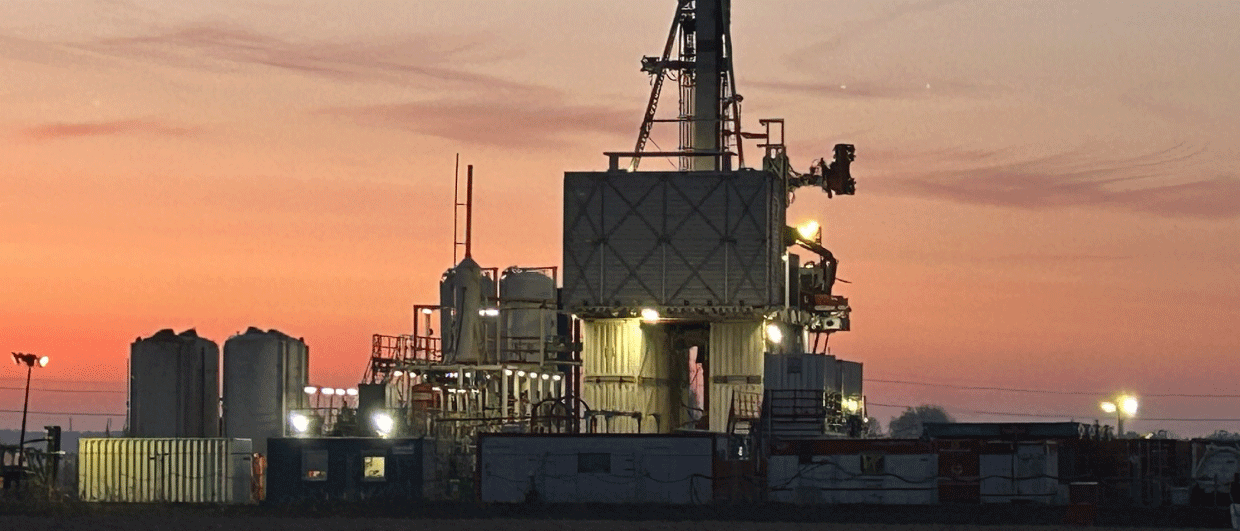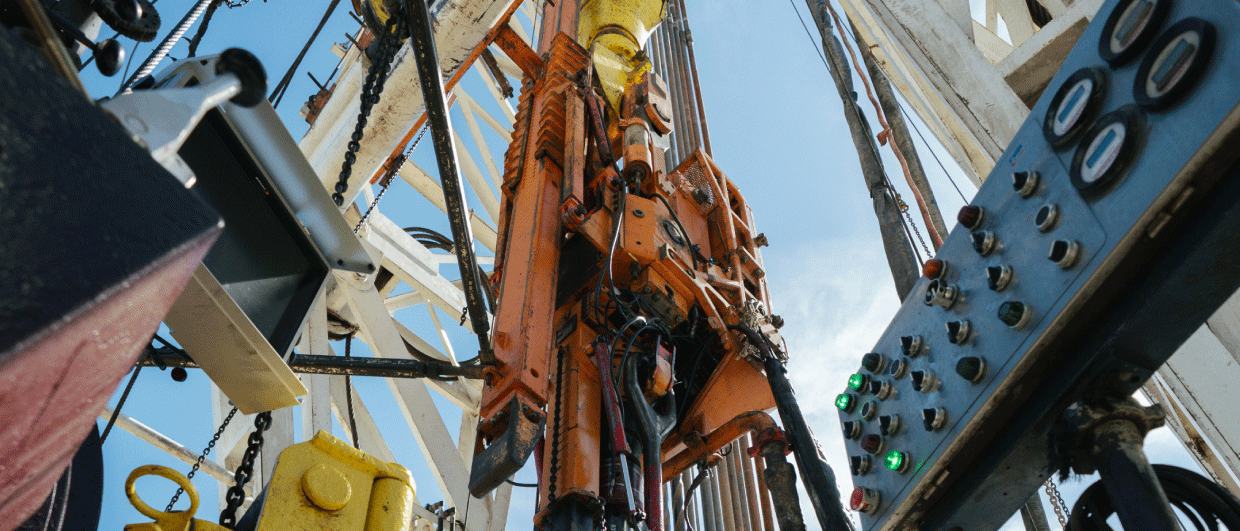
The Kansas drill site where the first test well was recently completed into granites. Photo: Deep Fission.
Drilling a well to produce nuclear energy
How a US company brings together technology from the oil and gas and nuclear sectors to build small nuclear reactors one mile below the ground

The first time I heard about the company Deep Fission was through a conversation with an operations geologist. He had been working on the first well dedicated to the company’s project in Kansas, USA. It all sounded a bit odd to me, putting a small nuclear reactor in a borehole, but when you listen to a few of Deep Fission’s videos and read through the website, it may actually make sense.
One of the main issues the company, which was founded by a father and daughter – Richard and Liz Muller – tries to tackle is the time it takes for “conventional” nuclear reactors to be built these days. It can easily take ten years, with one of the key factors being the extensive safety measures that need to be taken into account when building a reactor. If you place a small reactor at a depth of around 2 km underground, the walls are in place already, and the footprint at surface can be a lot smaller too. That is the main reason why Liz Muller, who is the CEO, is confident that they can achieve commercial production within the timeframe of two to three years instead.
As mentioned before, Deep Fission has recently drilled a test well in Kansas at the so-called Parson site to a depth of around 1,8 km. The main difference with an oil and gas well is the diameter of the well at depth; looking at images of the canister that will hold the reactor, the hole could have a diameter of around 50 cm or more. The lithology the company is probably targeting is granite, as suggested by a core photo from the website.
The idea is for the small pressurised water reactor to be placed in a canister, lowered down the hole, which is subsequently filled with water. One reactor is supposed to generate around 15 MWe, which is not that much, and compares to what a prolific geothermal well can produce. But in this case, there is no scaling nor a temperature decline.
Deep Fission went public on the 18th of June this year, raising around $40 M. However, the share price dropped straight away from around $15 to $10, and is currently sitting at $7.11 amidst concerns about escalating costs and the timeline to first production which is still very much unknown.
The company has now started to drill the second well in their campaign, and also announced that they already have signed Letters of Intent with various data centres and other industrial entities for the delivery of a total of 18.5 Gw of generation capacity. That would require more than 1,000 wells, meaning that the technology needs to upscale fast. Since the company aims to use known technology, with the only difference being the new setting, the teething issues may hopefully be limited.