Photo: Adobe Stock.
Listen to the drill bit
How a deep exploration well in Libya gave away essential geological information through drill bit performance

“Our runs are getting shorter and shorter…” That’s what Harrie and Nick from Aurora Drilling Optimisation Services were told by the Shell team that was drilling a deep onshore exploration well in Libya about 15 years ago.
They helped design the bits and BHA programme for the 8,5 in and final section of the well, and were also involved with monitoring drilling progress. At the time, Shell was working on an extensive exploration programme across various countries, including Algeria and Saudi Arabia, in the search for deep and tight gas resources.
When drilling performance became a geological indicator
“In a frontier setting like this,” Harrie says, “you need to be open to surprises, because offset wells are few and far between. And for that reason, you need to have bits available that might be required if drilling doesn’t go to plan.”
And that’s exactly what happened in Libya.
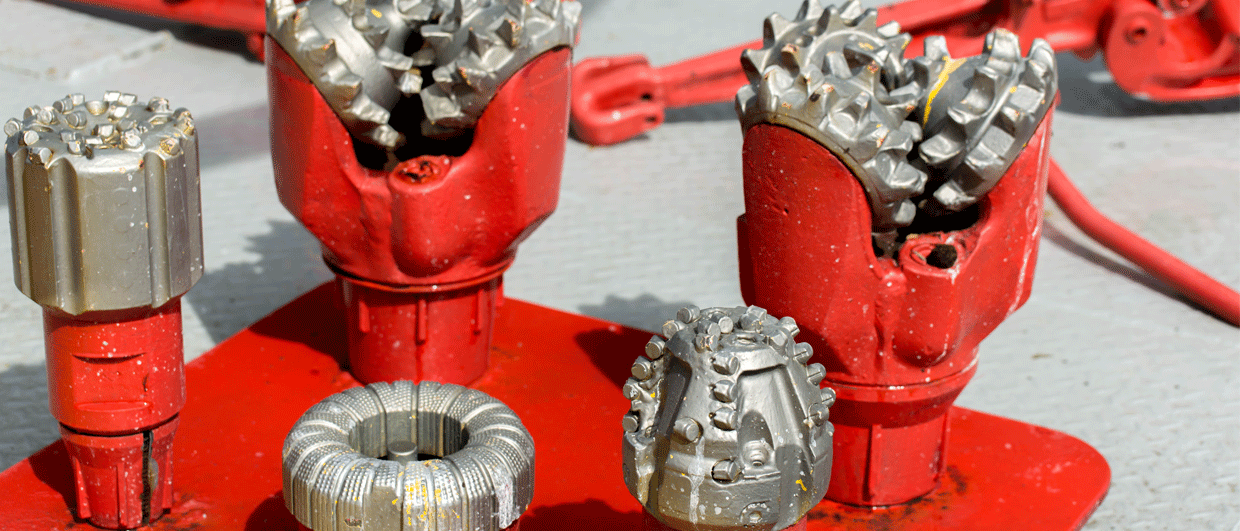
Due to the bit runs getting shorter and shorter, calls were set up with the rig, office and technical team in Houston. The team in Houston recommended running the same PDC bit and sticking to the original plan.
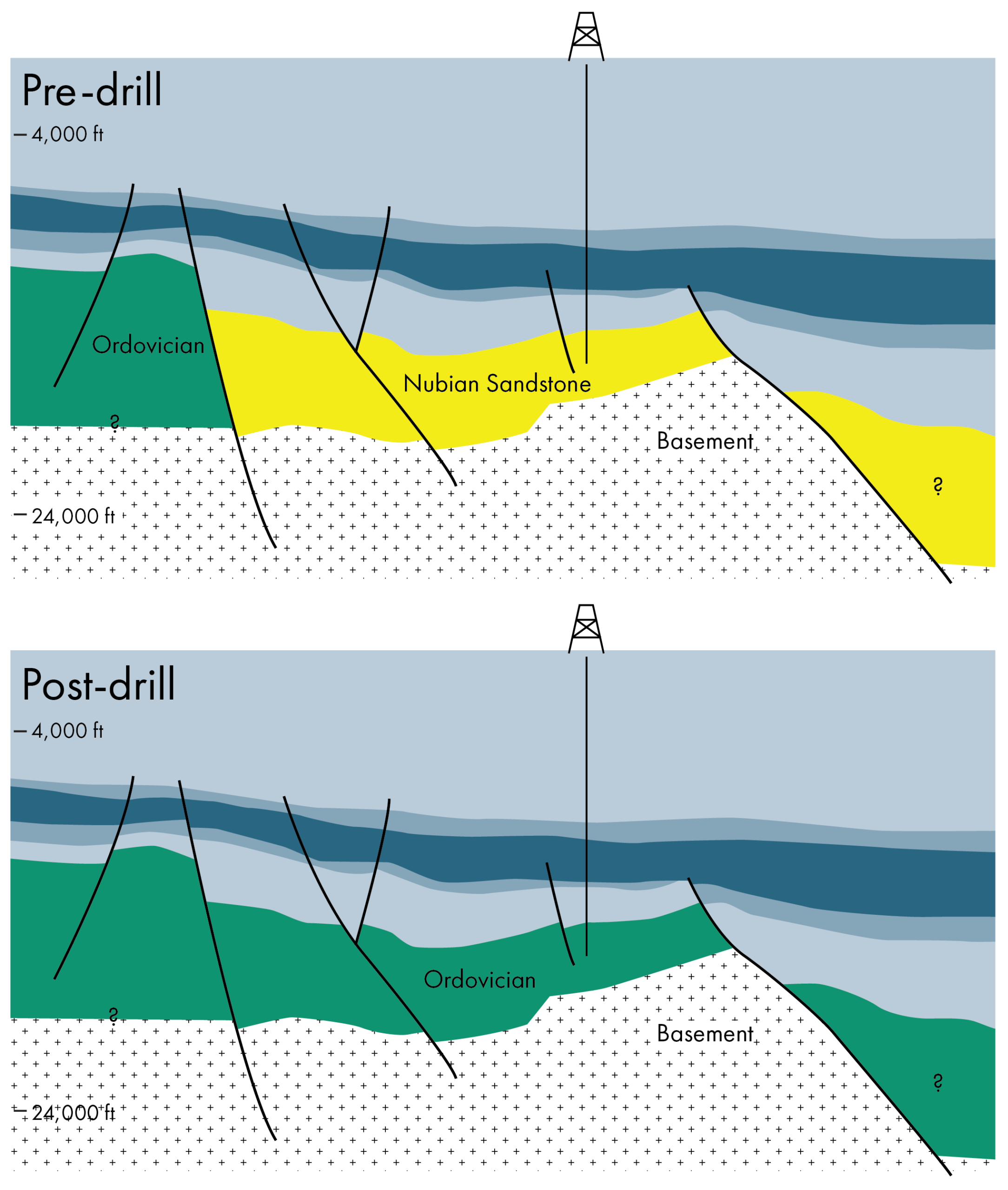
“We did not agree with that approach,” says Nick. “The ROPs told us that the geology was different from what was prognosed, and we felt that we needed to change the bit’s cutting structure accordingly.”
“The problem with such low ROPs is that you don’t really get much useful geological material to surface,” says Harrie, “because the formation is ground to powder. And that’s a shame, especially because we were in a frontier setting. You need the geological information from the cuttings to determine in what interval you are.”
At the same time, Harrie and Nick understand why there was resistance against changing the bit. “The alternative was to go for an impregnated turbine-driven bit, and these tools have the reputation of leaving even less visible traces of the geology. That was the main reason why we experienced pushback. We didn’t fully agree with that statement, though, also given the fact that drilling was so slow with the PDC bit that hardly any meaningful cuttings returns were seen anyway.”
During that phase, as drilling very slowly progressed, the geologists went back to study the “cuttings” material again, and with what they could reconstruct, the conclusion was soon reached that they had indeed landed in an interval that was much older and harder than what they had prognosed – the Ordovician Gargaf Formation, in contrast to the Nubian sandstone of Cretaceous age, which was the target of the well.
“It meant that Nubian was missing at this location altogether,” said Harrie.
The team had to continue drilling, though, because of a well depth commitment. “We swapped to an Impregnated Turbine bit, which we had recommended as soon as runs started to decline, and reached TD quickly.”
Looking back, the decline in ROP could have been sufficient to conclude that the geology was different from what was foreseen.