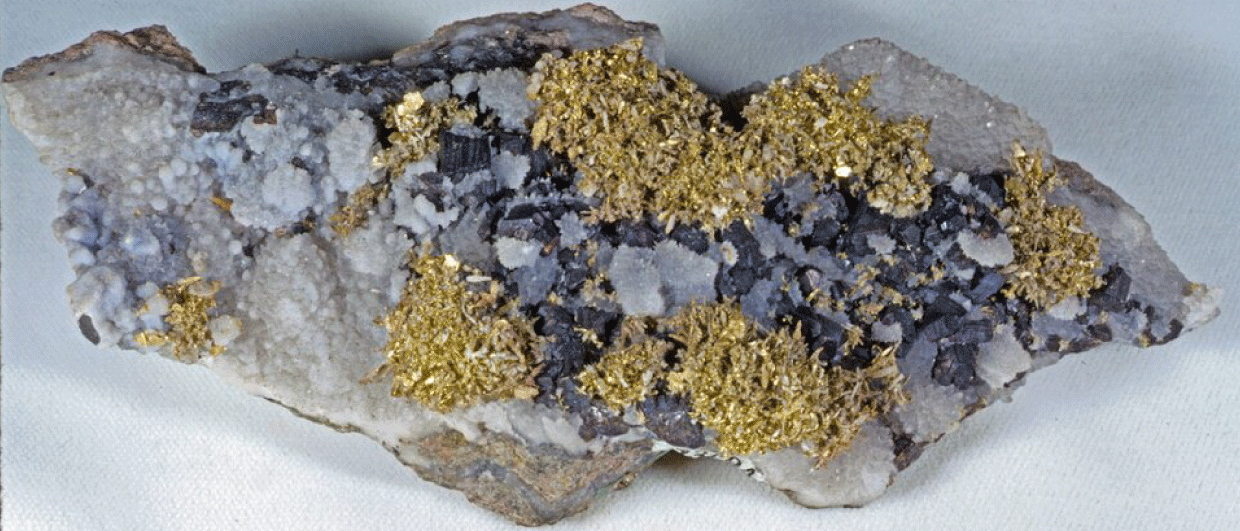
Gold and sphalerite on quartz, illustrating hydrothermal mineralization. Source: Harvard University Mineralogical & Geological Museum. Photo: Rock Currier via Wikimedia Commons.
What else is hiding in your reservoir brine?
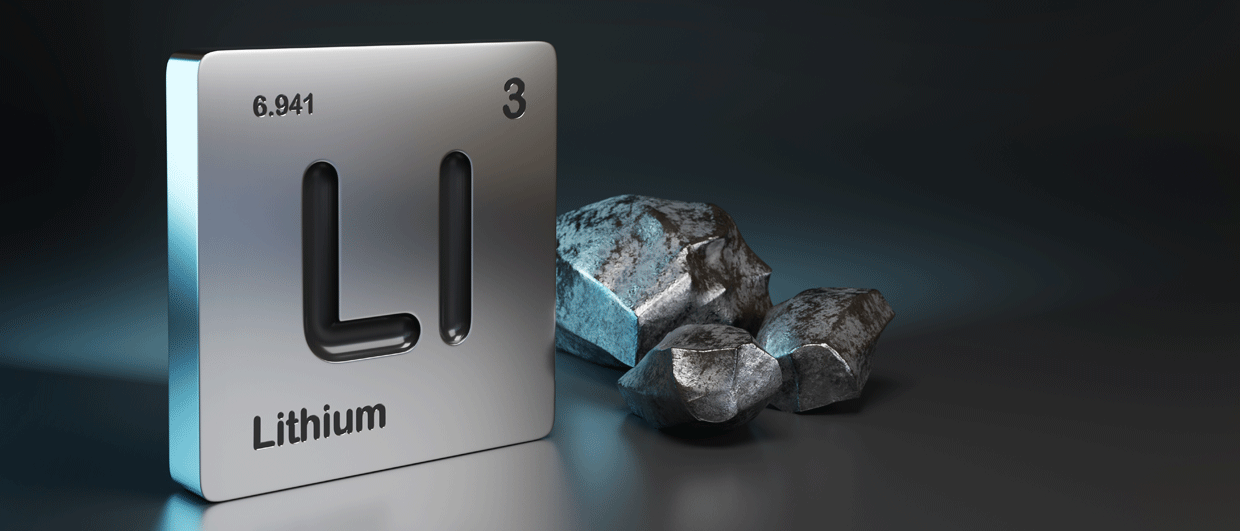
Lithium may have started the conversation. Gold is how it continues

In oil and gas, water is usually treated as a liability – something to manage, re-inject, or dispose of. But from a geological perspective, produced water is not just a by-product. It is the most mobile part of the system, and often the most informative. Under the right conditions, it can carry metals, including gold. Not everywhere, and usually not at concentrations that immediately suggest economic value, but its presence in subsurface brines is real.
It must be emphasised that gold is not easily mobilised. That is exactly why it matters when it appears in fluids. In high-salinity systems, particularly where temperatures are elevated and fluid circulation is active, gold can be transported as chloride complexes. This is well established in geothermal and volcanic environments, where deep fluids interact with metal-bearing rocks and move elements through the system. The Ohaaki geothermal system in New Zealand is an example. The key controls are straightforward: Temperature, salinity, redox conditions, and open fluid pathways. Faults and fractures do the rest.
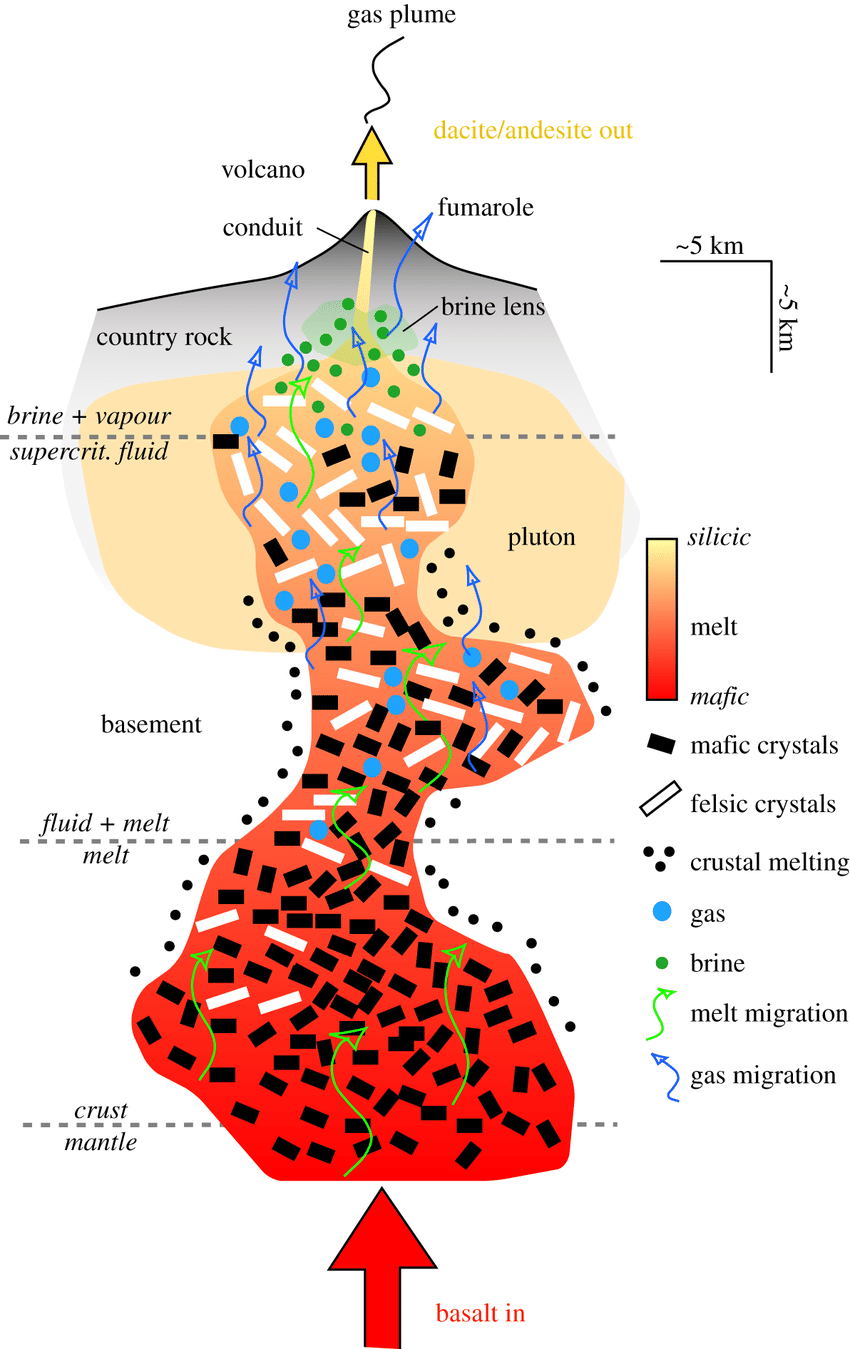
Most of what we know about metals in brines comes from geothermal systems. That is where the industry has looked. But the processes themselves are not limited to geothermal fields. Petroleum reservoirs – particularly those with deep basinal fluids, evaporites, or evidence of hydrothermal overprint – can host similar fluid chemistries. Produced water in these systems is rarely a single, uniform fluid. It is a mixture, shaped by long-term interaction with different rocks / minerals and temperature regimes. If those fluids have moved through metal-bearing zones, traces of gold can enter the system.
But are we looking for it? In most cases, we are not, because routine produced water analyses focus on scaling, corrosion, and compliance with calcium, barium, sulphate, strontium, CO₂ and H₂S being the main candidates for analysis. Gold is not part of that workflow. Even when trace elements are measured, detection limits and sampling protocols are rarely optimised for something like Au. So it goes unreported. But that does not mean it is absent. There are documented cases – mainly in geothermal and volcanic systems – where gold reaches measurable, even ppm-level concentrations in brines under specific conditions, for instance in Yellowstone, USA, and Hachimantai-Kusatsu in Japan. These are not typical reservoirs, but they show what is possible when temperature, salinity, and fluid flow align. The implication is simple: Fluids can carry gold in suspension or as colloids when the system allows it.
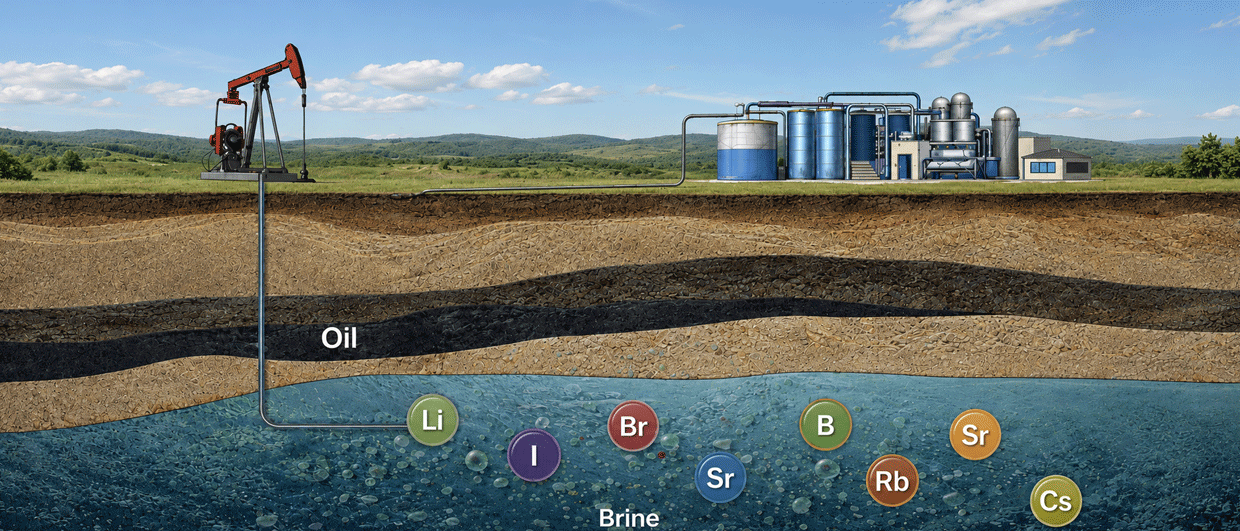
The industry has already started to rethink brines because of lithium. That shift was driven by economics, not geology. Gold pushes the discussion further. Not because it is immediately recoverable in most cases, but because it highlights how narrow our current lens still is. Produced water is not a deposit. It is an active, evolving system. Its value is unlikely to come from a single element, but from the combined presence of many, most of which we are not measuring at all.