Why amplitude-supported prospects are not the silver bullet we are led to believe
And why this silver bullet doesn’t work when it comes to the future of exploration in mature basins

“When you don’t see a scale bar at a seismic section that shows a nice bright spot, you should be scared”, says Ian Longley from GIS-Pax in a video in which he shares his experience with amplitude-supported prospect mapping. “We have seen cases where the bright spot is only a kilometre across, but the fact that it is a bright spot too often makes up for the actual lack of prospective volume. Because people get overexcited when they see a Direct Hydrocarbon Indicator (DHI’s).”
And that’s for a reason, because some big discoveries have been made and continue to be made using DHI’s, and they can significantly increase the probability of success. However, there is some nuance to be made, too.
“One of the reasons why people continue to be so excited about DHI’s,” says Ian, “is that the failures are not published. In turn, this means that calibration databases are commonly skewed to the successes. This leads the uninformed observer to think that amplitude-supported exploration is more successful than it is in reality.”
Ian mentions three recent wells drilled in the Asia Pacific region that had amplitude support, but all failed for a variety of reasons. One of them had a bright channel feature that was an anomalous lithology, and another had a fit-to-structure that was probably a phase transition instead of hydrocarbons. In other words, it is very important to keep in mind that amplitude-supported prospects are not the silver bullet, whilst the reasons for failure are very diverse. “But don’t talk to a quantitative geophysicist about this, as they often talk rubbish. It’s best to avoid them,” adds Ian.

Where do amplitude-supported prospects work best? “That is in frontier plays,” explains Ian, “especially in relatively young strata up to Cretaceous age and in gassy systems. In deeper plays, the technology is certainly less reliable because of the smaller impedance contrasts.”
However, keep in mind that it is only a proper de-risking tool if the following elements are present: a flat spot, a fit-to-structure and an AVO anomaly. “If you only have one 2D line showing a good flat spot, without any other indication, you’d better tear it apart,” says Ian, “as our lookback suggests that you can’t increase the probability only on that basis.”
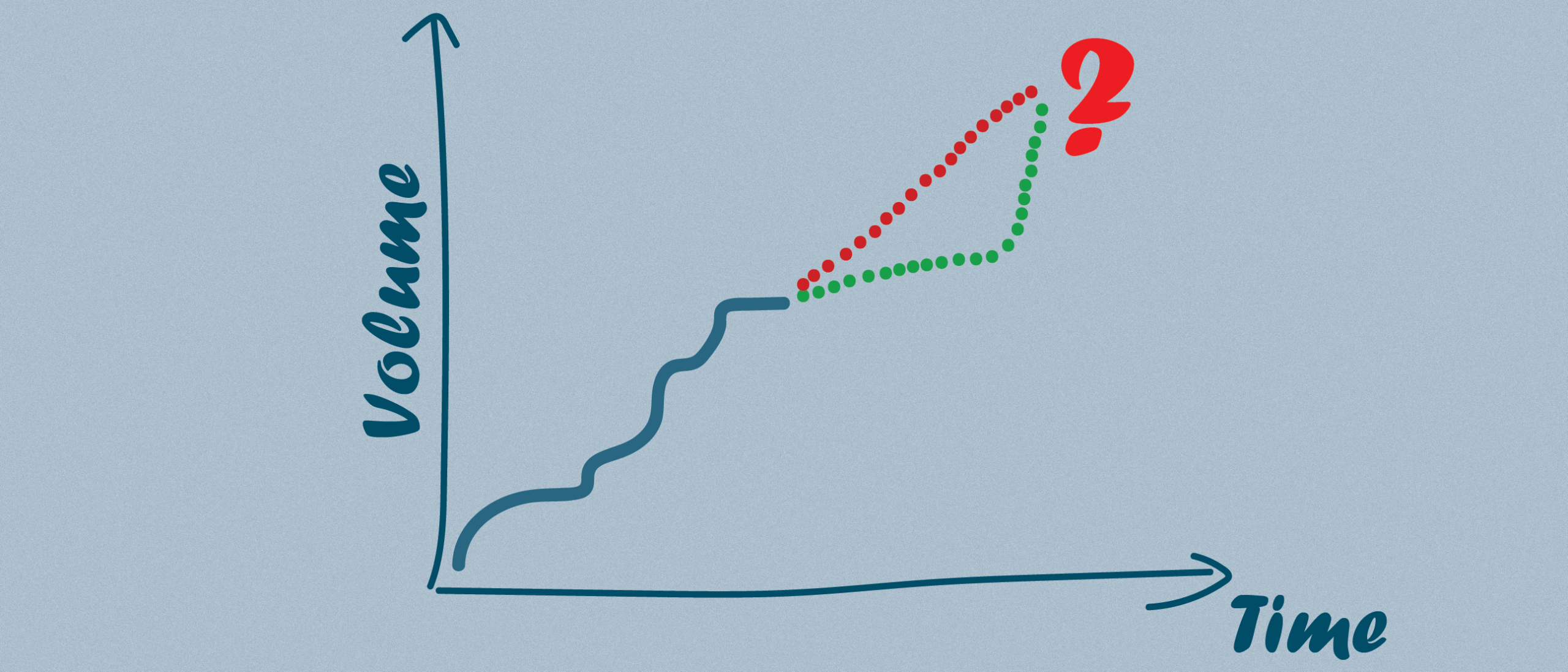
But where amplitude-supported prospects have been key to unlock new basins, such as Tamar in the Levant, the Rovuma Basin in northern Mozambique and Liza in Guyana, the number of amplitude-supported big finds in mature basins is much more scarce. The only known “recent” example is Zama in Mexico, which is a special case because it was likely observed by Pemex but ignored.
Why are amplitude-driven discoveries so much scarcer in these basins? “It is because following a success, everything that looks like a seismic anomaly gets drilled, so the only opportunities left in the more mature exploration phase are the non-amplitude supported (stratigraphic) traps,” explains Ian. So we’d better start mapping our stratigraphic pinch-outs again and not wait for our quantitative geophysicist friends to come up with yet another DHI-supported feature that is just 1 km wide.
This is the eighth of a series of articles based on work and experience from the GIS-Pax team in Australia, as presented by Ian Longley in a series of videos on LinkedIn.
Find the previous articles here:
Why the Term “Fault Block” Is a Useless Way to Describe a Trap
Why Traffic Light Play Maps Are Useless
Why Peer Reviews Often Don’t Work
Why P10/P90 Prospect Ratios Are Meaningless Without Involving the Geology
Understanding the “Minimum Economic Field Size” concept and aggregating targets