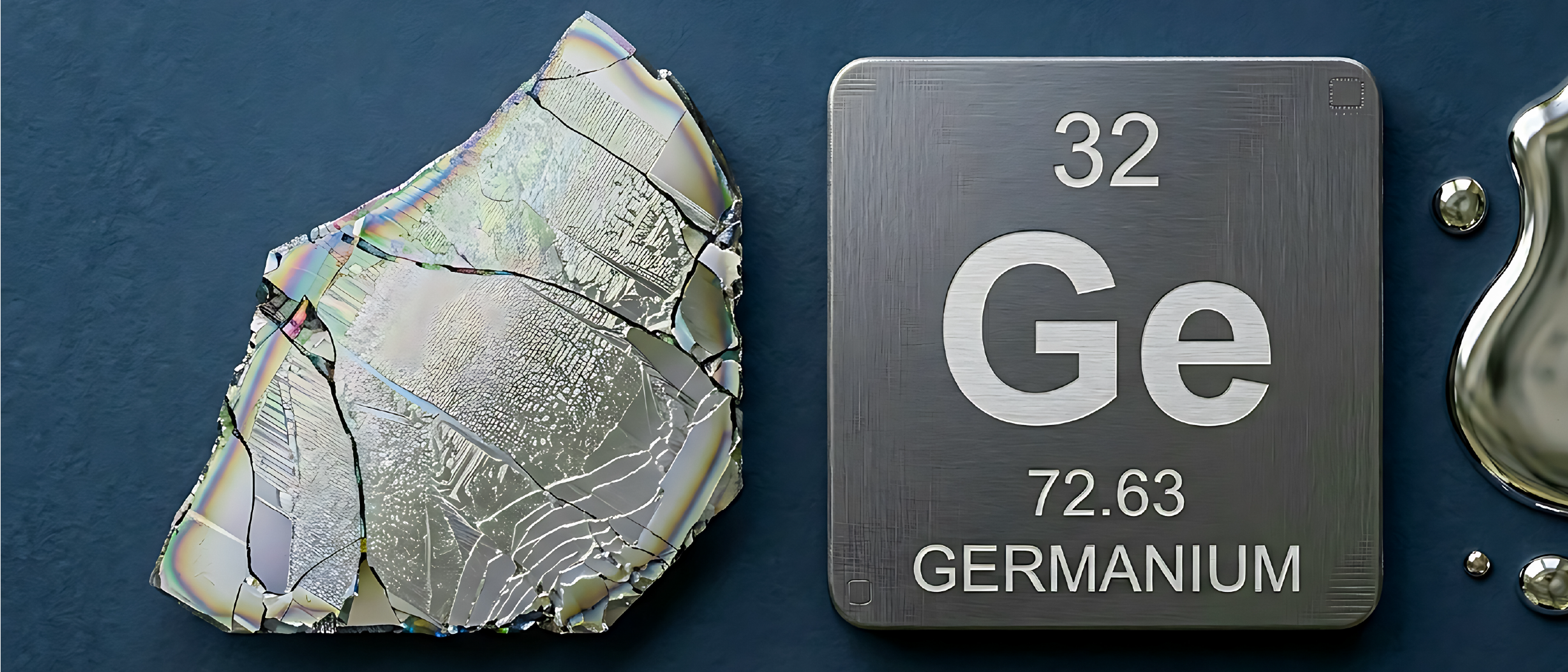
Source: Fawwazmedia via Adobe Stock.
What else is hiding in your reservoir brine?
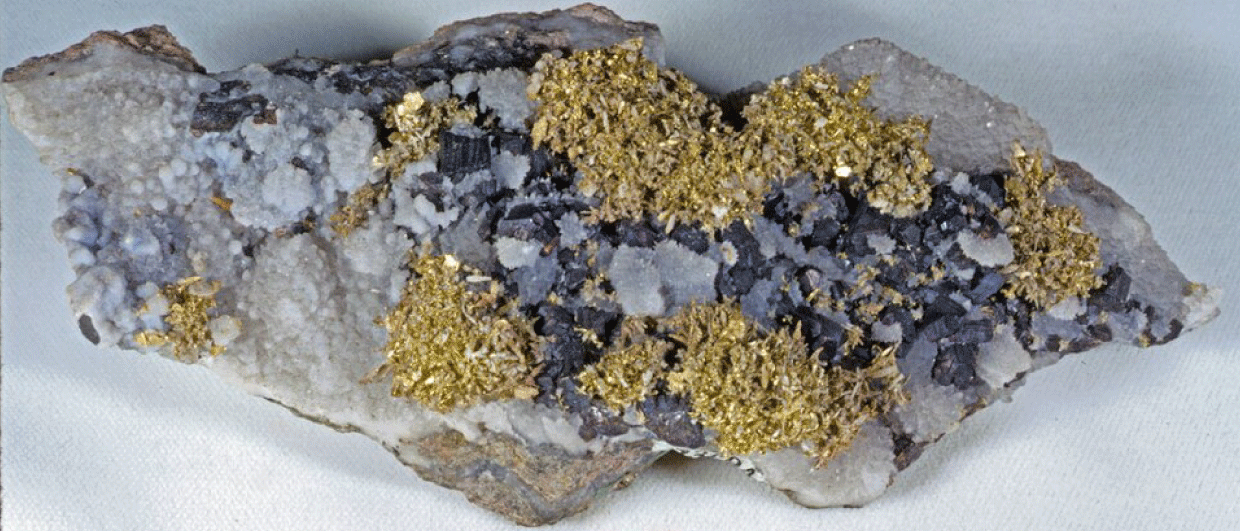
Gold continued the discussion. Germanium shows how little we still know

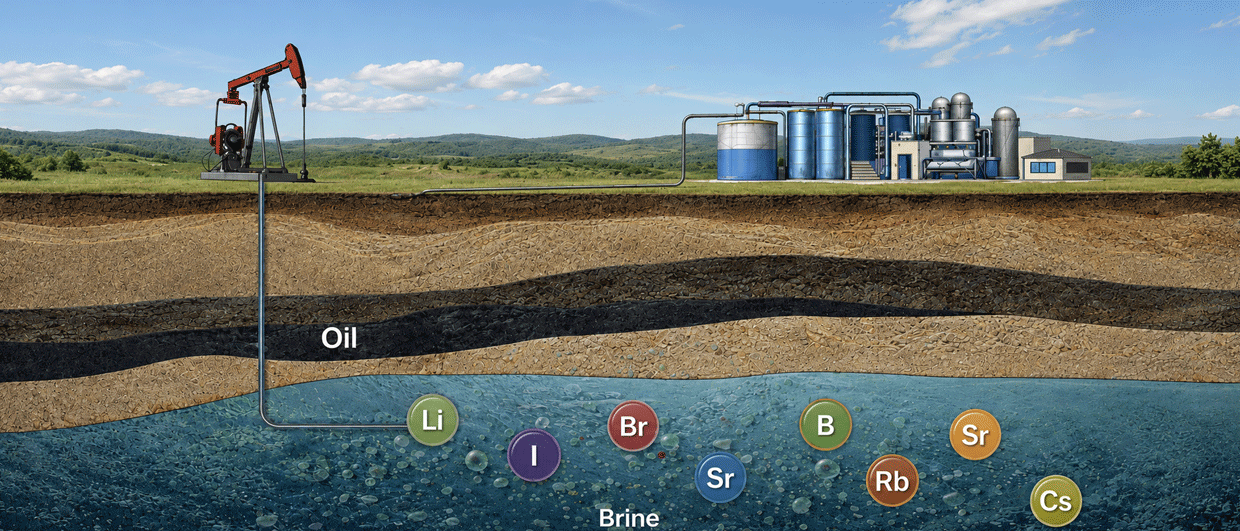
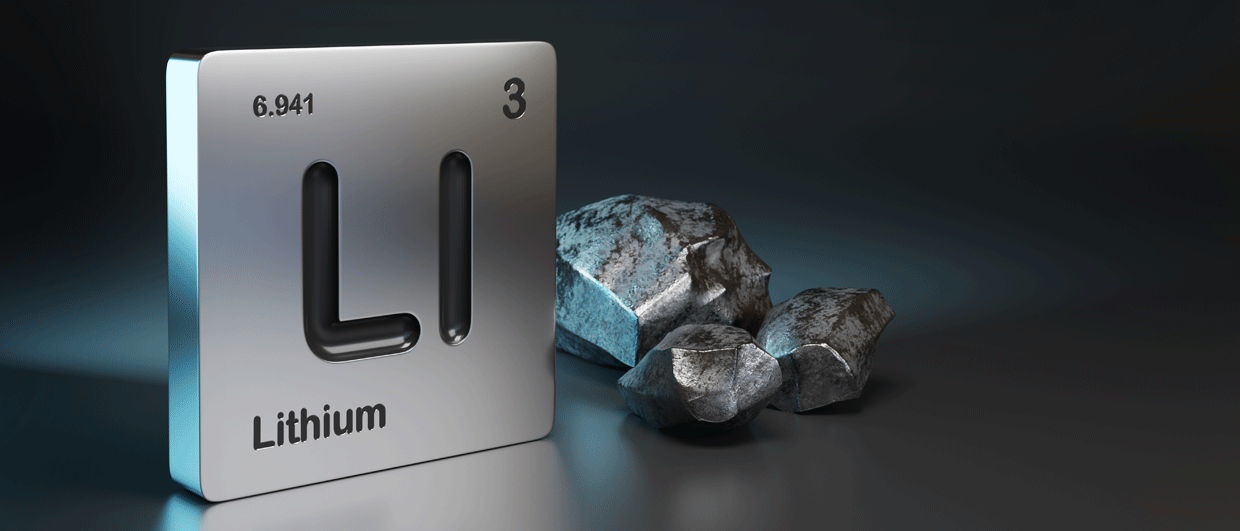
Lithium changed the way many people look at produced water. It forced us to admit that reservoir brines are not simply waste streams. They are geological fluids that have spent millions of years interacting with rocks. Once that idea is accepted, another question naturally follows. What else is dissolved in those fluids?
One element that rarely enters the discussion is germanium. Unlike lithium, germanium is not associated with batteries. Most people never think about it at all. Yet, modern society depends on it. It is used in fibre-optic communication, infrared optics, satellites, semiconductor devices and high-efficiency solar cells. Without germanium, many technologies we consider ordinary simply would not function.
The interesting part is that germanium not only occurs in ores. It can also be transported by fluids. Geologists have known this for decades. Under elevated temperatures and suitable chemical conditions, germanium becomes mobile in hydrothermal systems. It commonly follows silica-rich fluids and is often associated with zinc-bearing deposits, volcanic environments and deep basinal fluids. Salinity, temperature and fluid-rock interaction all influence its behaviour. None of these conditions is unusual in sedimentary basins.
Most petroleum reservoirs have experienced long and complex fluid histories. Formation waters rarely remain unchanged after burial. They dissolve minerals, mix with other fluids and migrate along faults and fractures. Every stage leaves a chemical fingerprint in the produced water. Germanium may simply be another part of that fingerprint. The problem is that we rarely analyse for it.
Routine produced-water programmes focus on scaling, corrosion and production chemistry. Calcium, barium, strontium, sulphate and iron receive attention because they affect operations. Germanium does not. In many cases, it is not included in the analytical package at all. If nobody looks for it, nobody reports it. That does not necessarily mean it is absent.
Whether germanium could ever become an economic product from produced water is a different question. In most reservoirs, the answer will probably be no. Concentrations are likely to be low, and extraction would rarely make sense on its own. But geology is not always about a single element. Since germanium sells for orders of magnitude more per kilogram than lithium, even concentrations of 50–100 μg/L may contribute meaningfully to project economics if recovered alongside lithium, gallium, boron, rubidium, or caesium.
The petroleum industry has spent decades treating produced water as something to separate and dispose of. That made sense when hydrocarbons were the only resource we were looking for. Perhaps the next important discovery in produced water will not come from finding more lithium. Perhaps it will come from realising that we have only been measuring a very small fraction of what these geological fluids actually contain.