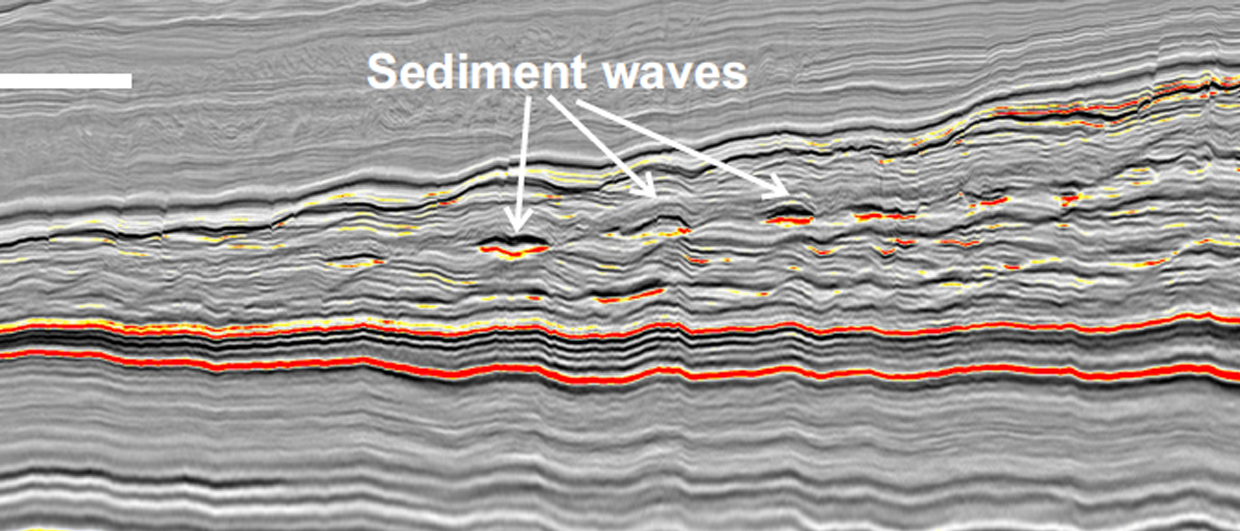
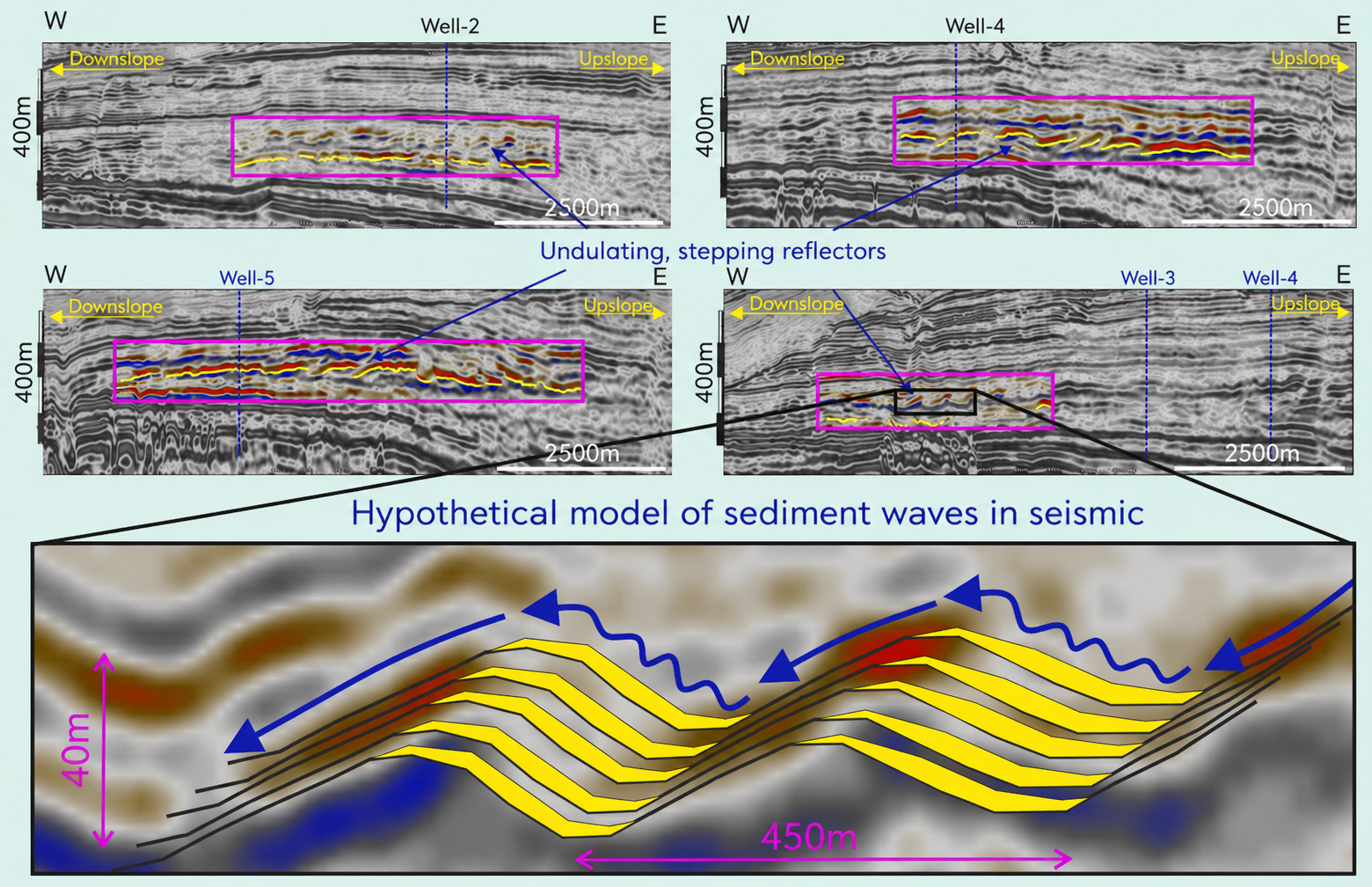
Sediment waves in the Senegalese offshore - not necessarily in Sangomar. Source: TGS
The sediment waves of Sangomar
How two conversations in a short period of time provided insight into the importance of sediment waves for this West African oil field

I always try to pen down the most important topics discussed during conversations. And so it happened that I wrote down a few snippets following a conversation with a geologist I spoke to in London earlier this year. She told me that the sediment waves in the Sangomar field were connected to each other, implying that since the start of production, the volume of oil in place has turned out to be higher than foreseen. At the time, beyond this being an interesting observation, I did not look further into it.
That is until I met with someone else in a completely different setting. It was someone who I had never met before, but soon after we got talking, I realised that he had worked on Sangomar as well. In this case, however, it was in a much earlier phase of the field development. It was at a time when the field had just been found, and appraisal or development wells were being drilled.
During that stage of development of the reservoir, which consists of Lower Cretaceous deep marine sands, the locations of the wells were planned in such a way that they targeted the ridges that were mapped at the top of the reservoir. In plain view, these ridges could be interpreted as sediment waves, caused by bottom currents reworking the sands deposited by turbidites.
“The big question at the time,” said the geologist, “was whether the crests of these sediment waves were connected, or whether the troughs were filled with much finer material such that the reservoir would be seriously compartmentalised.”
That was the moment I remembered the conversation I had earlier this year in London. That was also the moment I could tell the person what had happened since he moved on from working on Sangomar; indeed the sediment waves had turned out to be connected. It was a very interesting turn in the conversation.
ONE PUBLISHED RECORD
There is one published record of the sediment waves interpreted in the Sangomar field, and that is a poster available through ResearchGate, authored by Amanda Cunningham-Gray and colleagues. Published in 2018, it is interesting to see that Amanda writes that at the time, there were no published examples in the literature of deepwater sediment waves in petroleum reservoirs. Her work should therefore be seen as one of the first cases of the documentation of sediment waves constituting an oil reservoir.
Since then, hybrid systems where sediment waves or contourite deposits interact or modify turbidite deposits have been demonstrated in many areas, with the Rovuma Basin discoveries in Mozambique being a great example.