Graphic: Mohamed Hassan via Pixabay. Text: GEO EXPRO
“I don’t want dry holes, and I only want big prospects”
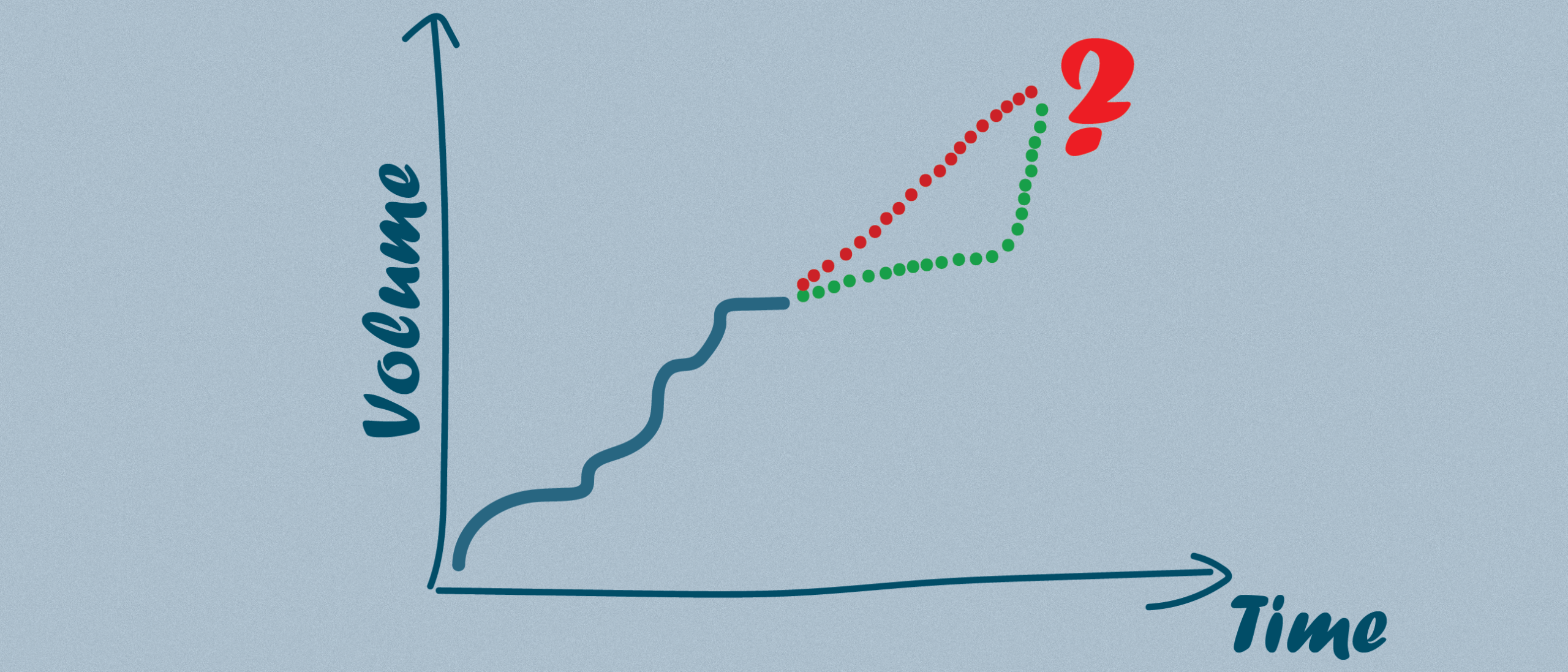
Or to put if differently; how to optimise serendipity

It may sound odd to the exploration geoscientist, but some leaders in the oil and gas business still believe that they can demand only successful wells to be drilled, and only on big prospects. It goes to show that the concept of risk versus reward can still be a poorly known thing once you get outside your geoscience bubble, even when the whole idea underpins the very fabric of how the industry operates.
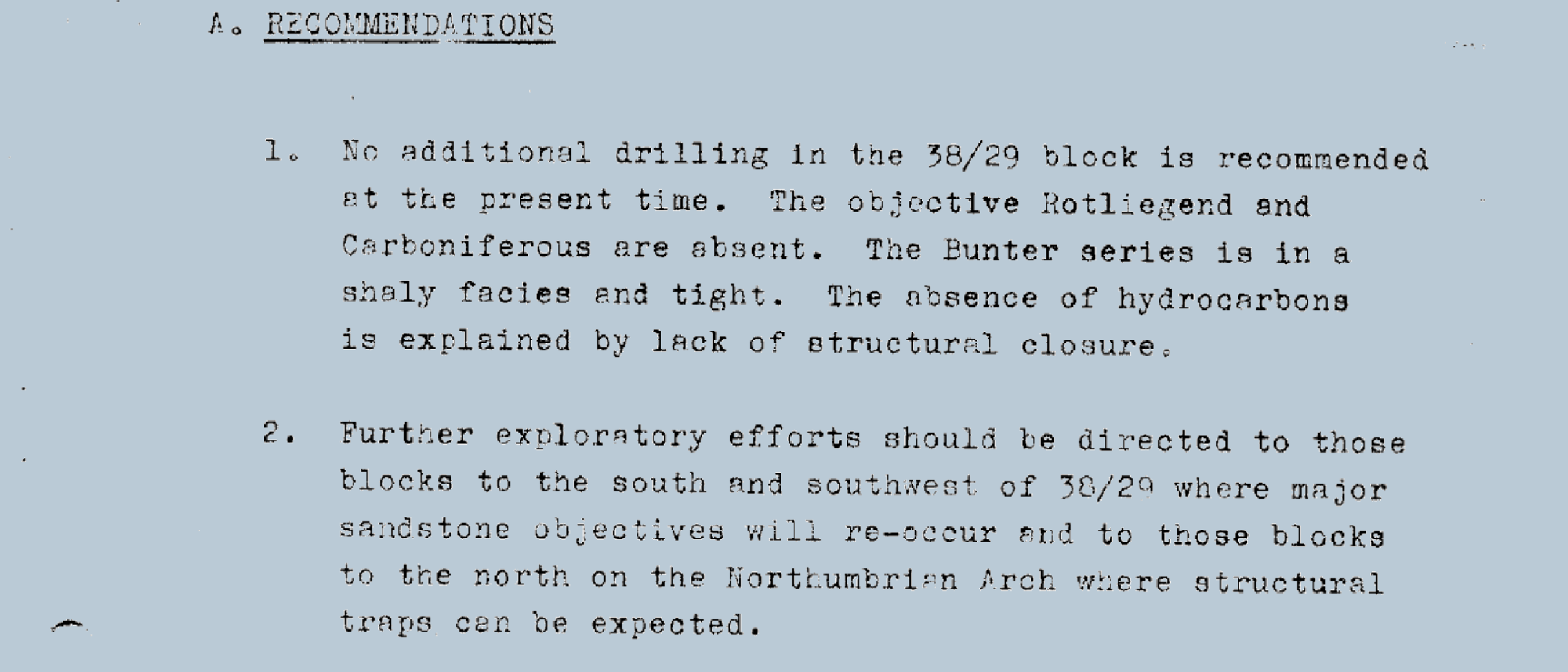
It’s this “divine management intervention” that can cause significant upheaval. For instance, there is the story of a CEO who ordered the building of a gas plant even before the prospect that was supposed to deliver the gas to that very plant was drilled. The firing of geologists straight after the completion of a dry hole is another example that has never proven to be a great strategy.
At the same time, you can understand the bitter frustration when a bunch of poorly funded amateurs repeatedly deliver massive exploration successes in surprising locations, whereas the smartest and best funded new venture teams fail all the time. “But that’s why this industry is so fascinating,” says Ian Longley from GIS-Pax in the video on which this article is based. Let’s take a look at how to really try to optimise serendipity, especially from a management perspective.
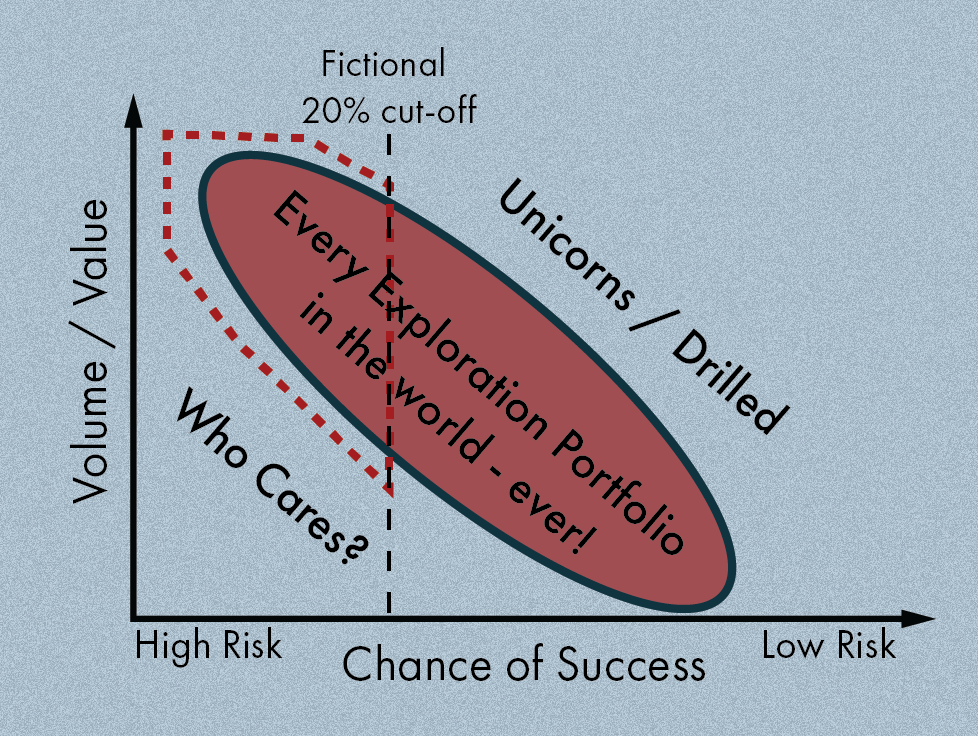
Every oil and gas prospect portfolio consists of opportunities that ultimately plot in a diagram as shown here. “Once this basic concept is explained to management,” says Ian, “what often happens is that the higher-risk opportunities are excluded because risk is bad and has to be avoided at any cost.” And from their point of view, it even makes sense, as most of their business strategies are all around the belief that risk is a state of knowledge and that it can be reduced by working hard.”
But that’s obviously not how you achieve exploration success. Management therefore needs to embrace risk, and focus on how it is estimated. Calibration against previous drilling activity in the same region is one of the key elements in this process, as it enables people to set expectations. In other words, no cooking up in a vacuum, but in a consistent and traceable way, preferably using software. That’s why most companies have a portfolio of opportunities in the frontier side (10 %), play extensions (30 %) and proven plays or near-infrastructure (60 %).
What else do you need? Well, good people in your exploration department, and keeping them happy in their job. By the way, remember that the ideas-geos are often the ones that are a little “unconventional” and don’t fit a large corporate company very well. Issuing a corporate manual on colour schemes, logos and fonts for a new corporate PowerPoint template is normally the trigger for most quality explorers to hand in their notice.
And as a last bit of advice, go to the more geologically complex areas, since by far most of the easy targets will have been drilled by now – except of course in the disputed areas. It is much more likely that the bigger remaining fields are hiding in a geologically complex setting than finding them in an easyto-map structure that has been seen by many before.
This is the 10th of a series of articles based on work and experience from the GIS-Pax team in Australia, as presented by Ian Longley in a series of videos on LinkedIn.
Find the previous articles here:
Why the Term “Fault Block” Is a Useless Way to Describe a Trap
Why Traffic Light Play Maps Are Useless
Why Peer Reviews Often Don’t Work
Why P10/P90 Prospect Ratios Are Meaningless Without Involving the Geology
Understanding the “Minimum Economic Field Size” Concept and Aggregating Targets
Why Post-Well Analysis Matters
Why Amplitude-Supported Prospects Are Not the Silver Bullet We Are Led to Believe