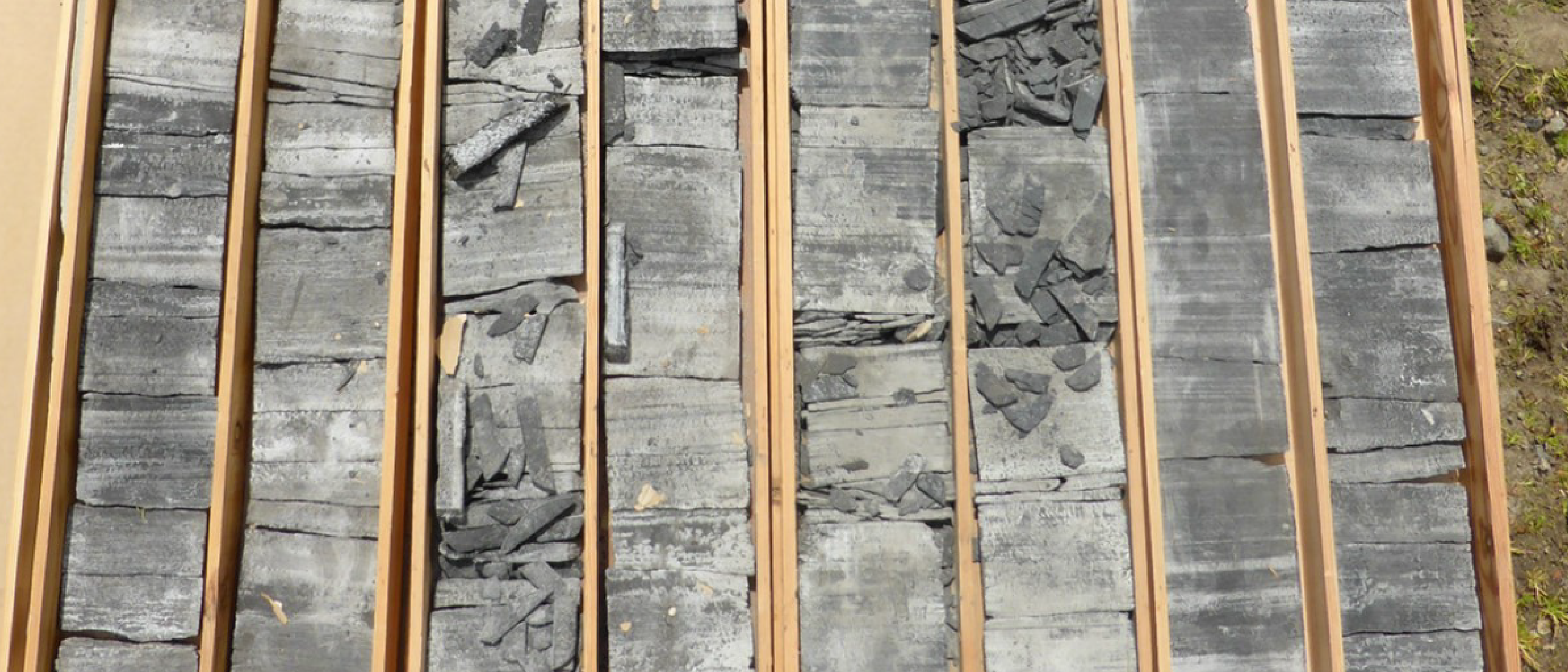
Kimmeridge Clay source rocks, North Sea. Photo: Henk Kombrink.
How one biomarker does not make a new source rock
The observation of TPPs or tetracyclic polyprenoids in oil samples is all too frequently used as the single proof for the presence of a secondary lacustrine source in the Central Atlantic. There is often another and more straightforward explanation

When we are looking for new opportunities, visiting data rooms, or moving to a new asset, many of us find ourselves reading old reports to piece together the nuggets of information from decades of past exploration. This is currently happening especially for the Central Atlantic margins of Africa and South America, where there is a lot of recent and renewed interest.
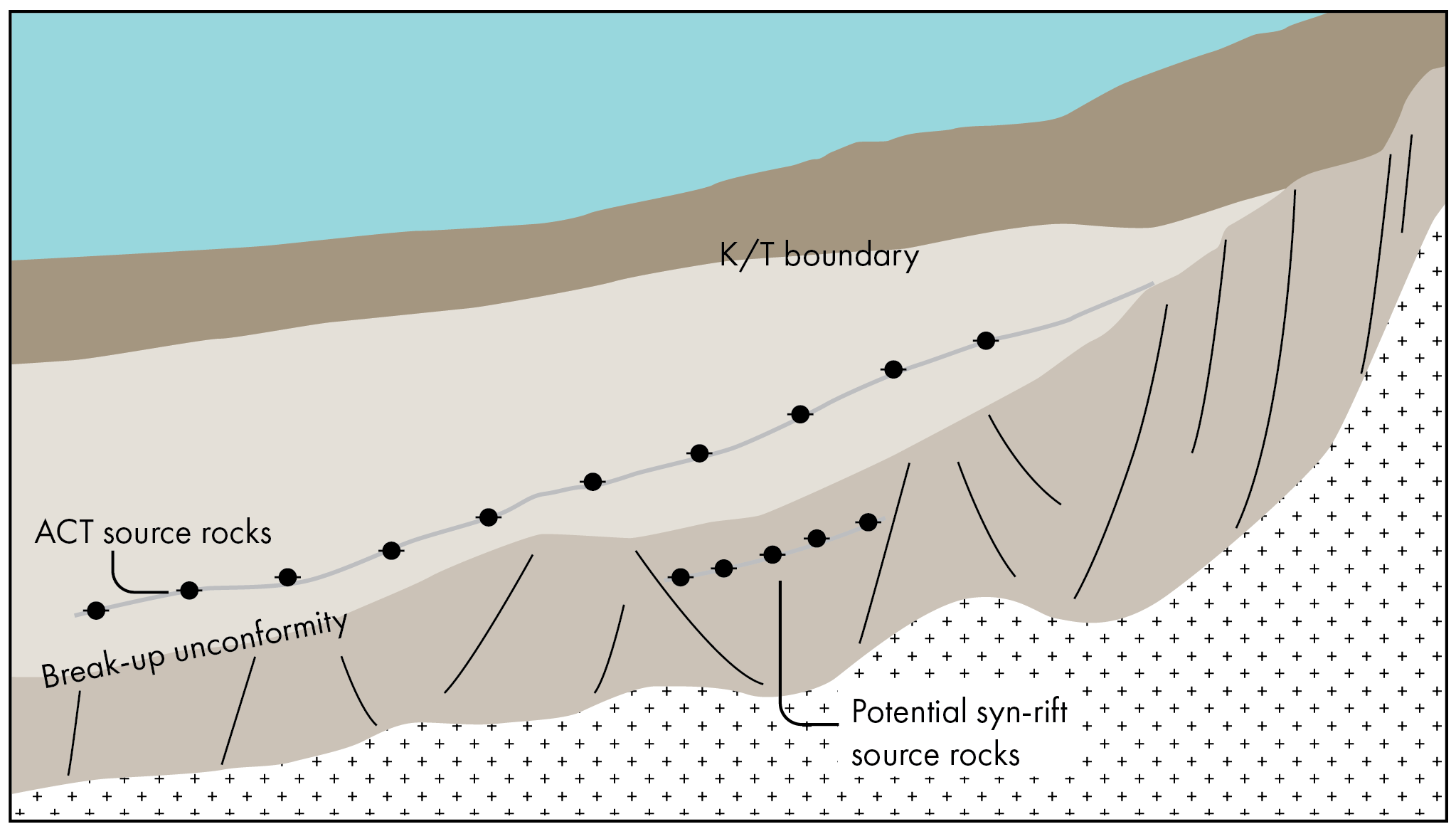
The marine source rocks of the Albian, Cenomanian and Turonian (ACT) are the superstars here, but there are always hints at older source rocks, another oil in the mix. For instance, a report on the Tano-Ivorian basin reads: “…lacustrine derived oil is a major component of the oils found…”. Similar phrases are speckled through reports from other basins. It seems that the ACT oils are harbouring the signature of older lacustrine systems that are apparently widespread.
Some prolific lacustrine source systems are well-documented along the Atlantic margins, notably in Gabon and Brazil. It is not a far-fetched idea to expect well-developed lacustrine source rocks to be present in other basins as well. But are the oil data telling us this?
TPPs, tetracyclic polyprenoids, are biomarkers or molecular fossils. Holba et al. (2003) comprehensively described TPPs and their link to freshand brackish-water organic matter input in sediments. Finding these biomarkers prominently in an oil of otherwise clear marine origin makes you think. A lacustrine source rock contributing is a possibility. But if that is the case, there are other biomarker characteristics that you would then also expect to see in the oil.
If the lines we read in the old reports just refer to TPPs and very simply add the interpretation of a lacustrine source rock contributing oil, we’re only halfway there. For an explorer, it is tempting to invoke a deeper petroleum system that will work where the ACT source rocks are immature, but are these geochemical data really telling us this?
Looking at extracts from marine ACT source rock samples from deep offshore wells in the region, one thing is striking about the biomarker fingerprint: a common, very significant presence of TPPs. Is it possible that the TPPs in the oils are therefore not showing any hidden extra source systems to chase?
The understanding of the origin of TPPs is not in question. Instead, the prominent occurrences in ACT source rocks throw up interesting questions about the depositional environment in the Atlantic when it was still a fairly restricted basin. River run-off and freshwater wedges stratifying the water column may have brought freshwater biomarkers to a marine setting.
For that reason, the interpretation of a separate lacustrine source contributing, often from a tentative line in a geochemistry report, may not always be the best possible explanation. There are most certainly lacustrine source rocks contributing to oil and gas along the Atlantic Margins, but there may be more wild geese to chase than there are big fish to catch.