Top-Down and Bottom-Up
An integrated petroleum systems modelling workflow for exploration

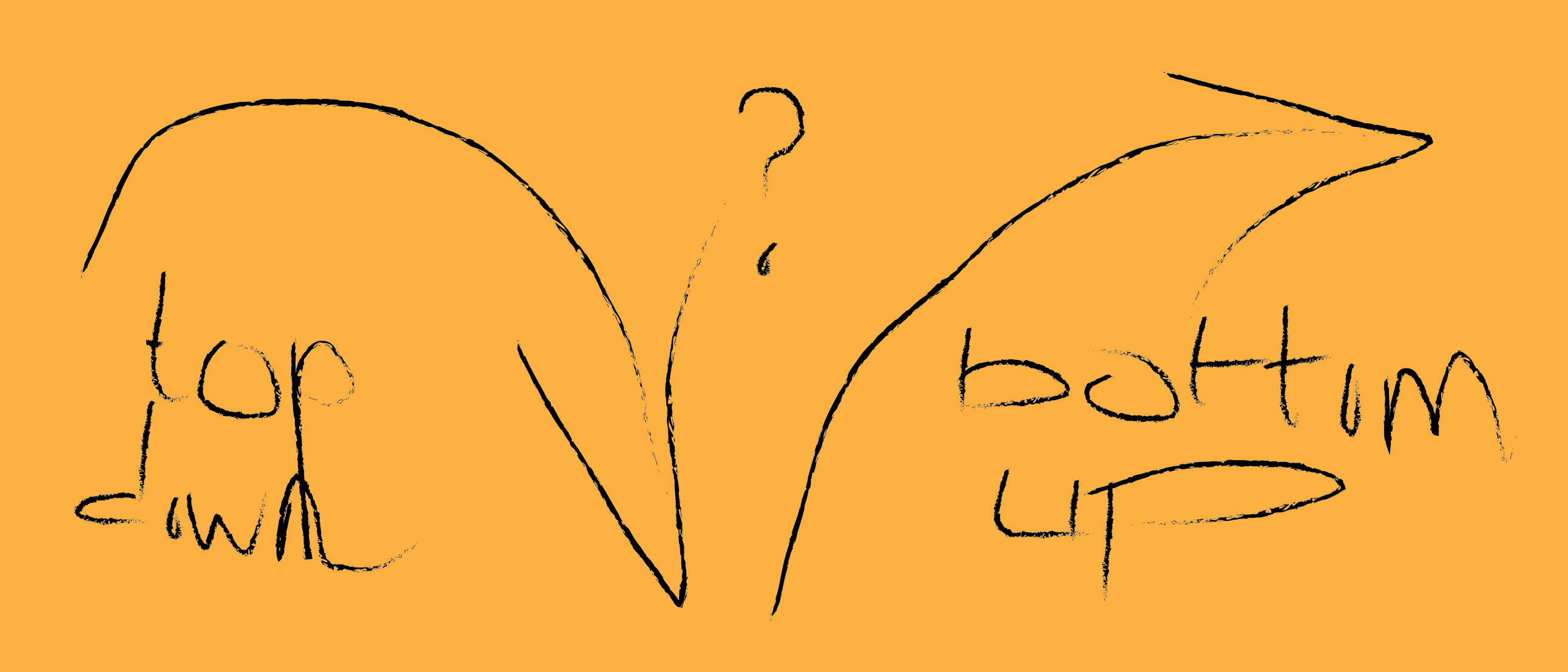
As exploration challenges become increasingly complex, two complementary workflows have emerged as the foundation of effective petroleum systems studies: bottom-up basin modelling and top-down fluid systems analysis.
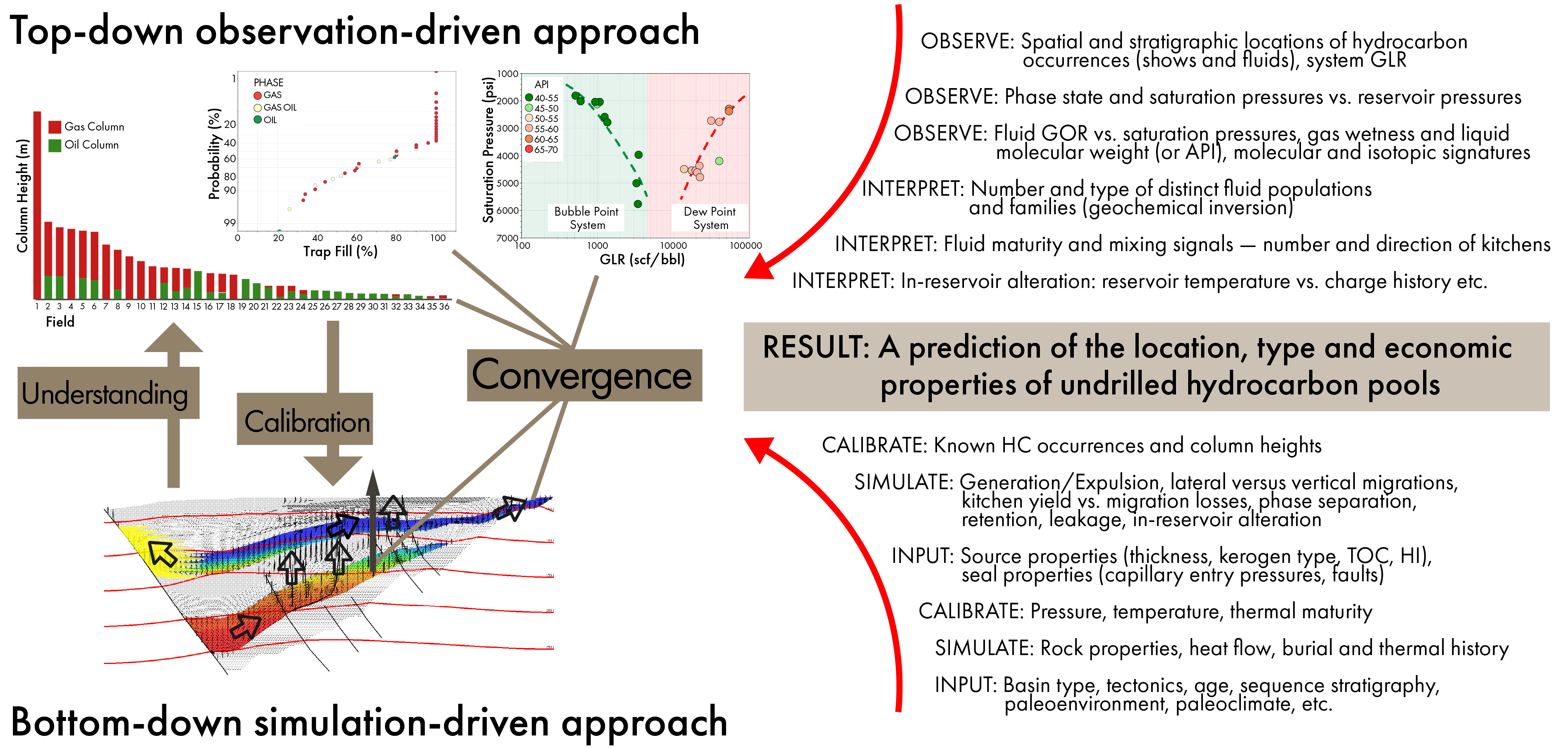
The traditional bottom-up approach reconstructs the geological evolution of a sedimentary basin through time. The principal strength of bottom-up modelling lies in its ability to quantify geological processes and predict source rock maturity, hydrocarbon generation timing and regional migration trends, especially in frontier settings.
However, predictive confidence decreases significantly when modelling secondary migration, trap filling and hydrocarbon distribution because these processes depend on complex subsurface heterogeneity and fluid flow behaviour that remain difficult to characterise accurately.
Consequently, where bottom-up models often provide robust regional trends, they are less reliable in predicting fluid properties and prospect-specific charge behaviour.
The top-down approach begins from the opposite direction. Rather than predicting hydrocarbon distributions from geological history, it starts with observed fluid properties. These observations are then used to infer source rock characteristics, migration pathways, fluid mixing, thermal maturity and post-charge alteration. As such, it allows reconstruction of the geological processes responsible for their present-day distribution.
Top-down workflows are particularly valuable in mature exploration provinces where abundant fluid data exist, and regional basin architecture is already well understood. Because the analysis relies on measurable fluid properties, it can provide robust predictions.
Although both methodologies have distinct strengths, neither alone provides a complete understanding of the petroleum system. Bottom-up models establish the geological processes that generate and transport hydrocarbons, whereas top-down analysis validates these predictions using observed fluid evidence. Where both workflows converge, confidence in exploration predictions increases substantially. Conversely, discrepancies between model predictions and fluid observations highlight uncertainties that require further investigation.
As such, the most robust exploration decisions arise when geological models developed through bottom-up basin modelling are continuously tested against observations derived from top-down fluid analysis.