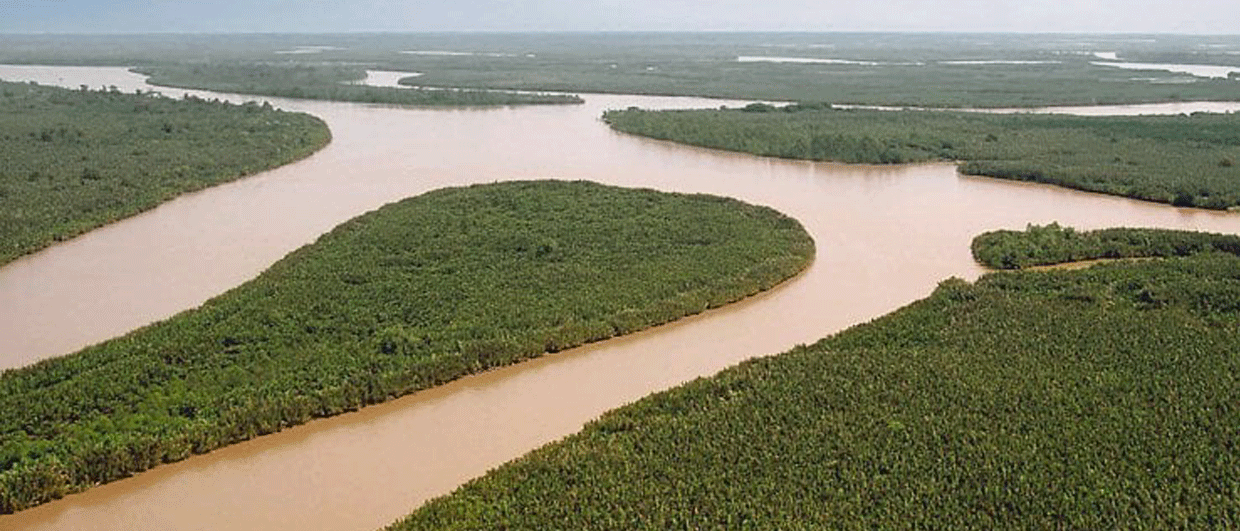
Mahakam Delta. Photography: tripalbum.net.
Geliga-1 – the gas discovery sourced by sandstones
In contrast to what is often thought, the likely source for the gas and condensate found at ENI’s Geliga-1 discovery, offshore East Kalimantan, is the sandstones in which the hydrocarbons were found, proving yet again that all petroleum systems have their unique signature

Today, operator ENI and partner SINOPEC (18%) announced a new giant gas and condensate discovery in the Kutei Basin, offshore East Kalimantan in Indonesia. According to ENI, the new find may host up to 5 Tcf of gas and 300 MMbbl of condensate.
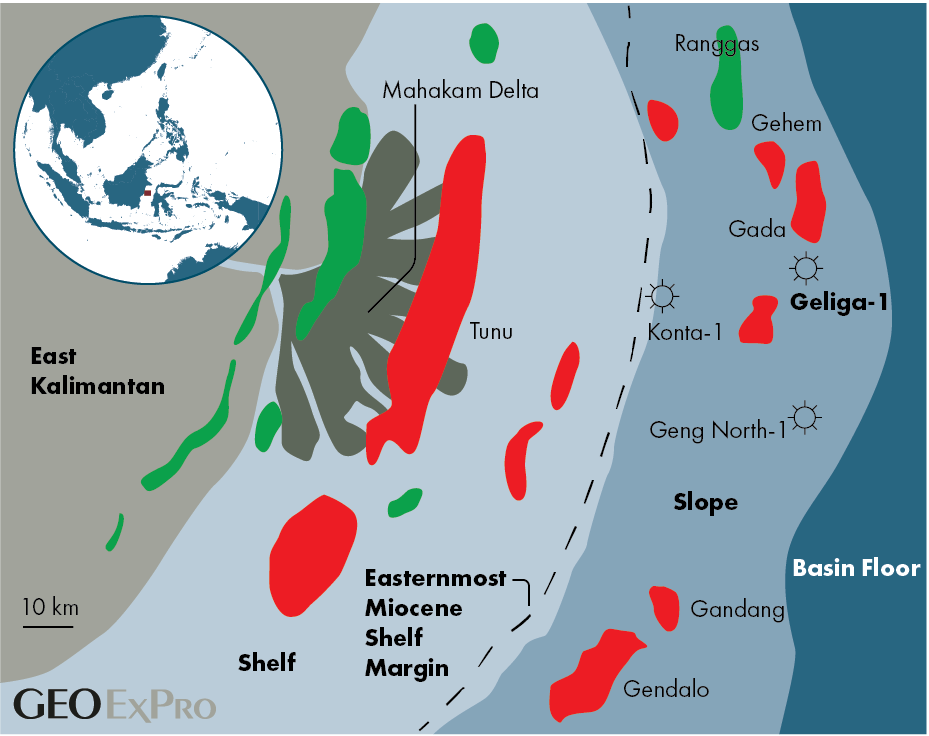
When plotting the location of the well on a map, it is apparent that this was not a frontier exploration attempt, with the Gada and Gula discoveries being situated close by, as well as the Geng North discovery announced in 2023, and Konta-1 reported last year. But even when this might be classified as near-field exploration rather than frontier, it must be concluded that the Kutei Basin still has a lot more running room than the North Sea, for example, where near-field exploration tends to result in much smaller finds these days.
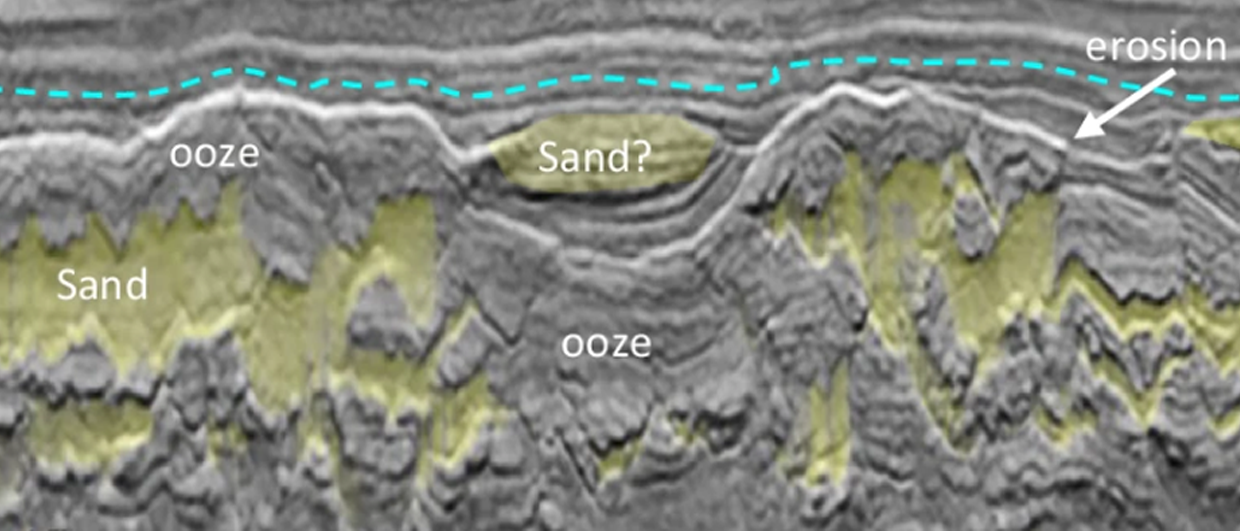
Another interesting aspect about this discovery is the observation that the source rock of the oil and gas found in the Mahakam Delta is supposedly coming from organic matter intercalated in the Miocene turbidite sands rather than from the basinal mudstones.
This is based on work published by Art Saller and co-authors in the AAPG Bulletin in 2006, in which they state that the turbidite sandstones tend to have higher TOC contents than their fine-grained counterparts. TOC values of 4.99% were recorded from the sandstones, with much lower values for the mudstones. In addition, and in contrast to many other marine basins, no significant marine kerogens were found in the fine-grained sediments either. Well-oxygenated conditions, resulting in rapid decomposition of the algal material, and strong bottom currents are seen as two important factors as to why the shales are do not have high marine organic matter contents.
In contrast, the organic matter in the sandstones is supposed to be deposited rapidly as part of turbidity currents, facilitating preservation of the material. The authors highlight that laminar coal fragments are the dominant type of organic matter found in the Miocene sands, of which the origin is thought to be leaf fragments, carried offshore by paleo-Mahakam fluvial systems.
Sallar and co-authors also describe that the top of the oil window in the area sits at around 3,000 m below the mud line, which means that the top of the Miocene reservoir in Geliga-1 might just be in the oil window given that the well was drilled to 5,100 m in 2,000 m water depth.