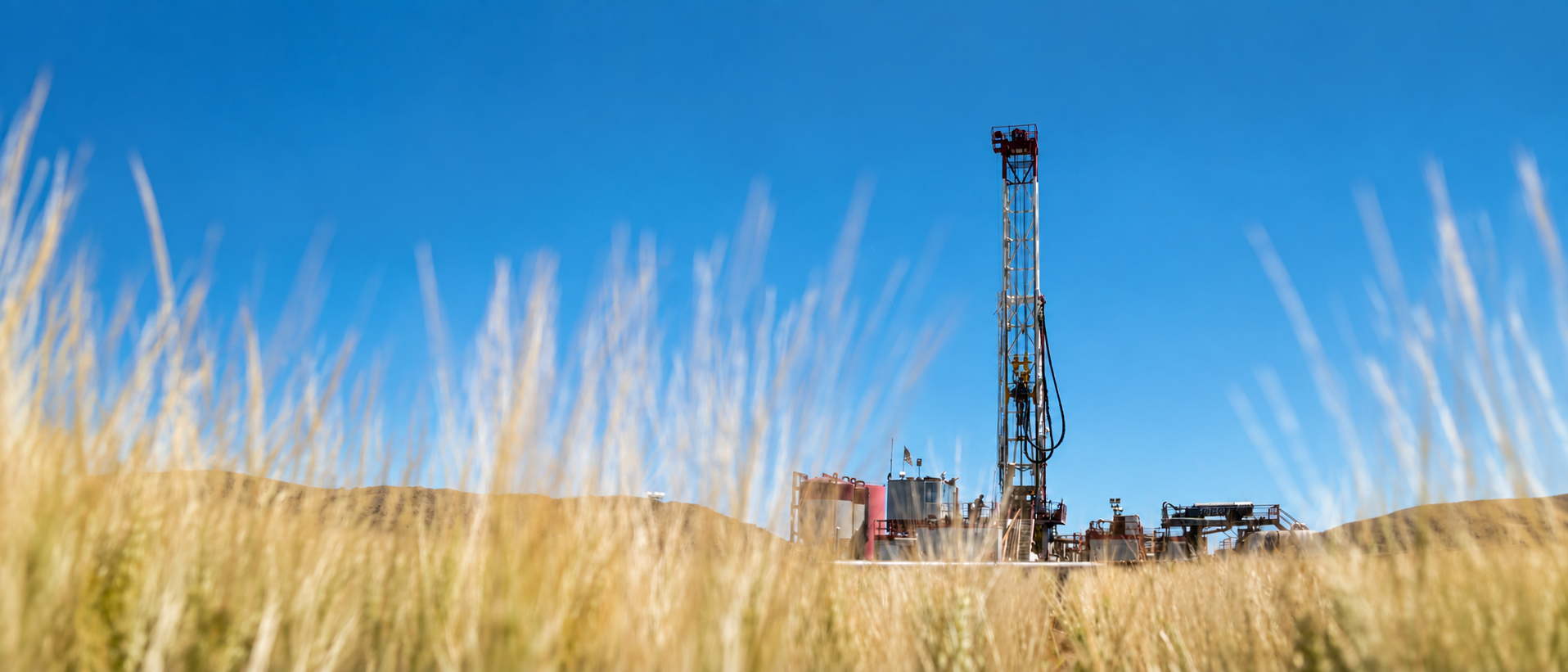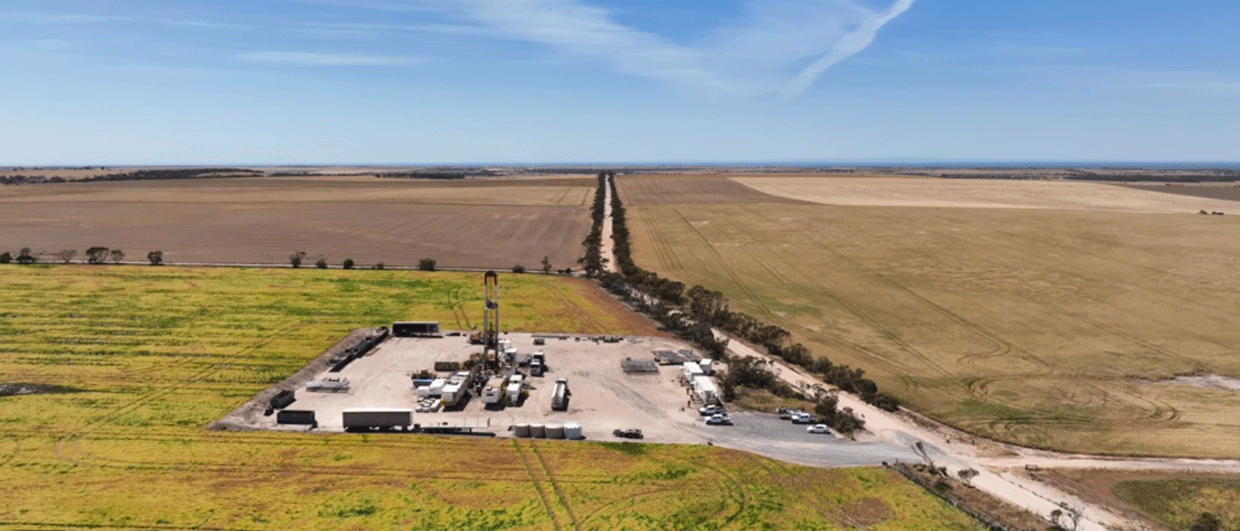
Ramsay wellsite. Photo: Gold hydrogen.
Too early to declare a commercial success
Analysis of released well data from Gold Hydrogen’s flagship Ramsay project in Australia support the fact that its hydrogen resource is still classified as prospective

Australia’s Gold Hydrogen was one of the earliest movers in the hunt for natural hydrogen: taking up acreage in South Australia, raising funds and drilling a number of exploration wells. Its two earliest wells, Ramsay-1 and -2 drilled in late 2023, have now become “open access” under Australian exploration rules and accessible via South Australia’s PEPS data-portal. Time for a deep dive!
Geological Setting and Exploration Context
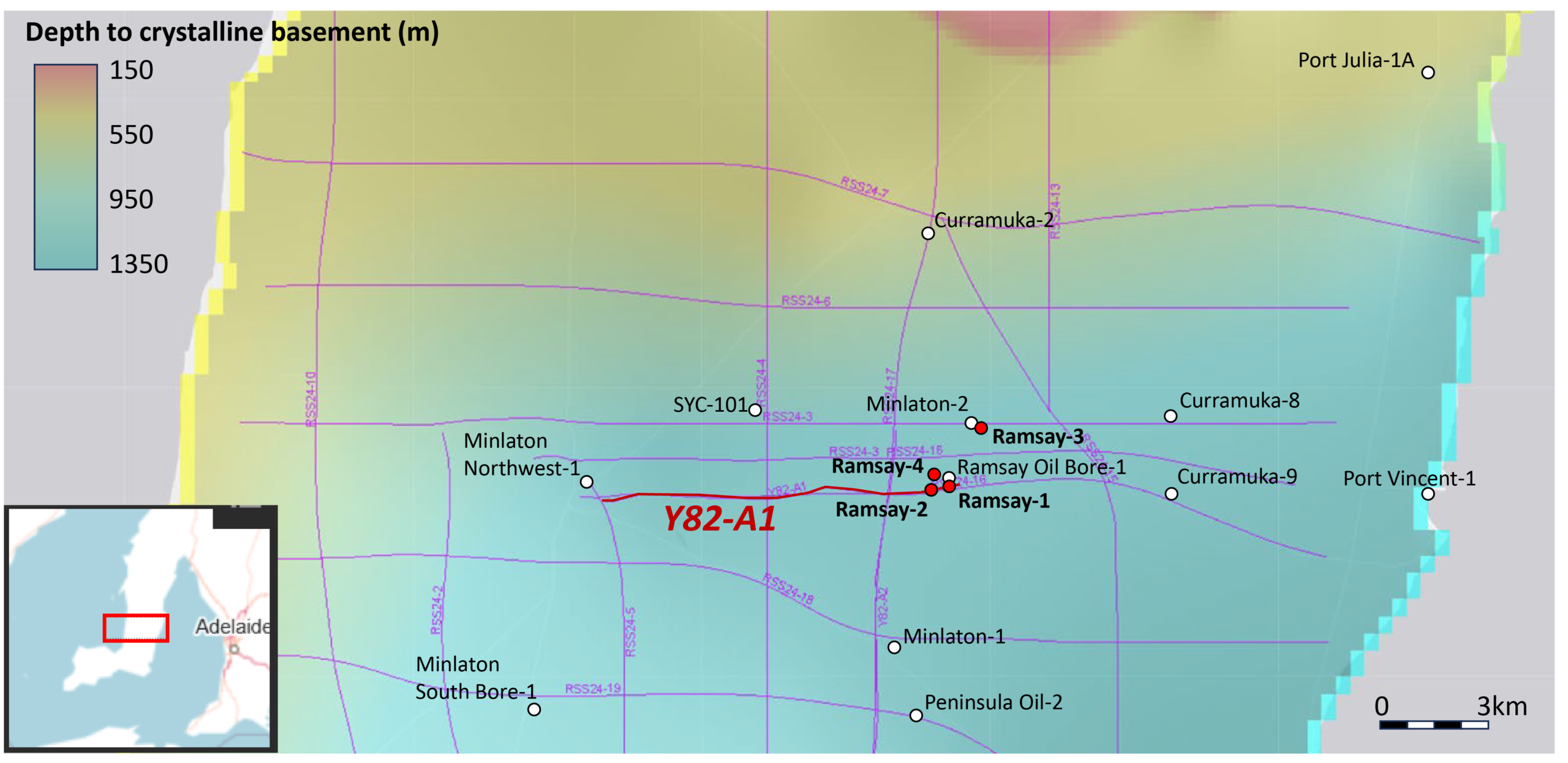
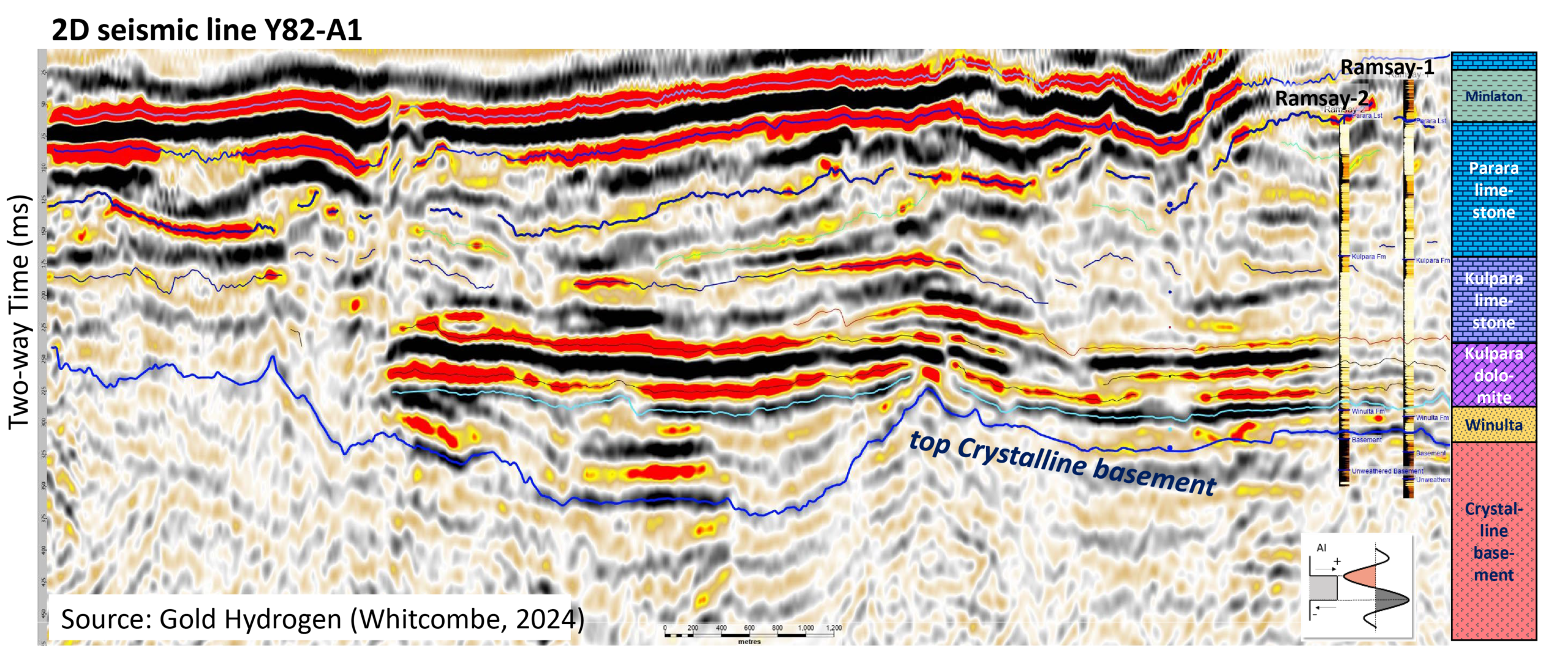
Gold Hydrogen’s exploration license is located on the Yorke Peninsula of Southern Australia. Geology of the Yorke Peninsula consists of Proterozoic basement rocks overlain by Cambrian sediments of the Stansbury Basin, in turn locally overlain by Permian and Quaternary sediments. Based on regional mapping and 2D seismic, Ramsay wells appear to be situated in the centre of a broad syncline with some 800-900m of Cambrian sediments overlying basement. Gold Hydrogen’s play concept assumes hydrogen flows in the basement with localized trapping in the Cambrian, presumably in fracture clusters and/or stratigraphic traps since there is no obvious structural closure around Ramsay.
Ramsay-1 and -2 drilling are redrills of a 1931 well (Ramsay oil bore-1) where a “flammable gas”, subsequently identified as hydrogen, was reported. Ramsay-1 suffered total losses whilst drilling through most of the Cambrian and into the basement. Ramsay-2, drilled as a redrill of Ramsay-1 to obtain better gas-composition data, had only minor losses and good data throughout except for the shallowest section.
Stratigraphy and reservoir properties
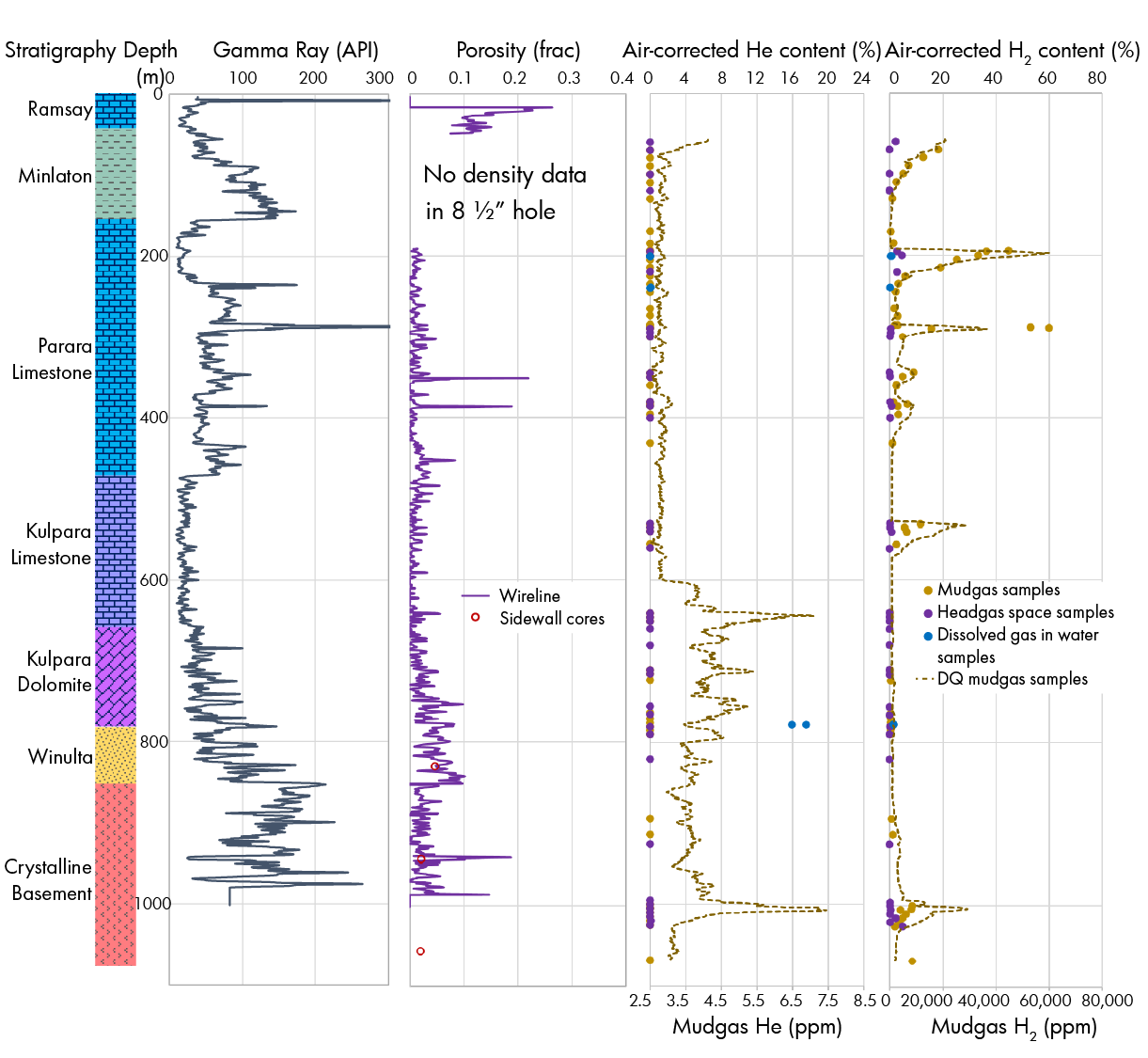
The basement intersected by Ramsay-1 and -2 consists of granites with mafic intrusions. Overlaying basement are coarse sandstones (Winulta Fm), limestones and dolomites (Kulpara and Parara Fm) and argillaceous limestones and siltstones (Minlaton Fm, Ramsay Limestone). Porosity is very poor, mostly 1-3% due to diagenesis and mild metamorphosis. Based on sidewall cores, only matrix with more than 7 % porosity may have meaningful permeability. In other words, storage capacity of the penetrated formations appears minimal and flow would be mostly via fractures.
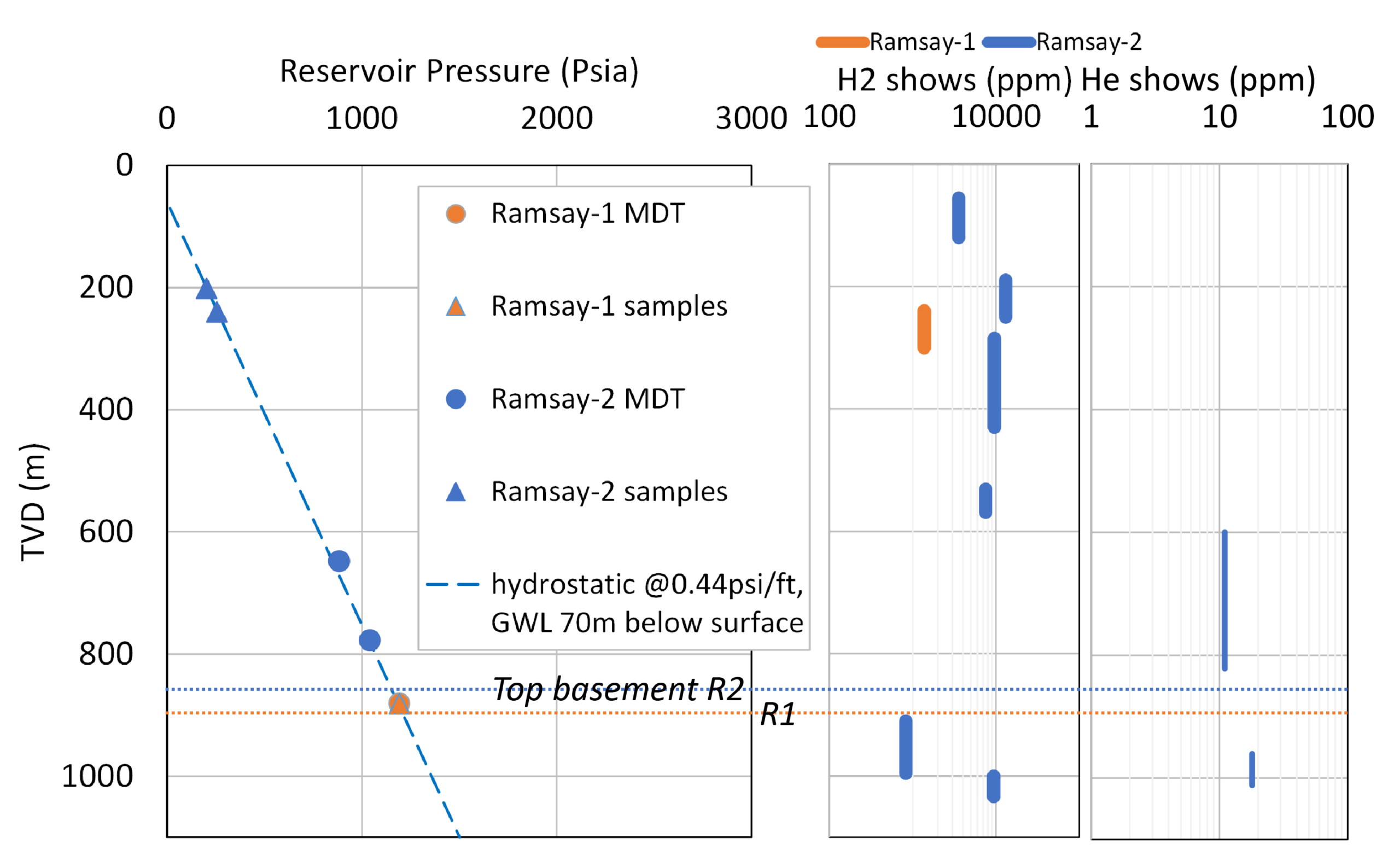
Pressure data consists of some MDT pre-tests and recorded MDT sample-pressures. The small number of valid MDT points illustrates the overall tightness of the formation. A hydrostatic pressure trend with no indication of elevated pressures in any of the intervals with gas shows suggests the system is dominantly aqueous with minimal, if any, free gas.
Hydrogen and Helium occurrences
Gas composition data consists of mass-spectrometry of the mud gas whilst drilling and of laboratory analysis of mud gas samples, headspace gas samples and MDT fluid samples. Analysis focuses on Ramsay-2 since the lack of returns in Ramsay-1 makes its mud gas composition below 300m MD unreliable. Whereas the background gas is dominantly nitrogen (avg. 93%), contribution of minor gases including hydrogen and helium varies significantly. Mud gas spectrometry and sample composition data consistently show localized “spikes” of elevated hydrogen content (up to 60% based on decontaminated samples), mostly in the shallower part of the Cambrian. For helium, the different datasets are less consistent. Whilst mud gas mass spectrometry suggests helium is increasing in the lower part of the Kulpara, this increase is not reflected in the mud gas and headspace sample data. However, water samples near the base of the Kulpara had 16-18% helium in the dissolved gas.
Reasons for compositional variation and for discrepancies in the helium data are not entirely clear. It could be that the fracture system is not well connected and that some fracture clusters have better connection to the (presumed deeper) hydrogen and helium sources than others. It could be that in some fracture zones, residual gas and dissolved gas are not in compositional equilibrium e.g., due to ongoing migration. Sample contamination of 84% on average, but varying wildly, suggests significant uncertainty in the decontaminated sample-composition. Given this variability and interpretation ambiguity, it will be a challenge to understand the “system plumbing”, predict and target hydrogen and helium “sweet-spot” intervals or locations in future wells but also, to narrow gas composition enough to allow engineers to design the gas purification facilities.
Productivity and Exploitation outlook
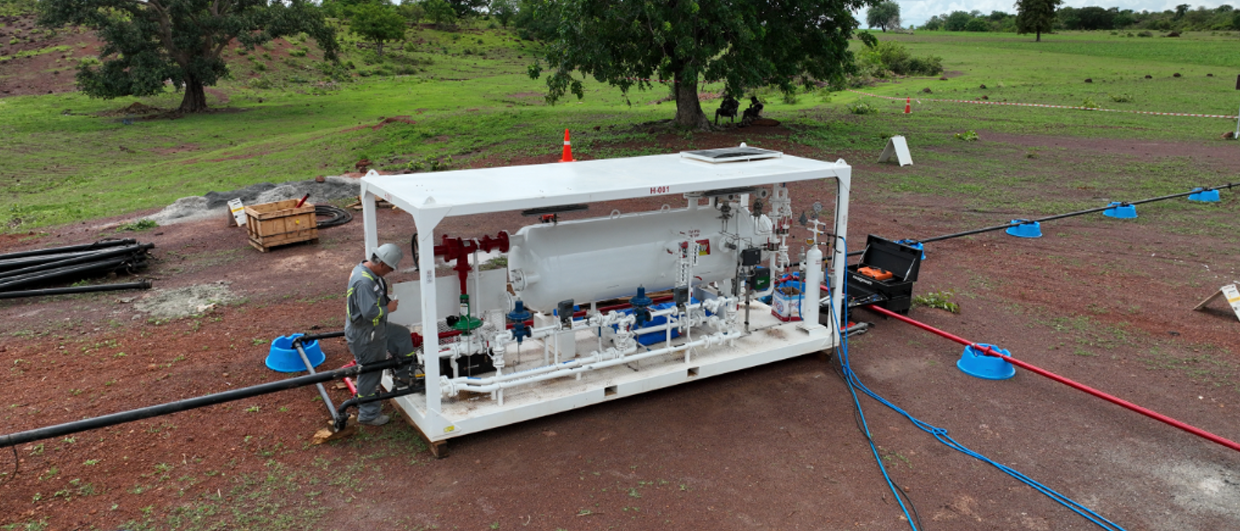
Well test data and related analyses are not part of the open access data; however, Gold Hydrogen have released some well-test summaries as part of their ASX announcements. Short flow tests on selected intervals were done by installing a downhole submersible pump for fluid lifting. Statements in Gold Hydrogen’s well-testing information sheet like “some of the hydrogen and helium resources may co-exist with groundwater” and “exploration well testing is expected to require pumping groundwater from the geological formation” indicates the operator also concluded Ramsay is dominantly an aqueous system.
Information released on one of the Ramsay-1 tests, a commingled flow from 2 zones with elevated helium around 900m MD, can be used to make some inferences on production potential and materiality. A Productivity Index (PI) of 34 bbl/day/psi and a gas-water-ratio (GWR) of 3.05 scf/bbl were reported by Gold Hydrogen. This GWR is in the same ballpark as the solution-gas yield expected from brine saturated with a nitrogen-helium gas mixture at this pressure and depth. Unfortunately, PI and GWR are too low to yield a commercially meaningful production of helium, let alone hydrogen. For example, at 500psi drawdown a commingled zone like this might produce 17,000stb/d of water and some 52Mscf/d of solution gas. Assuming 17.5% He content (highest recorded in any of the samples), helium production might be around 9,000scf/d or 3.3MMscf/yr: marginal. Assuming a hydrogen content of 60% (highest seen in the samples), hydrogen yield from a zone like this would be 80kg/d or 30 ton/yr, a sub commercial rate.
And rates may not sustain. Since the pore volume of a fracture network is usually small, pumping formation brine would deplete pressure very quickly. Liquid rate would drop and whilst GWR might go up (pressure depletion reduces gas solubility), only part of the released gas may flow into the well since the ESP is only lifting water, not gas.
To date, Gold Hydrogen carries only prospective, i.e. undiscovered, hydrogen and helium resources in Ramsay and despite drilling four appraisal wells, has not upgraded any resources to contingent (discovered) resource class. Suggesting Gold Hydrogen also recognises that data from the Ramsay wells to date does not convincingly demonstrate a potential for commercial recovery of hydrogen and/or helium. To raise the prospects for commerciality, planned tests of Ramsay-3 and -4 would have to yield much better productivity and ideally, find some trapped gas rather than just aqueous.
Update – May 2026
On 20 may 2026, Gold Hydrogen issued an ASX statement quoting an independent high-level commercial assessment of indicative Helium production scenarios by Worley Consulting. The study indicated that Ramsay could be a commercially viable helium development with as few as two wells, assuming sustained helium flow rates of 29,000 scf/d per well.
Compared against the notional 9,000scf/d helium-yield potential based on Ramsay-1 flowtest, it means that Gold Hydrogen’s upcoming Ramsay-3 and -4 tests need to demonstrate a three times better Productivity Index, a three times better helium content, or a three times better Gas:Water Ratio (GWR) than Ramsay-1.
- Three times higher PI would imply a massive 50,000stb/d per-well water co-production at 500psi drawdown. Unacceptable from environmental perspective. Moreover, at such high offtake the reservoir pressure and hence, helium yield would likely decline very quickly.
- Three times higher helium content means gas with some 50% helium; highly implausible.
- Three times higher GWR may only happen in a well testing reservoir with some free gas. The 3.05scf/stb GWR from Ramsay-1 is consistent with gas-saturated brine at the observed reservoir pressure and temperature.
In other words, the only realistic way towards a commercially viable helium project at Ramsay is to find free gas, not helium in dissolved gas.