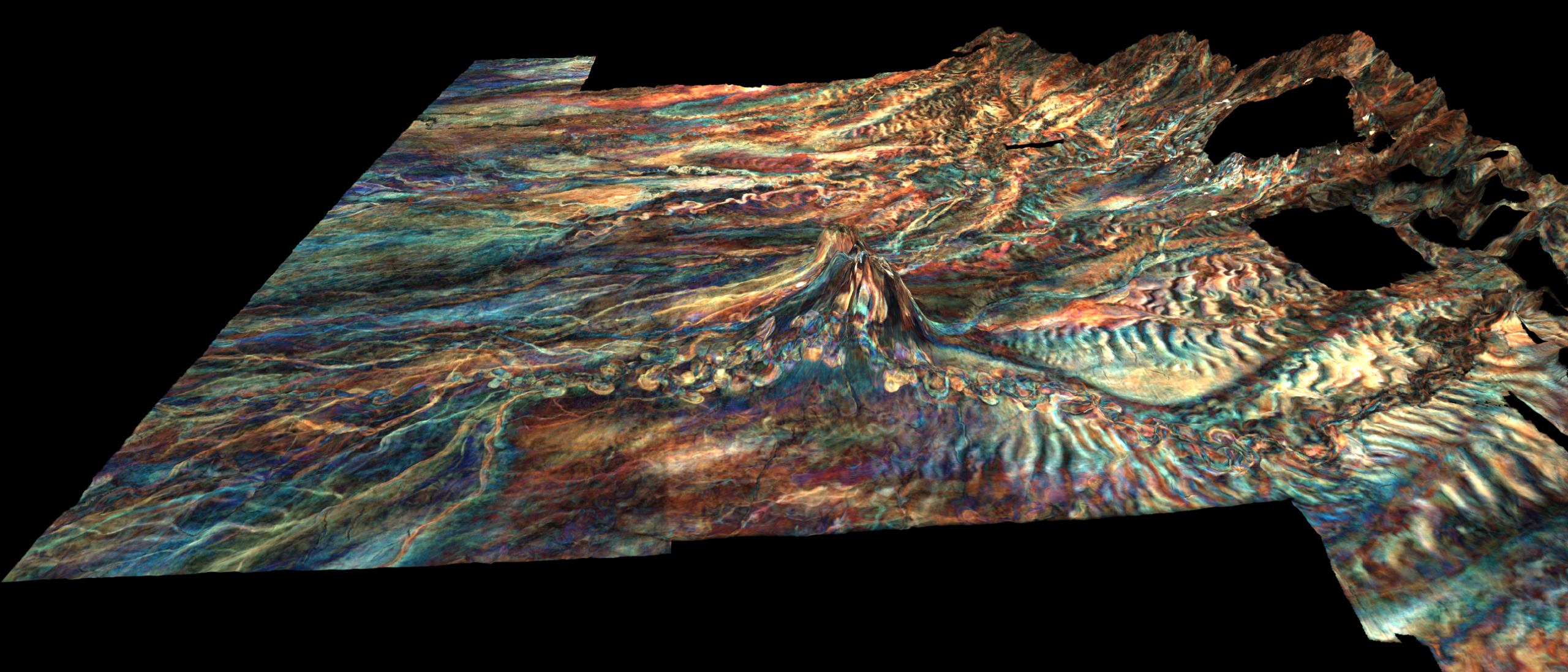
Spectral decomposition of the TGS MegaSurvey Cenomanian - Turonian channel system, Mauritania.
A basin-scale perspective: Foster Boateng’s journey through data, discovery and a changing industry
At the Africa Oil Week (AOW) in Ghana, the African Explorationist of 2026 will be crowned. In this series, the nominees tell us about their career, what motivates them and how they see the future of the continent. First up: Foster Boateng, geoscientist at TGS

My journey in geoscience started during my undergraduate days at the University of Ghana, where my interest in sedimentary basins and petroleum systems first took shape. That fascination pushed me to pursue a master’s degree in Petroleum Geology at IFP School in Paris. I deepened my understanding of basin evolution and the processes that govern hydrocarbon generation and migration. From there, moving into industry roles was a natural progression.
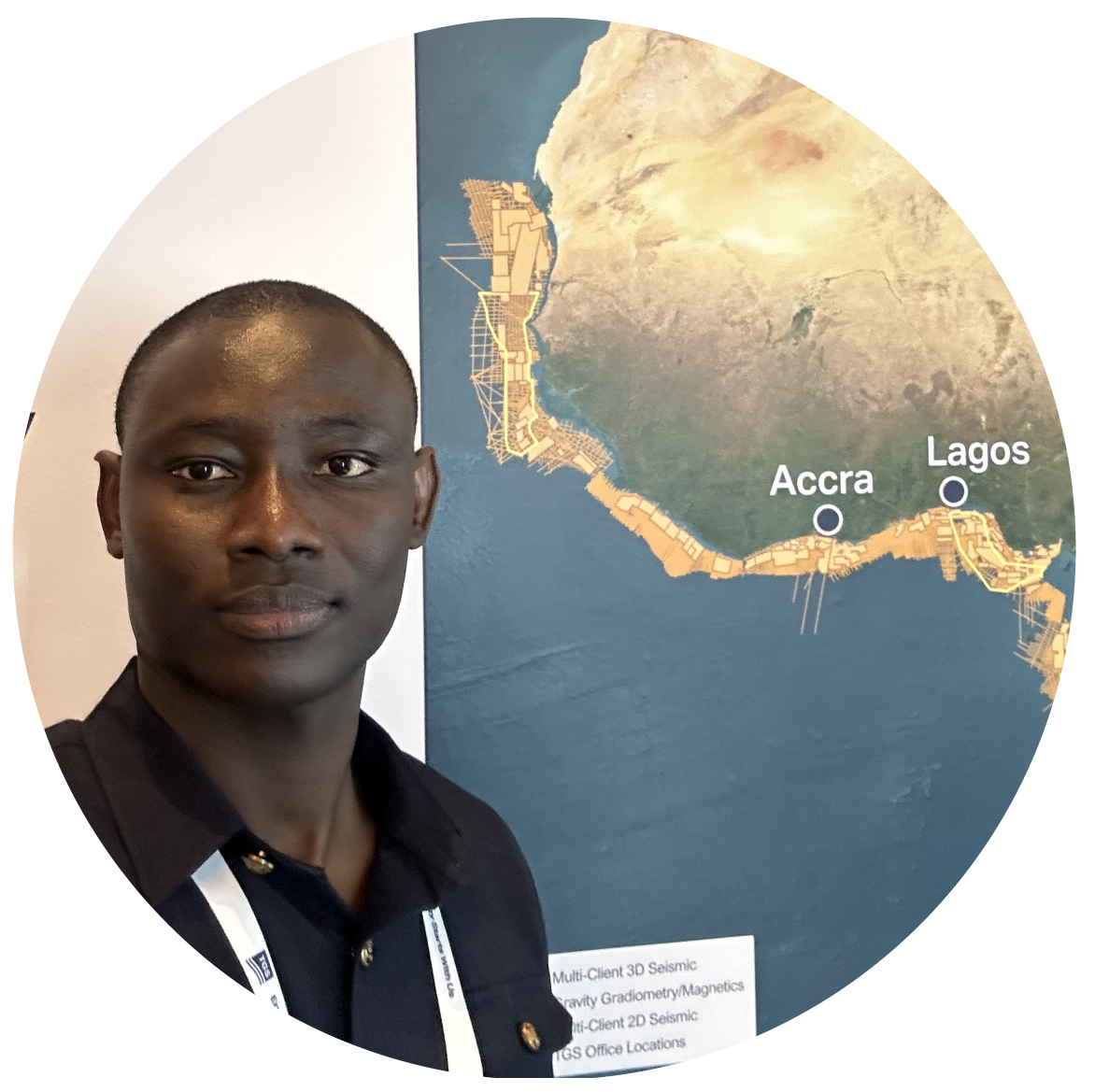
When I joined TGS as a Geoscientist, the company was in the middle of a major push to promote the value of MegaSurvey data across Africa. I spent a lot of my early career working with these large regional datasets, using them to highlight the potential of offshore basins and support business development. It was an exciting time because the industry was shifting away from isolated, block‑by‑block exploration and toward a more integrated, basin‑scale mindset. We started combining extensive 2D and 3D seismic coverage to evaluate plays and petroleum systems in a way that simply wasn’t possible before.
Advances in seismic imaging, processing, and digital technology have transformed how we work. Interpreting large seismic volumes is now far more efficient, and many of the manual workflows that used to dominate our time have been streamlined. This allows geoscientists to focus more on high‑level geological insights and strategic decision‑making rather than on the mechanics of interpretation.
Exploration in Africa is as much about collaboration, adaptability, and understanding local contexts as it is about technical excellence
Exploration in Africa has its own unique character. Many of the continent’s basins are still frontier areas, underexplored and full of geological uncertainty, but also full of upside. That combination of risk and potential forces you to think regionally and creatively. African basins often extend across multiple countries, so understanding them requires integrating data and insights beyond individual jurisdictions. You need that broader perspective to identify play fairways, analogues, and migration pathways that would never be visible if you stayed confined to a single block.
At the same time, Africa’s operational and commercial landscape adds another layer of complexity. Regulatory frameworks vary widely, infrastructure can be limited, and licensing systems continue to evolve. Exploration here is as much about collaboration, adaptability, and understanding local contexts as it is about technical excellence.
Looking ahead, I believe the next decade will bring even more integration and digital transformation. High‑quality regional seismic datasets, improved imaging, and AI‑driven interpretation will continue to unlock frontier offshore areas, especially in deepwater settings where significant potential remains. The increasing use of artificial intelligence, machine learning, and cloud‑based platforms will reshape how subsurface data is analysed and shared. These tools will help reduce risk, improve efficiency, and support more informed exploration decisions.
For me, the most rewarding part of this journey has always been seeing discoveries made and fields brought into production, knowing that these successes contribute, in some way, to addressing energy poverty across Africa. That sense of purpose is what continues to drive me, and it’s why I believe the future of exploration on the continent is so compelling.