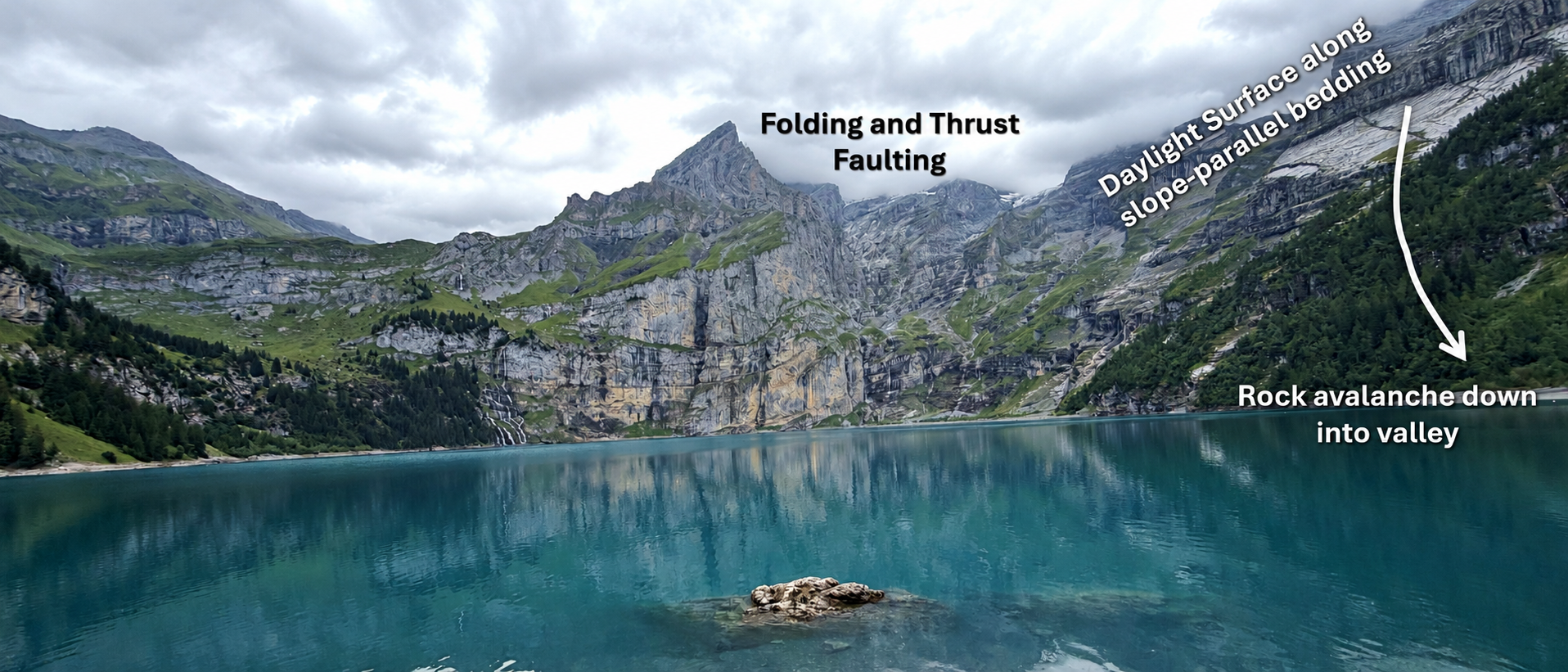
Photo: Molly Turko.
From thrust faults to landslides
When millions of years of deformation culminate in one catastrophic event

As I hiked the trail around Lake Oeschinensee near Kandersteg, Switzerland, my attention kept drifting away from the brilliant turquoise water toward the towering limestone cliffs across the lake. The scenery is breathtaking, and it is easy to understand why Oeschinensee lies within the UNESCO Swiss Alps Jungfrau-Aletsch World Heritage Site.
But as a structural geologist, I found myself asking a different question: Why did the mountainside fail?
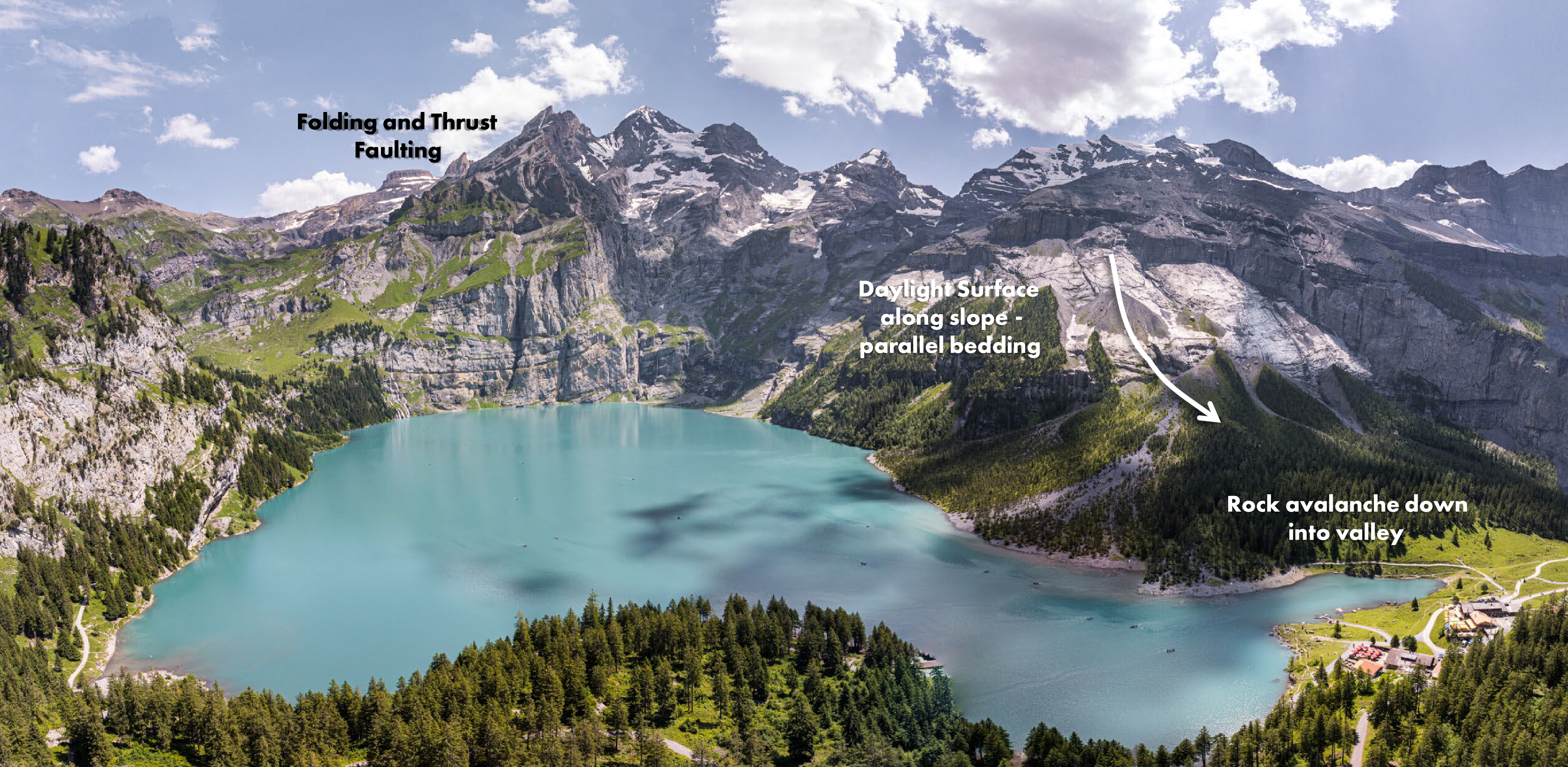
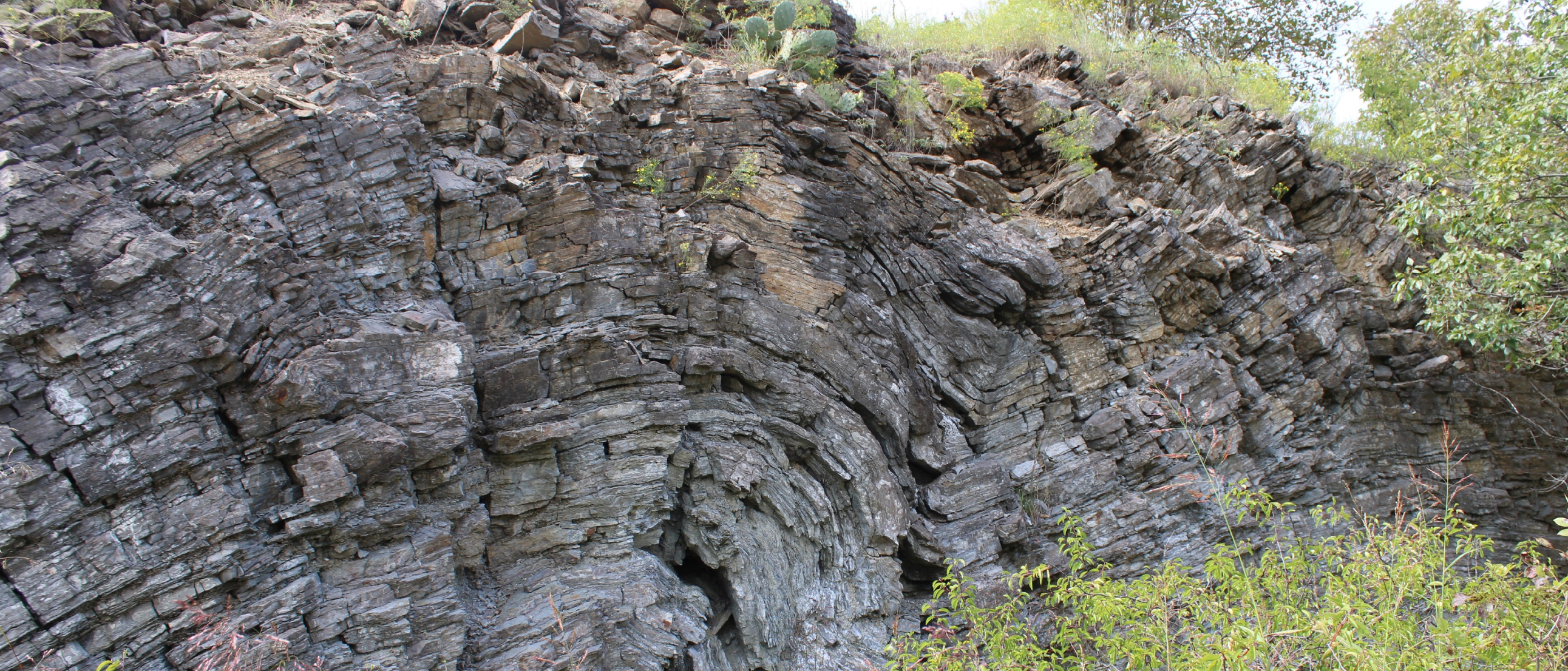
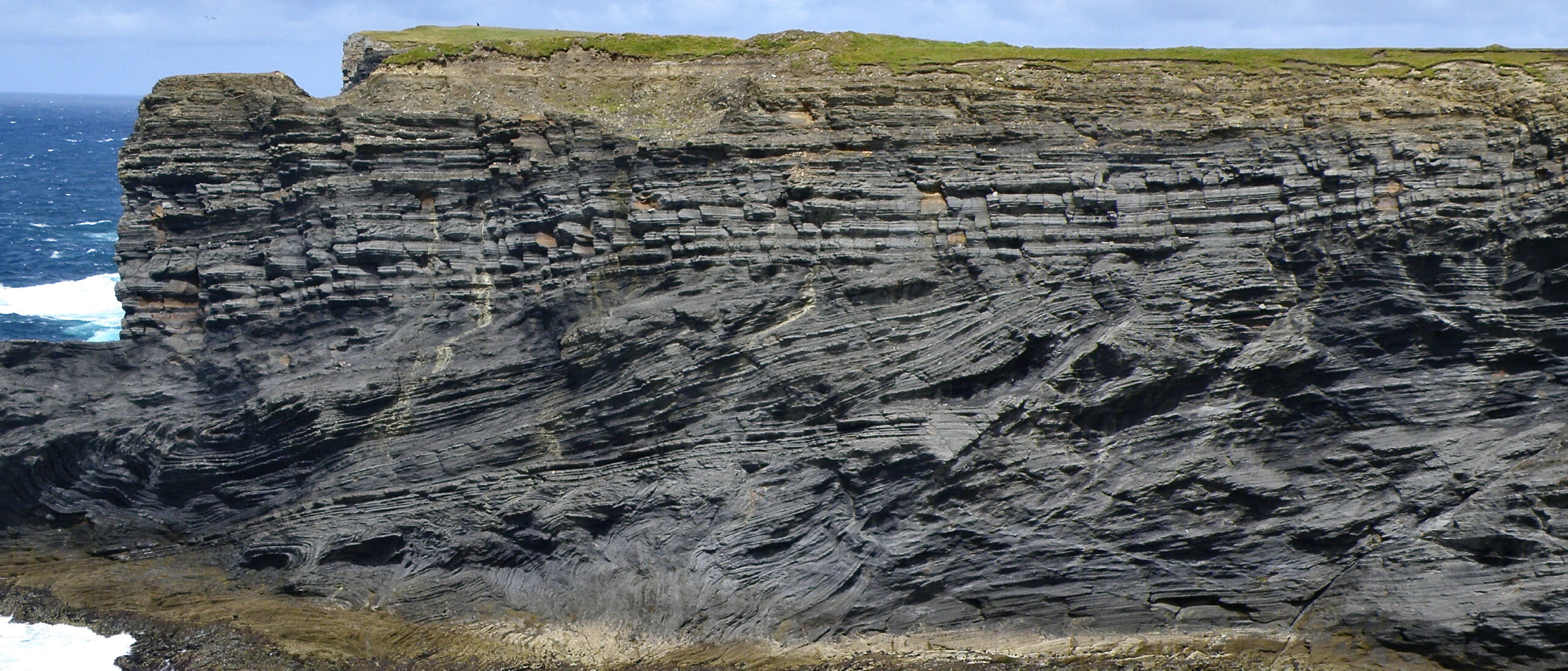
The answer may have begun millions of years ago during the Alpine Orogeny. As the African and European plates collided, sedimentary rocks deposited in the ancient Tethys Ocean were compressed, folded, and transported along large thrust faults. These tectonic forces built the Alps while folding and rotating limestone and shale beds into the steeply dipping orientations visible today.
Looking across the lake, the bedding appears to dip toward the valley, suggesting a slope where bedding planes may daylight. Although this observation would require detailed field mapping to confirm, published studies indicate that glacial undercutting created a daylighting condition for otherwise slope-parallel bedding discontinuities, providing a plausible structural mechanism for failure. My interpretation is that Alpine thrusting rotated these beds into orientations favourable for gravitational failure, while glacial oversteepening removed support from the slope. An earthquake may then have provided the final trigger.
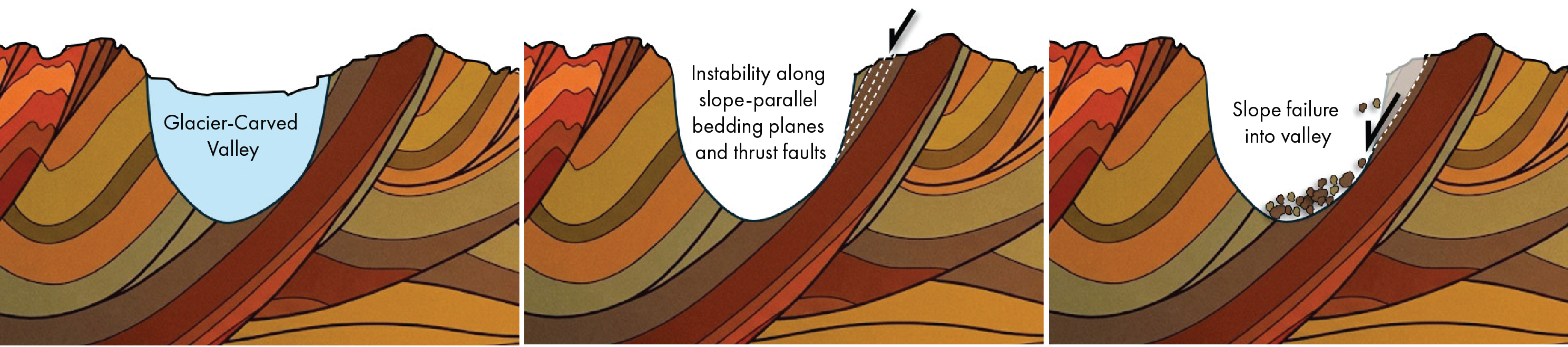
Approximately 3,200 years ago, a massive rock avalanche detached from the adjacent mountainside, damming the valley and creating the natural lake seen today. What appears to be a peaceful alpine landscape is, in fact, the product of millions of years of tectonic deformation followed by a single catastrophic event.
Although every slope has its own geologic history, Oeschinensee illustrates a principle recognised by engineering geologists worldwide: mountain slopes are often predisposed to failure long before they collapse. The orientation of bedding, faults, and fractures may determine where future rock avalanches occur, while glaciers, rivers, or human excavation remove the support that once kept those slopes stable. Understanding structural geology is therefore critical for evaluating geologic hazards that threaten infrastructure and communities.