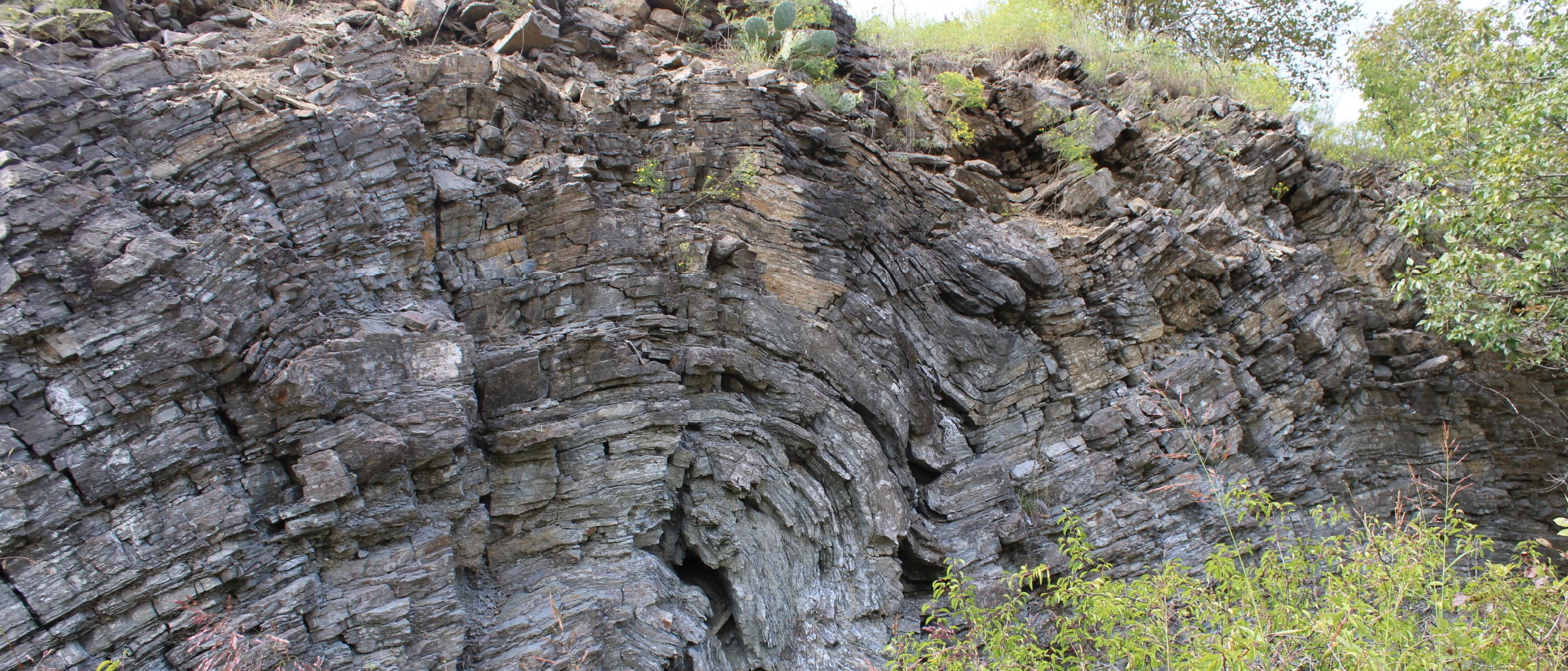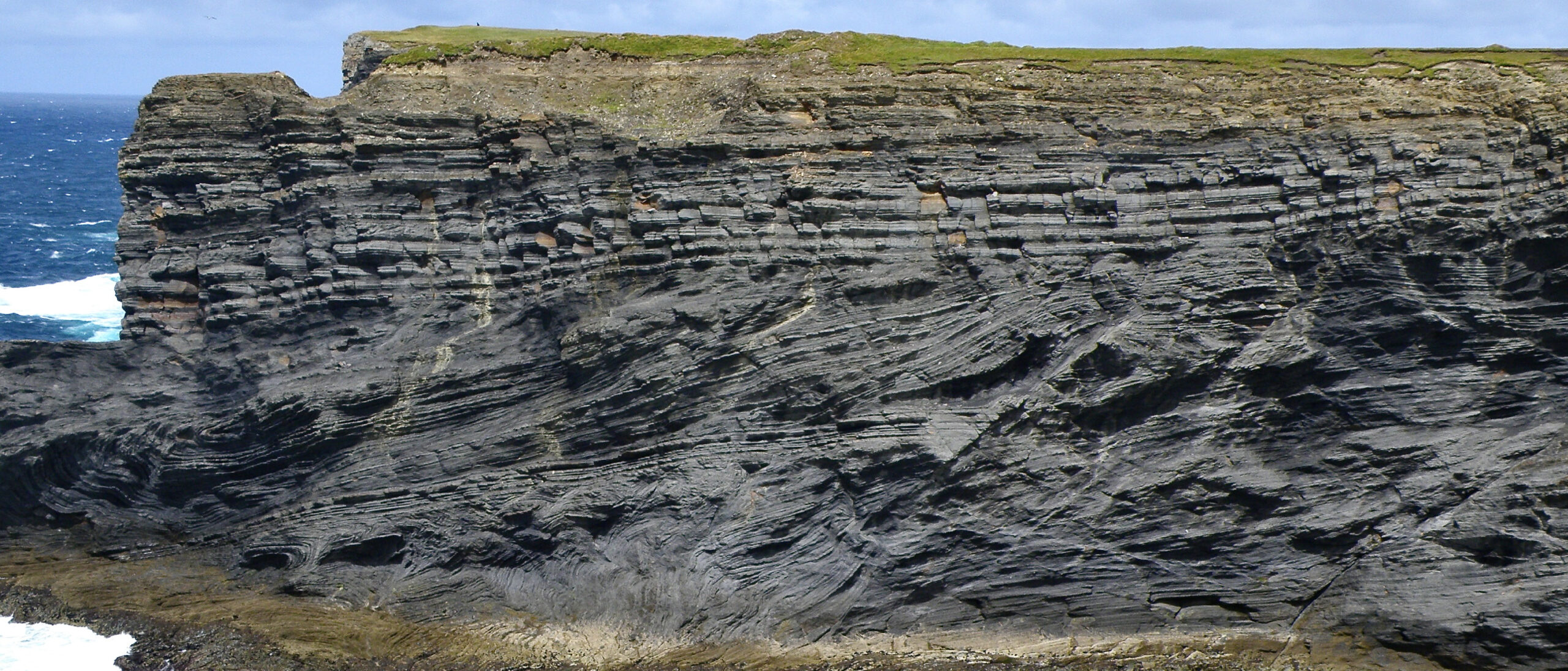
SSD near the base that does not impact the units near the top. Photography: Ali Jaffri, Applied Stratigraphix.
Tectonics or soft-sediment deformation?
Some key criteria for each

Soft-sediment deformation (SSD) refers to structures that form during or shortly after deposition, while sediments remain unlithified, water-saturated, and mechanically weak. These features develop prior to significant compaction and cementation, when elevated pore pressures and unstable grain frameworks allow layers to deform ductilely. In contrast, tectonic deformation, primarily faulting and folding, results from regional or local stress fields acting on lithified strata. For subsurface interpreters, distinguishing between these two styles is critical, particularly in structurally complex or reservoir-prone intervals.
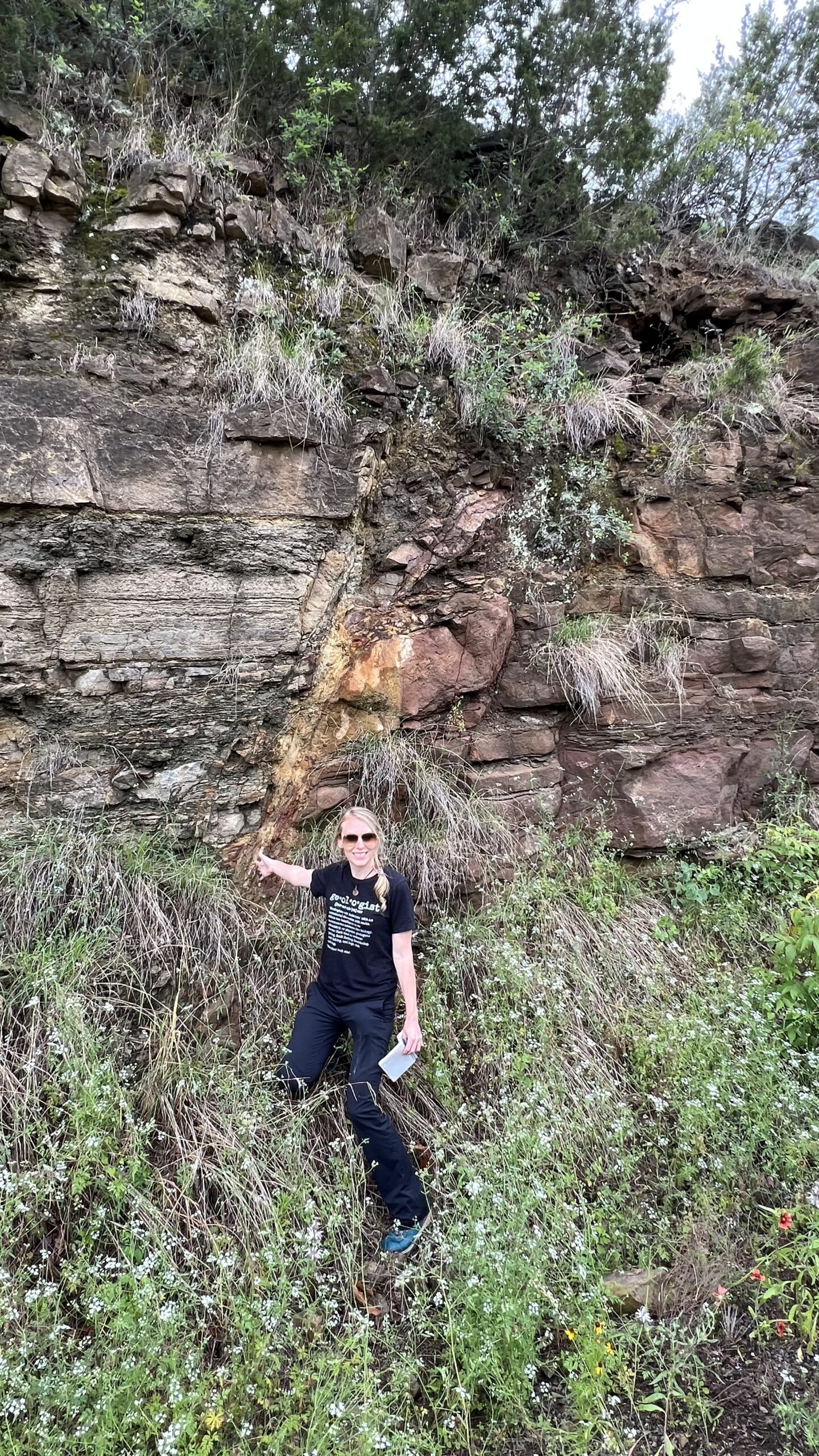
Several practical rules of thumb can help differentiate SSD from tectonic deformation in core, image logs, and seismic data. First, SSD is stratigraphically contained. Because it forms contemporaneously with deposition, deformation is restricted to specific intervals. Faults or folds that abruptly terminate at bedding interfaces and have no apparent impact on overlying strata are strong indicators of SSD. These structures are typically smaller in scale and lack evidence of brittle deformation.
In contrast, tectonic deformation commonly cuts across multiple stratigraphic units of differing ages. Faults generated by regional stress regimes are throughgoing and may extend across large portions of the stratigraphic column. They are often accompanied by brittle deformation fabrics, including fracture networks, cataclasis, slickensides, and mineralised veins. Damage zones characterised by increased fracture intensity, as well as synthetic and antithetic fault splays, are hallmarks of tectonic fault systems.
The nature of the fault plane itself can also be diagnostic. Faulting during SSD is commonly gravity-driven or related to localised instability in mechanically weak sediment. These faults tend to be relatively clean-cut and lack a pronounced damage zone. Because the sediment is unlithified, deformation is more ductile in expression and does not produce the brittle fabrics typical of tectonic settings.
Scale provides another useful discriminator. Tectonic folds may be broad, regionally extensive, and involve multiple stratigraphic units, often with associated fracturing in zones of tensile strain or thrusting near fold hinges. SSD folds, by contrast, are smaller in scale and confined to the depositional unit in which they formed.
Context is equally important. Structural observations should be evaluated alongside the tectonic history of the basin. Small-scale thrusts and contorted bedding in a region with no history of orogenic compression may instead reflect gravity-driven deformation, such as mass-transport deposits in deepwater settings. Integrating depositional environment, structural style, and basin history reduces the risk of misinterpretation.
Distinguishing SSD from tectonic deformation directly impacts fault analysis, reservoir compartmentalisation models, paleostress interpretations, and predictions of mechanical behaviour. Misidentifying stratigraphically confined slump features as tectonic faults can lead to erroneous structural maps and trap geometries, while overlooking true tectonic faulting may underestimate seal risk or compartmentalisation. For exploration and development teams alike, recognising the timing and mechanics of deformation is fundamental to predicting subsurface architecture and fluid flow.