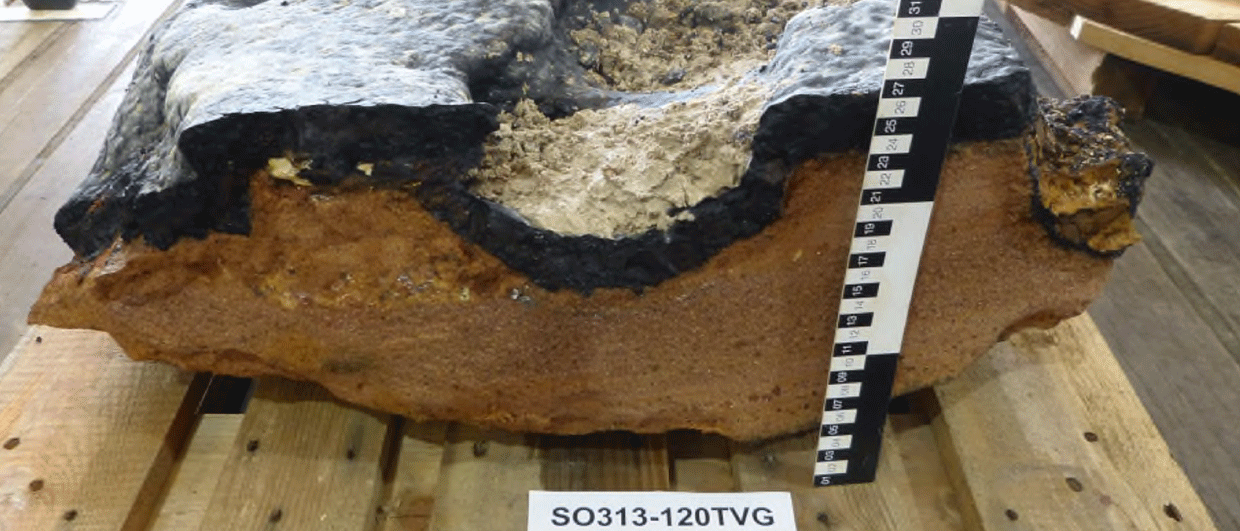
Ferromanganese crust on (reworked) volcanic ash layers. Photo: Simone Sturm.
Seamount summit crusts
A German-led research expedition to the Louisville Ridge in the southwest Pacific highlights significant cobalt and rare earth potential in seamount summit crusts, though seafloor conditions may be challenging for future extraction efforts

Seamounts are abundant in the world’s oceans, numbering in the tens of thousands, with some estimates exceeding 100,000. These submarine mountains, mostly extinct volcanoes, rise at least a kilometer above the seafloor but don’t break the water surface. From a resource perspective, they attract attention because many are coated in ferromanganese crusts enriched in critical metals such as cobalt, nickel, and rare earth elements.
The iron-manganese oxide crusts host diverse benthic faunal communities. The research cruise SO 313 was to investigate the occurrence and economic potential of ferromanganese crusts, alongside benthic species distribution and localised hydrographic features.
In June 2025, an international team of geologists, geochemists, biologists and physical oceanographers set sail to the northern section of the Louisville Ridge in the Pacific Ocean. The ridge is a chain of more than 70 seamounts which formed as the Pacific Plate moved over the Louisville hotspot. The study area encompassed six seamounts, located northeast of New Zealand. Bathymetry mapping using a multibeam echosounder showed that the mounts are guyots, decapitated seamounts with a relatively flat top. The summit plateaus formed when the volcanoes were exposed above water. As the Pacific Plate drifted away from the hotspot, the lithosphere cooled and contracted, causing the seamounts to subside to well below sea level.
Thomas Kuhn, chief scientist of the expedition and employed at the BGR, presented the preliminary results at the Seabed Minerals 2026 conference in Norway. “The topography is rough,” Thomas noted, referring specifically to the seamount slopes, which are prone to erosion, slumping and mass wasting. “These steep gullies, ridges and exposed volcanic rocks limit the formation of continuous, thick crusts on the slopes. In contrast, the summit areas offer relatively stable and flat conditions, more favourable to long-term crust growth.”
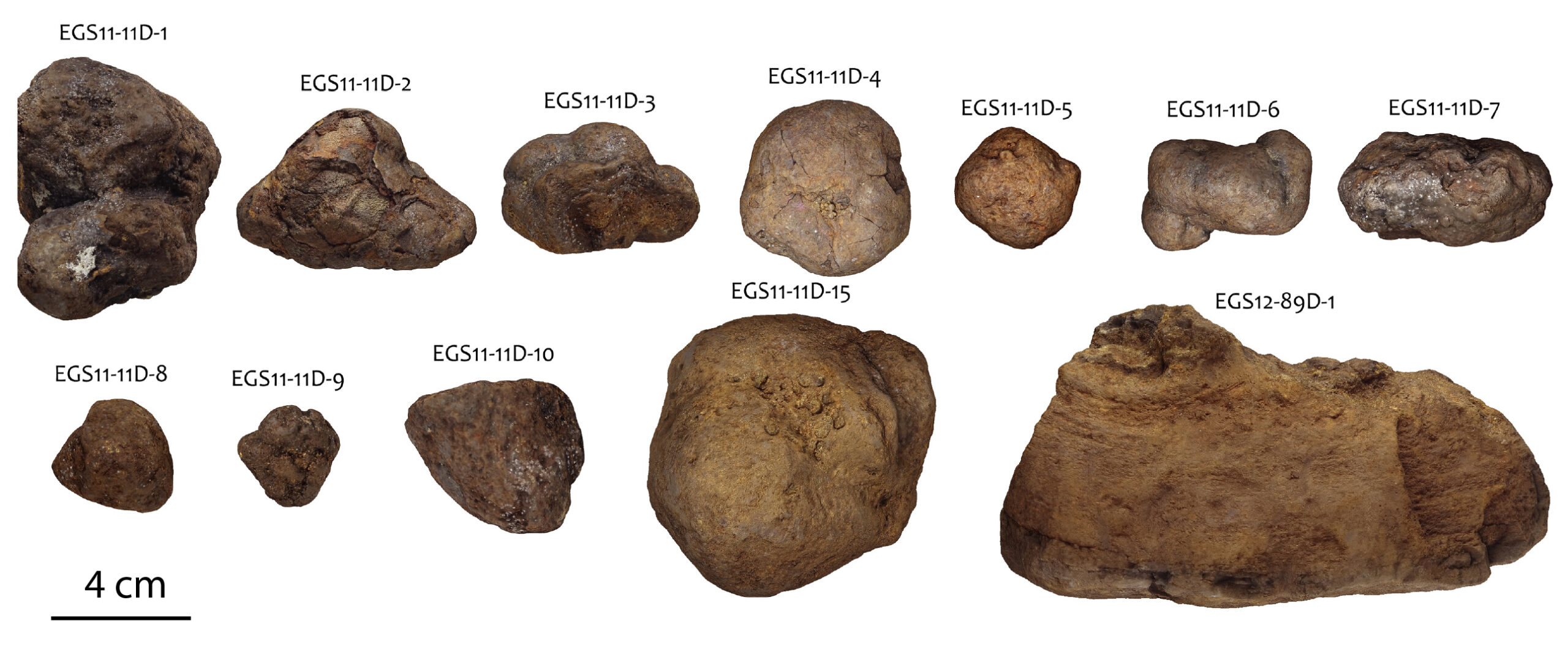
A key control on crust prospectivity is sediment cover, which is strongly influenced by factors such as the size of the summit plateau and local current regimes. On the investigated seamounts, sediment coverage ranged from nearly nothing on the small Burton seamount to about 60 % surface coverage on the much larger Seamount 420. However, on the summits of both guyots, the expedition was able to sample up to 5 cm thick layered crusts growing on volcanic substrate. In places, large numbers of sessile animals, such as corals and sponges, were attached to the crusts.
Kuhn states that the Louisville Ridge appears more prospective than many other seamount regions in terms of cobalt, rare earth elements and yttrium content. However, for the seamounts to be attractive targets for future exploration and exploitation, both the technical difficulties of mining irregular terrain in at least a kilometer-deep water, and the broader environmental impact, need to be addressed.