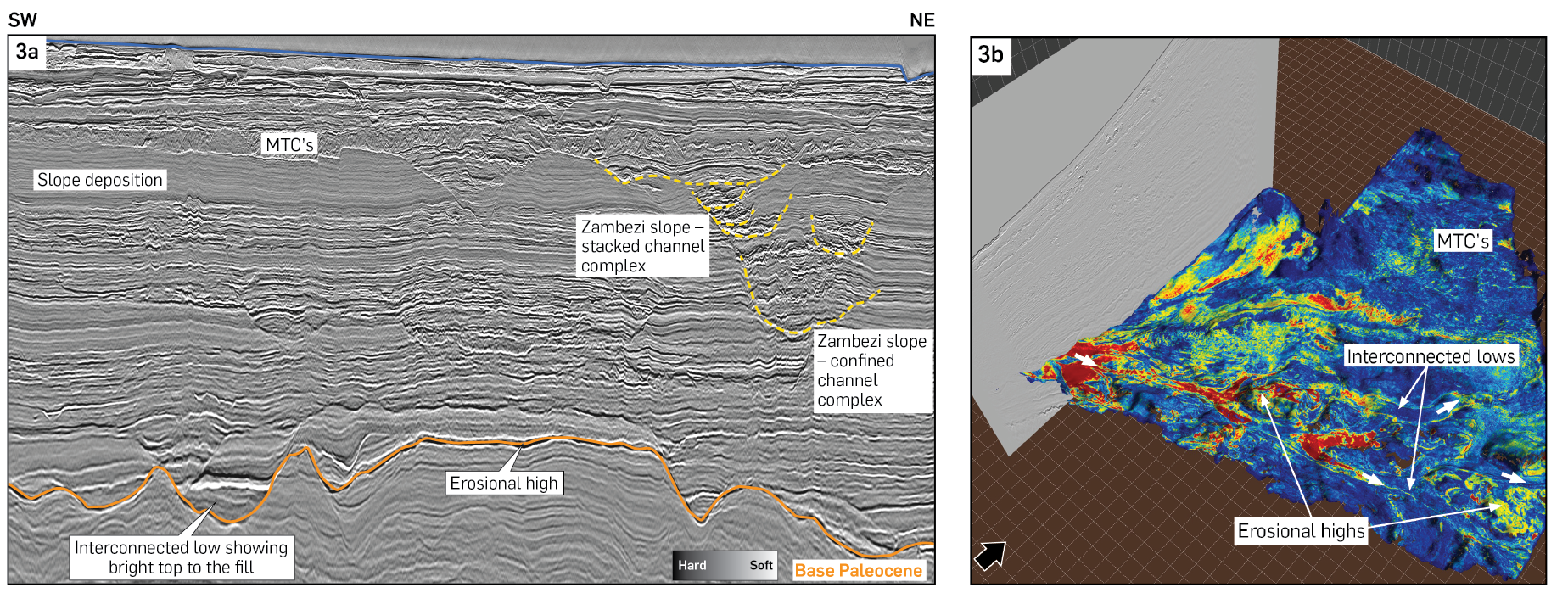
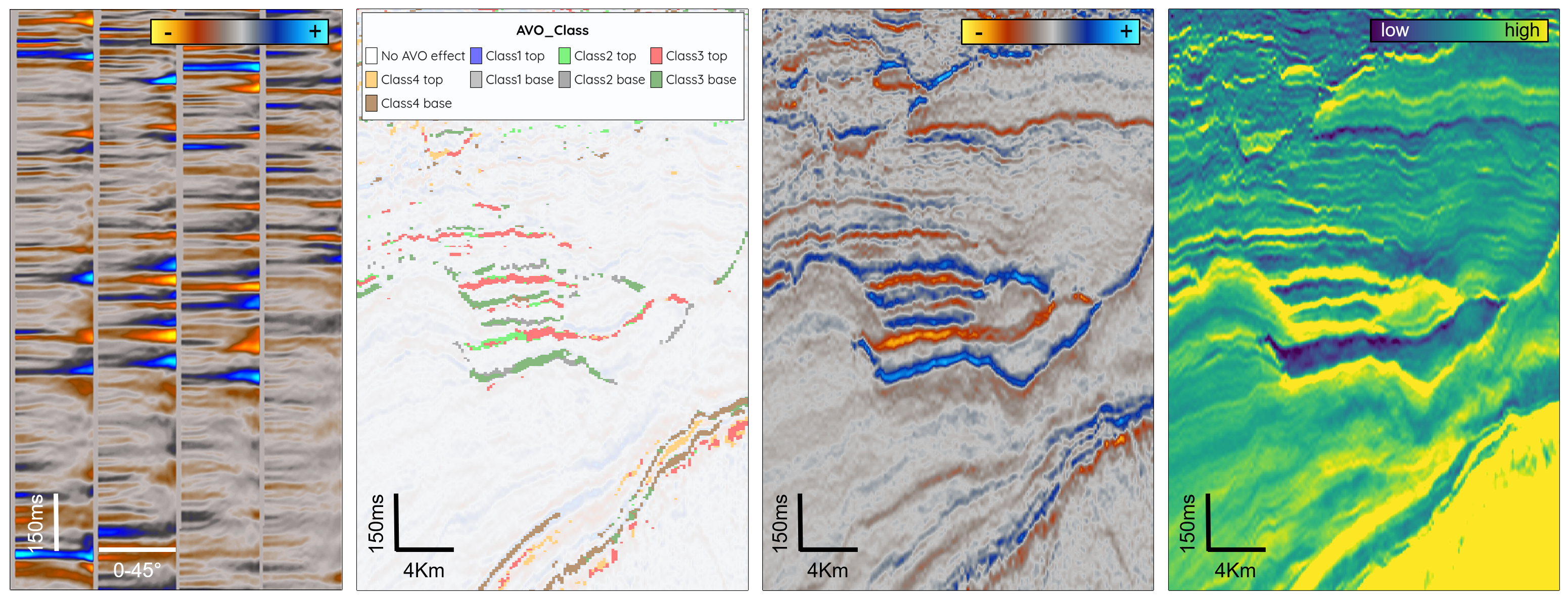
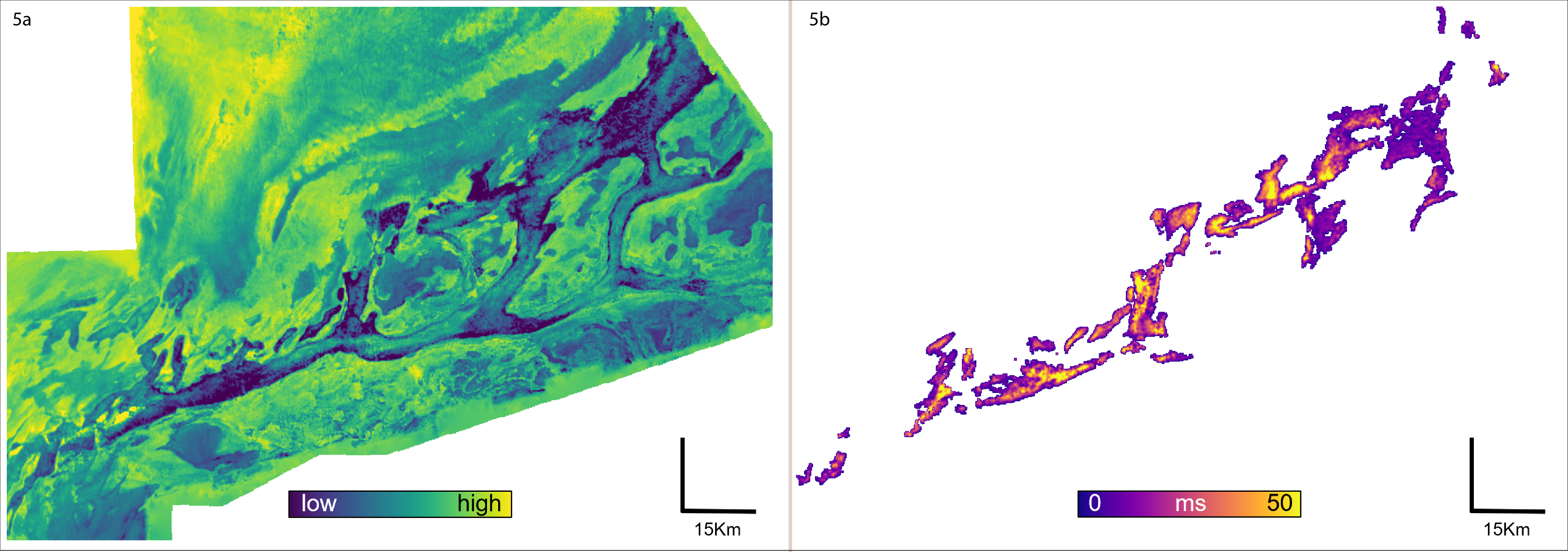
As global energy demand continues to rise, continued investment in oil and gas will be critical to keep pace. Recent frontier basin exploration, particularly in deepwater basins in Namibia, Côte d’Ivoire, Guyana and Brazil, have yielded high-impact discoveries. However, these settings demand identification of large prospects to justify high drilling and development costs. In such cases, quantitative interpretation techniques play a critical role in de-risking prospects and reducing exploration risks. Integrating AVO analysis into frontier workflows to identify exploration opportunities Assessing frontier basin prospectivity with limited subsurface data presents significant challenges in evaluating its petroleum potential. As well data is often sparse or absent, it becomes essential to acquire and interpret high-resolution 3D seismic data to build knowledge of petroleum systems and plays. To further enhance our understanding of the Zambezi Basin, Viridien recently conducted a regional AVO screening study on its 15,000 km2 3D seismic survey. Several plays have been identified in the post-rift sequences of the deepwater Zambezi Basin ranging from Upper Jurassic to the Oligocene-Holocene play. The study focused on hybrid turbiditic-contourite channels of the Paleocene Upper Grudja formation with an aim to assess fluid characterisation and better understand rock physics to delineate zones of prospectivity within this interval. The Paleocene Upper Grudja formation is considered to have reservoir potential with sedimentation occurring largely within a slope setting. The Upper Grudja formation within the southern part of the survey area is characterised by migrating channel levee complexes indicating synchronous interaction of downslope-flowing turbidity currents and along-slope contour currents (hybrid channel systems). These hybrid channel systems were strongly controlled by the position of the pre-existing Upper Cretaceous contourite drifts and moats. The reservoirs consist of thick channel deposits (Figure 3a) with potential vertical connectivity. An RMS map of the Base Paleocene (Figure 3b) shows the distribution of potential reservoir sands, some of which exhibit a high-amplitude response within the connected lows of the hybrid channel systems in the south of the survey. These reservoirs are sealed by fine-grained clastic slope deposits. Hydrocarbon charge is likely to be from Early Cretaceous (Aptian-Albian) and Late Cretaceous (Turonian-Coniacian) source rocks. Traps are stratigraphic and consist of truncations, onlap and ponding within the lows of the channel systems. For the AVO screening, our rigorous workflow included data QC on gathers to assess and condition data for AVO attribute generation, AVO class screening, generation of additional attribute volumes and, finally, geobody picking. First, a seismic velocity field was required to convert horizons from depth to time. This volume provided a low-frequency trend for impedance estimation. Four angle stacks – near, mid, far and ultra-far – and offset gathers were available for this screening. The data quality of angle stacks was observed to be good with noise well suppressed. The basic screening attributes were generated from AVO fitting of the data using Shuey and Fatti approximations. Further attributes such as AVO class and chi rotations were generated from the Shuey-derived intercept and gradient, whilst Fatti provided P and S reflectivity. The P and S reflectivity allowed us to generate the fluid factor attribute, and after inverting for P and S impedances, we obtained Lambda-rho/Mu-rho and fluid indicator, any of which can be used as potential hydrocarbon indicators (Figure 4). The Fatti-derived fluid factor and Shuey-derived chi rotation (20° works best) both identify the same anomalous features, whilst the AVO class display provides further information about the position of the data in the familiar R0/G crossplot space. For this project, we required data that was appropriate for AVO analysis. The data was made more robust using volume-based attributes, preferable to the interface properties provided by the reflectivity attributes. The reflectivity volumes from Fatti were therefore inverted to provide P and S impedances and, from there, the fluid indicator attribute was generated. Rocks containing hydrocarbons instead of brine will tend to exhibit reduced P impedance values and hence low or negative fluid indicator values (Figure 5a). We then further high-graded the fluid indicator attribute using a selection criterion in the fluid indicator/S impedance space and picked geobodies from the result. By mapping out the geobodies, we can visualize areas where the seismic data indicate potential sweet spots for hydrocarbon prospectivity (Figure 5b). The geobodies vary in extent, reaching up to 90 ms two-way time in thickness; when coupled with their positions within the channel systems, some will be more attractive or plausible than others. By linking this information with our understanding of the lithology, paleogeography, and geological timeline, we can determine which of these areas are likely to have reservoir potential. Our AVO screening indicated several potential hydrocarbon leads within the Paleocene hybrid channel systems seen in this seismic volume. These channels are observed to exhibit Class II/III AVO. The fluid indicator attribute allowed us to identify areas with potential fluid effects and, when combined with S impedance, isolate and capture the most anomalous features. The integrated methodology successfully demonstrates how advanced seismic attributes can help unlock prospectivity in frontier basins.
Mozambique: Revealing exploration potential of deepwater Zambezi Delta
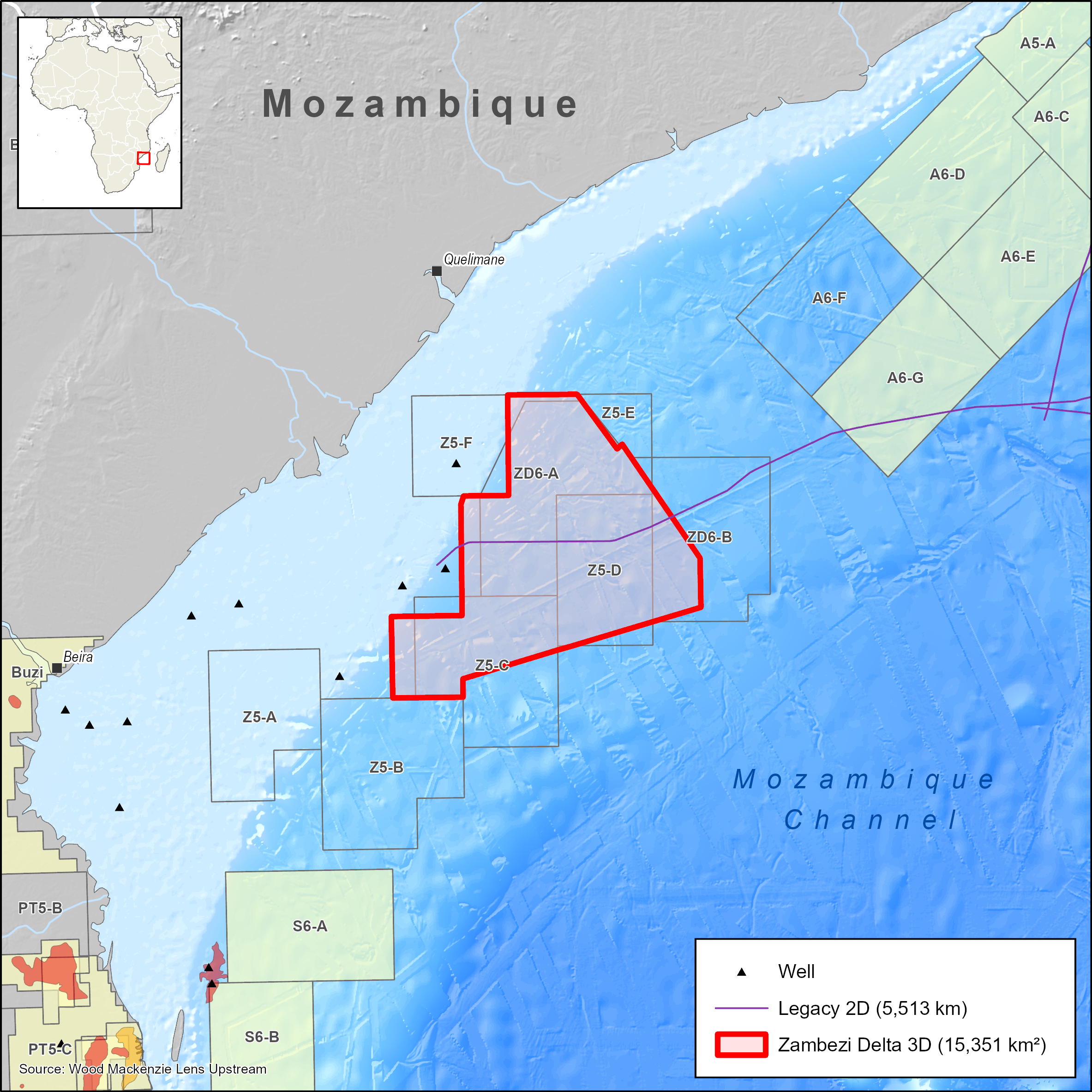
The deepwater Zambezi Delta Basin in central Mozambique remains largely underexplored with historical exploration focus limited to onshore fields (e.g. Pande and Temane) and the shallow shelf. In 2017, Viridien acquired over 15,000 km2 of 3D multi-client broadband seismic data (Figure 2) imaged with advanced pre-stack depth migration (PSDM) using full-waveform inversion (FWI) for velocity model building to de-risk exploration and provide high-resolution subsurface imaging in the basin (Figure 1). Emphasis was placed on preserving amplitude-versus-offset (AVO) behaviour to support attribute analysis. Key plays include the Upper Cretaceous basin floor fans, Paleocene hybrid channel systems and the Tertiary channel systems related to the Zambezi Delta system. Here, we look at how we can assess prospectivity in a frontier basin using AVO screening techniques.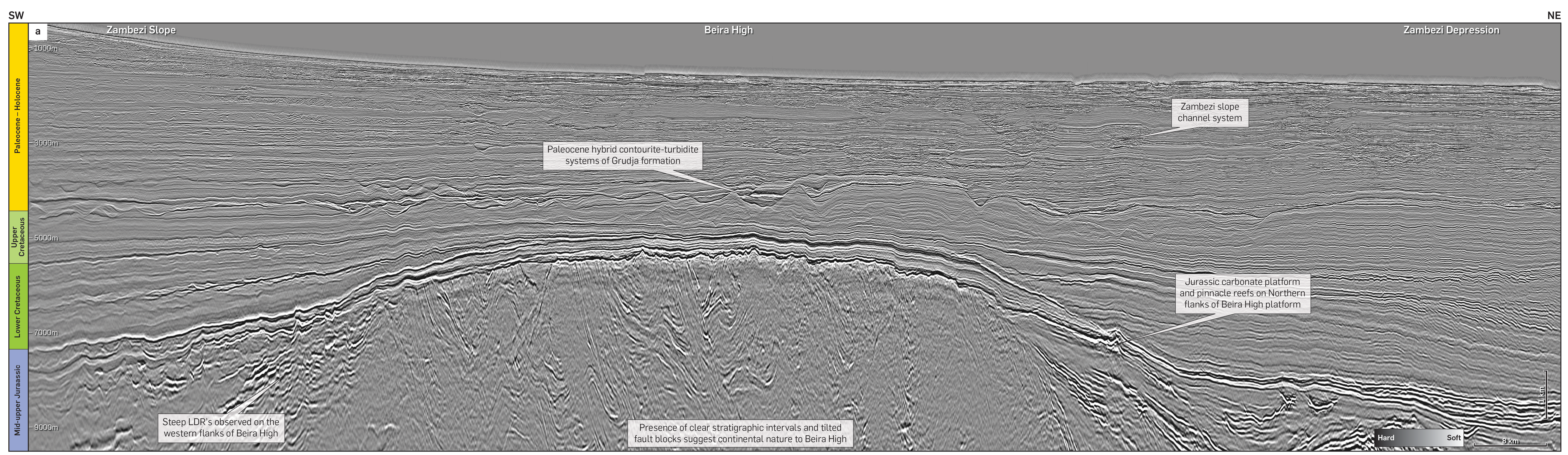 Figure 1: The southwest-northeast full-stack Kirchhoff PSDM (prestack depth-migrated) seismic line taken from the southern area of the Zambezi 3D survey shows transition of the deepwater system from the proximal slope to distal slope (Zambezi Depression).
Mozambique’s deepwater Zambezi Basin: Where AVO meets untapped opportunity
Paleocene reservoirs
From insight to outcome
Key learnings
Foundation for informed action
Related Articles