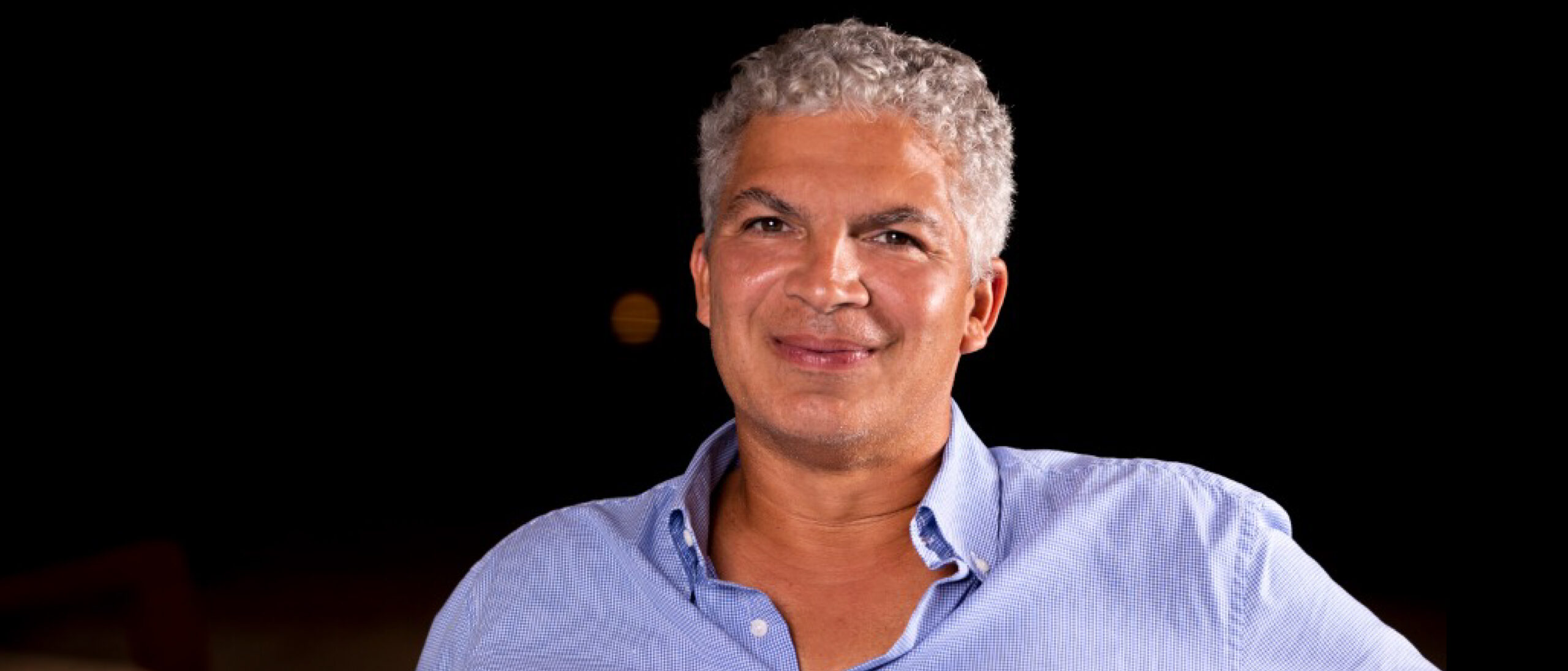
Enzo Zappaterra. Photo: Henk Kombrink.
“I am not a geologist. I am a petroleum geologist”
In October 1959, Enzo Zappaterra flew from Italy to Tripoli to start his first job after graduating from Bologna University. It was the start of a long career that saw major changes in the industry, from new carbonate classifications to new stratigraphic concepts, new seismic imaging and new ways of licensing. But along the way, he never got too attached to a certain technology or discipline, because he turned out to be after one thing: Finding more oil through observation, observation and observation

When I walk round the corner of the street, only 50 m away from the Arar office in Central London where I am going to meet with Enzo Zappaterra, I already see him waiting at the front door. He is 91, uses a stick for walking, but his eyes are sharp as he recognises me and reaches out to give me a hand.
Most interviews I run are online, but for this one I decided to travel down. Not only because of Enzo’s incredibly long career – he is still working after spending 66 years in the business – but I was also told that he keeps a nice collection of maps and other pieces of geological art from all over the world. And that happened to be true. We spent the first part of our meeting looking at a wide variety of cross-sections, well correlation diagrams and composite well logs from Libya and Indonesia, drawn in a way you don’t see anymore. “We had drafting departments at our disposal,” Enzo says, smiling.
In this article, we will walk through Enzo’s long career. The focus will be on the earlier part of it, during which he worked for Chevron and its affiliates, mostly because it is now quickly becoming part of a history not many people will have a direct connection to anymore.
Fossils in a stream and rigs in a field
“Do you really want to become a priest?” Enzo’s parents asked when he told them he wanted to go to university to study geology in Bologna. They had mistaken geology for theology. “Geology was very much unknown to them,” Enzo says.
His parents had a farm in the Po Valley, west of Ferrara. But even though his parents were not particularly into geology, Enzo had come across the science on a couple of unrelated occasions during the last phase of his lyceum years.
In summertime, as his parents were busy on the farm and he couldn’t afford going on holiday himself, Enzo used to go to summer camp with the Jesuits in the Dolomites. It was free, which helped. One of the members of the community took Enzo hunting for fossils. “Fossils?” he asked, “do you find those here?” “Sure,” the man said, as he showed Enzo the rounded pebbles in the stream before cracking them open using the geological hammer he brought with him. It triggered Enzo’s imagination. A totally different experience took place close to home, where drilling rigs had started to show up in the Po Valley, targeting gas in Pliocene fluvial sands. It equally intrigued Enzo, and he tried many times to talk to someone at the rigs, only to find that they were fenced off. Until he got lucky and found a geologist at one of them, whom he could briefly talk to.
These two unrelated experiences were enough to make up his mind, and Enzo entered university, together with ten other students, in 1954. Palaeontology turned out to be his favourite course. “It’s the only one I had a cum laude for,” he says. “I knew all of the fossils by name.”
By the time he graduated five years later, in 1959, 35 students had embarked on studying geology. “It was a sign of the time,” he says. With the rise of oil production and exploration, the demand for geologists had risen, and more people were driven towards it. “Geology as a discipline even made it into the newspapers,” he says. “I think the student numbers rose even more in subsequent years.”
However, after graduating, the oil industry was not waiting at the front door just yet. Luckily, Enzo won a scholarship for six months, and he continued his palaeontology work. But staying in academia, as quite a few of his fellow students did, was not for him. He was already dreaming about going international.
Unfortunately, though, the two local Italian companies – AGIP and Ausonia Mineraria – were not interested in his services as a micropaleontologist, the specialism he had chosen during his studies. What else could he do, he thought, as he had moved back to his parents’ house in the Po Valley. Then he got an idea, as he read the journal Micropaleontology. There, he found a list of correspondents, some of whom worked in the oil industry, and he started writing letters. “I think I wrote about four or five letters,” Enzo says. It was in March-April 1959. Then he went on holiday and spent the summer on the beach in Italy. By September, when he was back at his parents’ place, his mum woke him up from an afternoon nap one day and said that there was someone on the phone for him.
The man at the other end of the line introduced himself as Doug Klemme, and he started speaking to Enzo in broken Italian. “I’m happy to speak German as well,” said Enzo, who didn’t master English yet. So, they continued in German. Klemme, who was American, served in the infantry during the Second World War, both in Italy and in the Alps, so it is probably during those years he picked up these languages. “Sorry, but what company are you working for?” asked Enzo, who had not caught this yet. “Amoseas,” said Klemme.
It was only after he spelled out the name fully that Enzo recognised he had indeed sent a letter to Amoseas: American Overseas Petroleum. They had a short conversation, during which Klemme told Enzo that he was particularly interested in his Miocene stratigraphic work. “They subsequently offered me a position in Tripoli, Libya, but wanted to meet me in person in Rome first, at the Caltex office, another Chevron affiliate,” Enzo says. So they met in Rome, and that was it; Enzo was offered a job. Within six months of graduating, he secured himself a position with the company he would be part of for 41 years. Just by using the back cover of a scientific journal.
Learning the ropes on the rigs
When Enzo arrived in Tripoli, he was welcomed by the Amoseas personnel manager and the chief geologist. He was subsequently stationed at the Mehari hotel for a few days but was expected to find his own accommodation soon after. “I was on probation, so there was no safe expat cushion,” he says. Enzo found a room in the flat of a Sicilian family, which neighboured a local family who were by then fasting for Ramadan. Enzo was totally unaware of this tradition, so he lay wide awake in the evenings as the family could finally start eating and celebrating. He spent these sleepless hours studying English instead.
At work, Enzo was also thrown in at the deep end. A desk was ready for him, with a microscope on it, and he started working straight away without any introduction. Cores and cuttings came in from several well sites across the country, and he was tasked with identifying the age of the rocks that had been drilled through. “We did everything ourselves,” he says, “from prepping the cores to preparing thin sections. It was amazing to be part of this team.” And even though he was in the lab, the work was still real-time, with drilling decisions based on the analyses he performed. He did well, building up a stratigraphic chart of the part of the Sirt Basin he worked in. After six months, he was offered a permanent job.
Then, he was soon asked to go to the rig sites to do more real-time paleontological analysis and identify which part of the stratigraphy they were in. “How great it was to see oilsoaked cores coming out of the hole, whilst building up a picture of the platform and basin setting of the classic Sirt Basin,” he says. “There is no better thing to experience for a 25-year old than seeing the real rocks with oil coming out of the well.”
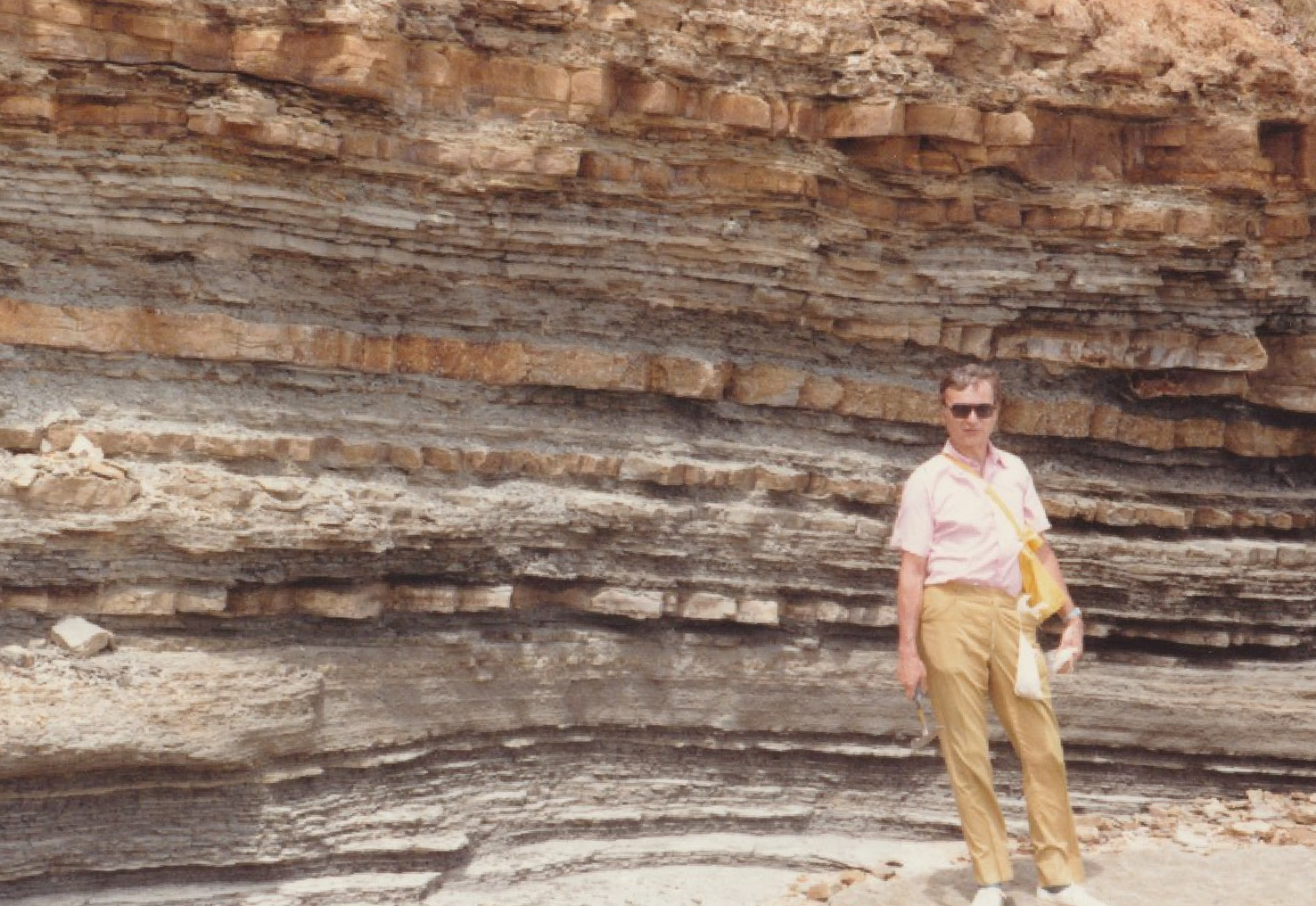
It was in the Sirt Basin where Enzo really gained his carbonate stratigraphy experience. ”What do you do when you see these rocks coming up at the shakers? You classify them first according to what you learned at university: Calcirudite calcilutite, calcarenite, oolite. Later on, he started following the Folk classification.” The problem was, though, when he took this to the chief geologist, he had no idea what Enzo was talking about. “I decided to ditch Folk, and used the newly published Dunham classification that looked at texture rather than composition instead. For reservoir geology, that was much better.”
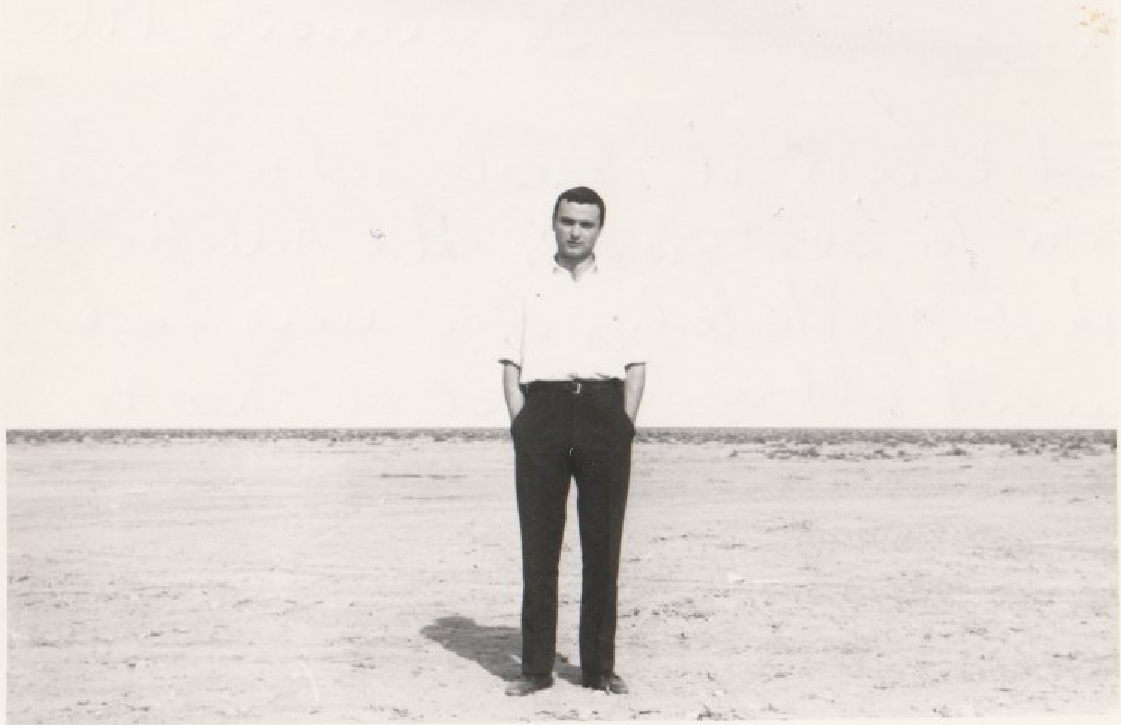
There was time for some breaks too, for instance when Amoseas was drilling in the Cyrenaica Basin in the northeast of Libya. Particularly known for its Tertiary dolomites, it was not uncommon for wells to lose circulation for up to a whole month on end. So what do you do when that happens? “You just take the Land Rover, and you go for a ride across the desert, whilst all sorts of junk is being thrown in the well in an attempt to stop the drilling mud from disappearing,” laughs Enzo.
“YOU GO, WE STAY”
In the early 1990s, Chevron announced the move of its headquarters from San Ramon in California to Houston. But it wasn’t the first time this happened. Enzo remembers a similar moment during the late 1980s, when he and his colleagues received the news of a corporate move to the Lone Star State, mostly for tax reasons. However, when he arrived home and told the news to his wife and two kids over dinner, they put away their cutlery and said convincingly: “You go, we stay.” In the end, Chevron did not move, probably because California realised what this meant in terms of lost tax revenue. 35 years later, taxes was likely not a critical part of the decision.
Introducing new stratigraphic concepts
In 1965, after more than five years in Libya, Enzo was promoted to chief micropaleontologist in the Amoseas Port Harcourt office in Nigeria. “It was a different world,” he says, “from the carbonates in Libya to the siliciclastics of the Niger Delta.”
It was in Port Harcourt where Enzo learned some very practical lessons on well correlation. “The chief geologist was always of the inclination to correlate a sand with another one 2,000 km away,” he says with a smile. “And what if the sand is not there? No problem. He puts an unconformity or fault in between the wells.” Based on the micropaleontological analyses Enzo subsequently did on these wells, he could show that it was the shales correlating with the sands. There was no need to put in an unconformity or fault at all. “The chief geologist was obviously not too happy with me at that point,” Enzo laughs, because his (mis)interpretations also made it to the head office in New York. It was in Nigeria where Enzo learned how a litho- or chronostratigraphic correlation had quite some implications on the connection of the reservoirs.
Enzo did not get the chance to stay in Nigeria long. The Biafran Civil War broke out due to rivalries between ethnic groups in 1967, and he and his wife, whom he had met in Libya, were told from one day to the next to pack their bags – only their essentials – and get onto a plane. They were flown back to Italy, stayed with his parents for a while again, until he was called to London to work on Nigeria from there.
In 1968, Sumatra would become Enzo’s next posting, with Caltex, another Chevron affiliate. “My job title was regional geologist,” says Enzo with a certain degree of satisfaction. “Finally, they recognised that I needed to look around, that my mind was not focused on a postage stamp.”
That also translates to why I don’t work on computers,” he adds with passion. “I still print most of my documents, especially seismic lines and well logs, because I want to look at them from different angles and perspectives. I feel confined when I’m staring at a screen for too long,” he says.
In Indonesia, Enzo learned how geologists often think too much in layer-cake zonations. “I was the first one who could show, based on paleontological work, how several formations that were previously interpreted as being vertically stacked in the basin to be each other’s lateral equivalents instead,” he explains. “I applied Walther’s Law of stratigraphy there, a concept that started to become more common in those years.”
This seemingly simple insight, as it may seem now, was something that the company took note of. Enzo was able to solve a practical geological problem elegantly. He had also cemented his reputation as an oil explorer, because when he and his fellow paleontologists were asked to write down their achievements in the affiliate so far, Enzo was the only one who mentioned the word oil in his report. Because, in his view, that is what it was all done for, at the end of the day. “For some others, the technical discipline was often much more of an end goal, rather than the oil. I just saw all these things as tools rather than academic exercises,” Enzo says.
That business-driven attitude is possibly the reason why Enzo was offered a job by both Caltex’ parent companies; Texaco and Chevron. But he didn’t need to think long about which one to accept: “The letter from Texaco said “Dear Sir”, and the one from Chevron “Dear Enzo”. The cultural difference between the two companies was expressed in just the letters’ opening words.
The Americas
The first stop for Enzo with Chevron was New Orleans, in late 1972, as a geophysicist. As always, he was thrown in at the deep end and started working on the federal lease sales in the Gulf of Mexico. “It was an exciting time to be a geophysicist,” recalls Enzo, “because in those years, the realisation came through of the value of DHI’s or bright spots. We had secret meetings about it in New Orleans and in Houston, because we thought that only a few companies were aware of this new technology and we had to prevent this from leaking out to our competitors.” It also meant working crazy hours, to a point where he and his team were told by the boss to take it a bit easier.
Following his lease sale experience in New Orleans, Enzo spent sixteen years in the San Francisco and San Ramon offices, California, with Chevron Overseas (1975-1991). During that time, he was involved with many international exploration programmes across the world.
Brazil was one of the countries Enzo got to work in, between 1977 and 1982, and given that this was much earlier than the pre-salt boom that the offshore experienced over the past 20 years, it is interesting to look at the dynamics at the time. And that dynamic was very much coloured by what had happened in Venezuela, where the oil industry went through a wave of nationalisation. “Management was very wary that this could also happen in Brazil,” Enzo says, “and were reluctant to go very big.” The main drilling targets were obviously shallower than the ones we see today. “There was no way we could see beneath the salt,” Enzo says, “the quality of seismic data just was not there.” Instead, the company focused on post-salt exploration and drilled a few wells. However, results were not great. “We found CO2 and H2S in a Santos basin well,” Enzo says, “and a discovery of around 15 MMbbl, which wasn’t commercial at the time.” In those days, a company like Chevron required a discovery the size of 100 MMbbl at least, especially because oil prices were not that high.
The London years
In 1992, Enzo was transferred to the Europe team in the London office. Although the UK North Sea was the most important region for this team, it never became Enzo’s focus. Instead, he was more involved with exploration projects in the Mediterranean, whilst he also helped convince management to take a look at the Norwegian sector where the company hadn’t been very active.
Albania had also appeared on the exploration radar, possibly thanks to a relatively new way of licensing that became a trend in those years: the seismic option. Rather than committing to drill a well straight away, the well became contingent upon the results of a seismic survey. “That is rather common today,” Enzo says, “and nobody gets excited about it any more, but at the time it really turned our opportunities upside down.”
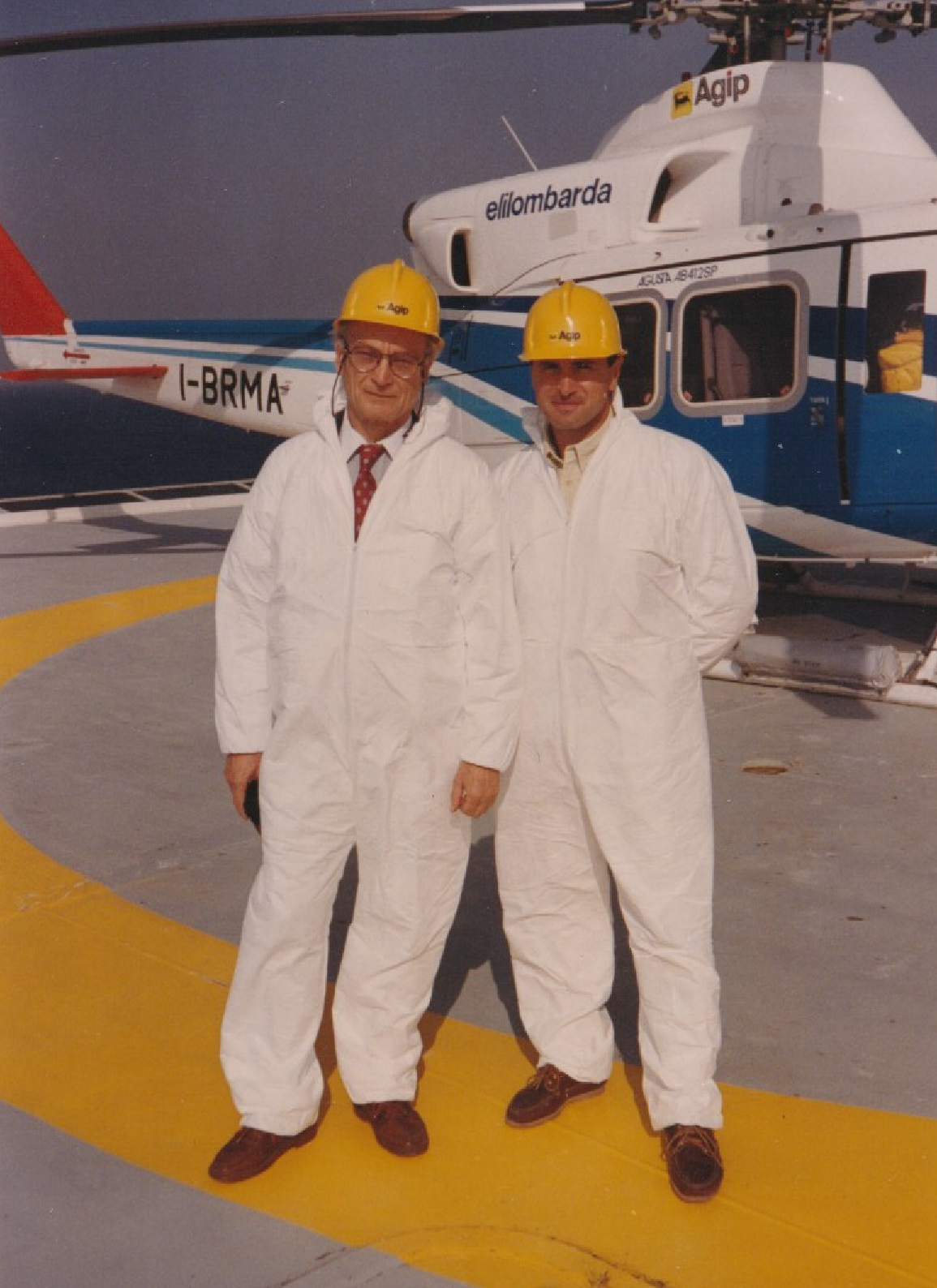
The seismic data in Albania looked good, revealing a well-developed four-way closure, and Enzo became quite involved with the project that resulted in the drilling of well A4-1x in 1993. It was one of the first offshore wells drilled in Albanian waters, in 720 m of water, which was considered very deep at the time. “I even went out to the rig, which was a semisub and much bigger than the ones I had been on offshore Nigeria in the 1960s,” says Enzo.
Even though the well discovered biogenic gas in the post-Messinian section and oil in a pre-Messinian reservoir, the combined size of the discovery at around 100 MMboe was not big enough for Chevron to develop. “Remember,” says Enzo, “it was deep water, and a different time from today. There was still not that much interest in gas either.” But convincing Albpetrol, the state oil company, that this was a non-commercial discovery was another matter. They wanted the development to go ahead.
“It is important to understand that the state oil company had a very different way of doing business,” says Enzo. He had found out about that during a visit to the country a couple of years earlier, when it was still in the grip of the communist party even though dictator Enver Hoxha had already left the scene. “When we arrived in Tirana by plane, we saw that the airport was surrounded by trenches,” he said, as he and his colleague were picked up by members of the secret service in a black limousine. “The roads were deserted; there was no one around. It was icy, and the hotel we stayed in only had a couple of hours of (warm) water a day. The sixty per cent liquor they offered us in the morning didn’t give much respite either.”
“Basically, the state oil company had one exploration model, and that was to drill to the carbonates, as that was where most of the oil was found,” says Enzo. In addition, drilling wells could easily last for around five years, because the geologists on these wells were uncertain of their jobs once the results came in – especially when it was a dry well.
“Against that culture, we had to explain to them that a barrel of oil extracted from this deepwater discovery would cost much more than buying a barrel of oil from Italy. It took us months to get that message across,” says Enzo. “They had no clue what an uneconomic discovery meant. In other words, you really have to put yourself in the situation of the country you’re in at the moment, and don’t expect the same rulebook you’re used to at home.”
During the oil price crash of 1998, the annus supra horribilis, according to Enzo, he came to the office only to find out that there was very little or no more work to do. “Everything came to a standstill,” he says, “there was nothing. We sat there and turned ourselves to streamlining processes in case things would get back to business again.” Then, Enzo’s upbringing on the farm came to the fore. “Planning was something so natural to me,” he explains, “because as a farmer, you have to always plan for the worst, as you never know what the weather will do next year. That’s why farmers are almost always conservative.”
In some ways, the company did plan for the longer term. It did not make the explorationists redundant, because there was the anticipation that things would turn around again. And it did. At the end of the day, Enzo survived the 1998 crash, but retired from Chevron two years later, in April 2000.
The second career
It was not the end for Enzo. Not at all. In fact, he embarked on a second career, which continues to today. There is not much space left to describe it all, but he continued working as a petroleum geologist all these years. The Eastern Med formed a big part of that, looking at newly acquired seismic, all the while he also continued evaluating exploration opportunities across the world.
Another long-standing working relationship Enzo is still enjoying is with Fatih Alpay, a former drilling engineer from TPAO, who set up his own E&P company Arar in 2002. The company is now successfully producing oil from the Bag field in Turkey – from an area that was previously thought of having no prospectivity – and has growth plans that Enzo helps materialise through his decades-long experience.
Before we leave his London Arar office, where we have been talking for around four hours Enzo shows me a printout of a well log of a recently drilled well in Turkey. “Look at the logs,” he says, “it’s these kinds of things that keep me alive; isn’t it wonderful to look at these and ponder about how it all works down below?” he says, whilst he points to a fracture system identified on the logs, most likely filled with oil.
We walk to the bus stop on Piccadilly where we say goodbye. I am blown away by the sheer length of Enzo’s career and the stories he told me, the changes he witnessed in the industry over the years and the fact that he is still very much in the middle of it. A great story, a story that started by taking an interest in knowing more about fossils in a mountain stream and the rigs that dotted the Po Valley landscape.