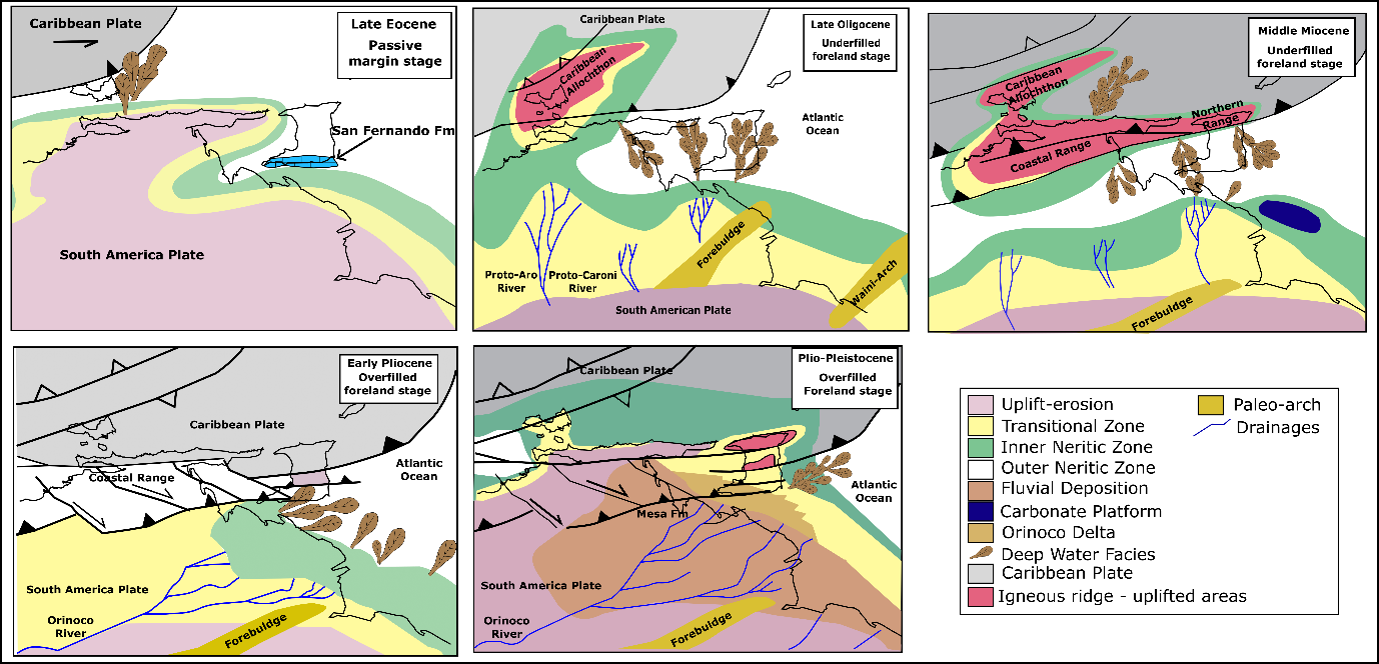
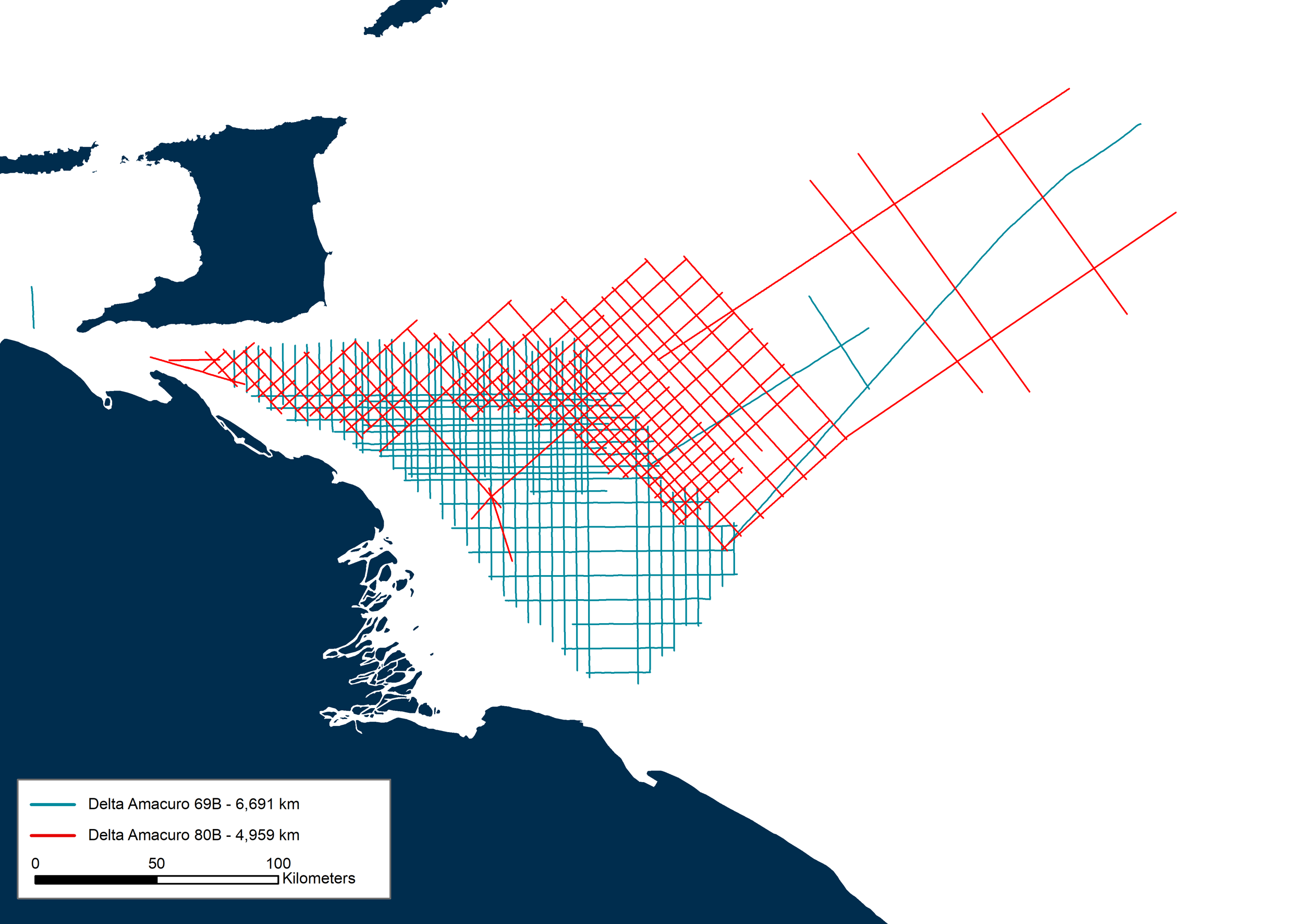
For decades, deltaic environments have been a globally prolific source of hydrocarbons. The Niger, Nile and most recently the Mahakam Delta provides evidence of the significant potential of these depositional environments. Large deltaic deposits in frontier settings are becoming more challenging to find, particularly those with relatively proximal discoveries and good existing infrastructure. One such opportunity where this exists is offshore Eastern Venezuela. Here, a significant deltaic deposit is present and would be categorised as frontier in terms of drilling density; however, significant discoveries have also been made offshore Trinidad & Tobago within the Columbus Basin. Due to this unique setting, DHI’s can be seen on both sides of the border that help to de-risk this frontier area. Geoex MCG, in partnership with DUG Technology, have completed the reprocessing of Delta Amacuro 80B with reprocessing of the Delta Amacuro 69B survey underway (Figure 2). Both surveys provide a complete imaging coverage of the deltaic setting. Within the data there are hydrocarbon indications that have been identified in multiple areas with tieback potential to Trinidad’s LNG plant. This untapped potential is sure to attract significant industry interest. Proven discoveries, established infrastructure and newly reprocessed seismic data are providing a clearer understanding of Plataforma Deltana, helping de-risk exploration and accelerate investment decisions across this underexplored basin This particular area offshore Venezuela has had a complicated tectonic history that resulted in proven reserves of hydrocarbons. Initially a rifting phase developed in the Jurassic between the North and South America plates which subsequently led to passive margin development within the Cretaceous, providing the predominant setting of the AOI. The AOI was then subsequently disrupted, significantly, by the oblique collision of the Caribbean plate with the Northern boundary of South America. As a consequence, a foreland stage in the offshore of the Eastern Venezuela Basin (EVB) developed during the late Oligocene. From this period to the Early Miocene, south to north flowing fluvial systems and associated deltas, prograded northward from the Guyana shield to the EVB. Subsequently, following a Late Miocene regression event, and the lowering of the eustatic sea level along the passive margin, a major unconformity is visible across the margin, which resulted in the development of submarine canyons that allowed the Orinoco Delta to prograde eastwards from the proximal EVB into the deeper water Atlantic area in the earliest Pliocene. From this epoch onward, progradation has taken place from the Orinoco Delta into the Atlantic Ocean. The sediment supply has had a convoluted history. Prior to the uplift, the Orinoco delta was being deposited onshore in proximal areas from Northern South America to the current Andes. During the uplift of the Andes to the west, river systems migrated eastward before depositing in the Delta Amacuro region. The tectonic and depositional history can be summarized as follows: Stage 1 – Cretaceous to Early Paleogene passive margin stage and underfilled Paleogene foreland stage Stage 2 – Miocene underfilled to filled-foreland stage in the distal eastern area of the EVB Stage 3 – Plio-Pleistocene overfilled-foreland basin stage in the distal eastern area of the EVB The synthesis of these depositional and tectonic systems is best summarized in Castillo & Mann (2021). Figure 1 demonstrates the complex interplay between tectonic and depositional systems (adapted from Castillo & Mann, 2021). The Delta Amacuro, or Plataforma Deltana, petroleum system is therefore characterized by a significant deposition of sands within listric faulting on a decollement layer. This has generated significant high porosity / high permeability intervals in shallow water, sealed by juxtaposed listric faults. The Querecual Formation is the main source rock providing hydrocarbons for these intervals, while others are postulated within the Paleogene. This petroleum system has proved successful, as discoveries have been identified in several fields including Tajali, Loran and Cocuina. A Final Investment Decision (FID) has recently been made by bp to produce the Cocuina-Manakin field and provide the associated gas to the LNG pipeline in Trinidad. It is therefore reasonable to deduce that if these types of plays with similar DHI’s can be identified on seismic, these frontier areas can be de-risked, leading to fast-track production and monetization, and reduce the overall CAPEX associated with producing such areas. Geoex MCG and DUG Technology, have already completed the reprocessing of the Delta Amacuro 80B survey (Figure 2). This dataset crosses the border with Trinidad and Tobago, providing useful ties from producing areas to the underexplored southern region. An example of this line is shown in the Foldout. Although only one of these features has been drilled and is subsequently producing, similar DHI’s are observed on both sides of the profile. Geoex MCG can therefore use this data to compare self-similar DHI’s and structures to produce an inventory of leads and prospects of key areas. In order to have a better coverage of the Plataforma Deltana region, Geoex MCG have begun to reprocess a second dataset Delta Amacuro 69B to provide a better understanding of the entire area (Figure 2). The workflow associated with the reprocessing utilises modern algorithms and significantly improves the legacy data. Despite the limited offset associated with the acquisition parameters, the reprocessing workflow significantly increases the bandwidth of the data, de-ghosts the data and eliminates existing multiples, enhancing the signal. The additional dataset provides the extended coverage required. This will be matched to the 80B survey to provide continuity and a seamless full coverage of this region in both time and depth. Due to the differences of vintage, Geoex MCG and DUG Technology will ensure that the lines are consistent in terms of amplitude, velocities and profile balancing. By integrating both datasets, the interpreter will have entire coverage of the offshore Plataforma Deltana allowing for significantly better geological understanding of the locations and their associated risks whereby large discoveries could be made. Subsequent insight would then be used to provide a more focused view on where 3D acquisition should be acquired. Geoex MCG and DUG Technology have already reprocessed seismic data offshore in the Orinoco Delta. These datasets provide insights from existing and producing fields in a frontier area. Limited drilling has yet to commence in highly prospective areas away from existing discoveries. This is in part due to the lack of modern data covering the full extent of the area, however, newly reprocessed volumes providing this coverage will soon be available. This will provide the insight required to make investment decisions. There are few regions globally that can provide this unique opportunity. Now is the time to seize it. Geoex MCG operates under a multi-client agreement with Venezuela’s Ministry of Hydrocarbons (MINHID) and is currently the only seismic data provider authorized to deliver new offshore multi-client seismic data in the country. This agreement positions the company as the exclusive commercial gateway for the Ministry’s offshore seismic programme. The programme covers Venezuela’s full offshore domain, from the Gulf of Venezuela to the Plataforma Deltana. It combines new basin-scale seismic acquisition with reprocessing of legacy datasets to establish a consistent regional framework across both proven and frontier offshore areas. Licensing and prefunding options are available.
Exclusive access to Venezuela’s next offshore play
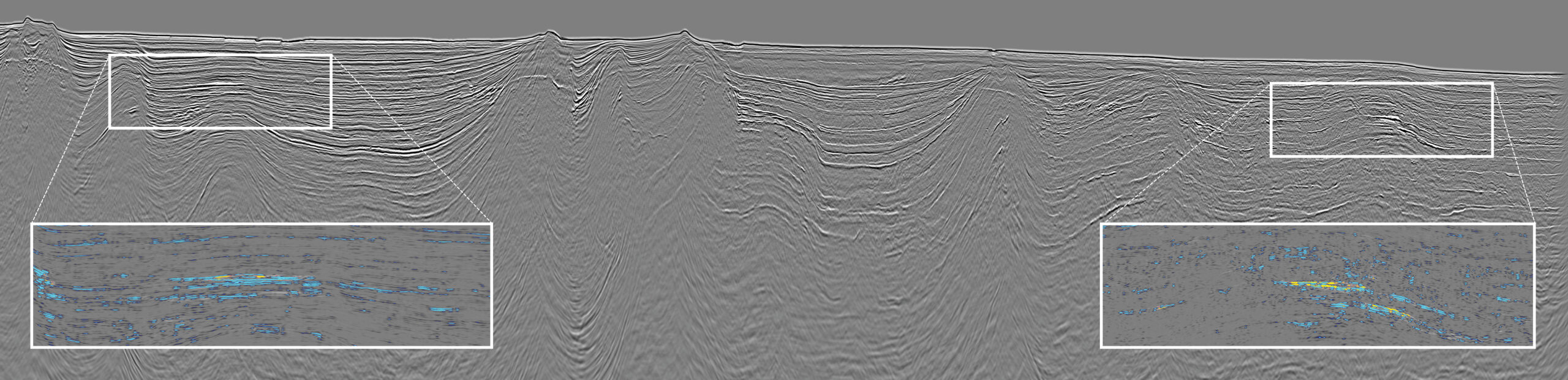 Seismic line through Le Clerc field.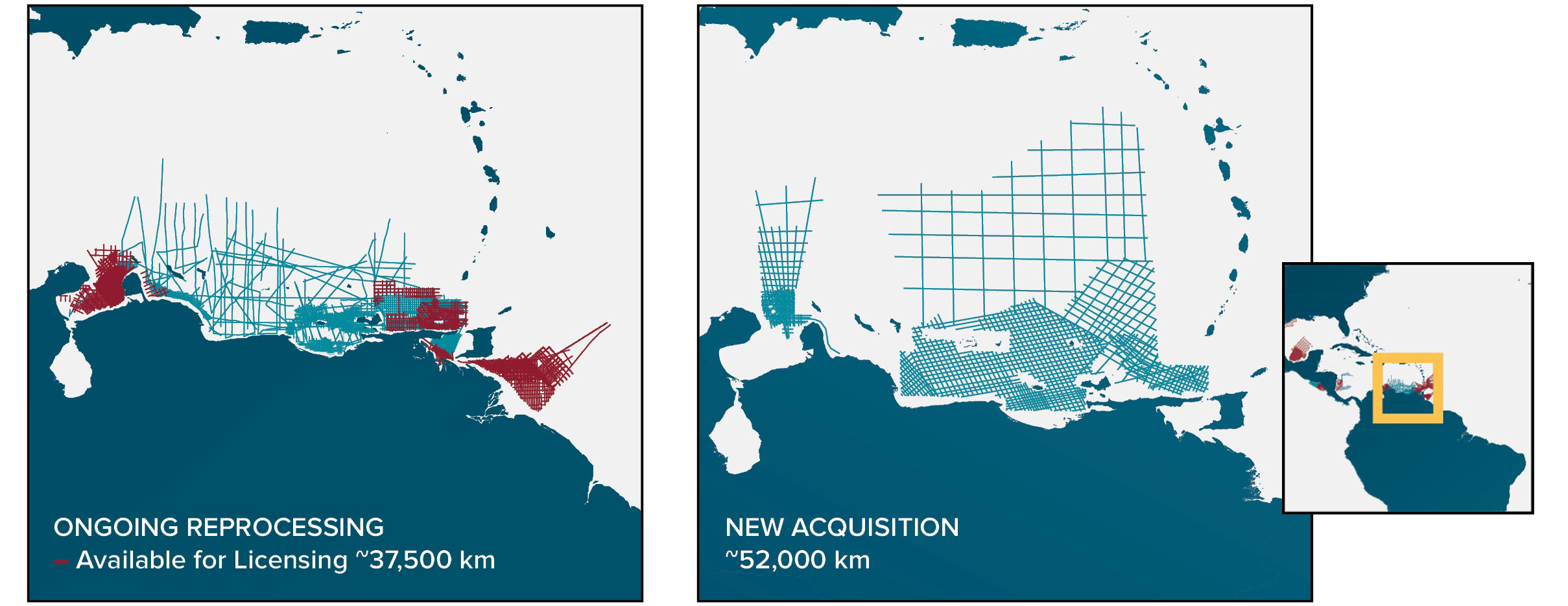
Venezuela offshore: A basin re-entering the global stage
Sourcing the delta
De-risked by discoveries with available infrastructure
Legacy coverage to modern understanding
Why the time is now
Exclusivity and scale
Related Articles