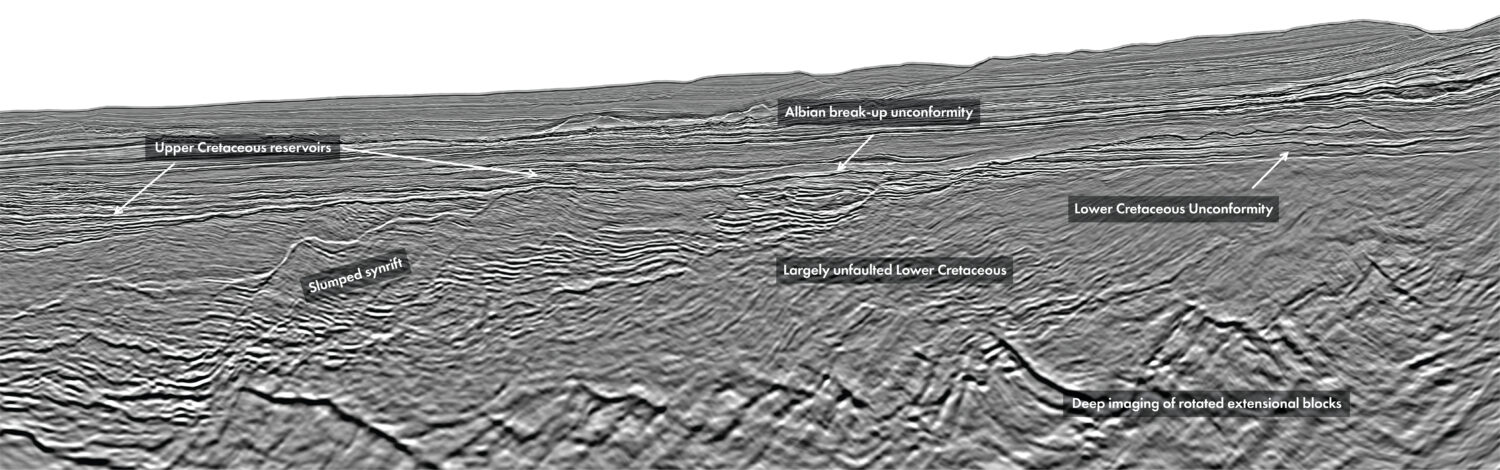
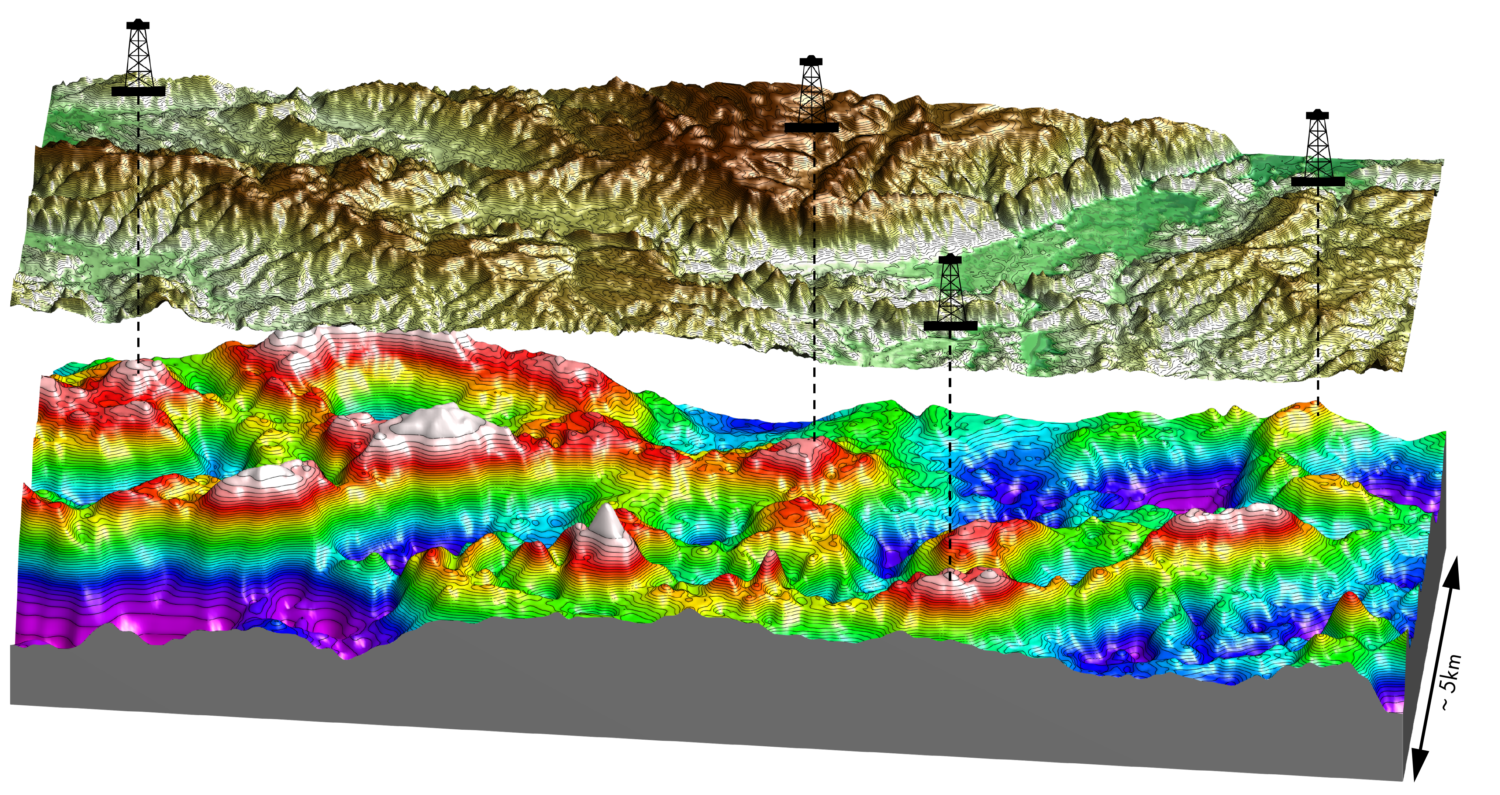
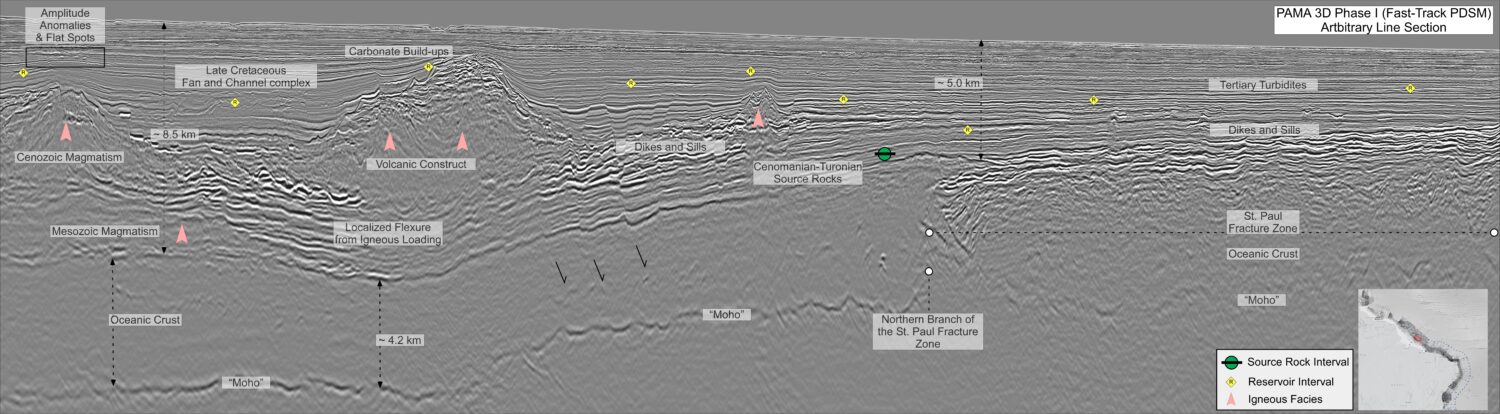
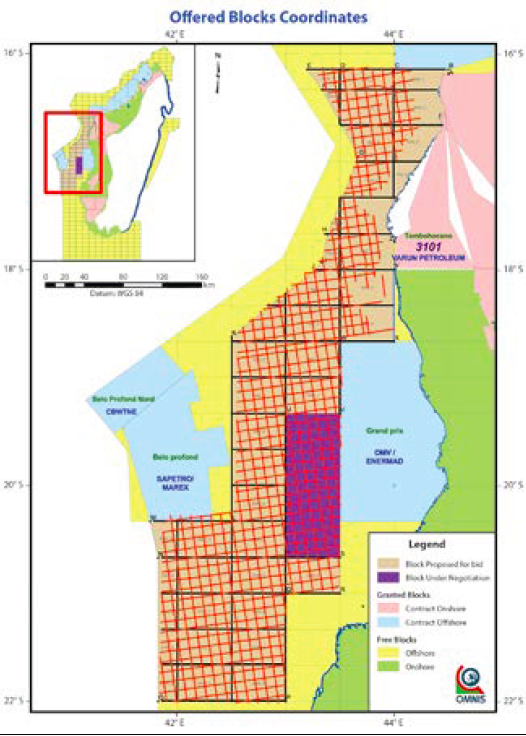
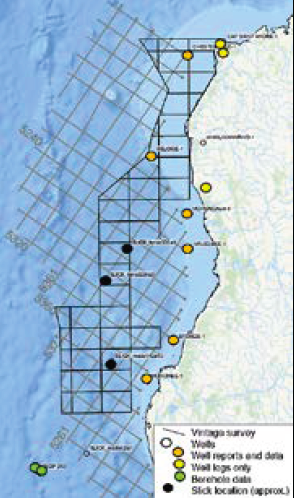
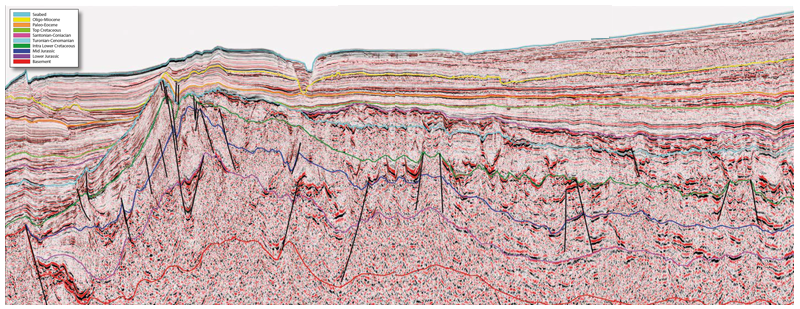
A fresh look at a clear image. New PSTM data from BGP reveals significant exploration potential of the Cuba Exclusive Economic Zone (CEEZ). The section below shows a series of structural traps in the thrust belt of the CEEZ, which have favourable reservoir and seal assemblage. The newly drilled oil discovery near this area has proved its potential. In this section, a reef is clearly indicated and there is also a flat spot reflection, which probably indicates the existence of hydrocarbons. With these new understandings and discoveries in this area, it is time to take a fresh look at the CEEZ. The West Morondava Basin: Let the bidding commence! After over 100 years of exploration, the offshore part of the West Morondava Basin remains largely underexplored. Only six exploration wells have been drilled in the region, all in shallow water. Three of these reported gas shows, while oil and gas shows have been reported in wells throughout the onshore part of the basin, where two heavy oil fields, including the giant Tsimiroro field, lie within 100 km of the coast. These fields are sourced from the Triassic Sakamena Formation, and further source rock potential is thought to lie in the Upper and Lower Cretaceous, and in the Upper and Middle Jurassic. Multiple oil seeps have been reported offshore. It is believed that the Davie Fracture Zone was still active during the Turonian-Santonian, which has allowed the creation of trap structures and the migration of hydrocarbons from older source rocks. Potential traps include reef structures, tilted fault blocks, fan complexes and intrusion related uplifts. Recent studies on new data conducted in collaboration between BGP and TGS confirm there is significant potential for future discoveries offshore the West Morondava Basin. These seismic sections were taken from a two-part BGP foldout from GEO ExPro Vol. 15, No. 6.
Cuba re-launches offshore oil exploration
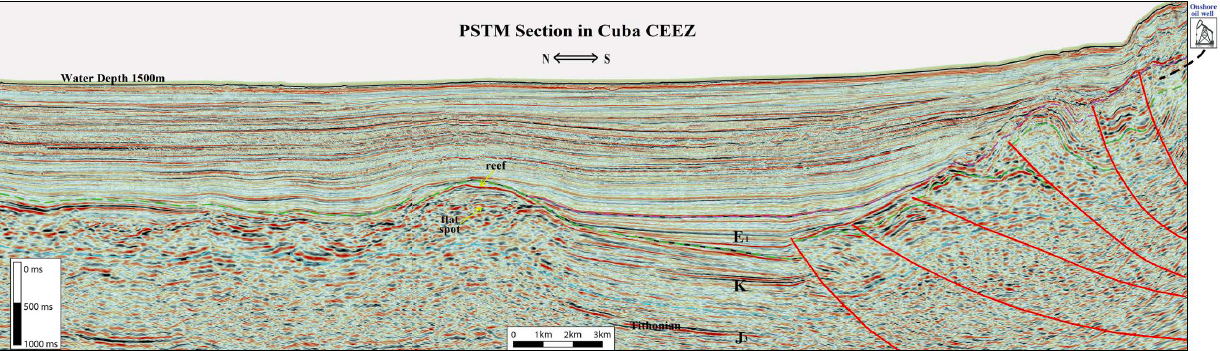 Seismic Foldout from the Cuba Exclusive Economic Zone (CEEZ).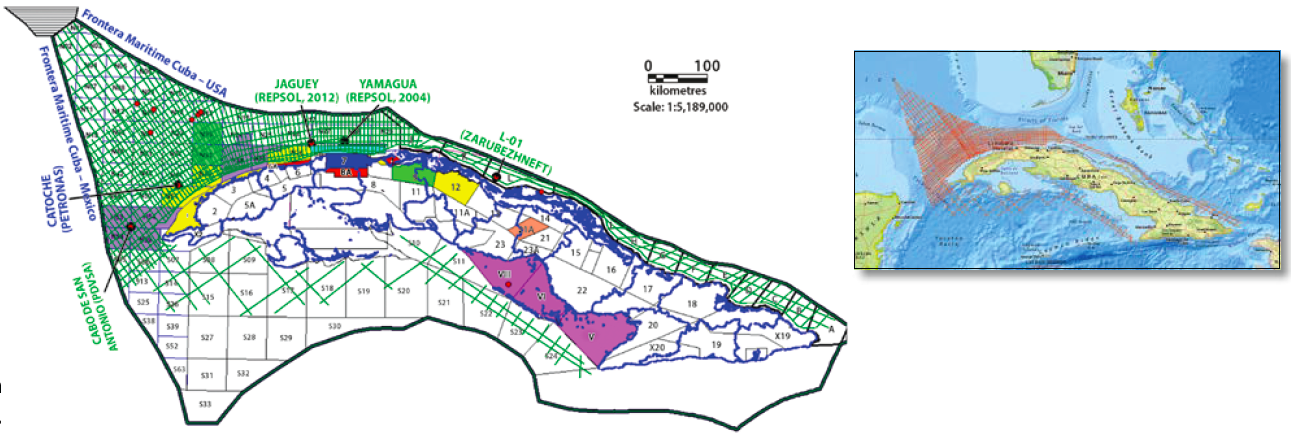
Explore Madagascar’s open acreage
Related Articles