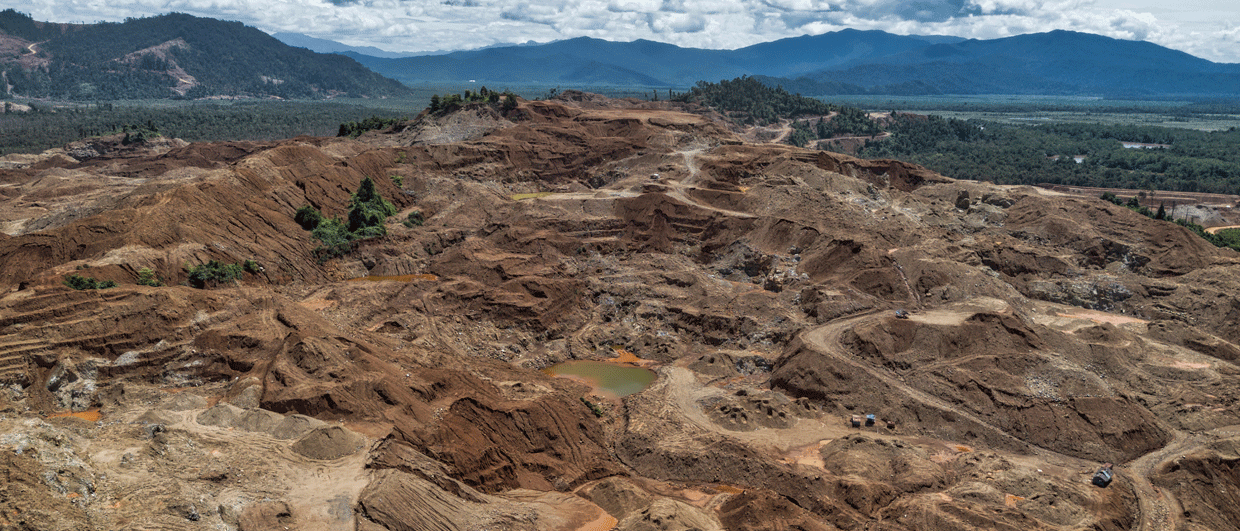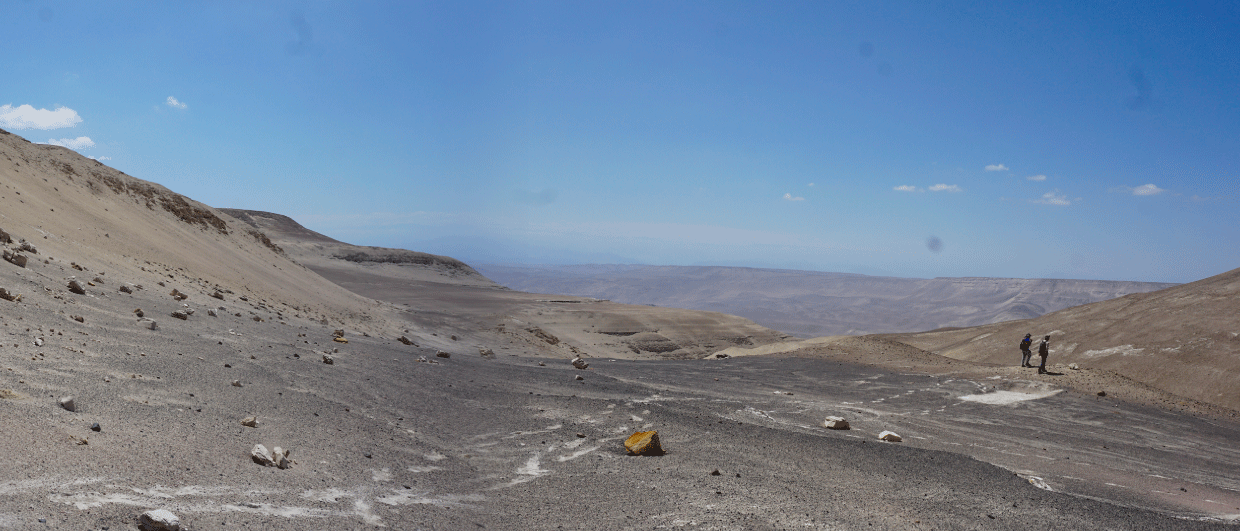
Rio Grande Valley, East Pisco Basin. The valley floor is covered in black manganese oxide nodules and fragments. Photo: Carcamo-Valencia et al., 2025.
Polymetallic nodule discovery onshore Peru
Studying deep-sea mineral deposits is not an easy task. They’re often found kilometres below the ocean’s surface, making in-depth investigation of the full geological context difficult. That raises the question: Are there any terrestrial analogues that can be studied without the need for a submarine or oxygen tank?

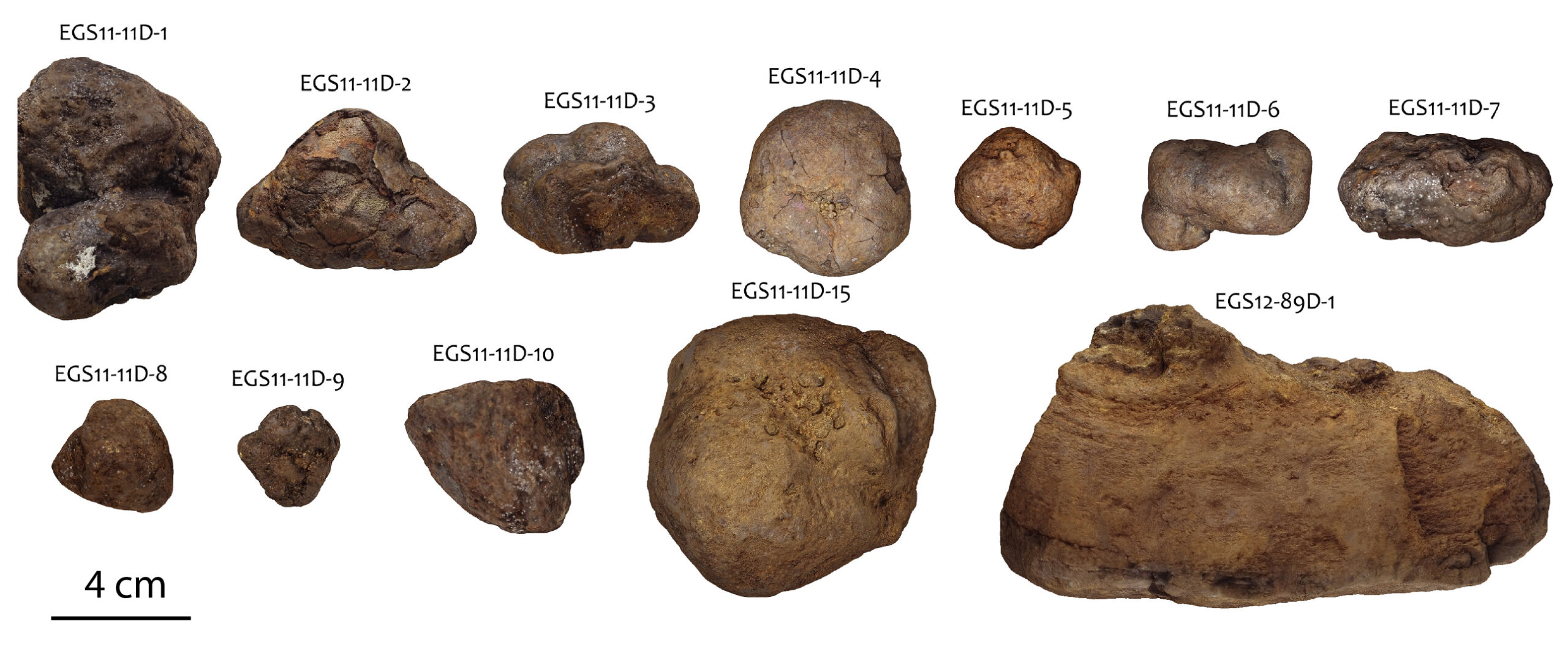
It’s August 2022, and undergraduate students from the Pontifical Catholic University of Peru are on a structural geology field course in the Pisco Basin, 200 km south of Lima. Although they are there to look at faults, they keep noticing centimetre-scale, black, rounded rocks protruding from the outcrops and can’t help but wonder what they are.
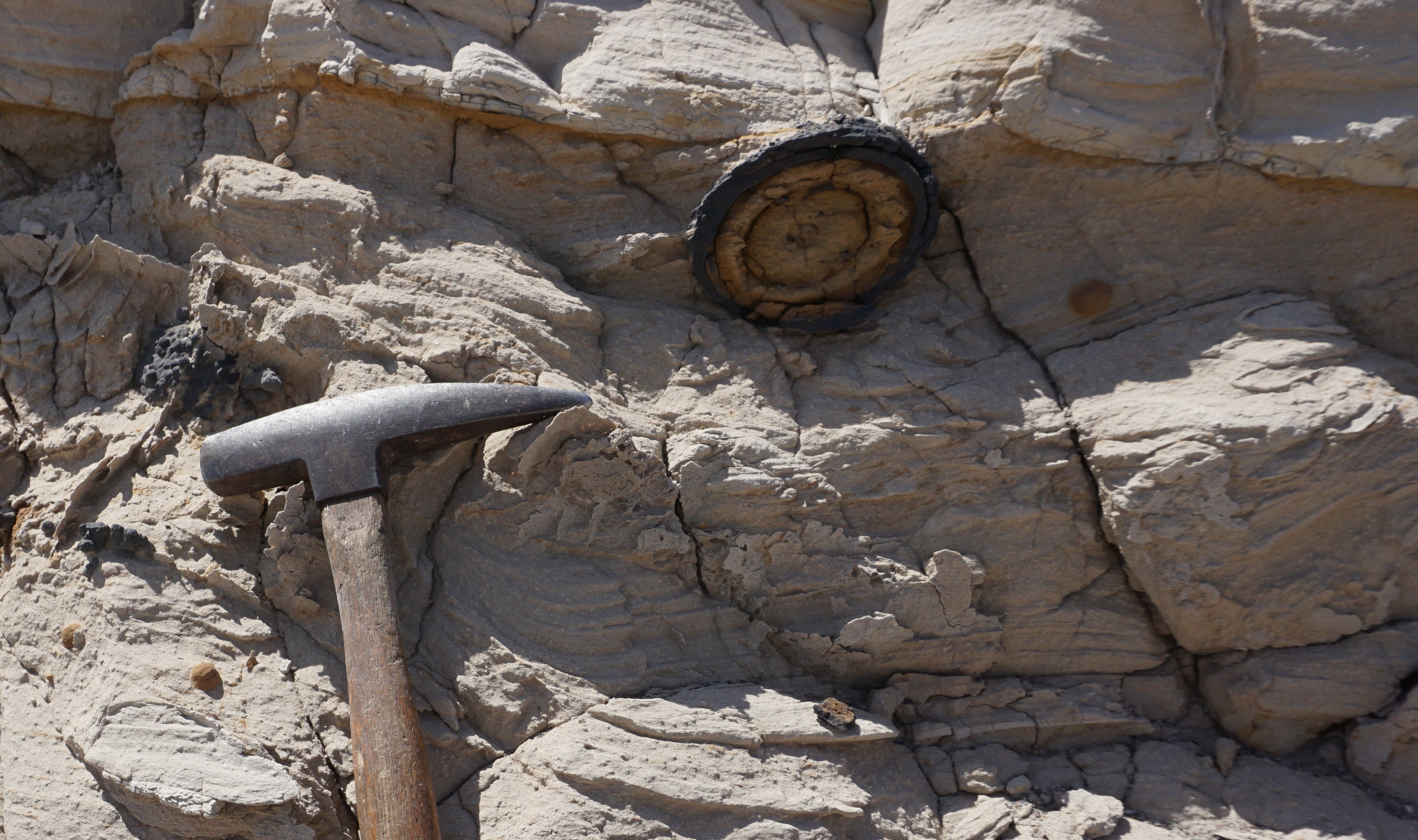
They take samples, and back at university they land on the desk of Professor Lisard Torró, who identifies them as manganese oxide nodules. Lisard explains he immediately knew this was an extraordinary find: “This is a hot topic; these nodules can be related to other critical elements too, such as cobalt, nickel and lithium.” A quick analysis indeed confirmed their high manganese and cobalt content, meaning they are similar in composition to polymetallic nodules found on the abyssal plain of the Clarion-Clipperton Zone in the Pacific Ocean.
“This discovery deserved further investigation, so I asked Ivana Cárcamo-Valencia, one of the students who found the nodules, to study them for her thesis project,” tells Lisard. Ivana went back to the Pisco Basin several times to map the stratigraphy and its relationship with the nodules. She also discovered veins, concretions and even remnants of bioturbation filled with manganese mineralisation. There are chimney-like structures in the shallow marine sediments that, together with the veins, served as fluid pathways. They discharged in permeable zones, allowing larger volumes of oxides to precipitate. All observations clearly confirm that the mineralisation is post-sedimentary.
After classing the nodules as diagenetic, the next question is the timing of mineralisation. Did this take place while the basin was still submerged or during uplift and dewatering? Given the age of the host sediments, the manganese oxides must have precipitated during the Pliocene or later while the Pisco Basin was rapidly uplifted during the late Pliocene, triggered by the subduction of the thick Nazca Ridge beneath the South American Plate. For that reason, the timings to distinguish between pre- and syn-uplift mineralisation are tight. Planned age dating will eventually determine the precise moment of precipitation, but Ivana adds: “Keep in mind that the basin was only shallow marine at the most, 100 m or less water depth, not a deep-sea environment by any means, so either way it’s exceptional to find cobalt-rich polymetallic nodules in this setting.”
It is remarkable that these nodules have been preserved. Under normal conditions, they would quickly corrode and disintegrate when exposed. However, the extremely dry coastal desert environment has been their saving grace. All in all, the polymetallic nodules from the Pisco Basin are not a direct analogue for their deep-sea cousins, as the latter grow directly on the sea floor, but they do seem an easier alternative to explore and potentially mine.