Illustration: Adapted from Adobe Stock.
Coring for beginners
A cautionary tale

It was the summer of 1989. After a year of kicking around the North Sea, for several reasons I ended up in a Toyota Land Cruiser a few hours south of Jebel Dhanna, United Arab Emirates. We approached a land rig sheltering on the rocky desert floor under the bulk of a vast, crouching sand dune.
Prior to coming to the rig, I had paid a visit to the offices of the oil company in Abu Dhabi and met the wellsite geologist. It was the last time I would see him. I was tested on my knowledge of the Dunham Carbonate Classification – successfully avoiding the cement core trap – promised daily calls and weekly visits, and sent off into the desert.
The job was, on paper, very simple. These were the days before LWD, so the plan was drill, drill, drill, wait for the drilling break, circulate up a sample and then pull out to core. Job done.
The first few weeks were quiet. Steady drilling and casing runs. No excitement beyond the locals who wandered into camp every few days to see what they could ‘acquire’. Comms with the office in town were patchy at best. A single fax machine and radio in the Company Man’s office, strictly forbidden to lowly data engineers. Still, we had our instructions and the job seemed straightforward. Finally, we approached the reservoir section. I remembered the instruction. Drill until the jump in penetration rate, circulate for a sample and pull out to core.
It was here that the first problem arose. The Company Man had his own plans and his own schedule, and none of them included wasting time circulating for samples. Drill until the break, pull out of hole, run in and cut core. And since the Company Man was God, that is what we did.
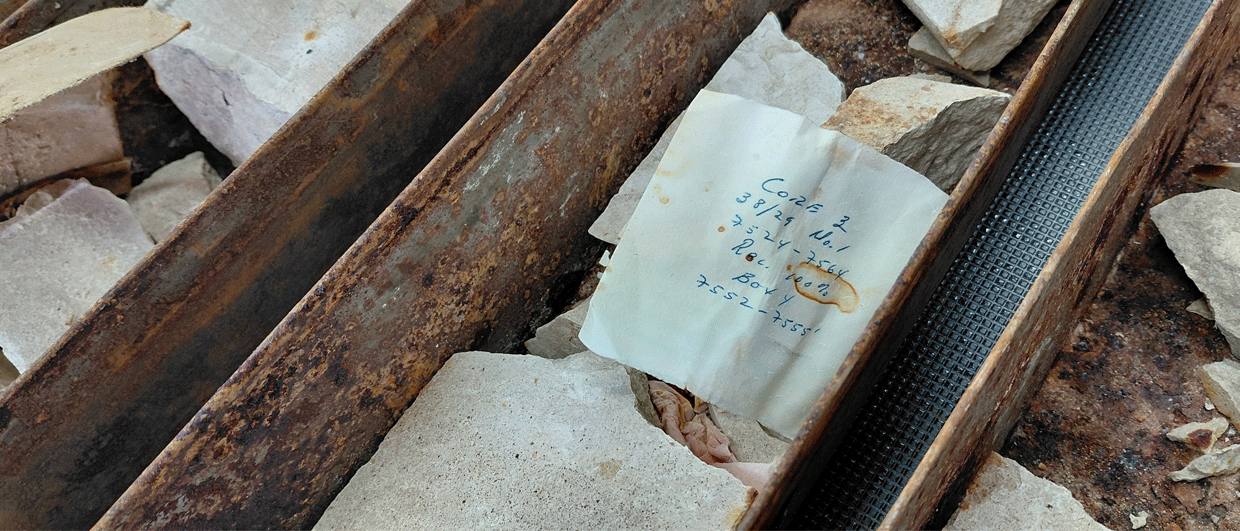
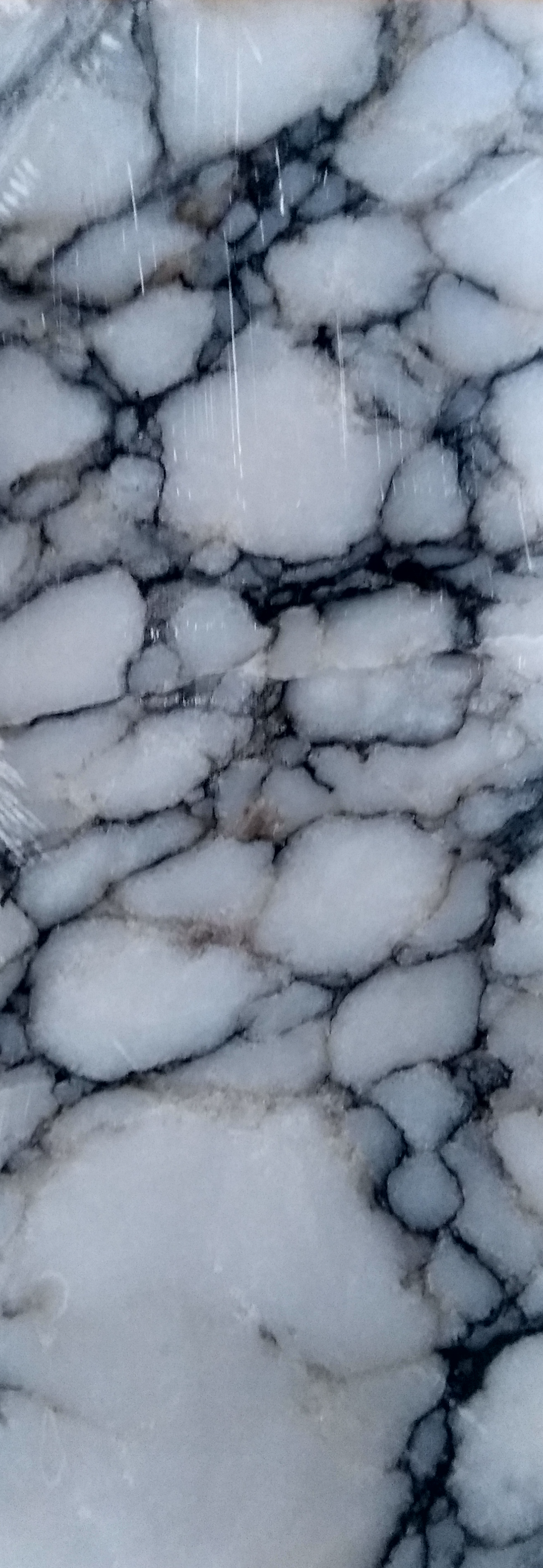
The coring was easy – perhaps too easy – and we awaited the arrival on surface of the 30 ft of reef limestones hopefully dripping with oil. Sadly, what appeared as we laid out the core was definitely not reef limestones and not a drop of oil was in sight. Our drilling break had been caused by an anhydrite bed, and what lay before us in the old core boxes was just under 30 ft of beautiful, shimmering white anhydrite pillows, each delineated by a fine curtain of claystone.
It looked lovely. It also looked like the end of my short career in the oil industry.
Inevitably, the core had arrived at surface just before midnight, and it was 2 am before we finally had it laid out ready for packing. I went back to the camp a mile away from the rig, dreading the conversations that I faced in the morning. But as it turned out, those difficult confessions would not be needed. When I arrived back in the morning, the core was gone. Not dispatched to town as planned, but stolen in the night. True to form, the locals had come into camp, taken a fancy to the core and nicked the lot. Only small fragments of anhydrite remained, shimmering in the dawn light. Nobody had seen anything, nobody knew anything. The Company Man called me into the office, explained that the daily drilling report would say recovery was zero percent, core lost in hole, and we were going back drilling.
My career, short as it had been to that point, was saved, and I suppose I had learnt a few valuable lessons. I spent another year working round the land jobs in the Emirates before moving on to pastures new. And I can only assume that fragments of that core are decorating tourist mantlepieces in various far-flung parts of the world.