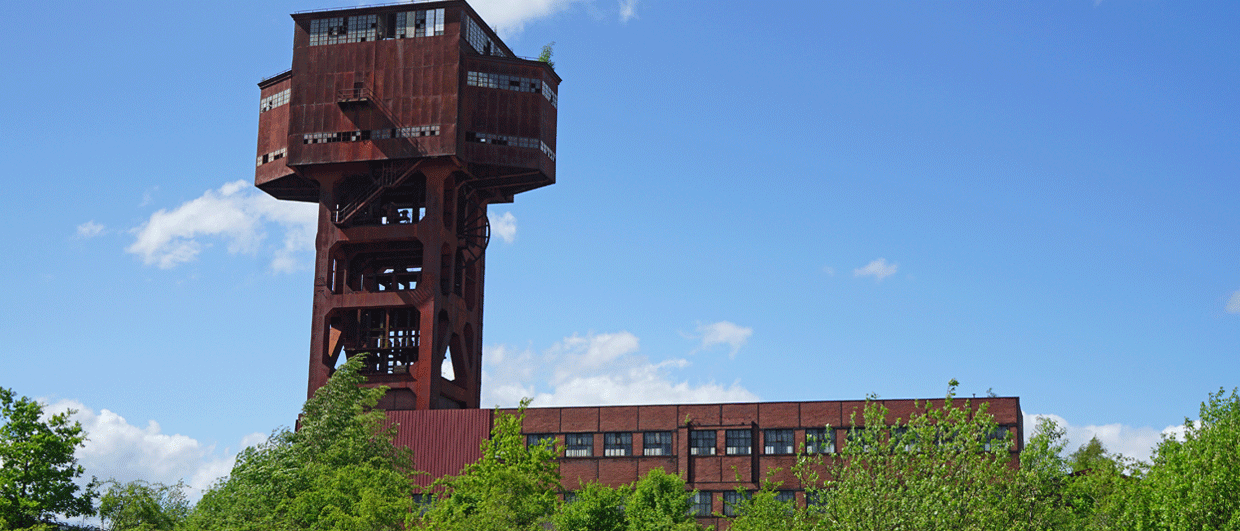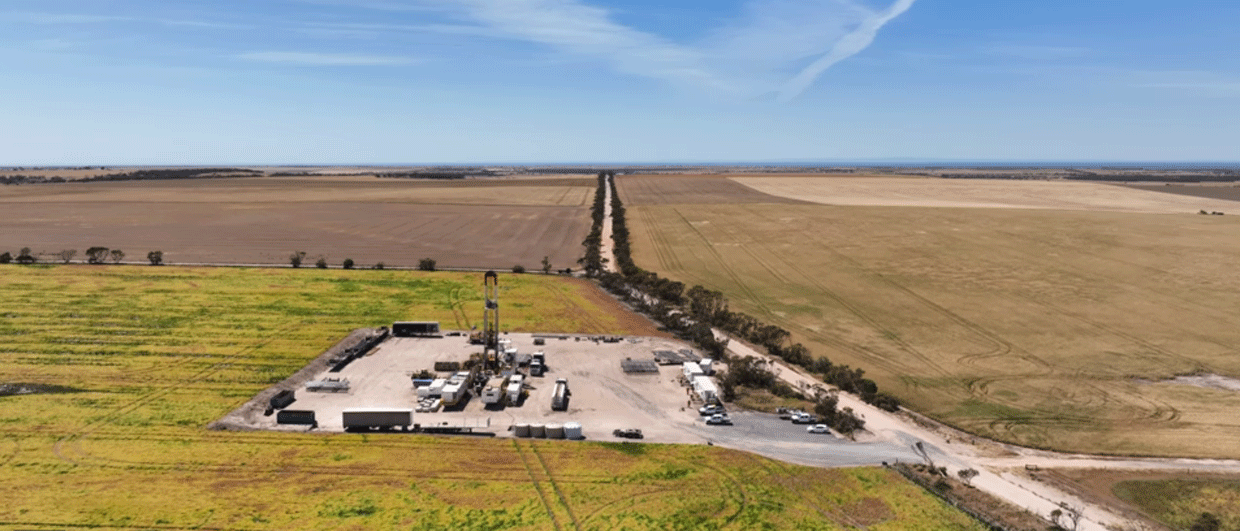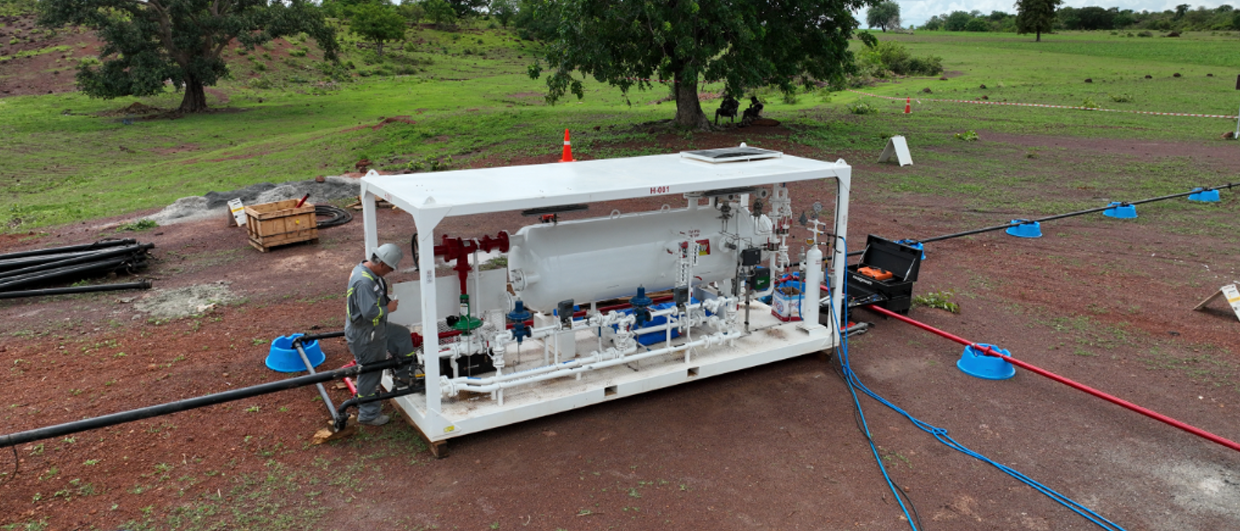
Lawson wellsite. Photo: Max Power.
MAX Power’s hydrogen appraisal campaign
Canada is one of the frontier countries in natural hydrogen exploration. At the forefront is MAX Power, originally a mining company and now holding nearly 4,700 km2 of hydrogen exploration acreage in Southern Saskatchewan

In December 2025 MAX Power drilled its first well targeting the Lawson structure, a Precambrian basement high draped by Cambrian clastics. Similar “buried hill” plays elsewhere in Saskatchewan and neighbouring Alberta and Montana, are known helium reservoirs. Lawson-1 recorded hydrogen shows up to 28.6 %, mostly from the basement complex, whilst elevated helium readings up to 8.7 % were noted in overlying Paleozoic strata. An attempt to free-flow the well after casing perforation but without tubing fitted, resulted in momentary inflow of gas immediately followed by strong influx of formation brine. This suggests the well perforated near or into an overpressured water leg with the brief, initial gas flux either comprising headspace gas or a very short gas column straddling the perforation.
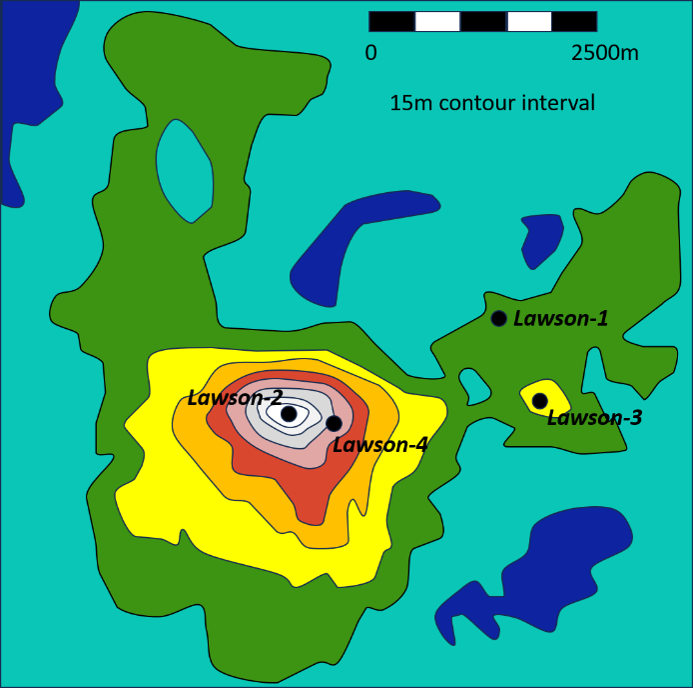
MAX Power then acquired 3D seismic over the structure and mapped a 14.2 km2 closure with around 100m elevation upside relative to Lawson-1. A free gas cap up-dip of Lawson-1 could indicatively contain up to 200,000 tons of hydrogen in the basement with another 350,000 tons potential in the basal Cambrian. Lawson-2 targeted the apex of the 3D closure. Elevated hydrogen readings were reported but no flow was attempted. Lawson-3 was drilled 1.2 km south of Lawson-1 in a similar down-dip position, to “triangulate the discovery”. Little is known about its findings other than that some helium upside was noted in the Paleozoic formations. Lawson-4 again targeted the basement high. Like Lawson-1 and -2, it noted elevated hydrogen readings in the basal Cambrian and basement as well as elevated helium in the shallower Silurian strata but again, no evidence of flow.
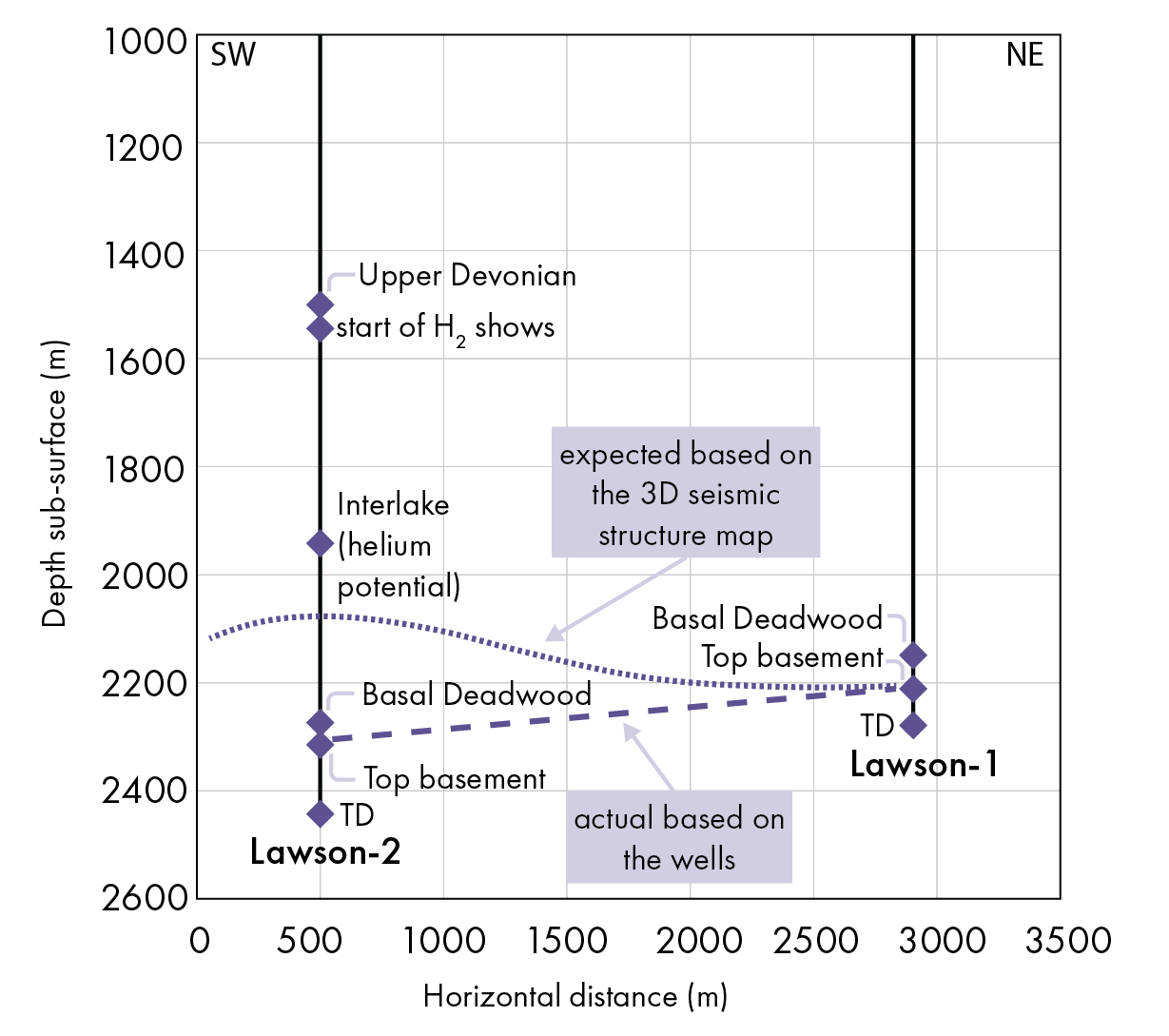
Unfortunately, MAX Power’s fragmentary and highly selective reporting makes it difficult to decipher what has been proven by the drilling campaign. One surprising result is that the top basement picks in Lawson-2 and -4, supposedly drilled up-structure, are some 100m deeper than in Lawson-1. This brings into question whether the wells proved or disproved existence of the seismically mapped 3-way closure. Maybe the closure is at a shallower level, e.g. at the top-Silurian unconformity? The structure may be more complex than initially suggested and the lack of reported flow in supposedly apex wells is not particularly encouraging. Whilst MAX Power claims “Lawson is advancing toward commercial evaluation”, public records leave many unanswered questions regarding the nature of this hydrogen-system.
We reached out to MAX Power but they declined to answer our questions.