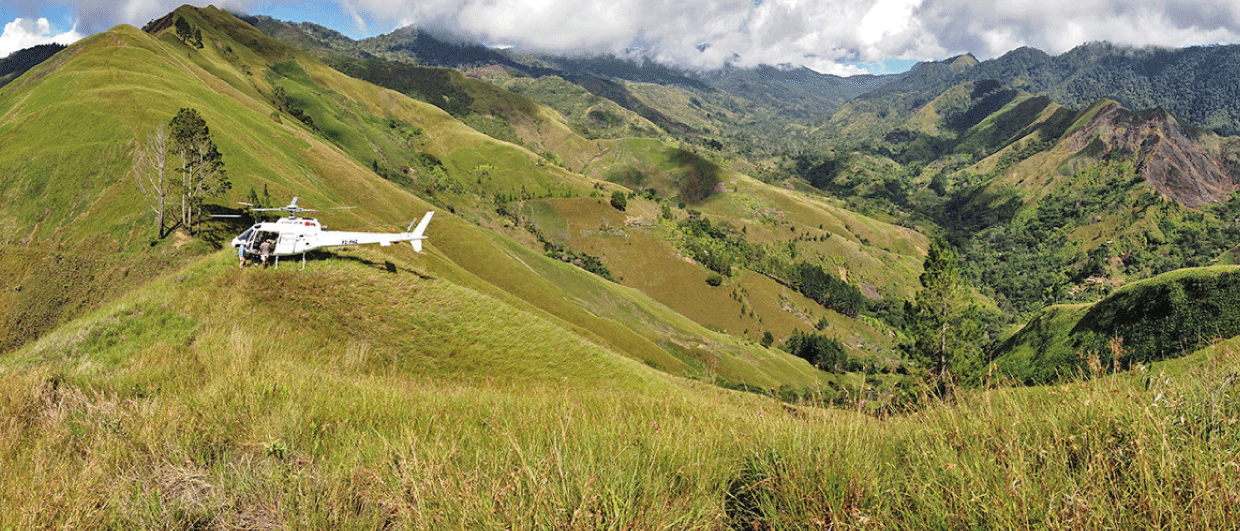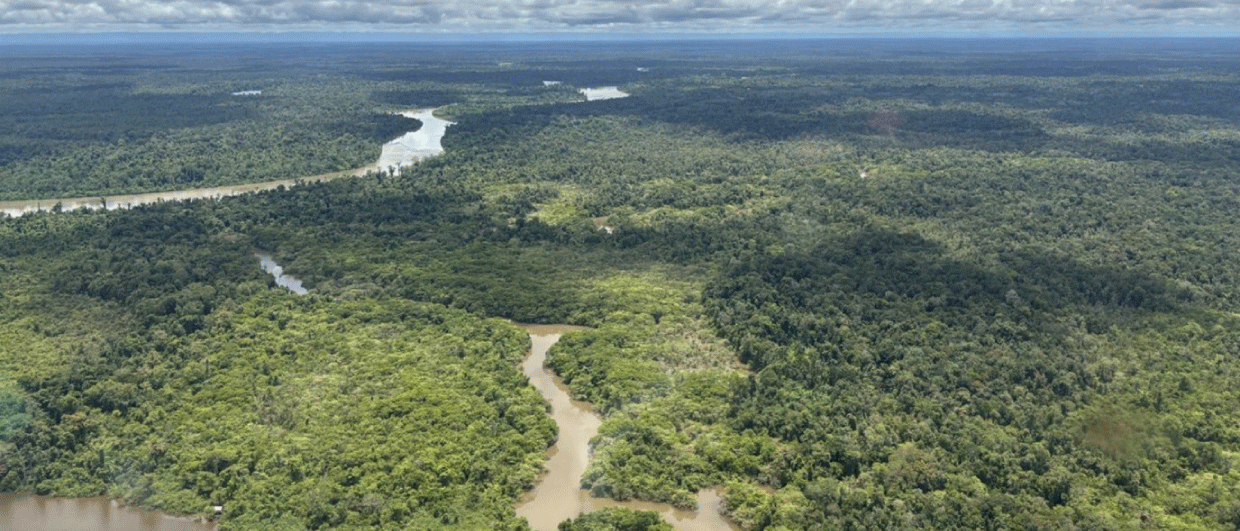
Photo: The western Papua foreland in the area of Heritage’s licences. Photo: Rachael Haslar.
Frontier volumes, near-field risk
Papua New Guinea’s Western Province has the ingredients to become another hub. And in that hub lie two prospective licences owned by Heritage Oil

Papua New Guinea (PNG) rarely features in the E&P headlines, but in fact, the country has a lot to offer when it comes to the exploration scene. TotalEnergies and partner Petronas are likely to be drilling PNG’s first deepwater well, Mailu-1, later this year, targeting a carbonate reef, which has the potential to be a play-opener. Meanwhile, Australia-based Larus Energy operates two partly onshore / offshore licences close to the capital Port Moresby that include at least one drill-ready and potentially stand-alone oil prospect.
Then there is PNG LNG, producing since 2014 and operated by ExxonMobil, which is a testament to the country’s ability to support large-scale infrastructure projects, despite the often remote and difficult terrain. In addition, TotalEnergies and its partners are expected to take FID on the Papua LNG project, which will develop the Elk and Antelope onshore discoveries. Further, the P’Nyang project, which will tie into PNG LNG, is expected to start construction in 2028, adding a further 4.3 Tcf.
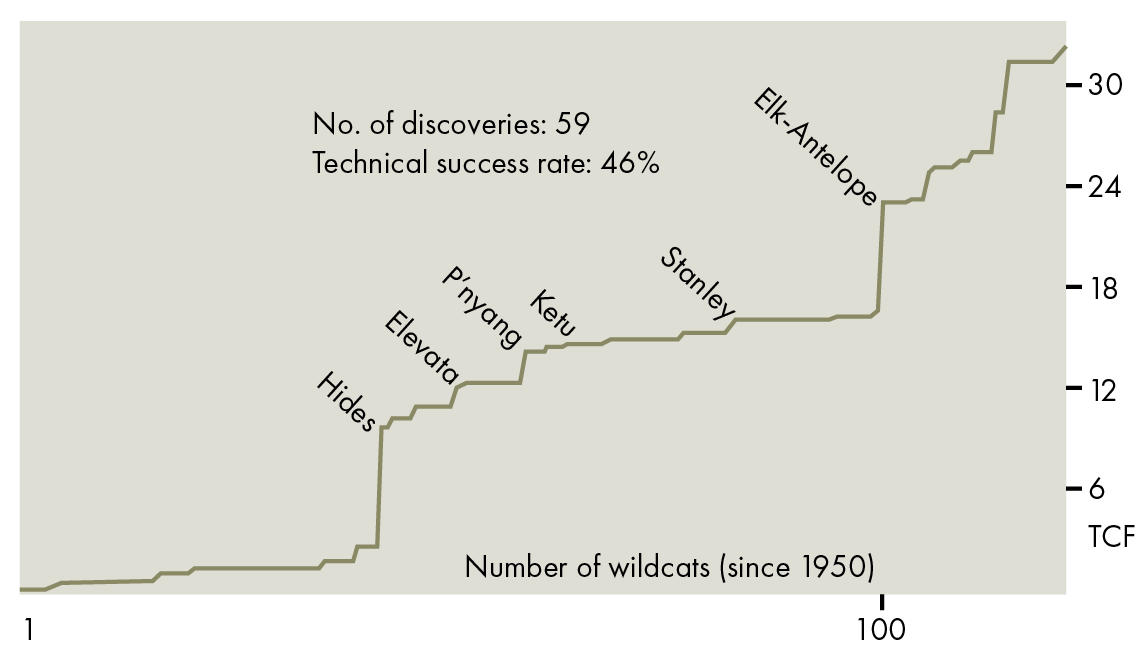
As such, there is more activity in PNG than one might think at first glance. A quick look at the country’s creaming curve also suggests that there are a few big finds still to be proven. In a way, it might be about time for the next discovery to be made. And that potential is not limited to the offshore. In fact, the data suggest that success is more likely onshore. That’s where Heritage’s acreage in the Western Province comes in.
The western province’s promise
In an early GEO EXPRO article, Jane Whaley wrote: “Outside the Central Highlands and Papuan fold belt, PNG is virtually unexplored. The Papuan Foreland and Fly Platform, for example, with its simple, flat-lying geology, has 12 as-yet-undeveloped discoveries, found from very few discovery wells.” This yields a success rate of greater than 50 %, far higher than many of the global basins. This is exactly the area where Heritage’s two licences are situated.
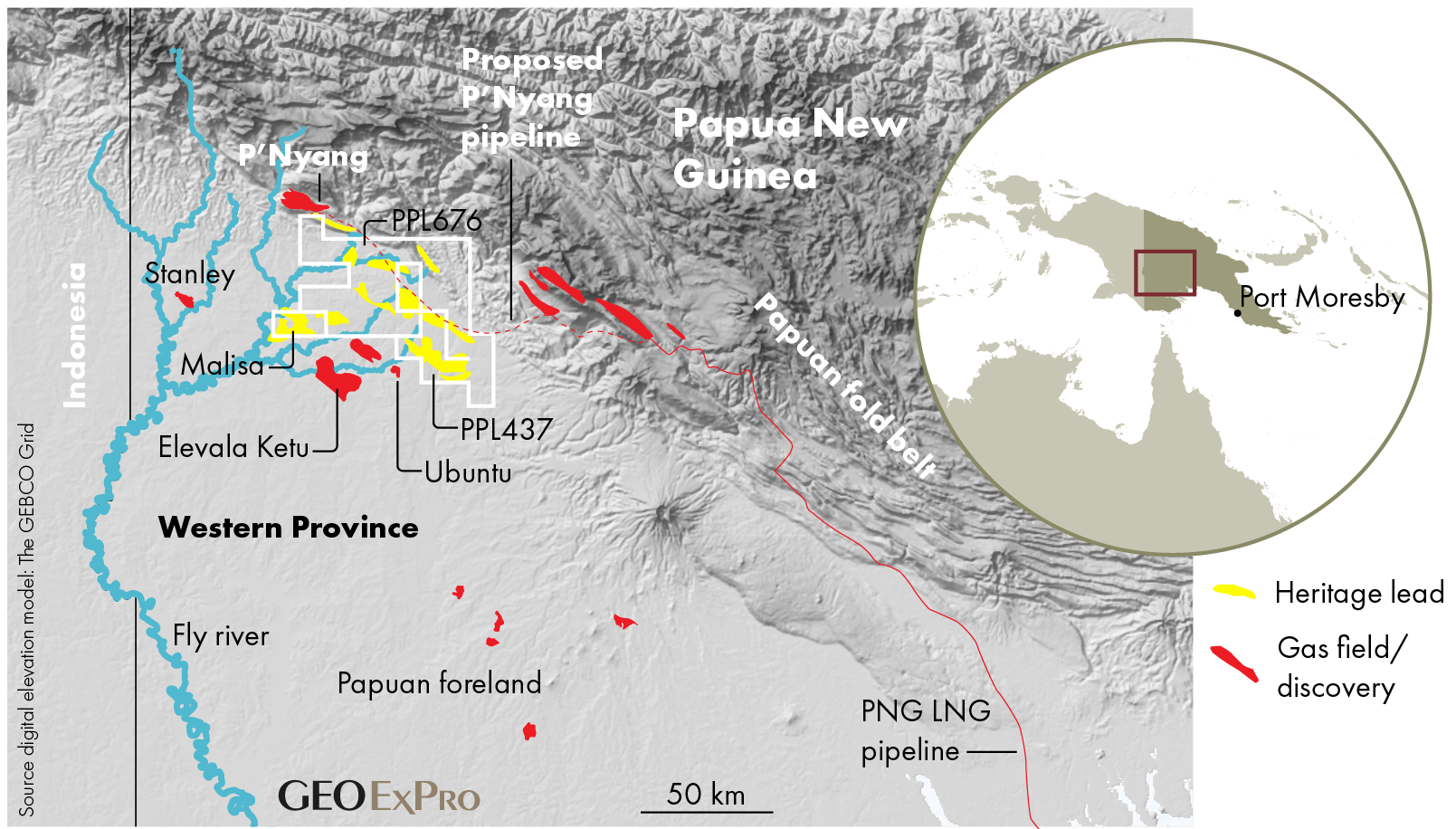
We are looking at the region that is situated close to the fields that are already feeding the PNG LNG project. There is already a cluster of finds awaiting further development, totalling a discovered volume of around 7 Tcf. And in the middle of that cluster of stranded discoveries is an area that has been part of Heritage Oil’s PNG portfolio since 2014; PPL437 and PPL676, measuring a combined area of slightly more than 3,000 km2.
Two plays
The two Heritage licences straddle an important geological transition; to the southwest is the flatlying foreland, whilst in the northeast the Papuan fold belt determines the structural grain. As such, there are two different play types associated with these zones: The basement drape play and the frontal fold play, respectively, both requiring a different approach when it comes to de-risking drilling targets.
The fold belt has seen the most extensive exploration activities so far in PNG. The reason for that is simple; there is no extensive seismic mapping required to find potential drilling targets; old-fashioned geological mapping and aerial inspection have proven to be successful in the past. In fact, some fields were found without any seismic lines acquired at all. In general, the area is so rich in hydrocarbons that if there is an anticline, it is likely gas-filled. It is often cheaper to drill than to shoot seismic.
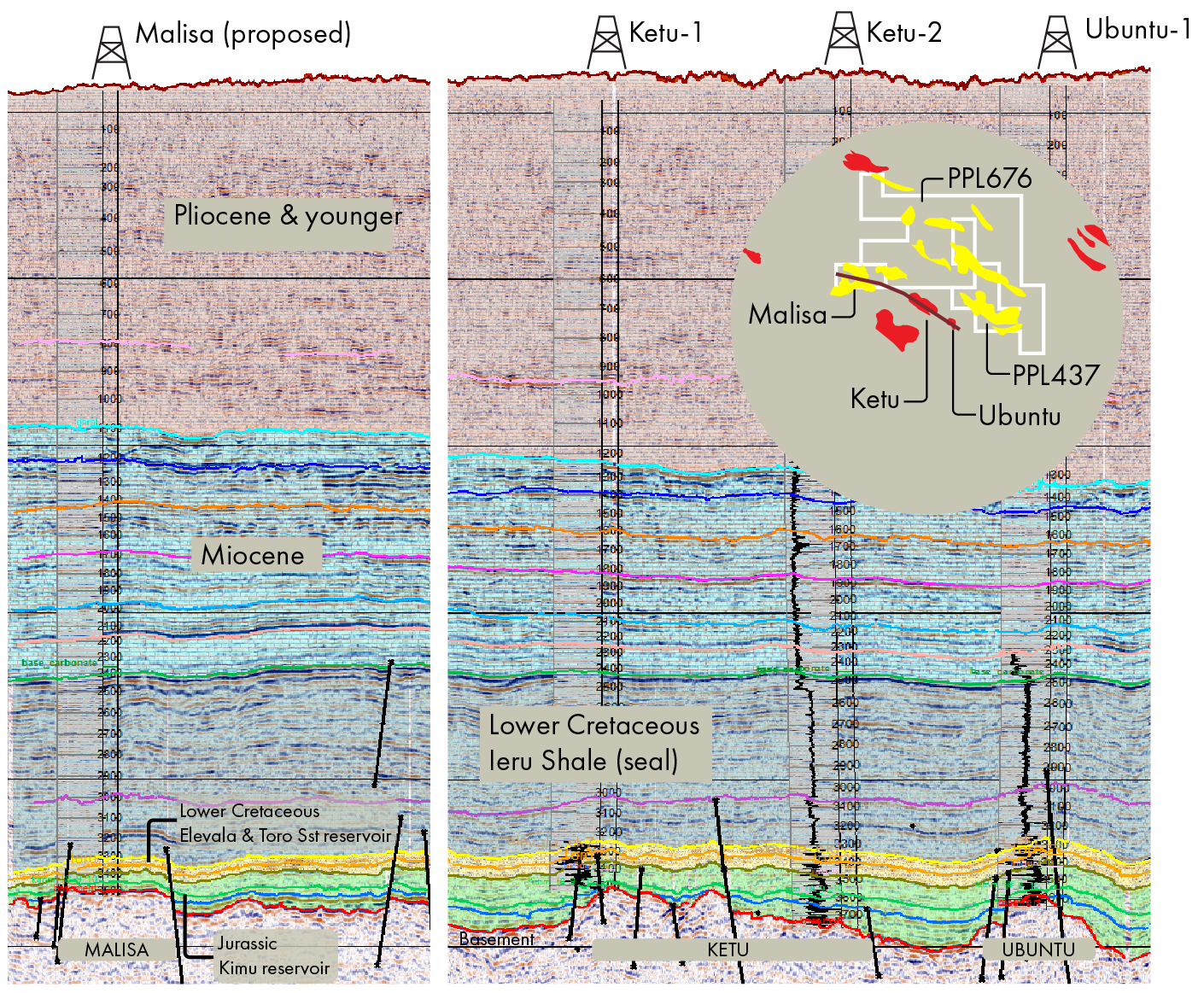
In the adjacent foreland, the picture is very different, as the terrain is flat; surface mapping is therefore more challenging. It is in this region that Heritage acquired a significant amount of 2D data to better delineate its prospects in PPL437, specifically the Malisa prospect.
Heritage’s main prospect is Malisa, which is situated in the foreland and classed as drill-ready, with a mean estimated GIIP of over 2 Tcf and condensate potential. The target reservoirs in Malisa are the Lower Cretaceous Elevala and Toro sandstones and the Jurassic Kimu sandstone, which are shallow marine sands shed from the Australian Craton to the southwest and proven in adjacent discoveries.
Due to the low relief nature of the prospect, multiple depth conversion methodologies were applied by the team, all of which confirmed a valid closure at reservoir level. In addition, the surrounding discoveries made in the foreland, such as Stanley, Elevala, Ketu and Ubuntu, are all similar in terms of reservoir and trap style, proving that the play works.
Again, based on offset wells, Heritage expects reservoir porosity to be in the order of 18 – 20 %, with an average permeability of around 50 mD. The overall chance of success is estimated at 44 %, which is comparable to the regional exploration performance that shows the Western Province to have a one in two success rate, despite the scarcity of data.
In total, Heritage has mapped 10 prospects and leads across the two licences, with seven of them being the foreland basin-drape type and three located in the fold belt play.
One of the main drivers of the exploration success in the region is the prolific Upper Jurassic source rock. The relatively thick Ieru Formation of Lower Cretaceous age also provides an efficient seal. Timing is still a key element, though; a dry well analysis of wells drilled to the west of Heritage’s licences showed that these basement drape prospects were paleo-lows during the migration phase in Oligocene times.
THE HISTORY OF HERITAGE OIL IN PAPUA NEW GUINEA
Heritage entered Papua New Guinea in 2013. The company initially had interests in four licences, in various plays in the country. Two wells were drilled in the North New Guinea basin, in the north of PNG, in 2015, which were dry. The company has also acquired 600 km of 2D seismic in PNG over the years, across three licence areas.Heritage’s primary focus is now on the proven foreland and fold belt plays. The company operates and has 100 % interest in the PPL437 and PPL676 licences in the Western Province and identified ~14 Tcf wet gas in place across 10 leads and prospects in multiple plays and targets.
Unlocking the resource
The significant undeveloped discovered gas volumes in the area around the Heritage licences, combined with the prognosed volumes that are waiting to be unlocked through exploration drilling, would provide the scale and opportunity for a coordinated approach to the development of an additional LNG infrastructure system in the Western Province. Discussions have already taken place along these lines. But before that large-scale LNG development was to occur, there is also the opportunity for an early phased development of gas and associated condensate resource through local consumption and small-scale export. That is what the operator of the nearby Stanley field will now embark on through the planned construction of a data centre in the area. Other options include exporting the condensate – the existing discoveries tend to have a Condensate-Gas ratio of around 40 – via barge down the Fly River. The river is navigable and is already used for transport, demonstrating that this is a viable option too.