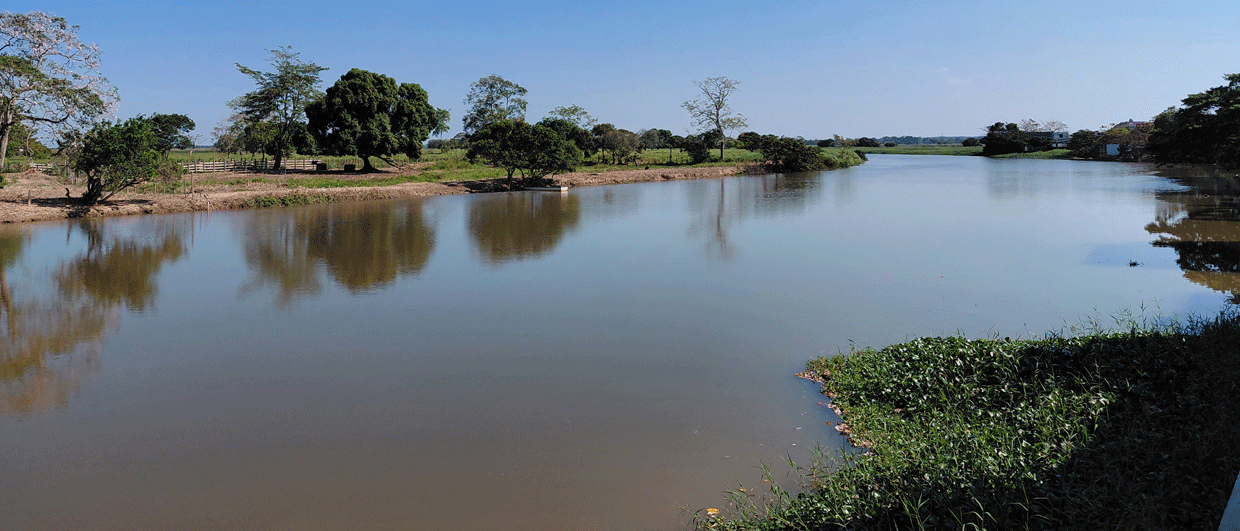
The lowlands of Tabasco and Veracruz are characterised by lots of rivers, swamps and lushy green landscapes. Not the easiest environment to drill wells and acquire seismic. Photo: Henk Kombrink.
Mexico – what’s happening
The state of Pemex and the state of exploration

One of the best ways to learn how an industry is doing is to talk to people when you are actually around. That’s what happened to me in February, when I was in Mexico for a week. Through the conversations and chats I had during that week, a picture started to emerge of how the oil industry is doing in this big country.
Payment delays
One of the most pressing issues in Mexico’s oil and gas industry – this was a recurring theme during the conversations I had – was the challenges that Pemex is facing. The state-owned company has apparently been unable to pay contractors for a long time, to the extent that many are facing serious financial trouble and are running the risk of going out of business.
I spoke to one service company director who was very serious in his attempt to drum up business abroad to become less dependent on work coming in from Pemex. But he also admitted that it will be very difficult to do so in the current environment, where drilling is not at a global high.
What is the explanation for Pemex’s inability to pay its contractors? I guess there are multiple reasons for that, but what I heard was that the government takes too much of a cut, and that Pemex has been ignored since the country opened up to foreign investment in 2016. At the time, the hope was that the newcomers would take care of finding the new volumes the government was craving for, leaving Pemex in the shadows. I think this is not necessarily how the situation has unfolded, with companies slowly turning their backs on Mexico again recently.
Still an important player
At the same time, Pemex is still by far the most important player in the country. Many people, especially in the Villahermosa area in the south of the country, have family members who either work for the company or did so in the past. The perks of working for Pemex were very good; going back some years, it was even possible to nominate a family member as a successor to your role if you retired from the company. Things have become less attractive over the years, on the back of the situation sketched above, but it is clear that Pemex is still a major force.
As such, it is also Pemex that is currently exploring for additional resources. Commissioned by Pemex, Sinopec is in the process of acquiring a large 3D seismic survey onshore Tabasco – in the Villahermosa area – to map deeper prospects beneath the main oil and gas fairway in Miocene deep-water sands. There is hope that deeper Cretaceous and Jurassic strata at depths of 3-6 km may hold further potential. The acquisition is not an easy task; the lowlands of Tabasco are characterised by wet and swampy areas where access is problematic.
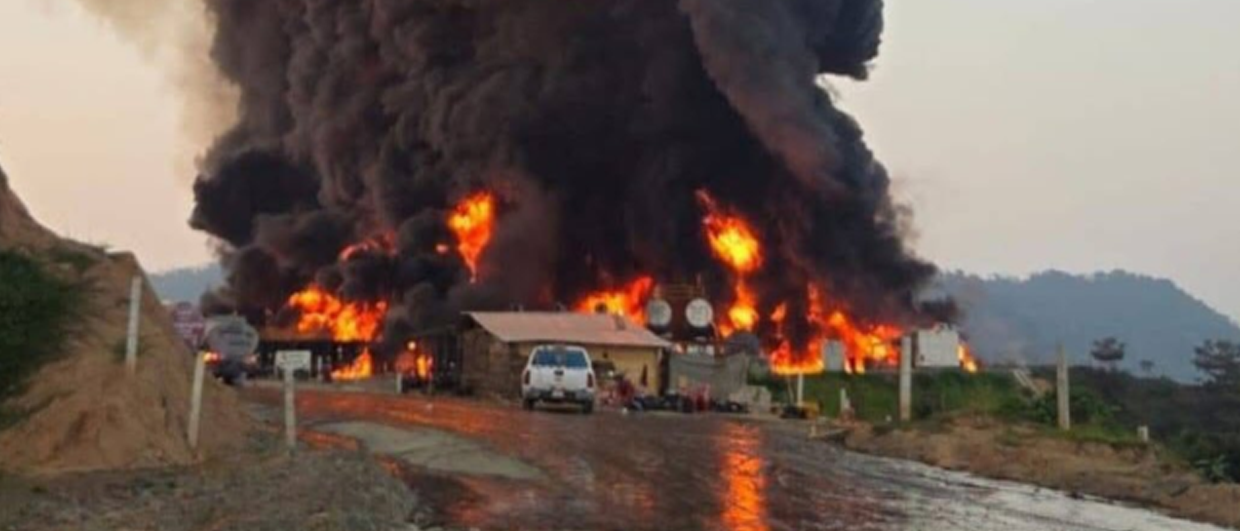
Pemex is also drilling exploration wells in the area already. Just recently, well Krem 1-XP experienced a blow-out whilst targeting Cretaceous reservoirs in the Las Choapas area in Tabasco. It was the first well of a four-well campaign in the area.