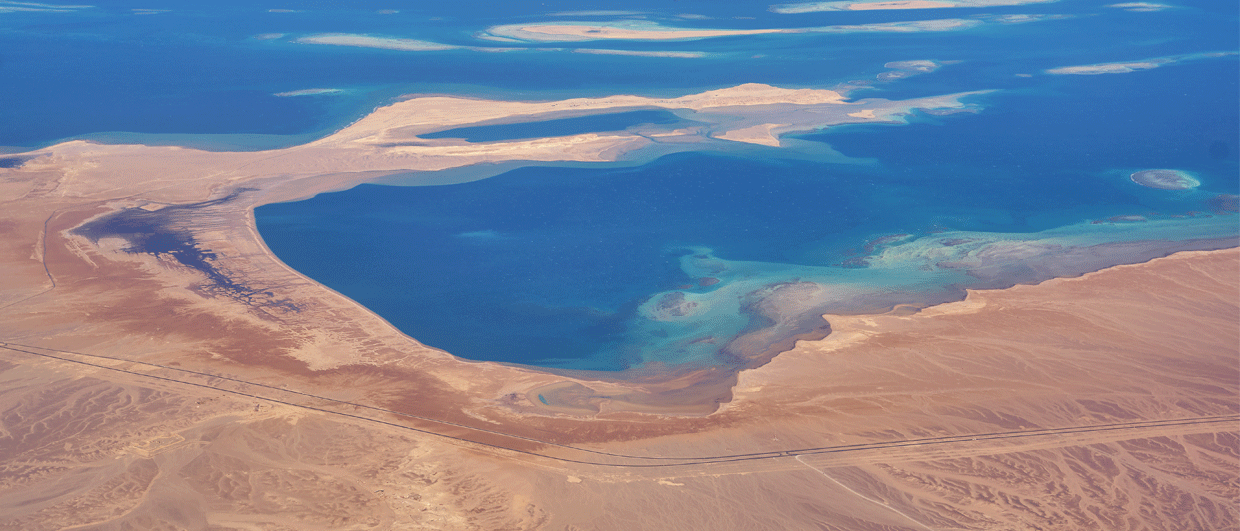
Red sea coast in the southern part of the Gulf of Suez north of Hurghada in Egypt. Photo: berezko via Adobe Stock.
The boon of Block 6
What could be the attraction of bp’s recent award in the Egyptian Red Sea?

Let’s start with a quiz. What is the basin with the highest resource density in the world? The answer is the Gulf of Suez. Not many people will have guessed that. The Gulf of Suez is a small failed rift basin, yet with all the required elements for a world-class petroleum system.
The exploration success in the Gulf of Suez drove companies to project its riches into the Red Sea rift, with a notable exploration drilling campaign in the Egyptian Red Sea in the 1970s by Esso and Phillips. But, in sharp contrast to its smaller sister, the Red Sea has so far disappointed when it comes to juicy finds.
It’s a source rock matter
Part of the answer to the question of why the Red Sea has so far disappointed lies in source rock presence. The rich source rock in the Gulf of Suez is a succession of transgressive Upper Cretaceous through Paleogene marine mudstones, associated with the post-rift succession of the Neo-Tethyan margin.
However, this source has so far been absent in well penetrations further south into the Red Sea due to a combination of the margin onlapping the Arabian promontory that pre-existed the Red Sea rift, and the fact that much of the Red Sea domain contains the Tortonian-aged evaporitic succession directly overlying a variety of basement rocks.
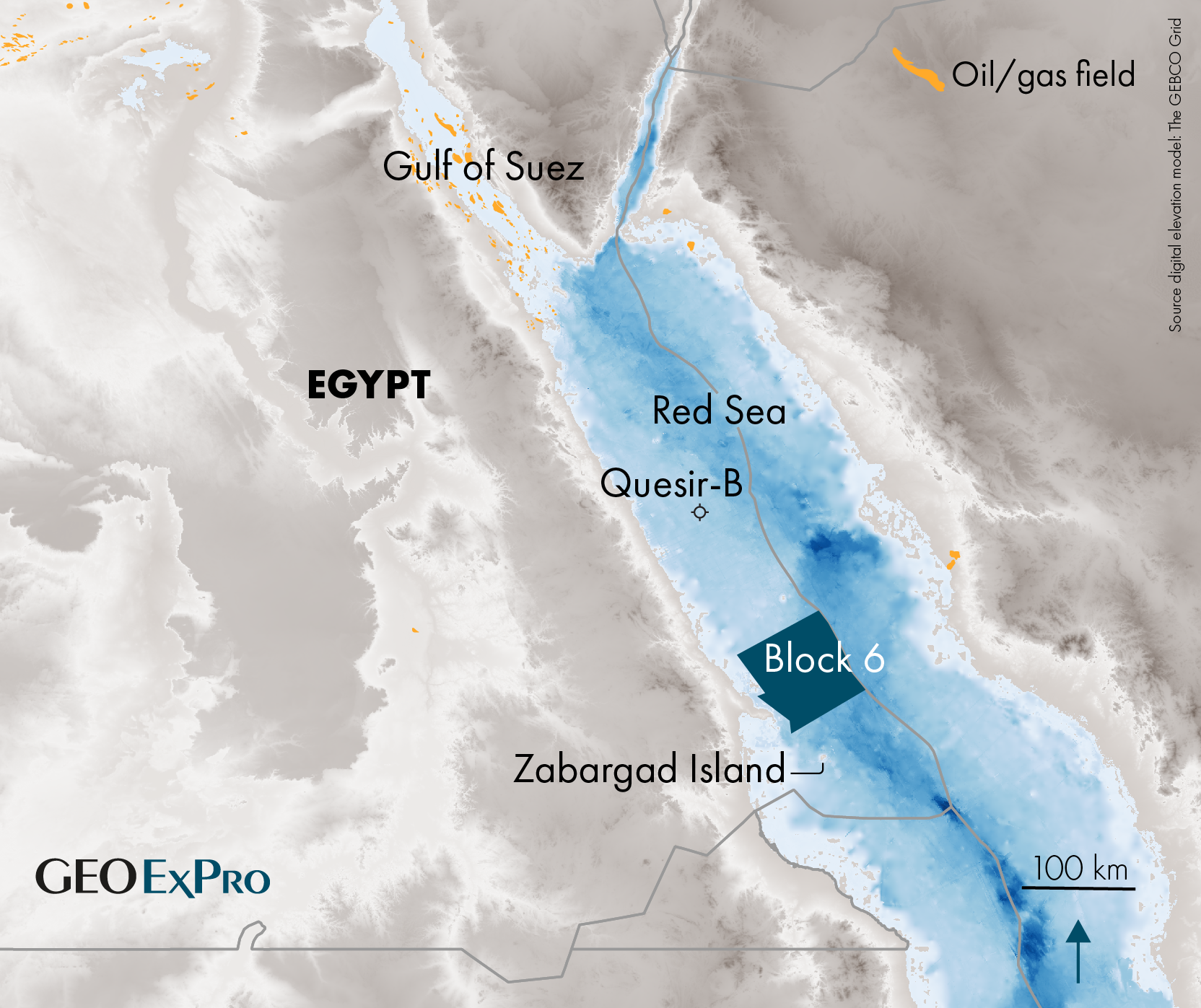
This is illustrated by the Quesir-B well, drilled by Phillips in 1977, which drilled over three kilometres of evaporites before calling TD in enigmatic “basement” rocks.
Uplifted lithosphere
In the southern part of the Egyptian Red Sea, the Zabargad Island is interpreted to be an uplifted fragment of sub- Red Sea lithosphere, famously named “Topazos” in ancient Greek times for the presence of gemstones associated with peridotites.
Yet, bp is going to have another stab at the outboard offshore region of the Egyptian Red Sea, as was announced early April during the EGYPES Exhibition in Cairo. The company signed an agreement with GANOPE for the award of Block 6. This leads to the obvious question; what is bp looking for?
Block 6 holds a large base-of-salt structure. Given nearby well results, this could be yet another case of evaporites overlying a “basement” high. However, if the high represents a remnant continental crustal horst block, there could be tantalising pre-salt Miocene marine deposits present, including the possibility of Miocene shallow water carbonate build-ups. That might be a suitable reservoir candidate below a super-seal.
But the question remains: where is the source rock, how do you mature it and what is the maturation timing? This will be the main element for bp to attempt to de-risk before they decide to drill a well. Or perhaps it can only be derisked by drilling a well.